A Short History of Rio Grande Southern 20
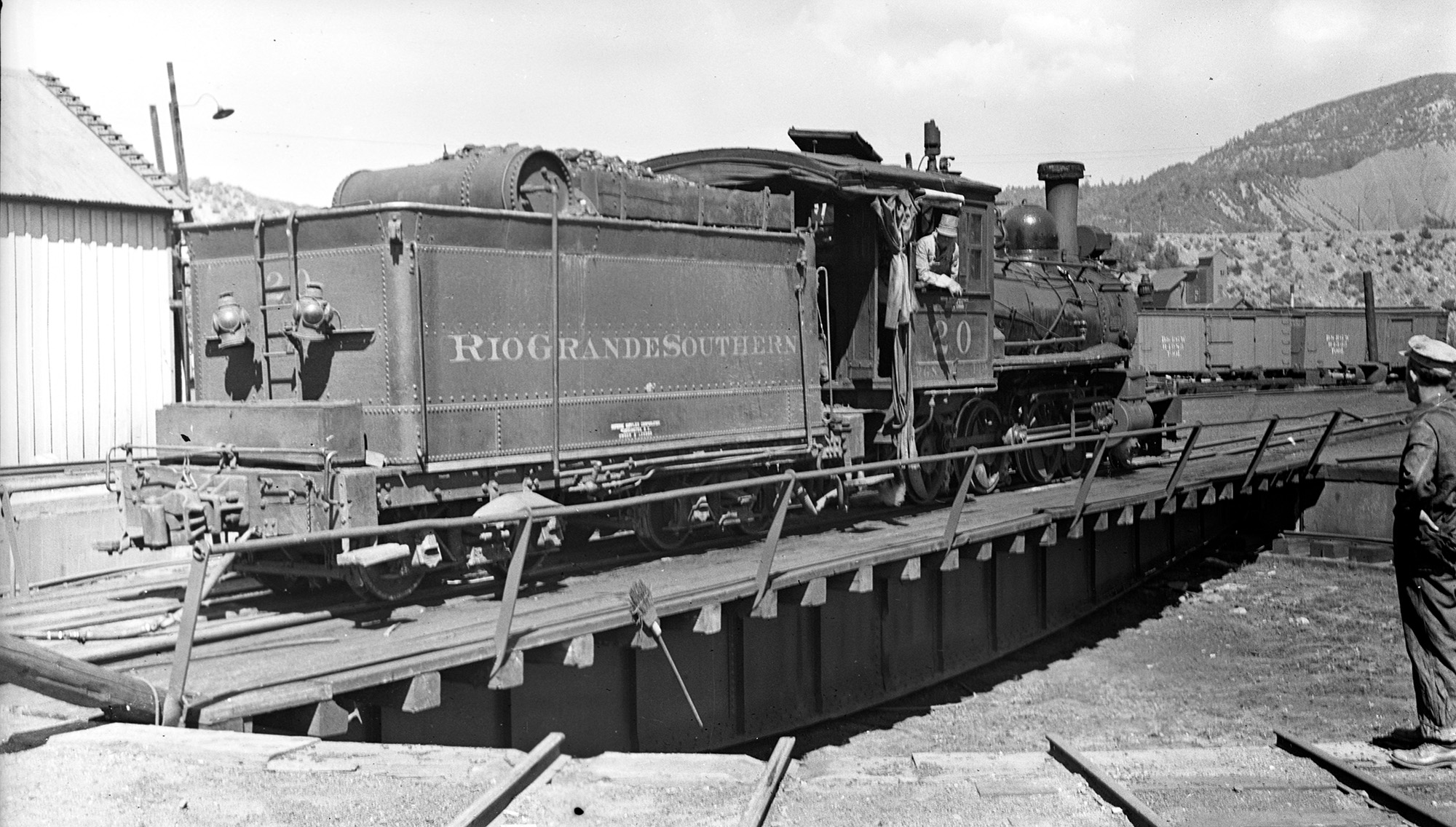
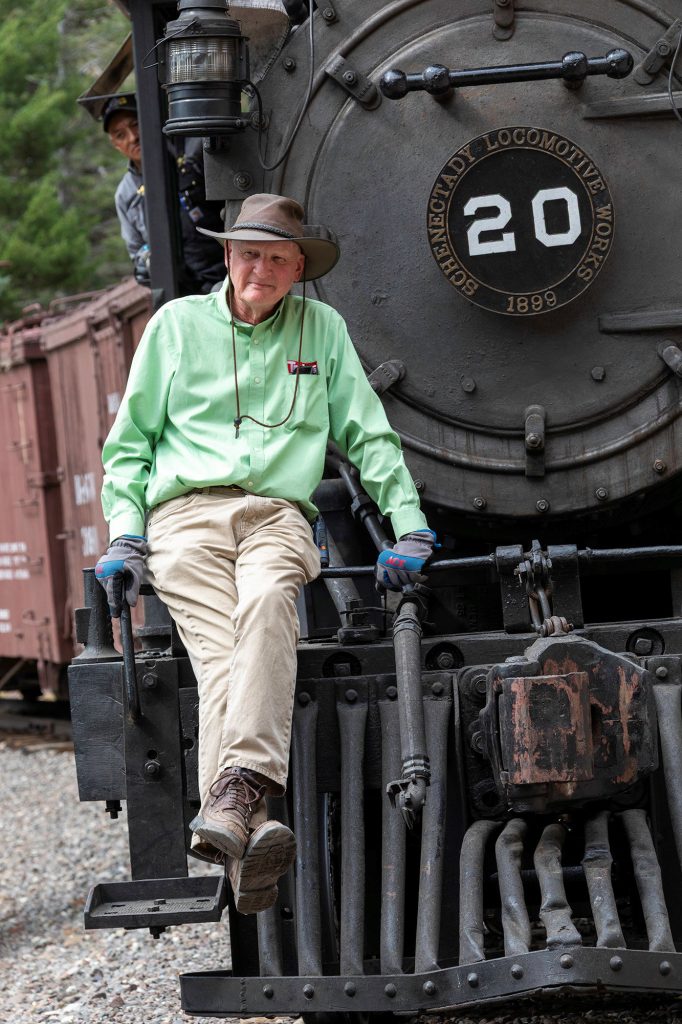
The story of RGS 20 actually starts out on the other side of the mountains from the RGS. The little narrow gauge 4-6-0 was built in 1899 by the Schenectady Locomotive Works (serial #5007) for the Florence & Cripple Creek. It started life as F&CC #20 and named “Portland”, and as the road’s newest and largest power, was quickly put to work hauling ore and supplies between the road’s namesake towns.
A large flash flood in July of 1912 sent a wall of water crashing down Eightmile Creek, wiping away a dozen bridges and much of the F&CC grade through the narrow canyon. While the line had survived several other catastrophic floods during its existence, this one was the final nail in coffin. Traffic from the mines had diminished and the road’s finances were in dismal shape. The road entered bankruptcy in 1915, and as part of the abandonment and liquidation, three of the last lot of locomotives were sold to the Rio Grande Southern in January 1916. These would be F&CC 20, which became RGS 20; F&CC 25 (born as F&CC 21) which became RGS 25; and F&CC 24, which became RGS 22.1 The purchase price for RGS 20? A mere $2500 – about $74k in 2026 dollars.2
The RGS had all three overhauled in the D&RG’s Alamosa shops, and the locomotives arrived in Durango to be interchanged to their new owner in early March 1916. The engines were heavy, at 85,000 pounds, and were brutal on the RGS’s light rail of the time. Even before arriving, they were restricted to the Durango to Telluride stretch, with a 12mph restriction on any 30lb rail and an admonishment to not do so unless absolutely necessary.3 In later years, with the rail largely upgraded, the heavy 4-6-0s would roam the whole system.
With their existing power showing its age, the RGS acquired D&RGW K-27 “Mudhen” 455 in 1939, and leased several others throughout the 1940s (as well as finally purchasing 461 in 1950). The Mudhens were preferential to the ex-F&CC 4-6-0s as road power, given the superior tractive effort (27000 lbs vs. 19000 lbs). In fact, the RGS had even tried to trade them off for K-27s in the early 1930s.11 The 4-6-0s were often idled or used for light and local service when traffic was low. However, when the grade became spongy from spring thaw or from heavy rains, the three lighter ex-F&CC engines were brought back into road service as they were less likely to tear up the track.4
While the RGS was no stranger to derailments, RGS 20 suffered a particularly notable incident on August 31, 1943. It was working as a helper on the front end of a freight, leading road engine RGS 40 and 15 empties. At milepost 141.9, just short of Cima (the summit between Hesperus and East Mancos), RGS 40 derailed to the inside of the curve, on account of its blind driver having too much play and riding up and over the rail. The rollover pulled RGS 20 over as well, proving fatal for her fireman Joe Wilmer.13
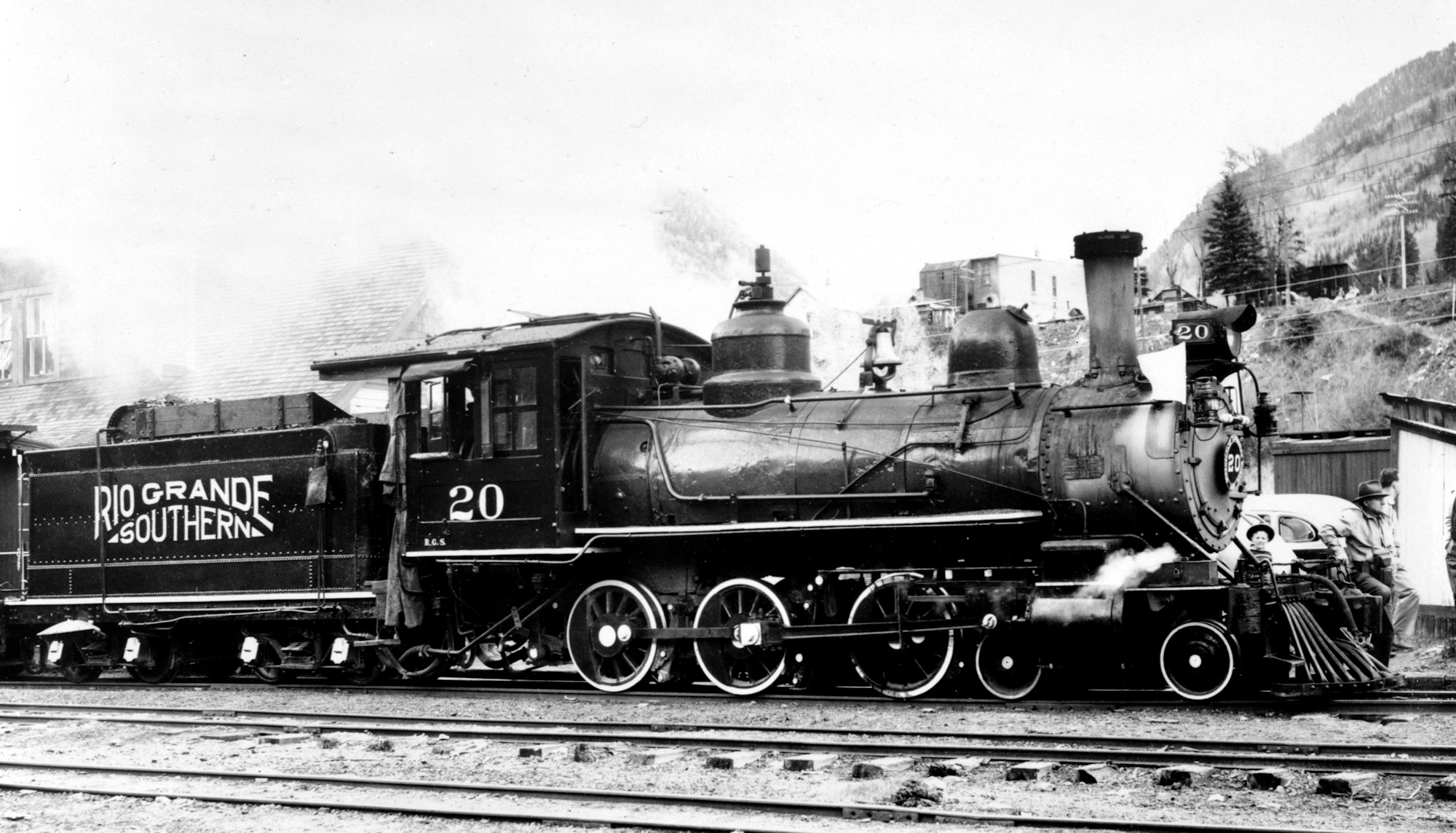
RGS 40 was subsequently written off and scrapped, but 20 was repaired. 20 was already using the tender from RGS 25, having acquired it in 1941. The rebuild used the cab from #25, the stack from #22, and the air compressor from either 22 or 40.12 The second course of the boiler retained a significant deformation from the incident, however, and would continue to operate with it until the end. Both donor ex-F&CC engines were then subsequently scrapped, leaving RGS 20 the only survivor of the class.
The engine achieved a bit of public notoriety as a movie star in 1949. Hollywood came calling and needed a locomotive they could dress up as a fictional 1875 locomotive named “Emma Sweeney” in a production called A Ticket to Tomahawk. (It’s available for free on Youtube and actually kind of a fun old movie.) RGS 20 was selected and painted into a truly gaudy brown, red, green, and gold paint scheme, and received a square headlight with antlers and a balloon stack. Shooting took placed from August 9 to September 13, 1949. Filming was done on the RGS around Lightner Creek as well as (primarily) on the D&RGW’s Silverton Branch.
The final scenes of A Ticket to Tomahawk called for the locomotive to be towed into town using a team of mules. At 85,000 lbs, this wasn’t going to happen with the real engine, so a wood and fiberglass replica was built for the scenes. This doppelganger would go on to appear in the Petticoat Junction series on TV in 1963, and was donated to the City of Durango in 1970. Unfortunately, it was left outside in the elements for four decades and suffered significant decay. In 2011, the replica was acquired by the Durango Railroad Historical Society, fully restored, and placed on covered display in Santa Rita Park.14
The engine also had a brief role in the 1952 film Viva Zapata! Filmed somewhere along the RGS in 1951, 20 has a brief role leading a train full of Spanish soldiers and ammunitions that hits a cart full of explosives sent by Zapata’s revolutionaires, allowing them to raid the train for supplies. Fortunately for history, the cart of explosives and subsequent blast were all movie magic, and the engine was not harmed. A short clip showing RGS 20 can be found here on Youtube.
Preservation
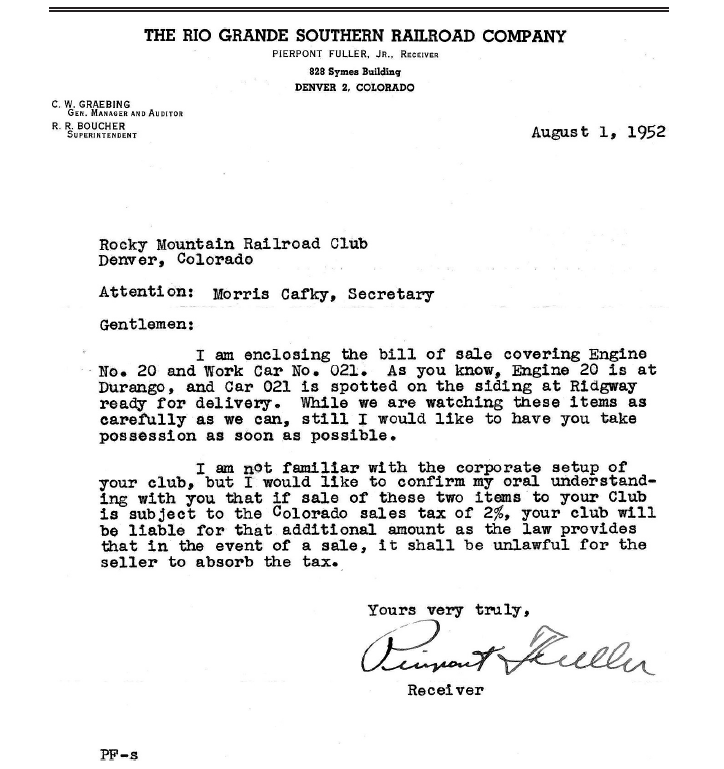
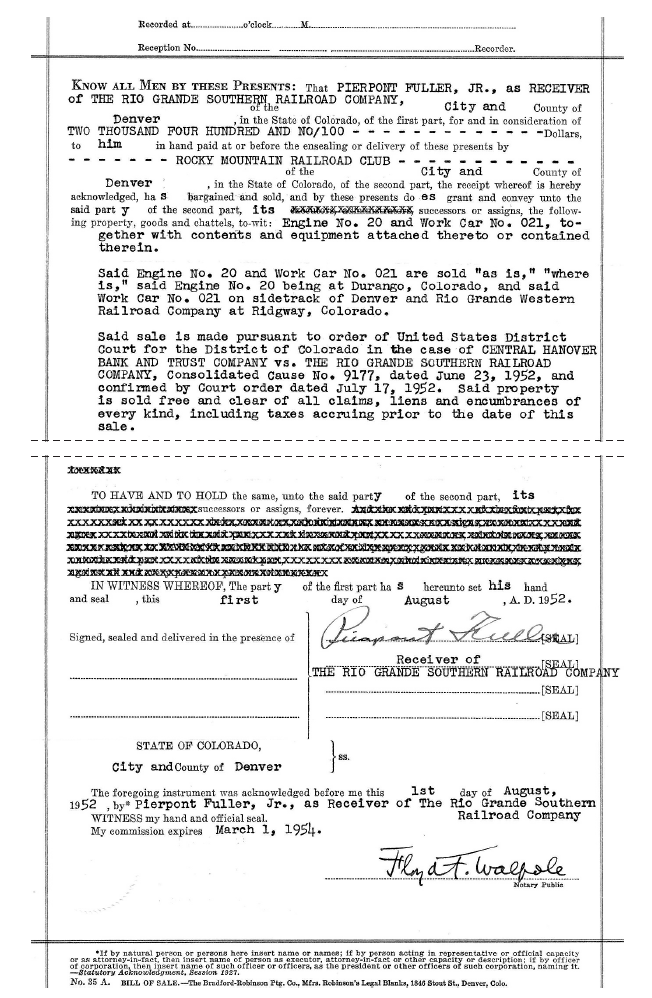
In 1952, with the RGS having run out its last miles and in bankruptcy liquidation, the Rocky Mountain Railroad Club stepped up and purchased RGS 20 and work car 021 (formerly business car B-21 “Rico”) for preservation for $2400.7 The Club had only a limited connection with 20, as the engine had only powered a single Club excursion. That trip ran from Ridgway to Dolores on May 30, 1947, and due to leaking boiler flues, it was swapped for D&RGW 319 on the return trip.9
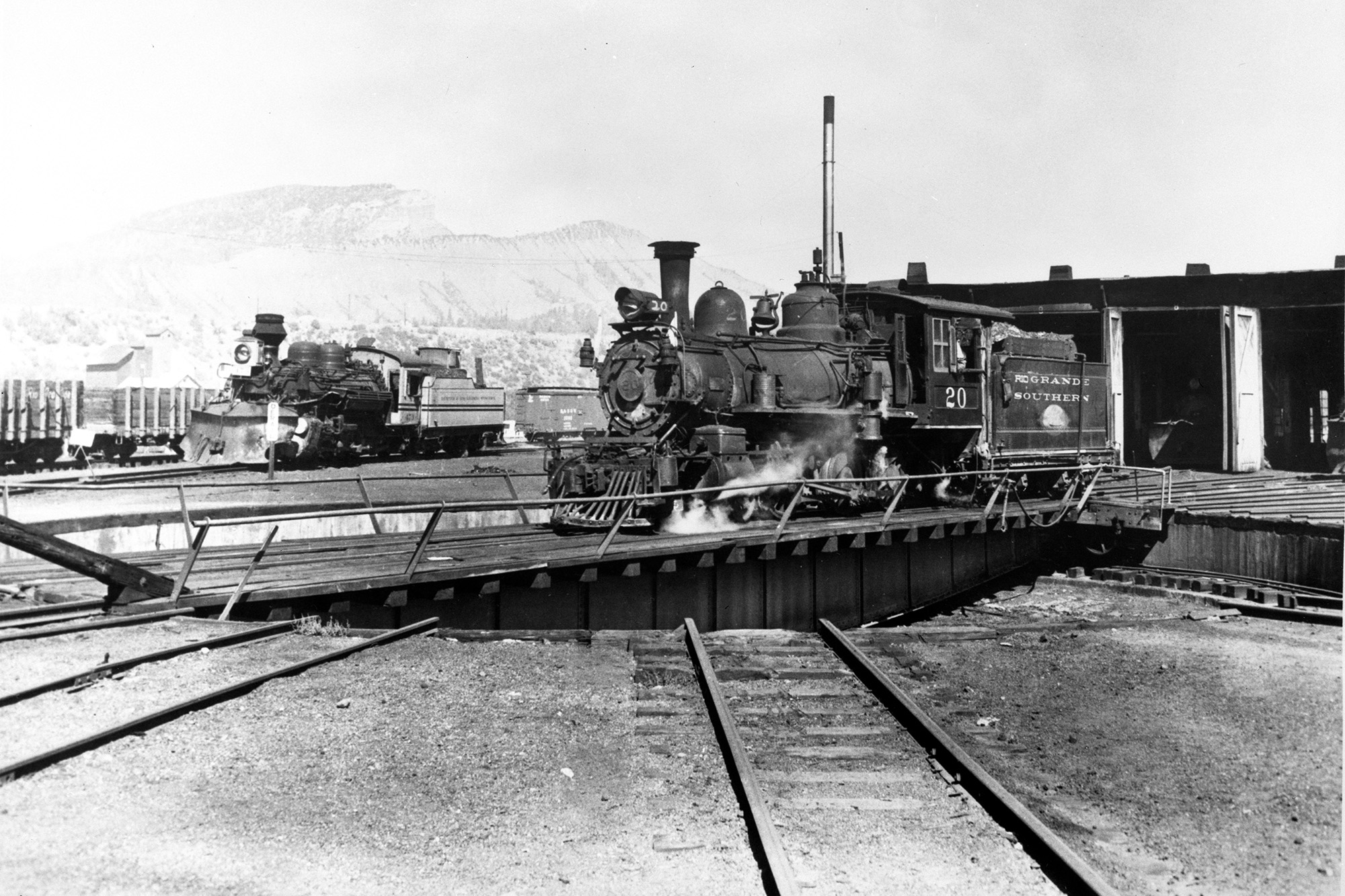
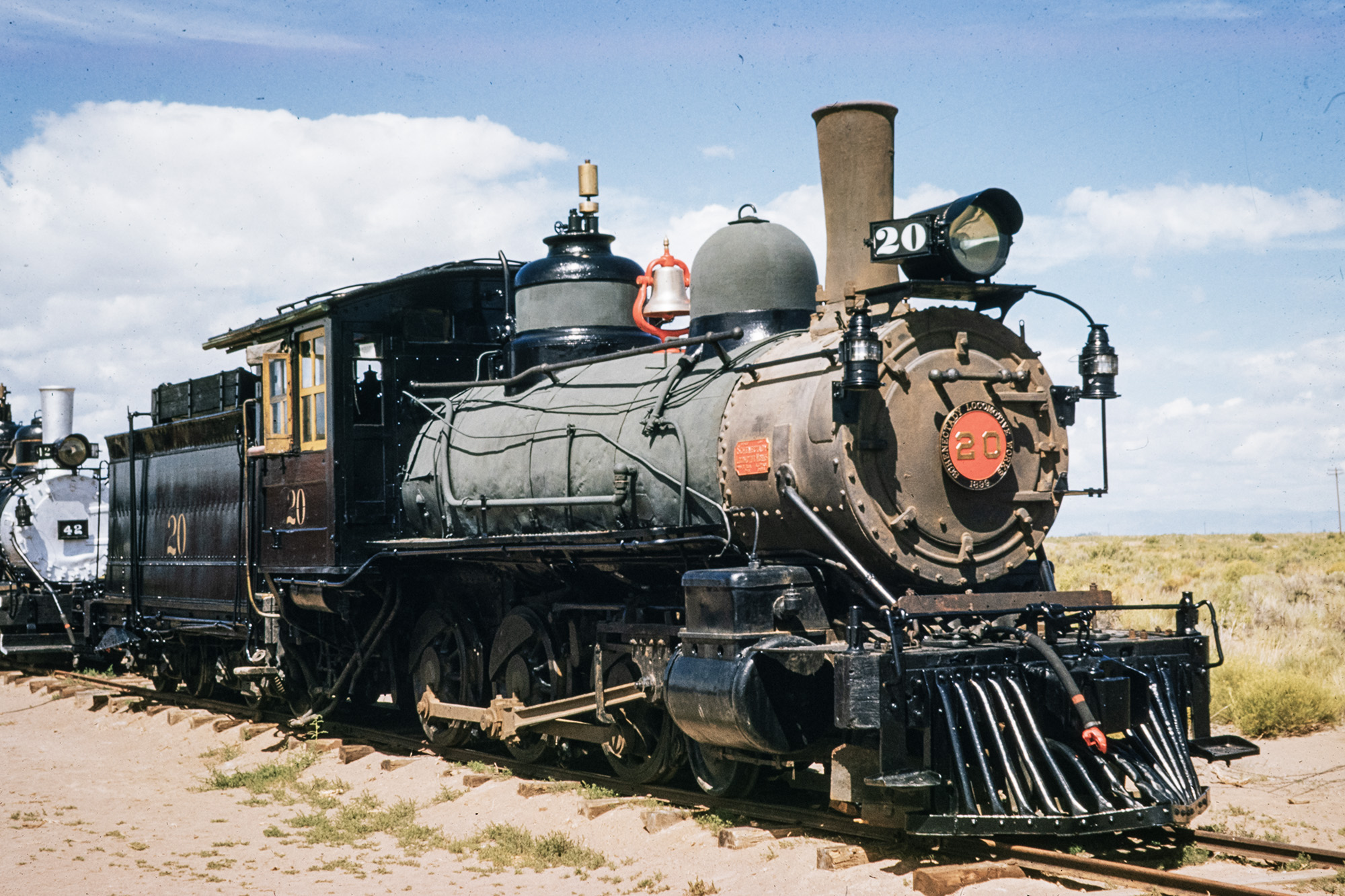
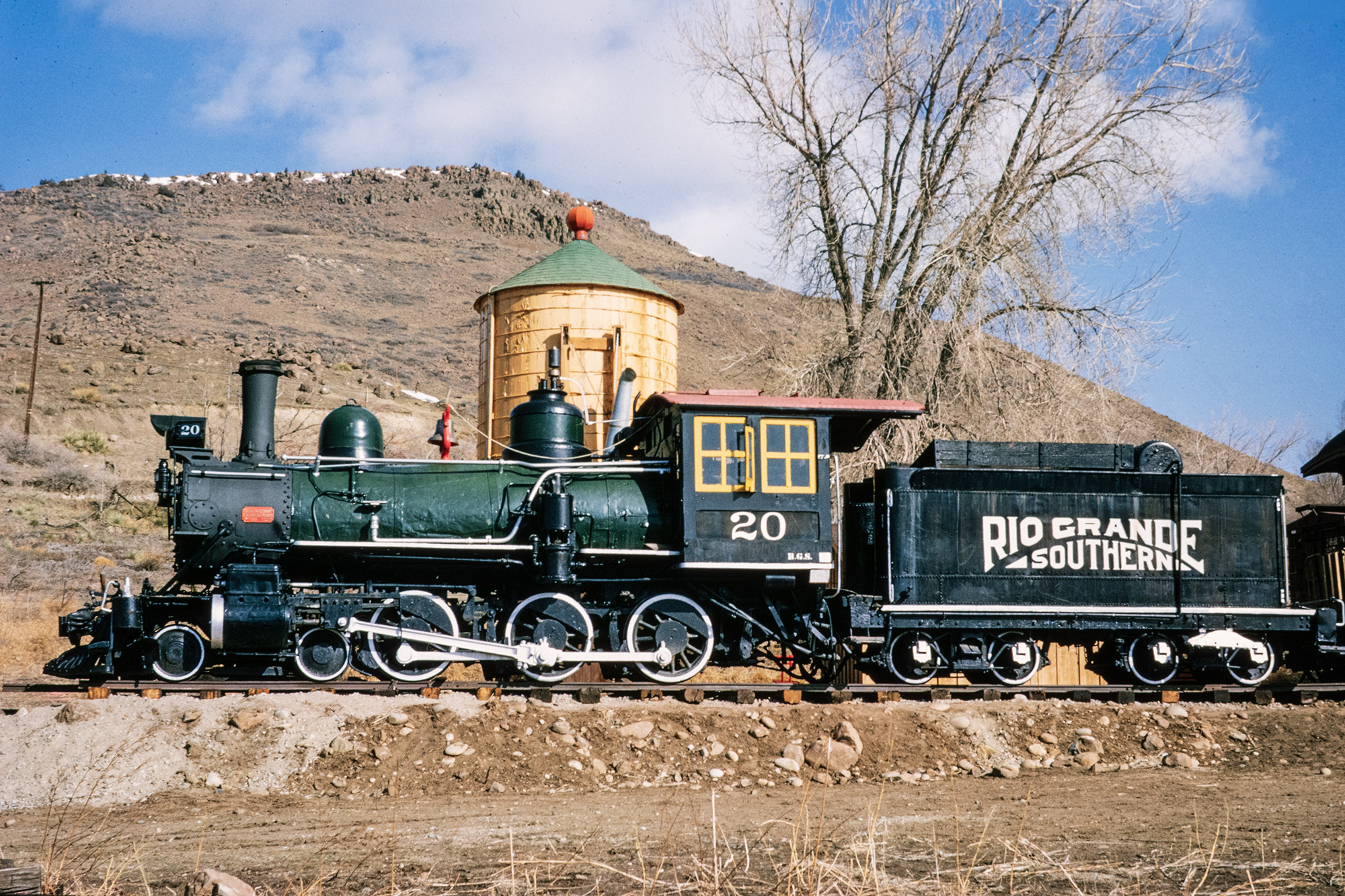
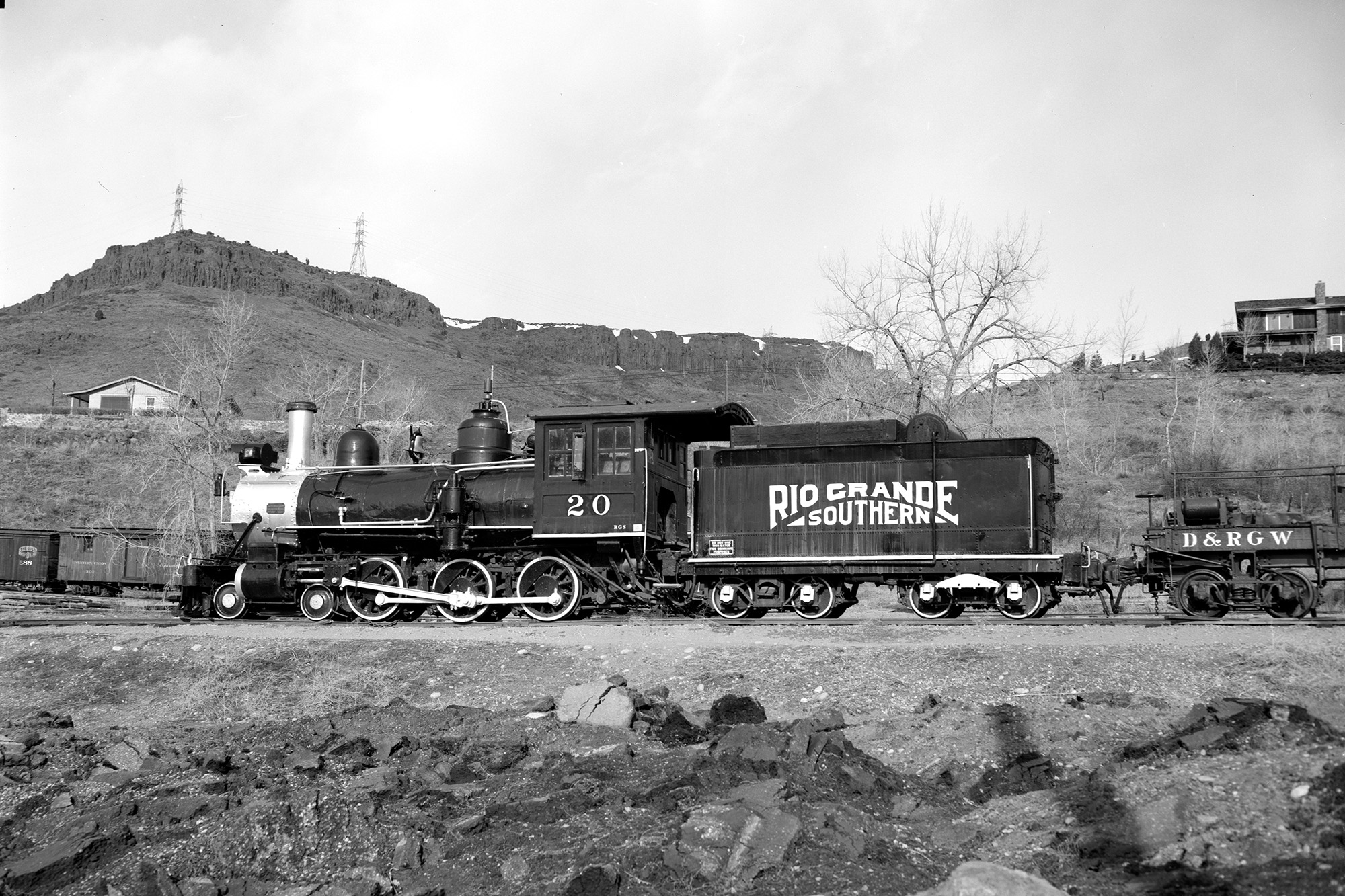
Initially, the Club had nowhere to store #20, so it was stored in the RGS’s two bays of the Durango roundhouse. The Grande quickly grew wise to this, as the RGS no longer existed and they wanted their roundhouse stalls back. With the threat of a potential daily storage charge, the engine was moved dead to Alamosa in April 1953 and placed at Bob Richardson’s Narrow Gauge Motel on June 13, 1953.4 Five years later, in June 1958, the engine was moved from Alamosa to the newly-established Colorado Railroad Museum in Golden.8
Restoration
On May 31, 2006, after 54 years of ownership, the Rocky Mountain Railroad Club formally donated engine 20 to the Colorado Railroad Museum.5 While the Club had kept the engine in good cosmetic repair, the engine had not run since it left the RGS. The Club’s membership was aging, and even cosmetic maintenance on the Club’s equipment – RGS 20, business car B-21 “Rico”, and D&RGW caboose 0578 – was beginning to become too much. The Museum had long been the equipment’s home, and when an anonymous donor had offered the Museum $650k towards its operational restoration of the 20, the change in ownership was made official.6
The initial estimates were about $900k to return RGS 20 to operation. The Museum shopped out the restoration to the Strasburg Railroad in Pennsylvania, known for their steam expertise, and sent the engine back to Strasburg, in August 2006. Once it was torn down, it quickly became apparent how much hidden damage there was. The frame rails were cracked and bent, with poor quality repairs made by the RGS to patch it back together. One course of the boiler shell was still dented from the August 31, 1943, wreck near Cima, and needed to be replaced to operate safely. The tender tank was rotted out on the bottom and in need of a replacement. The initial estimate quickly looked very inadequate. When the RGS indicated that the engine was “in need of a thorough overhaul” at the end, they weren’t kidding – it was shot, even by RGS’s duct tape and bailing wire standards.
The additional cost delayed the project by over a decade, and the cost ballooned to more than $1.5M. In order to minimize cost while not sacrificing the quality of the rebuild and keeping as much of the historic fabric of the engine as possible, it was largely done on a time available basis. Whenever the Mueseum would come up with a chunk of funding and the Strasburg team wasn’t otherwise occupied with higher priority tasks, they complete the next piece of the restoration.10
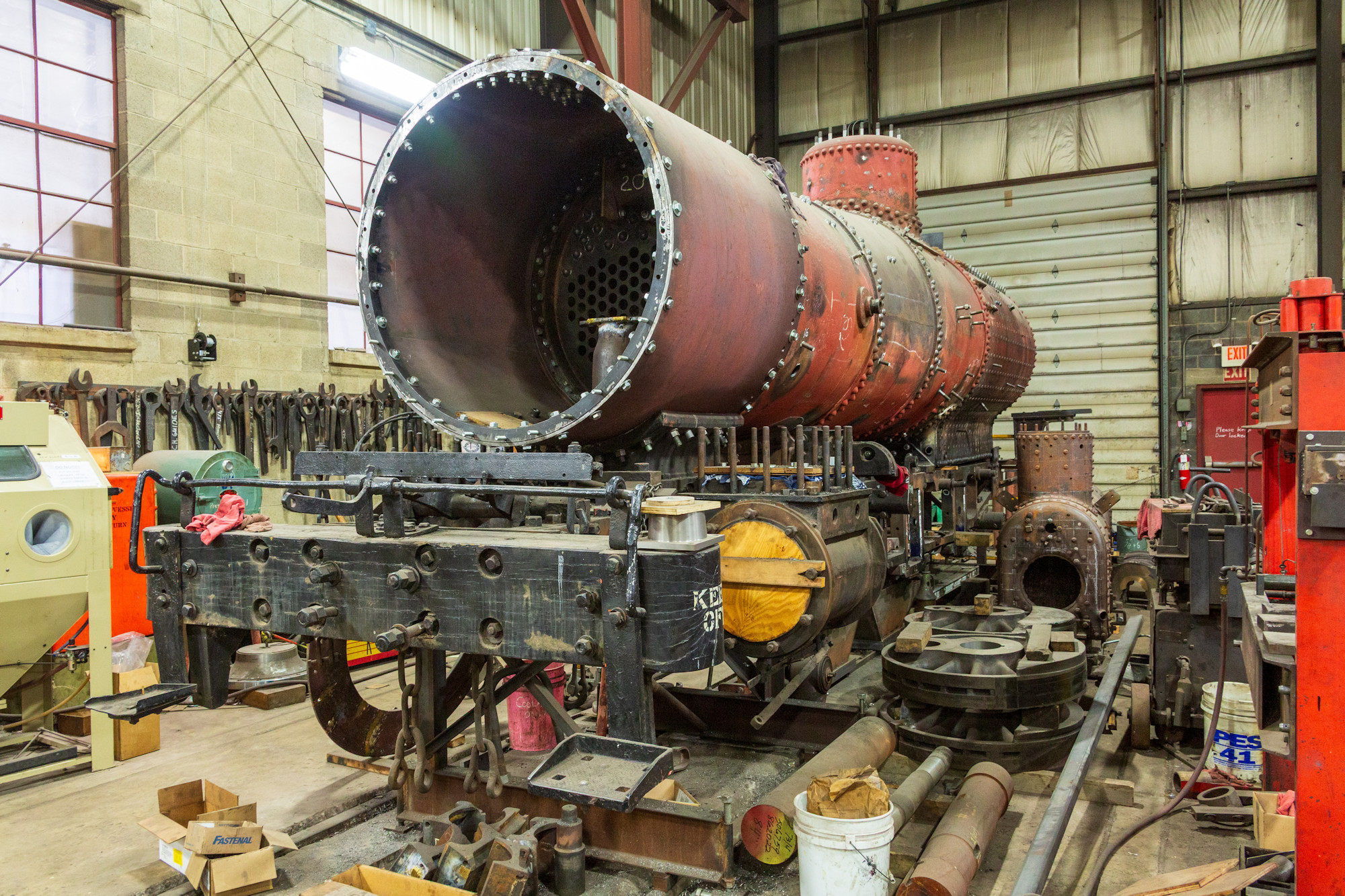
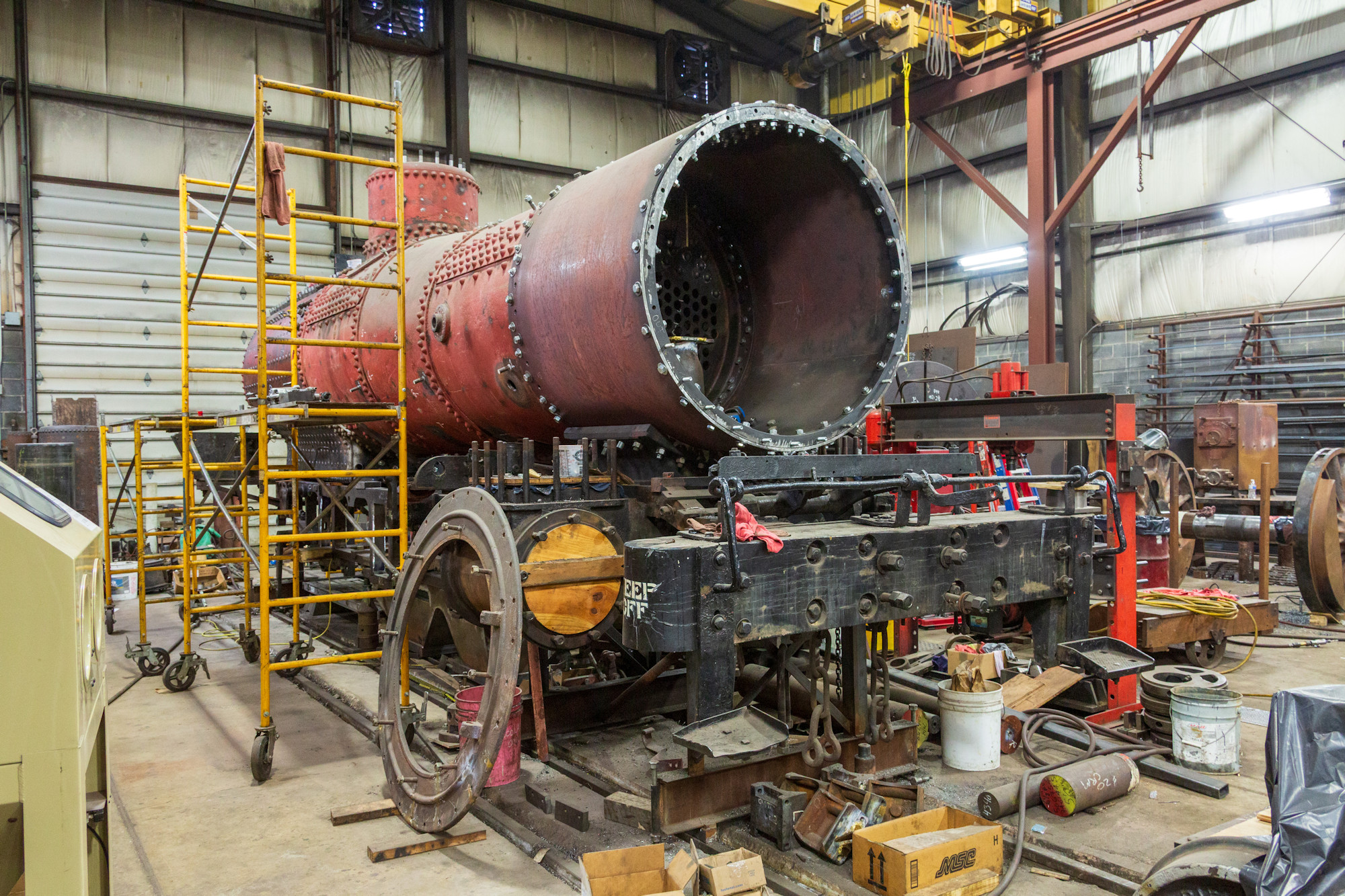
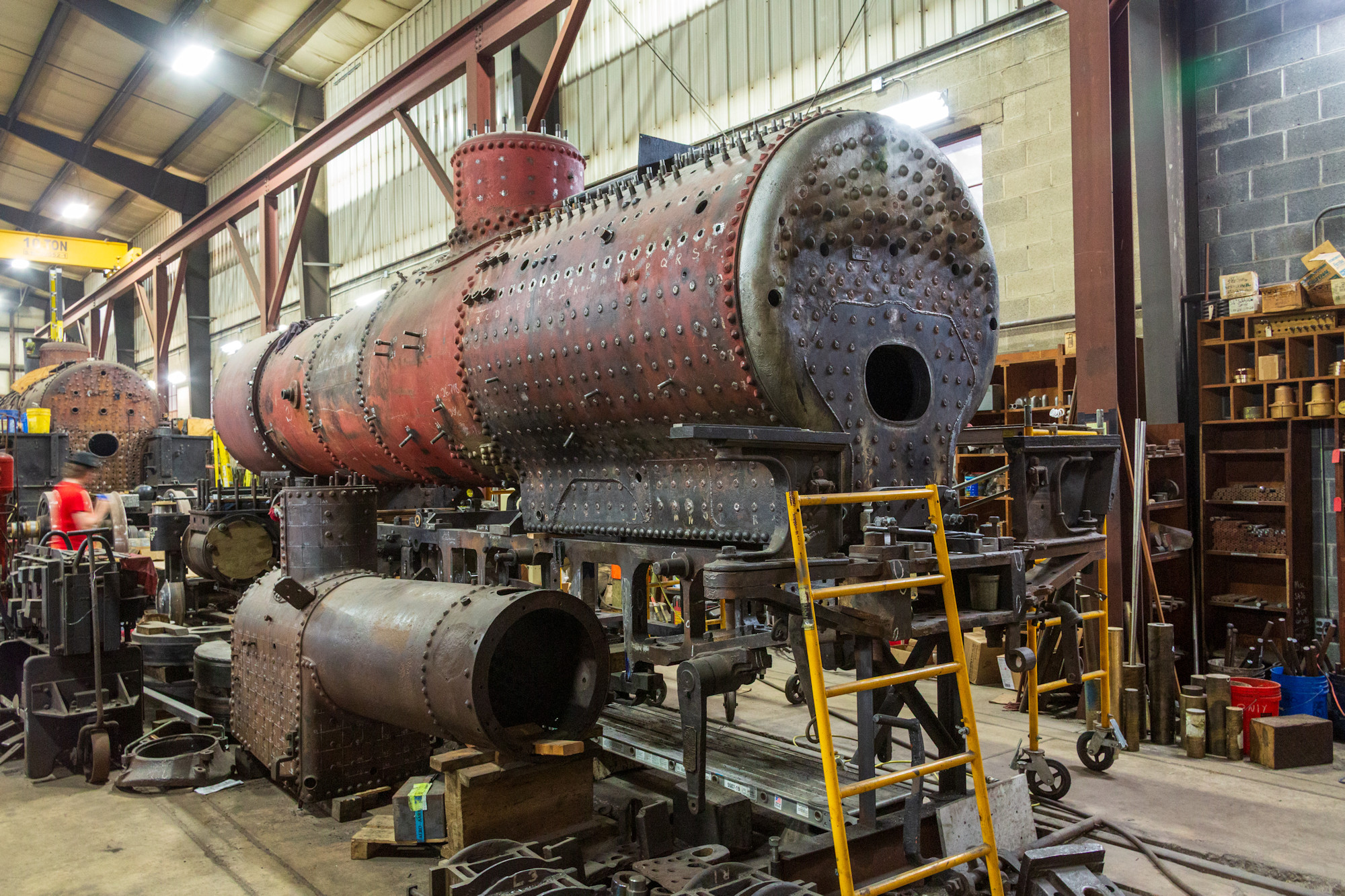
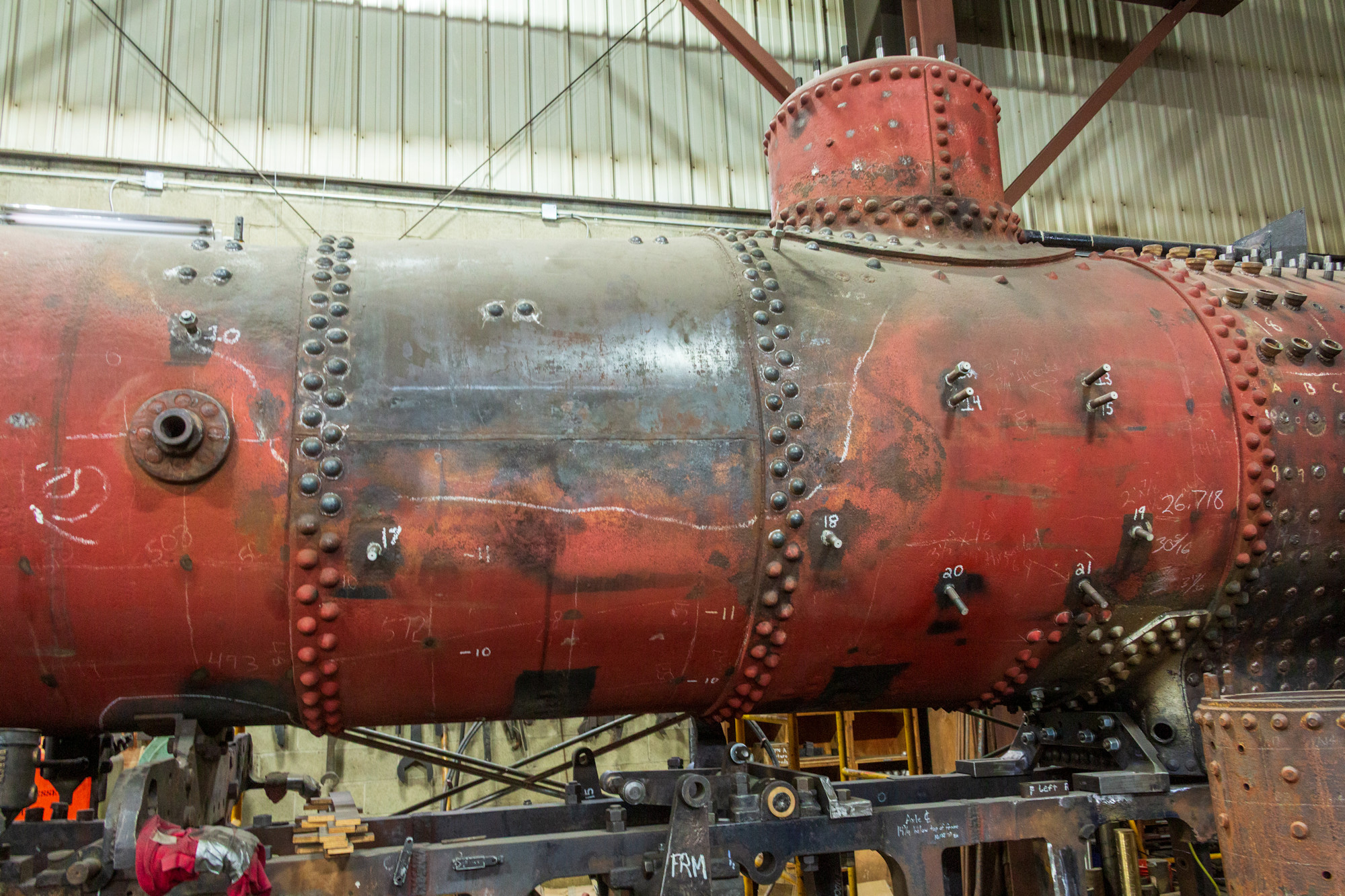
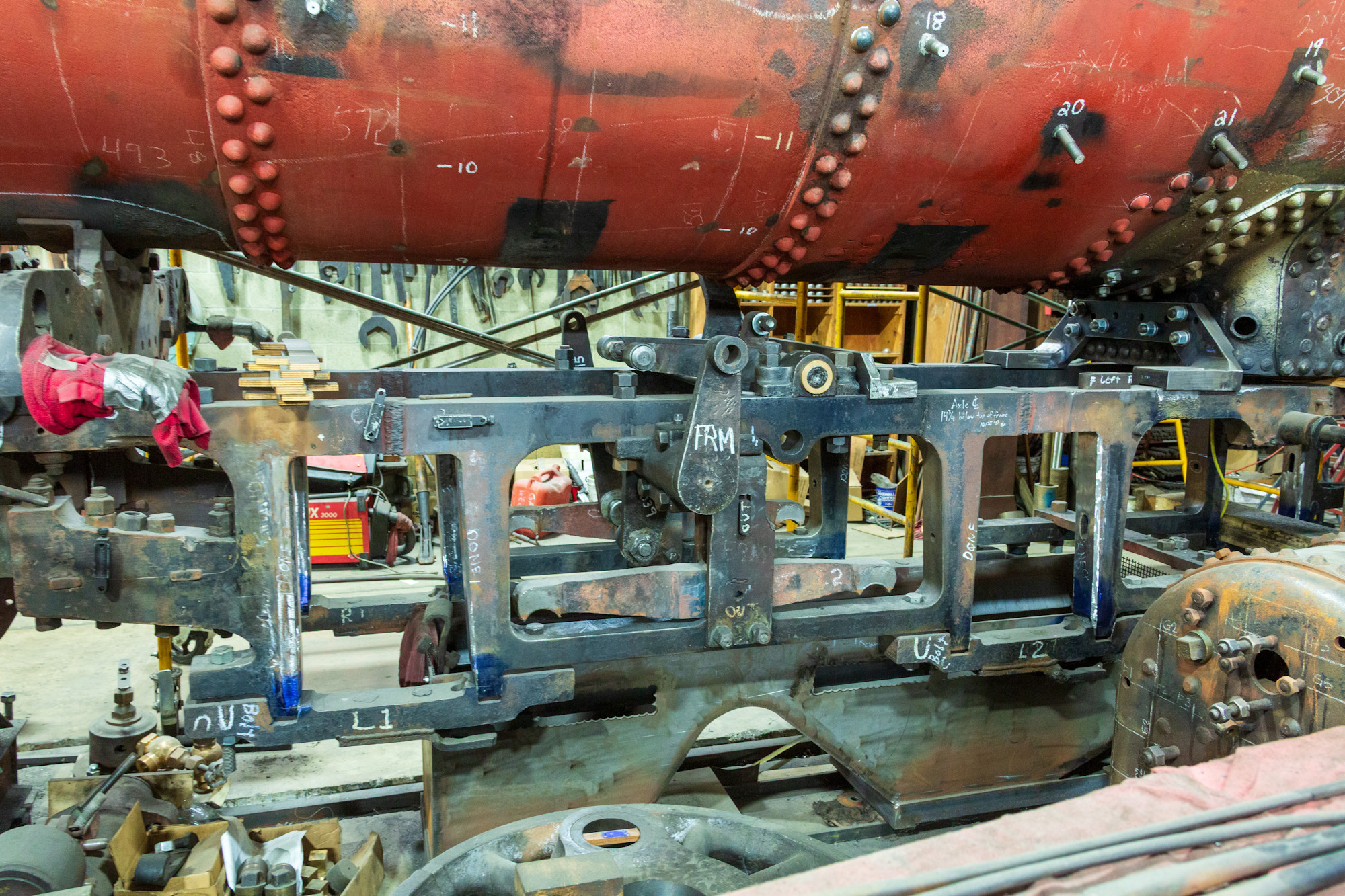
On June 3, 2019, an event some 13 years in the making took place – RGS 20, fully restored except for the cab, arrived back in the museum’s lot in Golden. The locomotive was still without a cab, and needed much of the finishing work such as mounting appliances and jacketing, but the boiler and running gear was back in top notch condition.
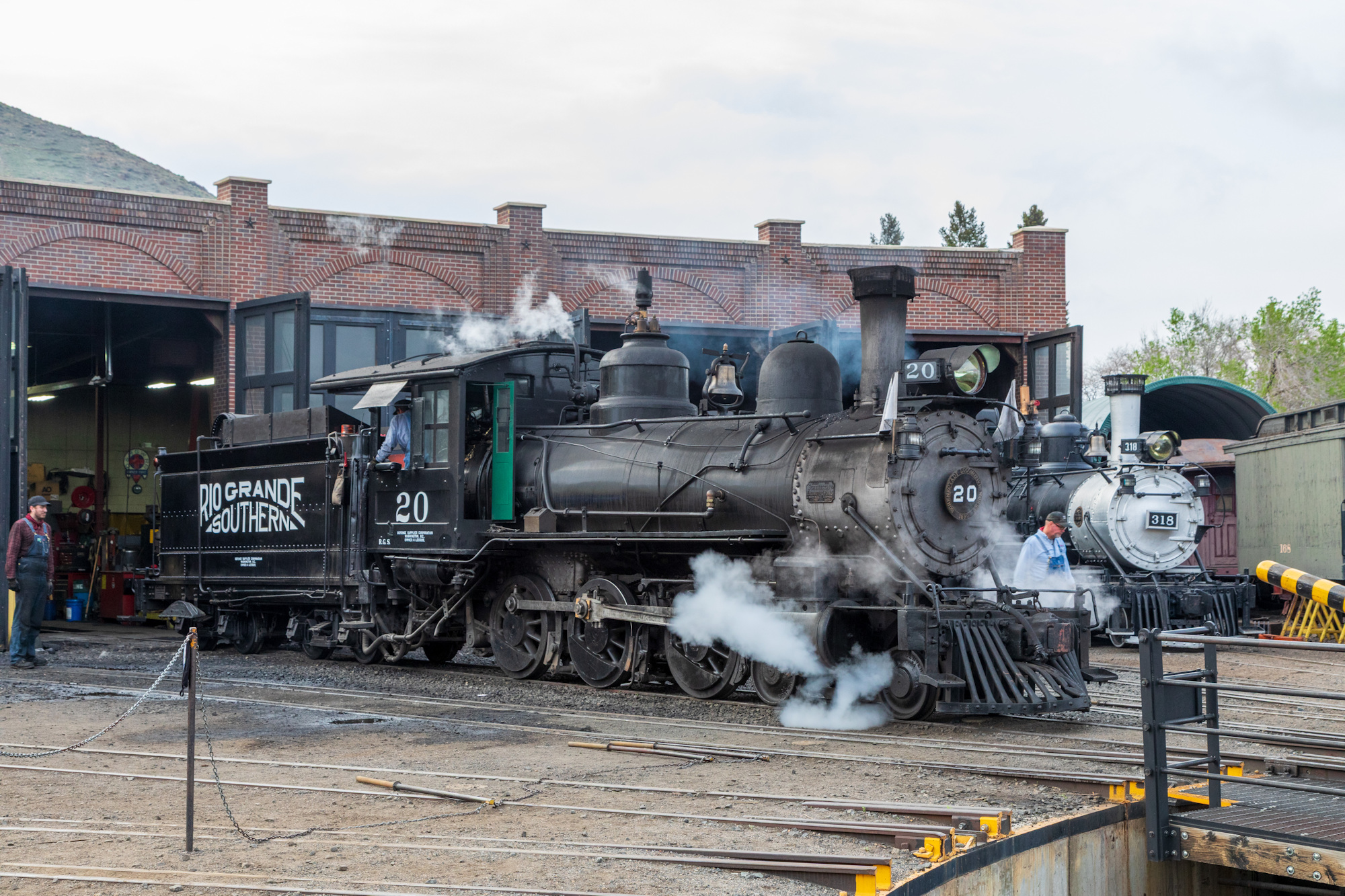
While the team in Strasburg had been busy rebuilding the locomotive, the Museum’s own mechanical department had built a beautiful new hardwood cab for the engine. The cab was mated to the engine on August 16, 2019.15 Work continued through the winter and spring of 2020, despite closures and delays from everybody’s least favorite coronavirus. The FRA hydrostatic test was completed near the end of May 2020, and on July 2, 2020, Jeff Taylor (the CRRM’s chief mechanical officer) declared her officially complete and under steam.16 As part of the initial steam-up, the CRRM roundhouse crew even poured in a mason jar full of authentic Lizard Head snowmelt water, something the boiler hadn’t seen in nearly 70 years. The official public unveiling was about a month later, on August 1-2, 2020, but the locomotive made a few test runs ahead of time to work out the kinks.
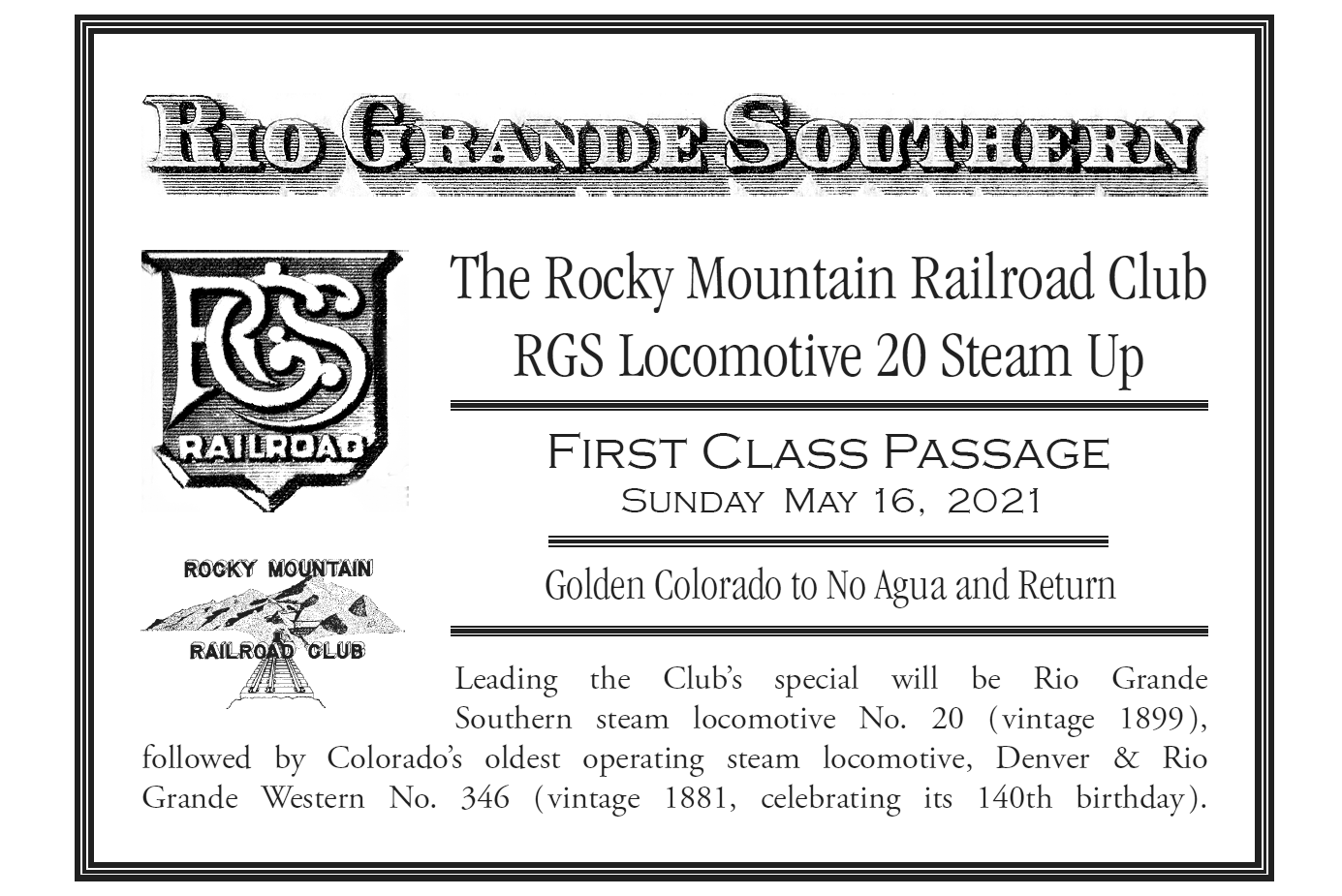
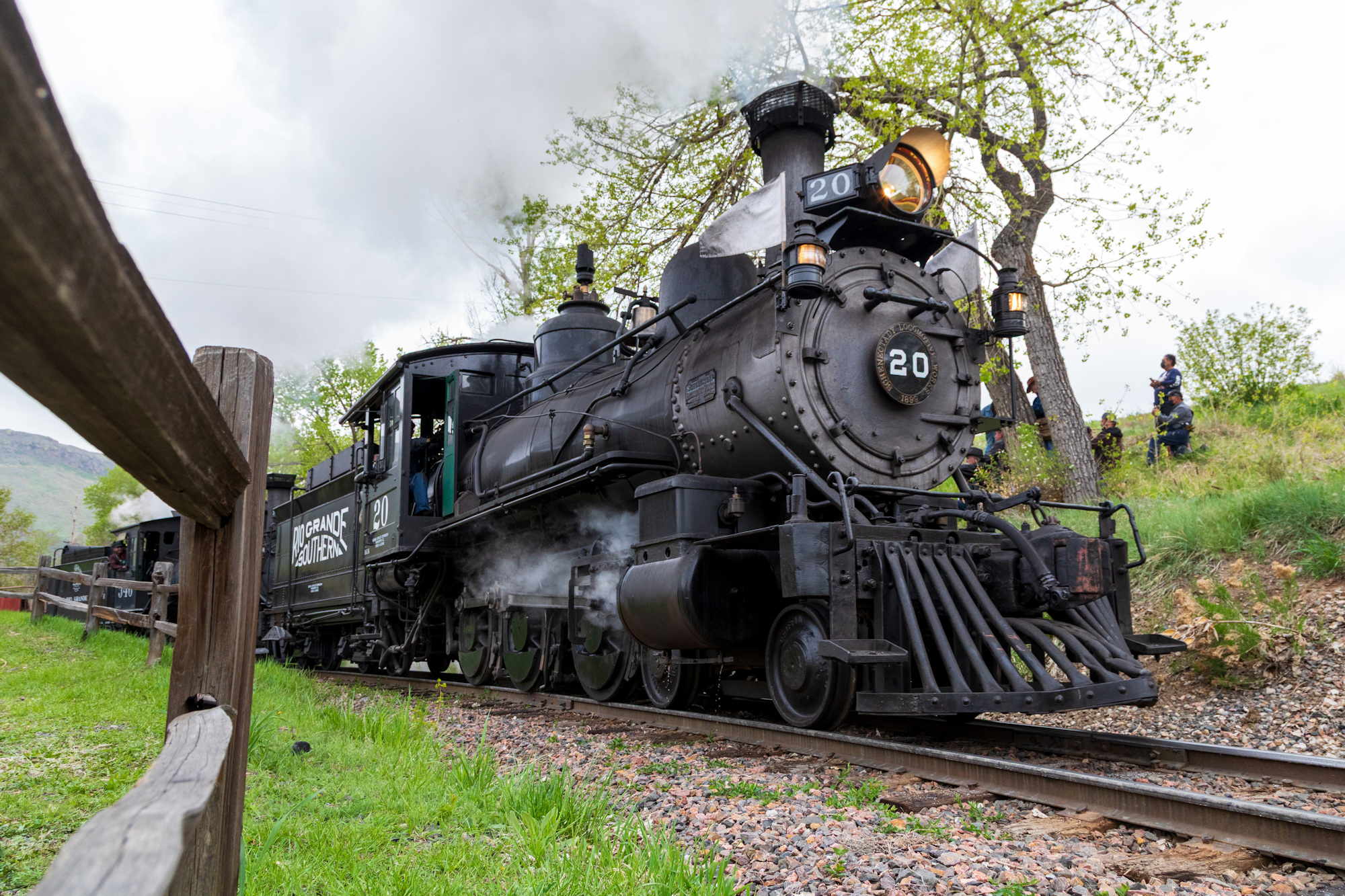
Despite owning the locomotive from 1952-2006, the Rocky Mountain Railroad Club only ever had a single day excursion behind the engine, back in May 1947. 74 years later, the Club would finally get a second trip at their May 2021 picnic at the Museum, and then again in 2022.
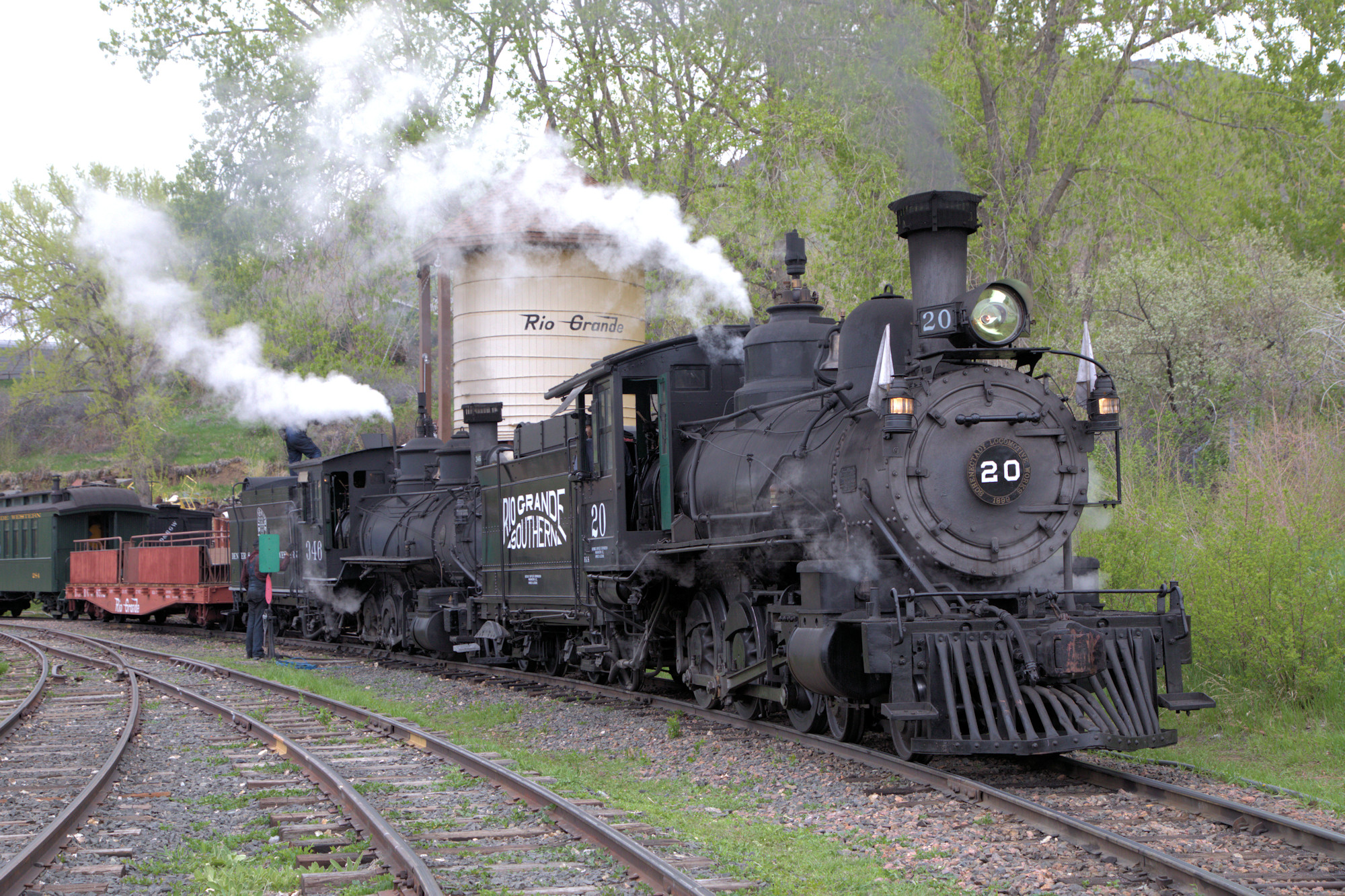
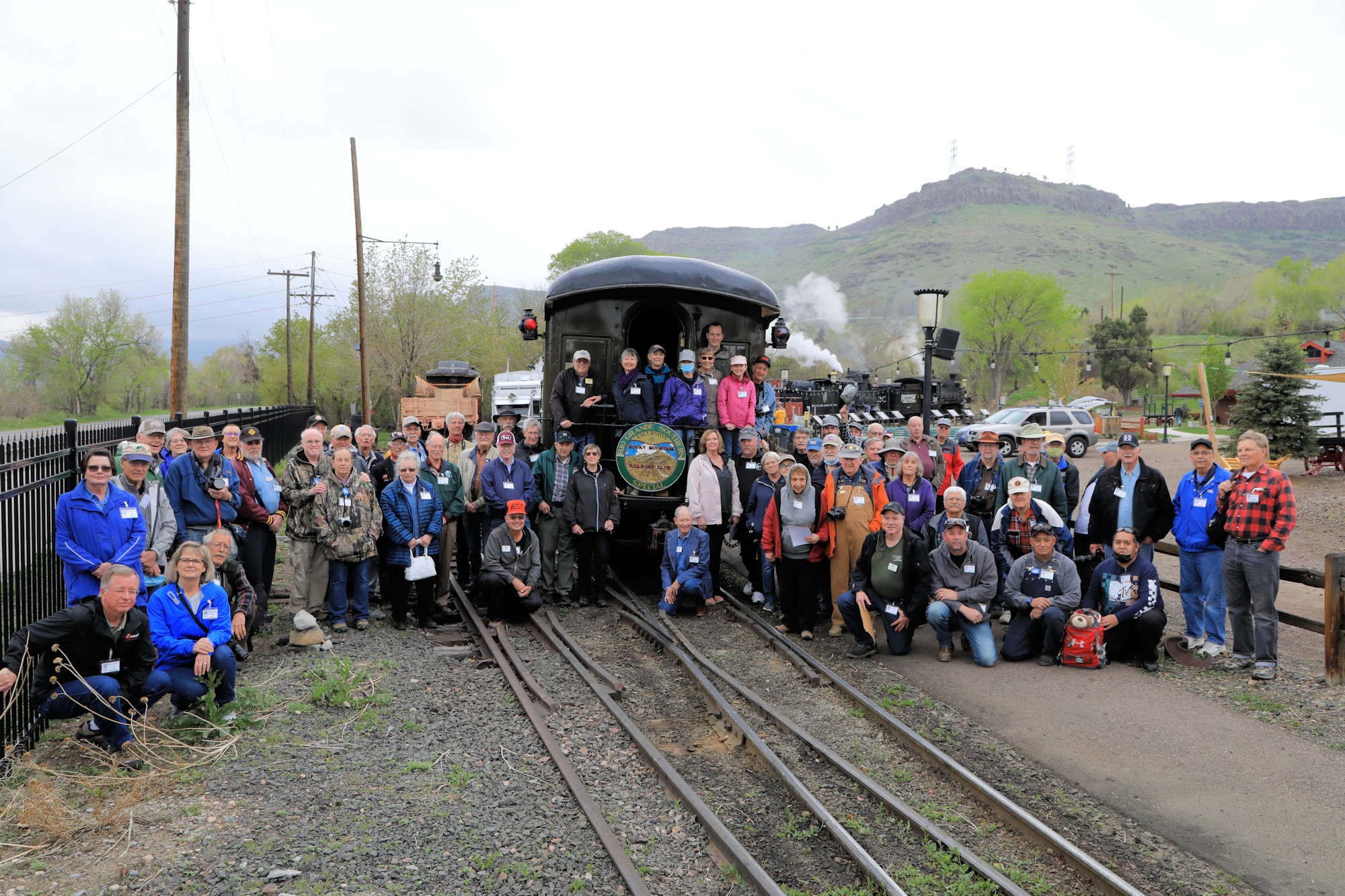
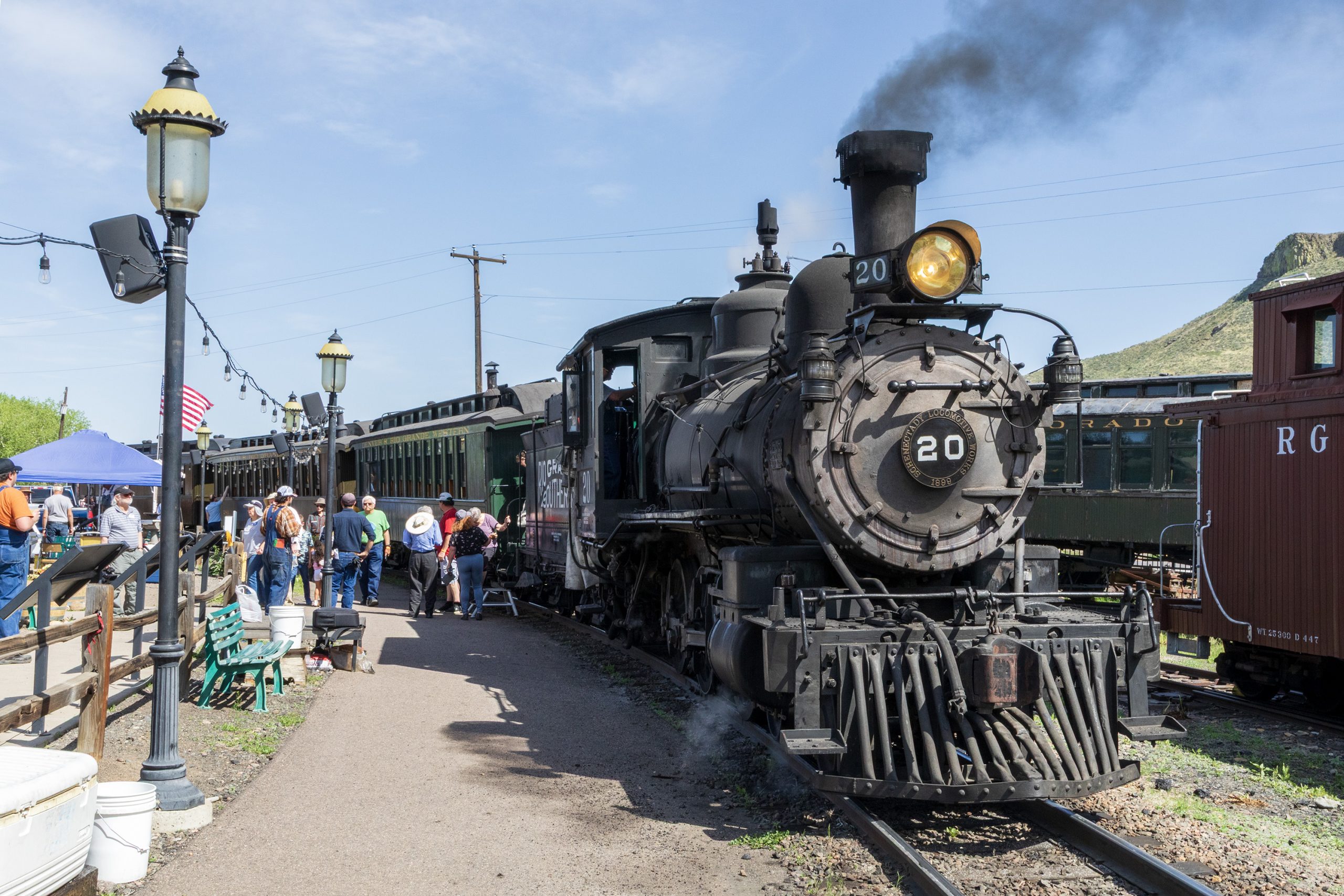
Returning to the Mainline – Summer 2021
The Cumbres & Toltec Scenic had series of special events known as the Victorian Iron Horse Roundup in the late summer of 2021. When the event was originally planned for 2020 (and postponed 12 months due to everybody’s favorite coronavirus), RGS 20 wasn’t even complete yet. Consequently, it wasn’t part of the guest equipment or excursions. However, with the year delay, RGS 20 was ready to go and there was significant interest in having it come down. It still wasn’t officially part of the festivities, but it fit the era and since event was already bringing in railroad enthusiasts from all over, there was plenty of interest in running a charter or two with it on off days.
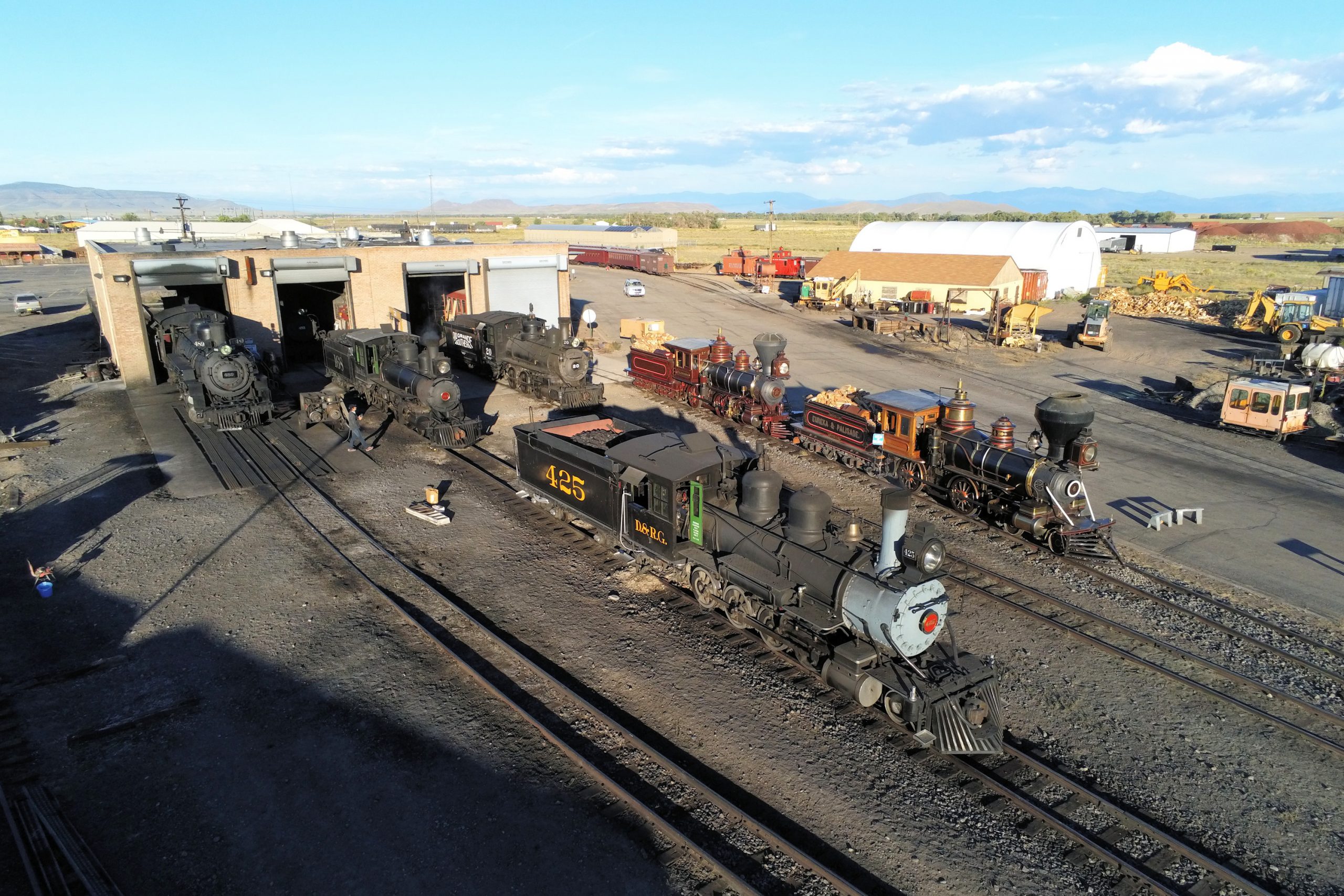
But we’ll get to that in a minute. RGS 20 had to first make the trip from Golden down to Antonito to be put on live rails. As long as you’ve got it on the truck, why not do a little publicity tour? On August 12th, the locomotive left the museum for its original home – Cripple Creek, CO. For the first time since it left in 1916, the little 4-6-0 would be within spitting distance of its original rails. It would be displayed on the trailer in the parking lot outside the Cripple Creek District Museum – formerly the Midland Terminal depot – for the town’s Donkey Derby Days, held on August 13-14, 2021. By all accounts, the engine returning home was a huge publicity win for the CRRM and CCDM.
(The F&CC depot was down on the east side of where Whiting Ave would have crossed Xenia St, roughly under where the big storage building is on CO-67 south of downtown, not up at the Midland Terminal depot.)
Unfortunately, due to other commitments getting in the way, I didn’t make it into town until they were just shutting everything down for the evening on Saturday, August 14th.
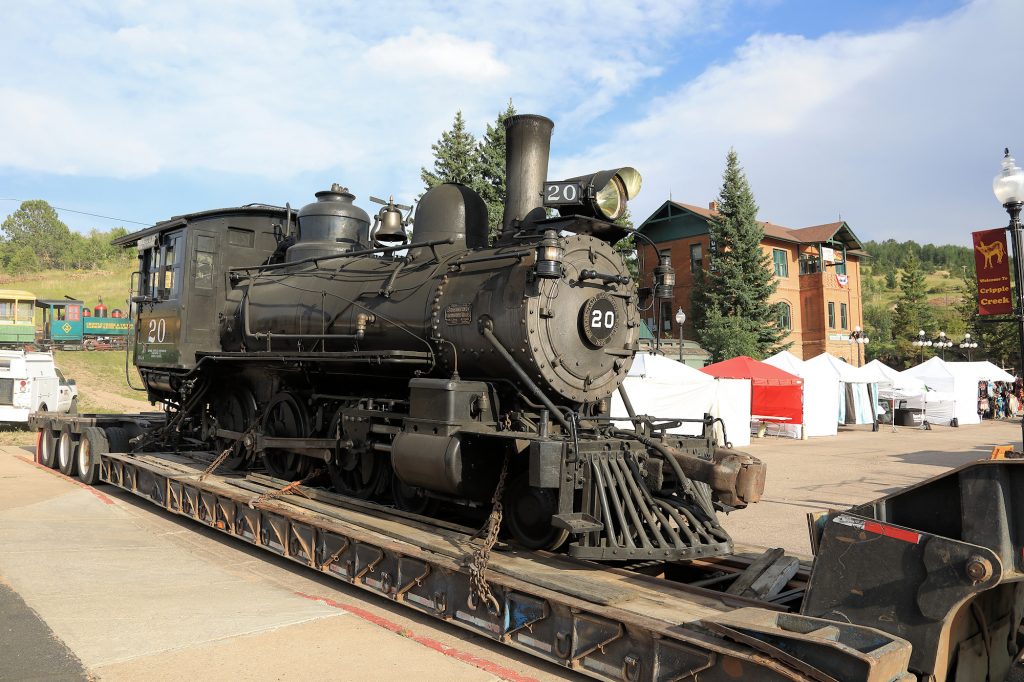
The following day, they trucked 20 on down to Antonito. Her tender, on the other hand, wouldn’t arrive until 4-5 days later. The Cripple Creek event was nearly a week before they had planned to move 20 down to narrow gauge country, so things weren’t perfectly lined up.
Trains Magazine Charter 1 – August 31, 2021
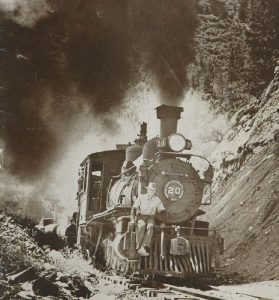
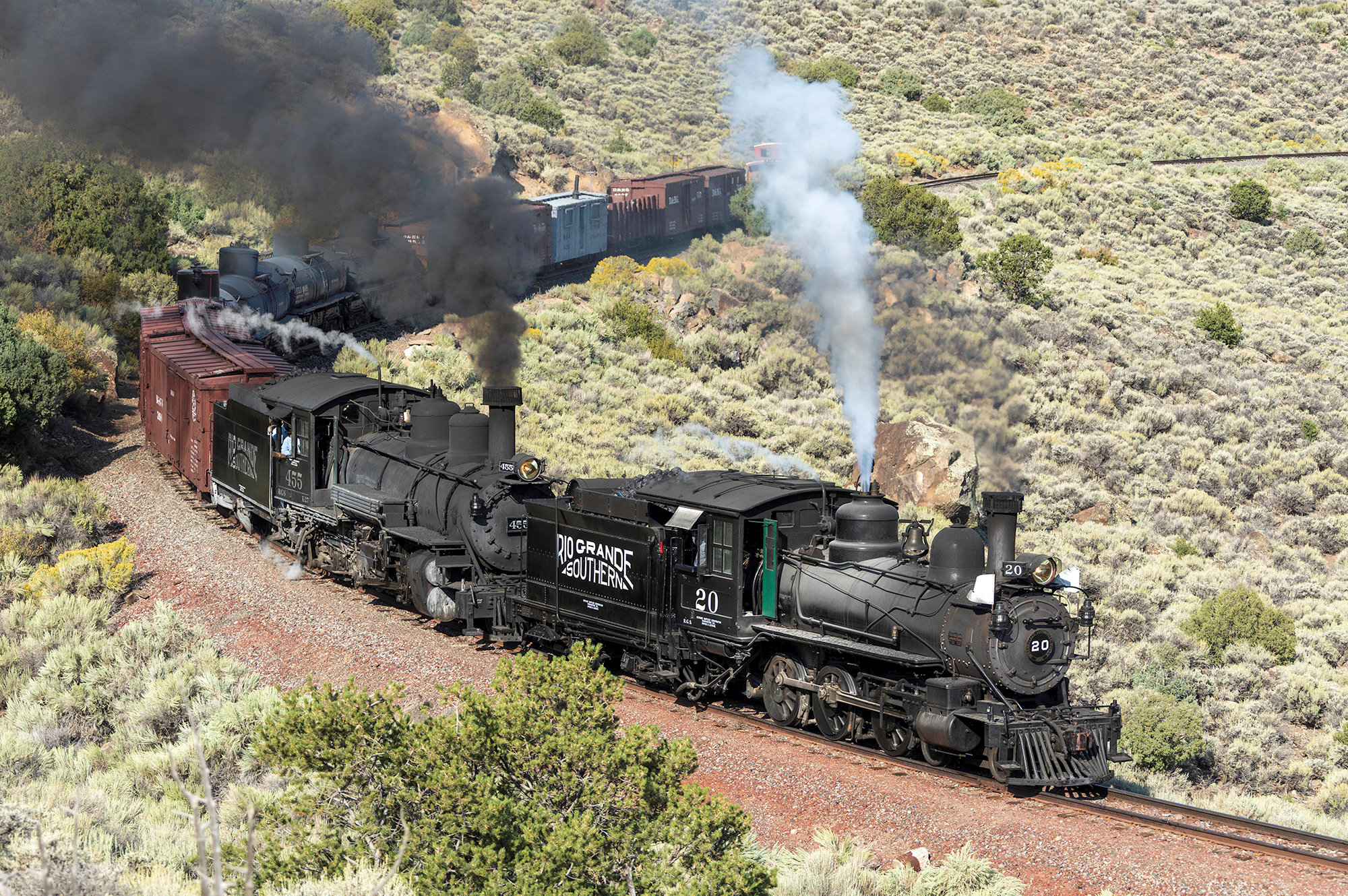
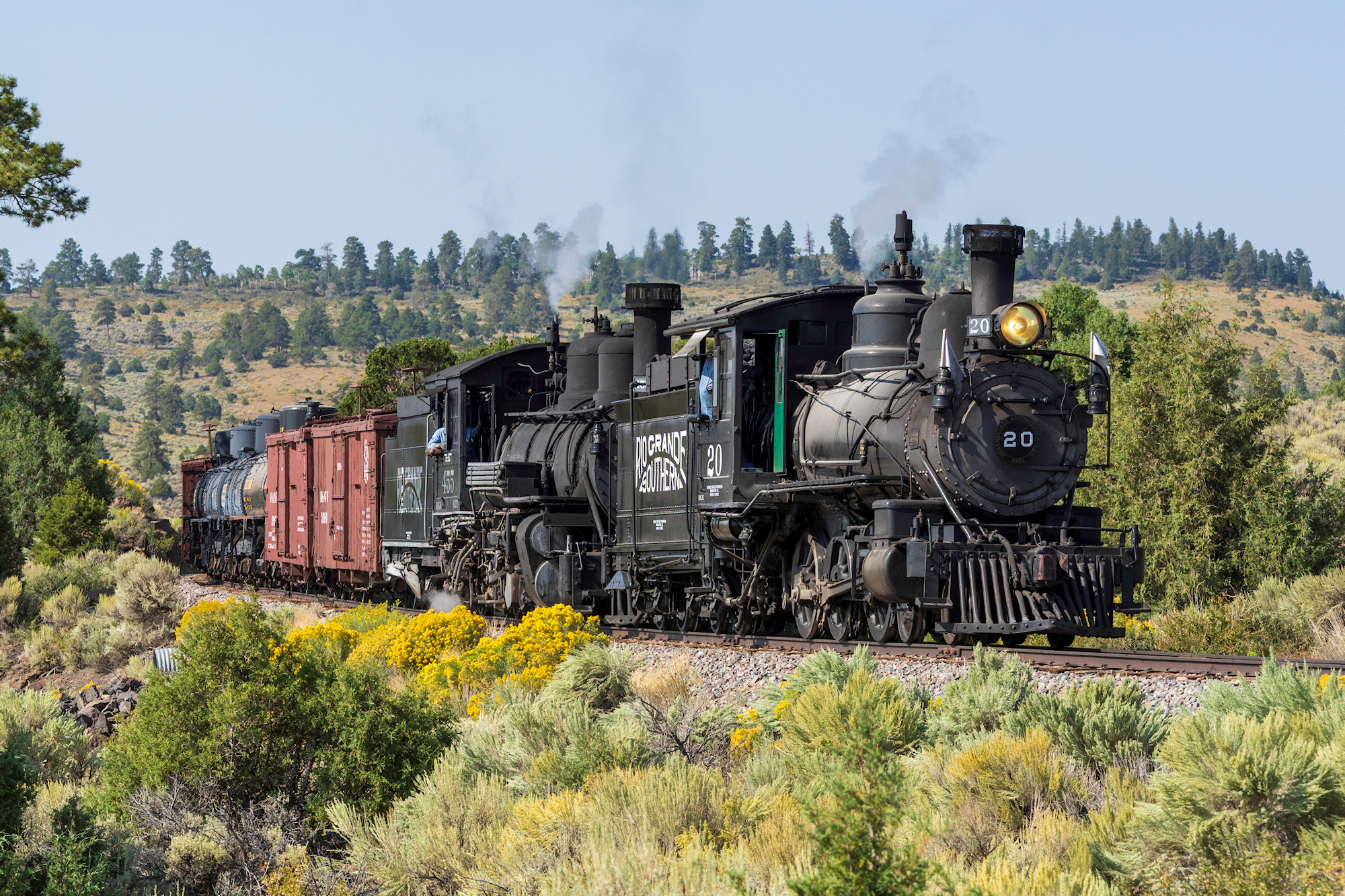
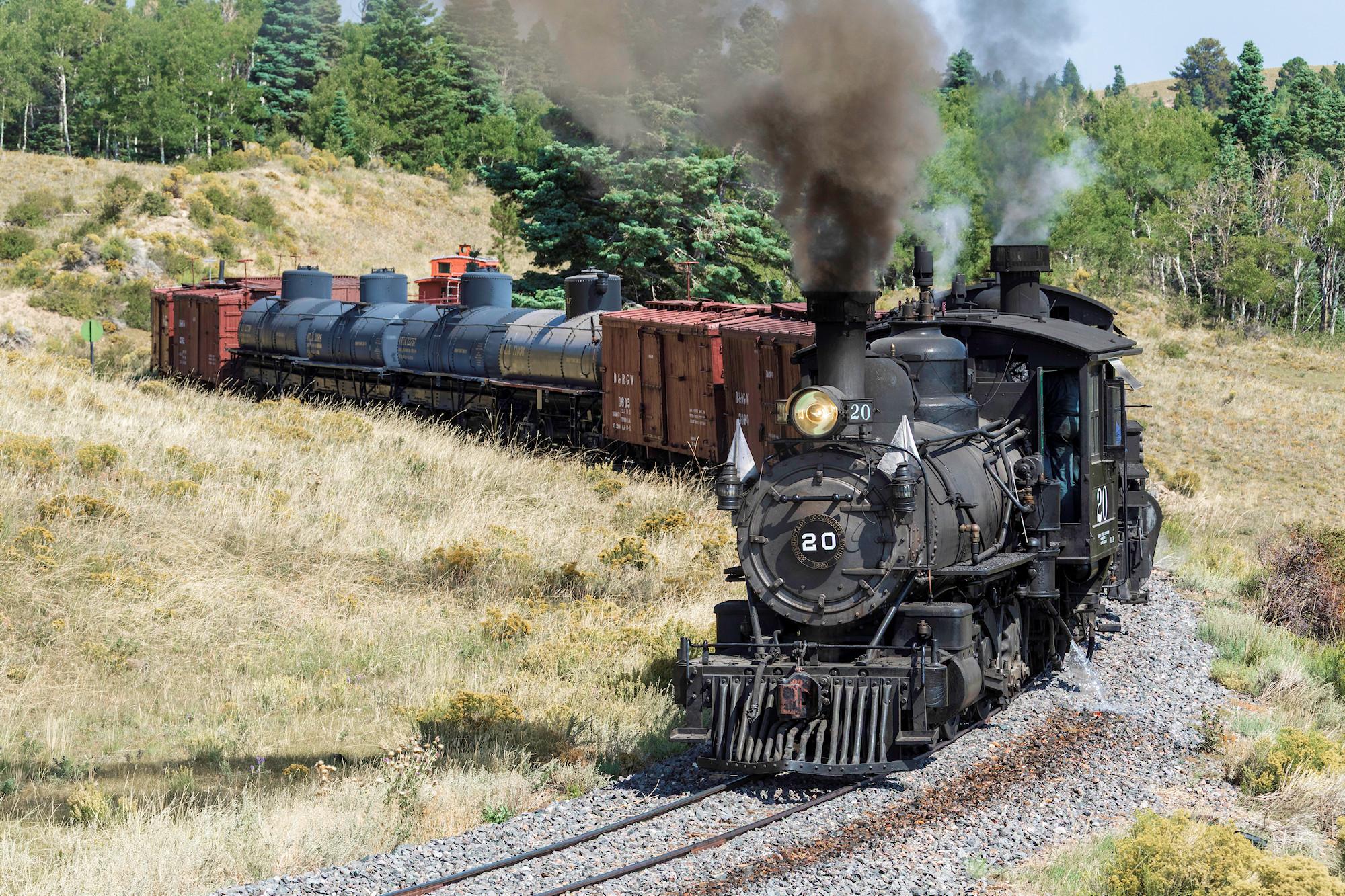
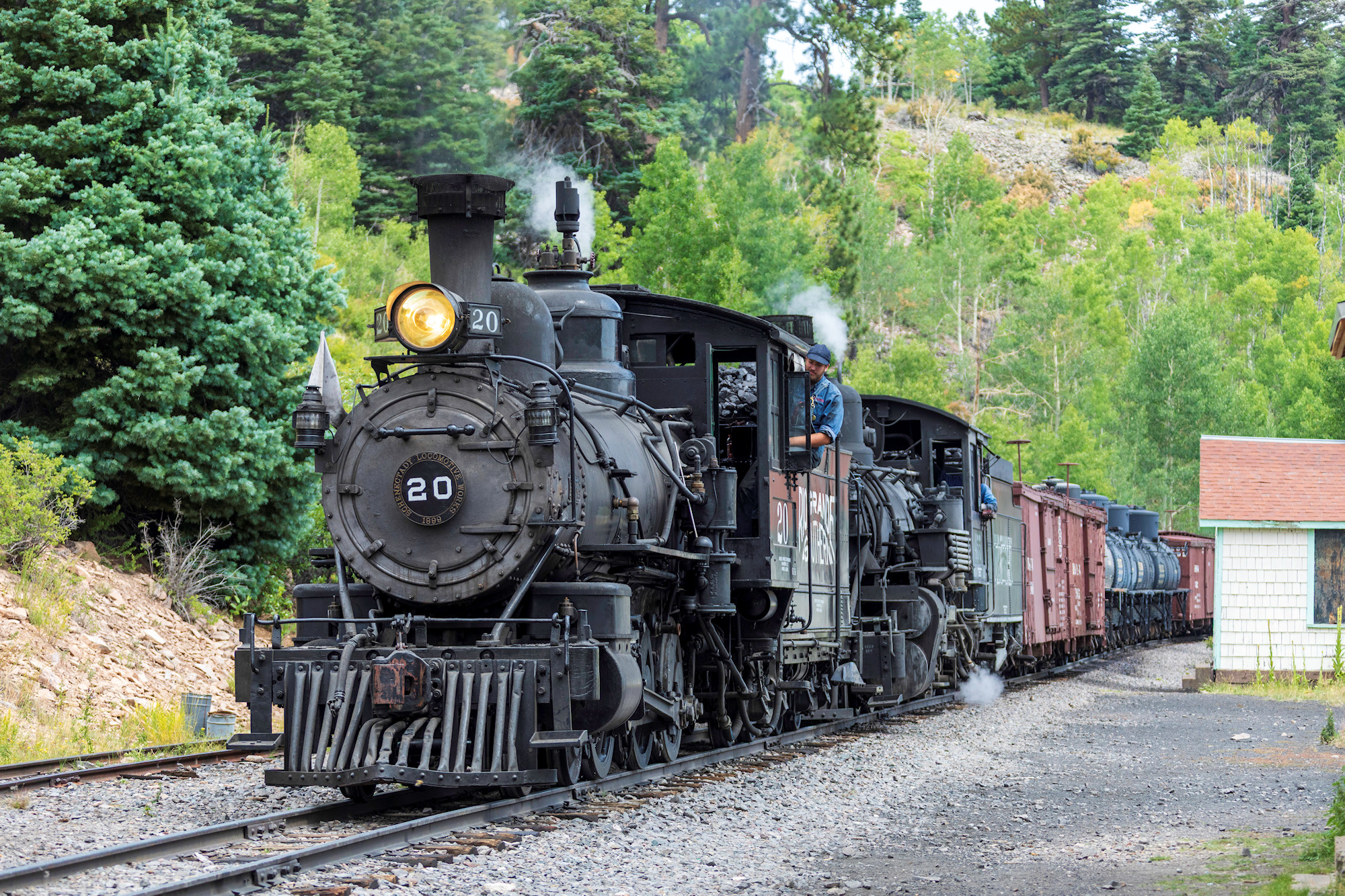
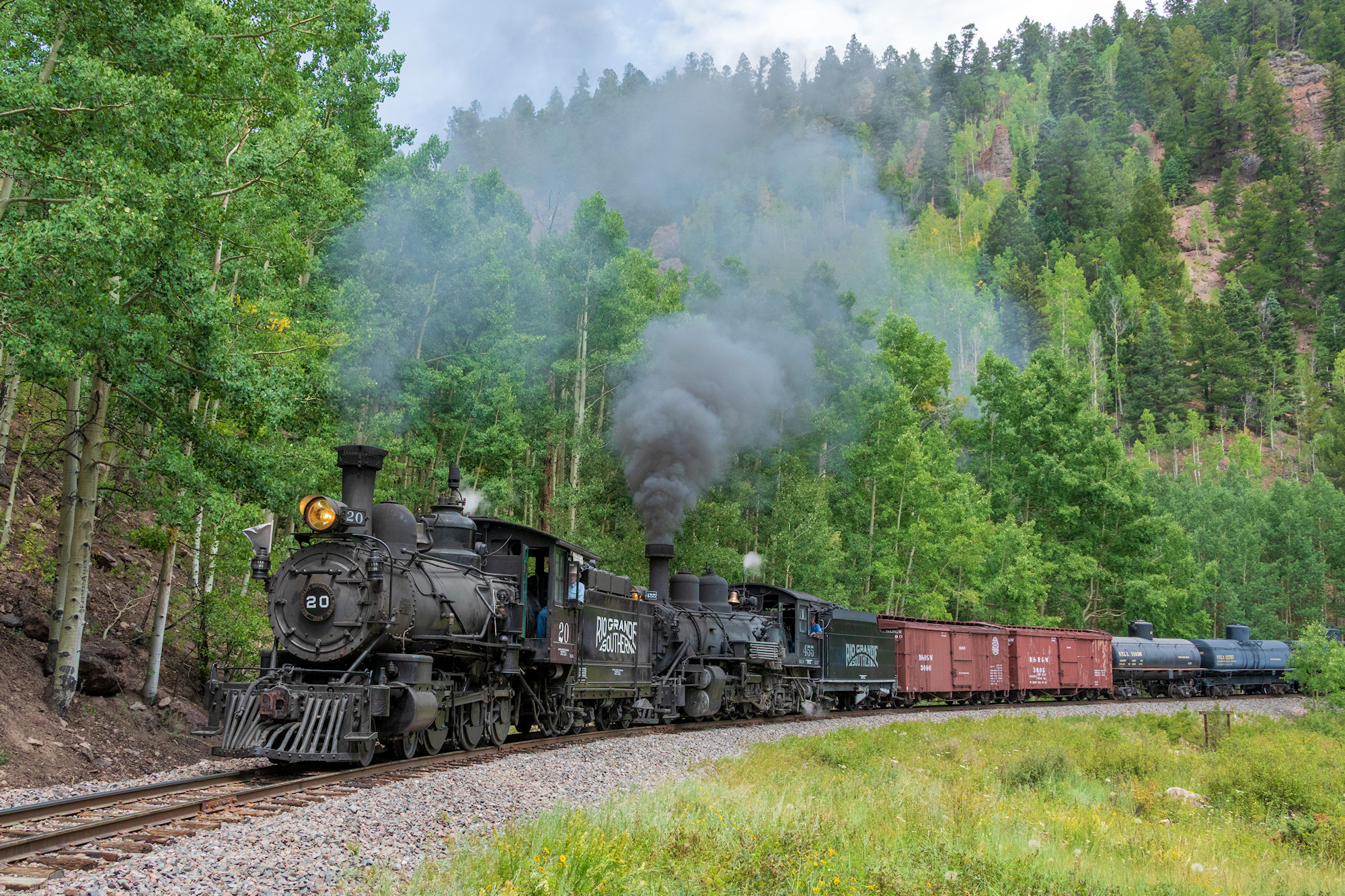
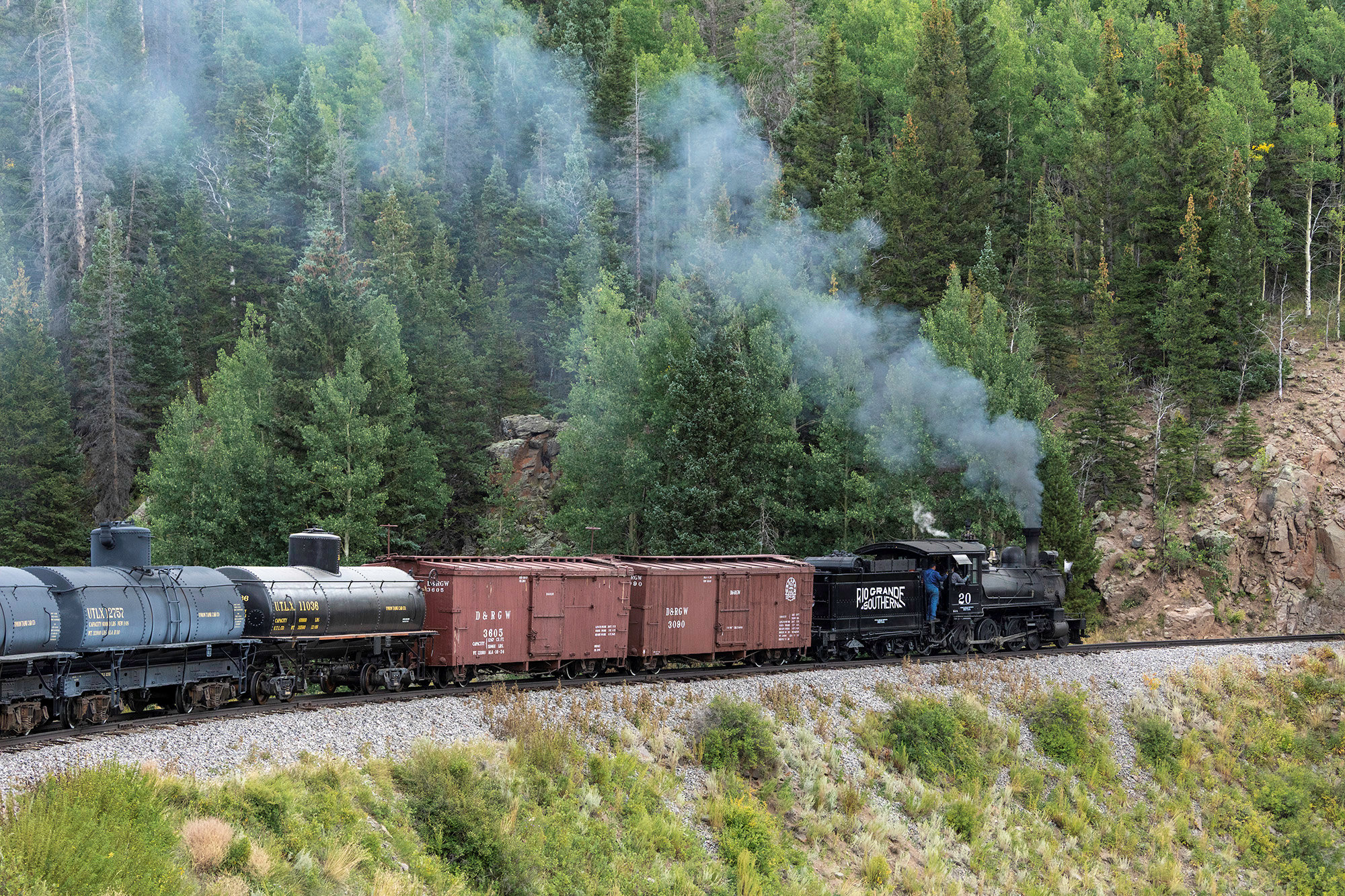
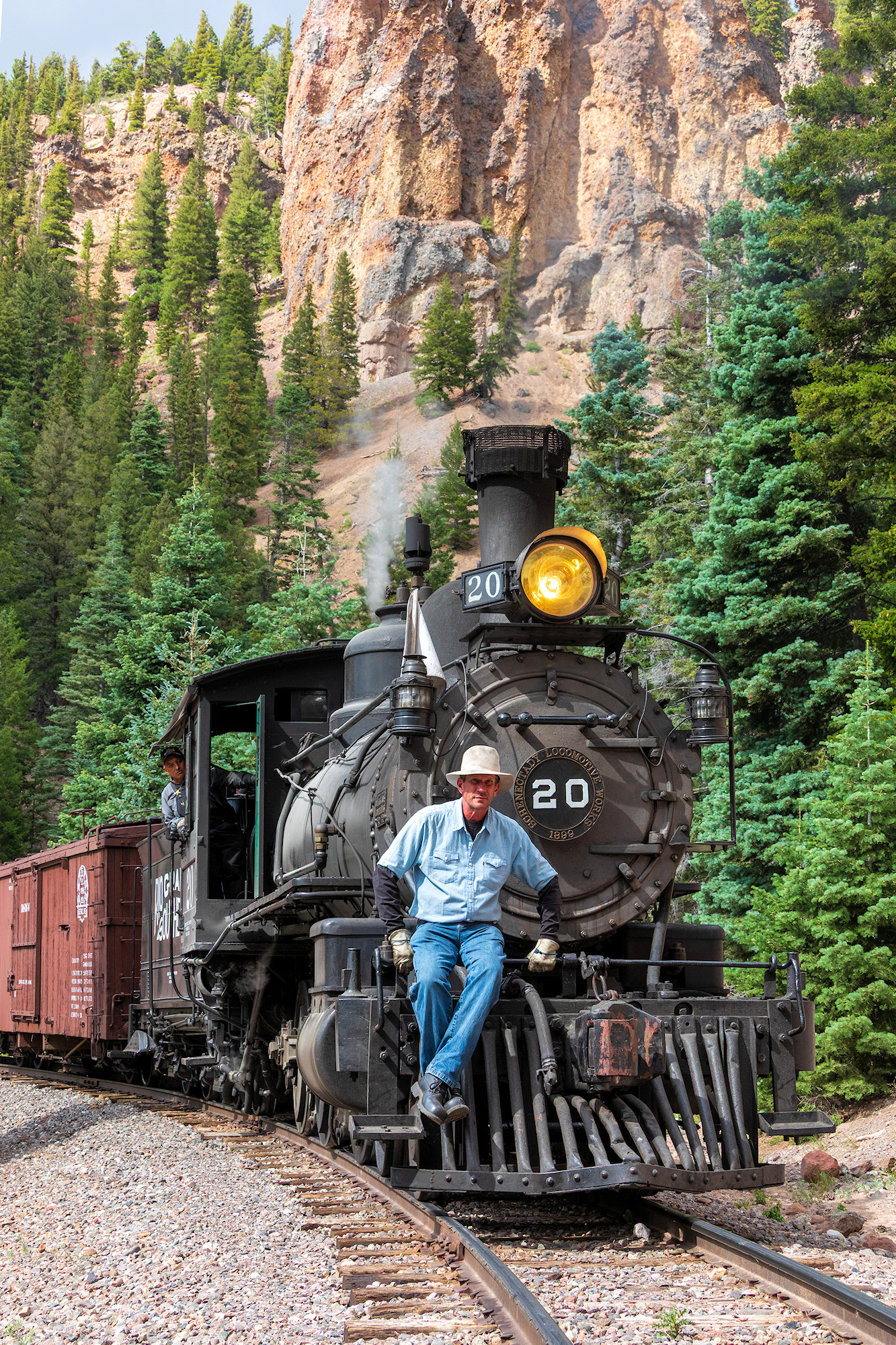
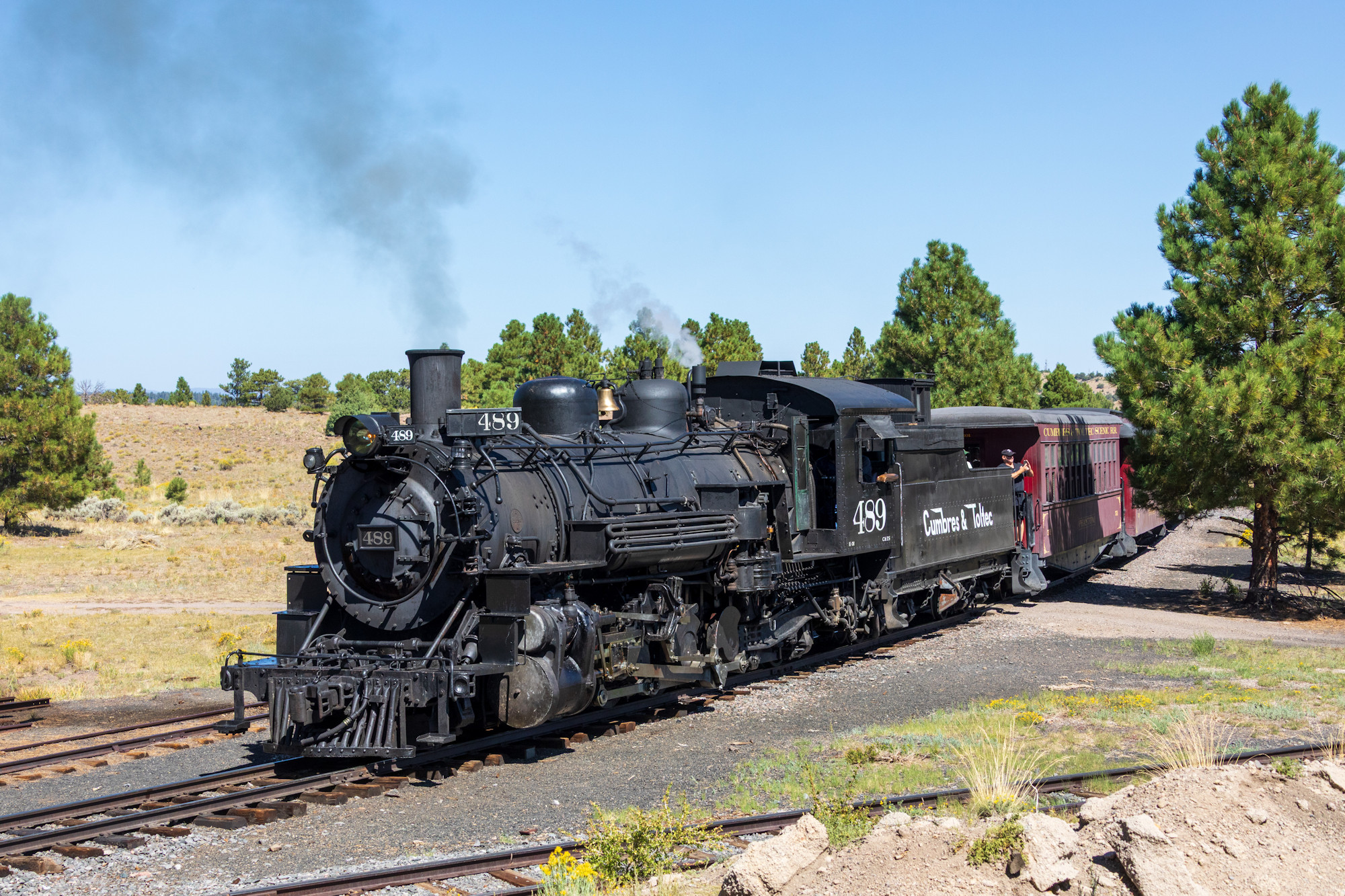
As I mentioned, RGS 20 wasn’t formally part of the C&TS’s Victorian Iron Horse Roundup (VIHR), held to celebrate the railroad’s 50th anniversary (or rather, 51st after the COVID delay). But since the VIHR would bring a mountain of photographers to town, Jim Wrinn and Trains Magazine put together a charter as a reason to bring RGS 20 down to the event. The original trip would be on August 31st – two days after the end of the VIHR – and feature, in Jim’s own words: “Our train will recreate Bill Moedinger’s famous RGS freight of 1941 with the brakeman riding the pilot beam to watch for landslides. The first half of the consist will match the train that Moedinger photographed that day. His research, photography, and writings became the subject for two major feature stories on the narrow gauge in Trains in February 1942 and October 1969.”
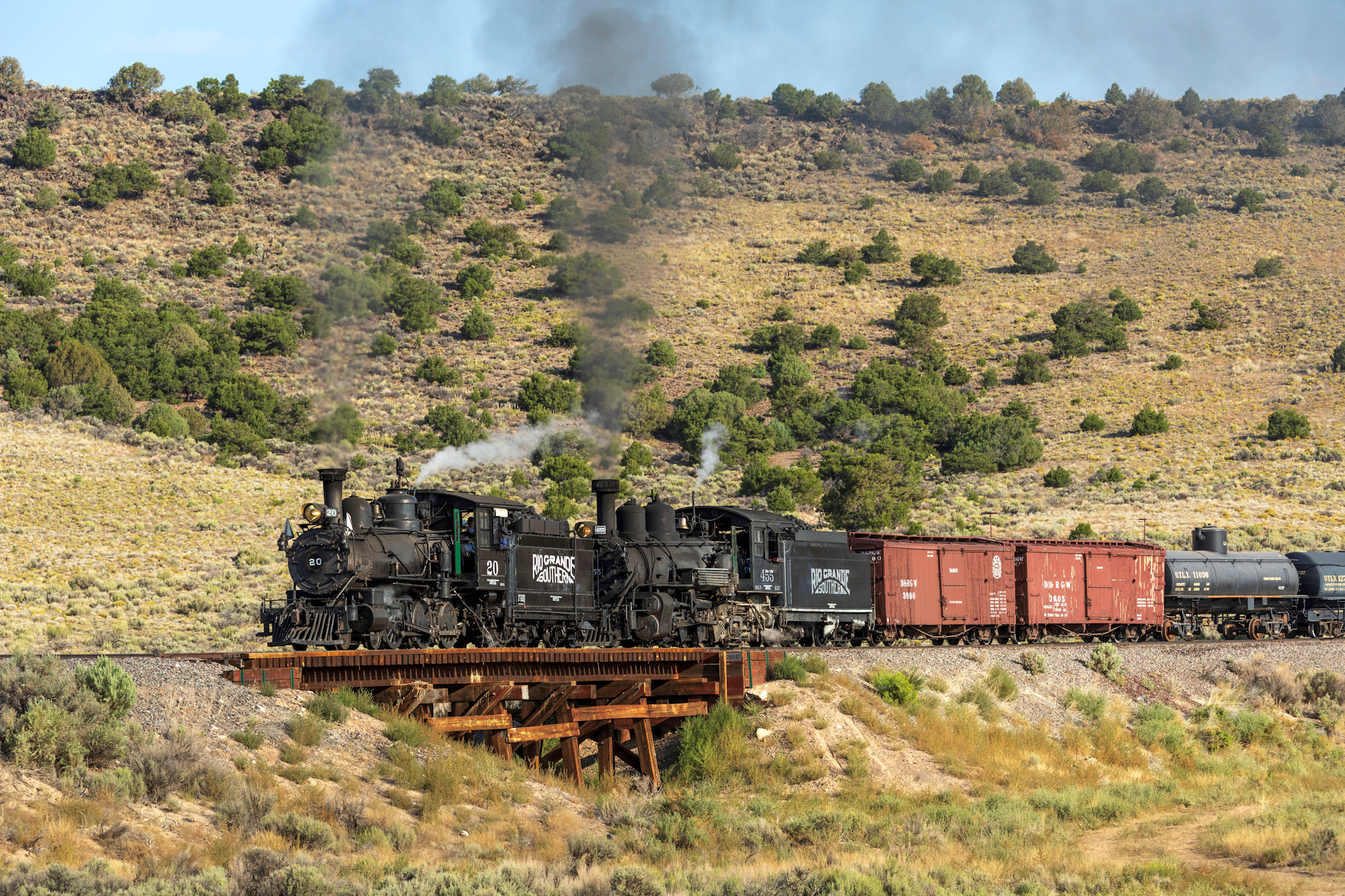
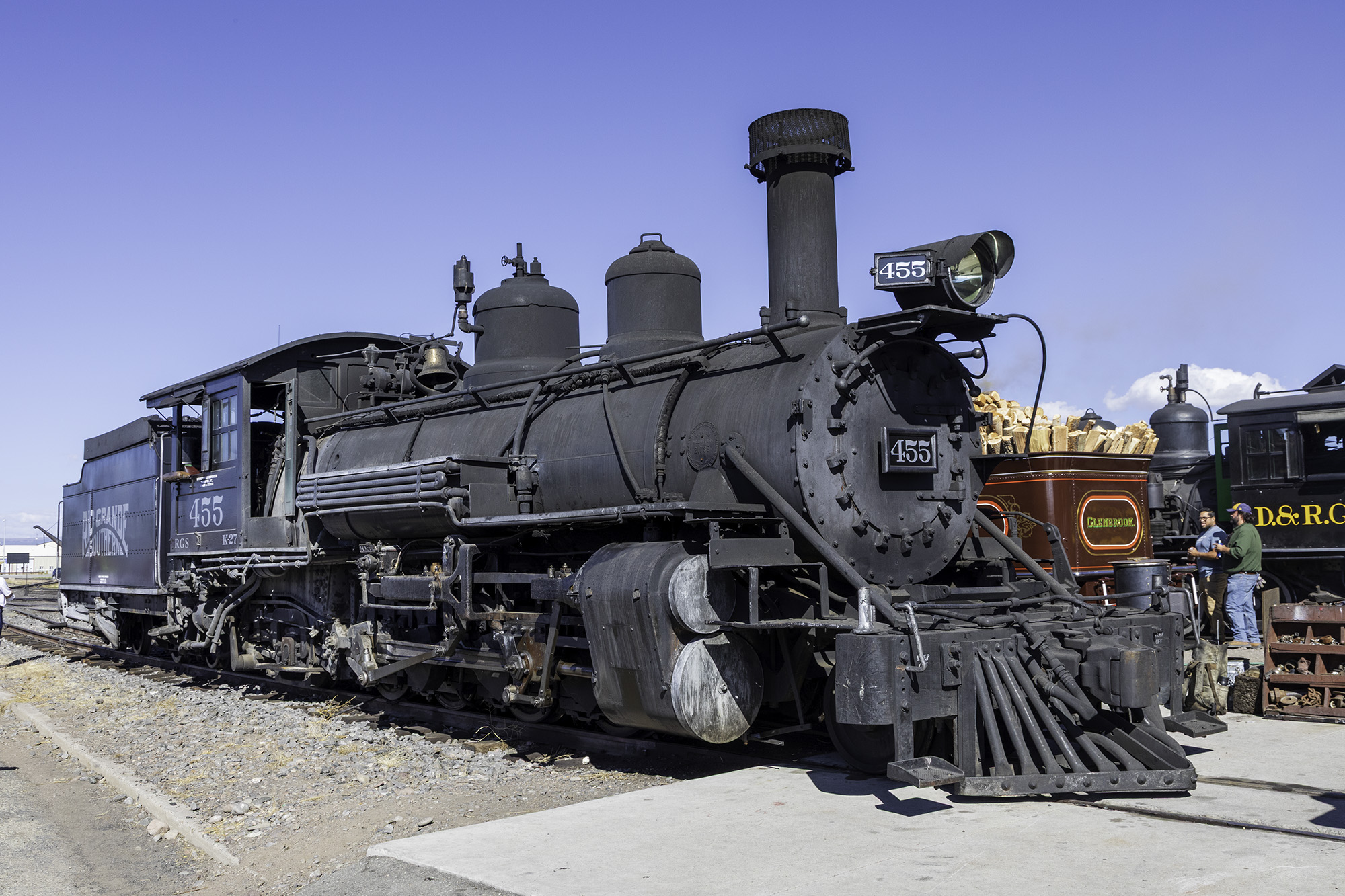
In addition, D&RGW K-27 463 would be repainted as RGS 455, the first of the K-27s that the RGS acquired in 1939. It would run behind the 20 from Antonito up to Osier, and then be sent back light to give us a pure RGS 20 train on the downhill run.
Note: The K-27s were often referred to as “Mudhens” because – one theory goes – they were considered rather homely and due to the outside counterweights, would appear to waddle down the track. Given the state of ballast on the narrow gauge of the era, this was often through the mud, not around. They also tended to derail quite a bit on the run-down and squishy RGS track, further emphasizing the mud part. RGS 455, however, was a particularly homely beast. After a wreck in November 1943, it was eventually rebuilt in 1947 with the (oversized) standard gauge cab from D&RGW 60. It made the engine look quite… special… for the last 4 years of operation. Before 1943, D&RGW 463 is a pretty good stand-in for 455.
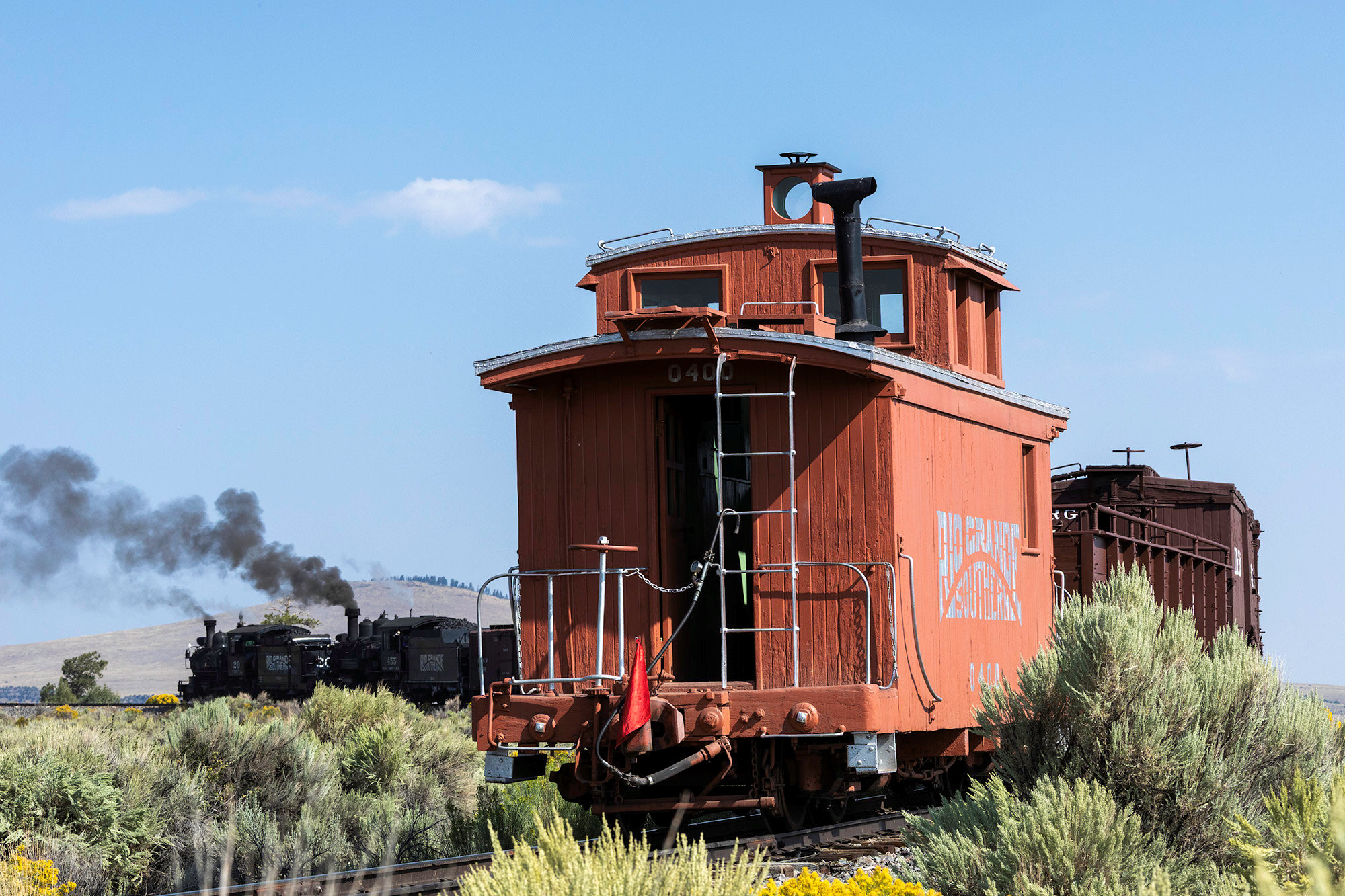
The consist leaving Antonito was RGS 20, “RGS 455” (DRGW 463), DRGW 3090 (box), DRGW 3805 (box), UTLX 11036 (tank), UTLX 12757 (tank), UTLX 13168 (tank), UTLX 12739 (tank), DRGW 3592 (box), DRGW 3339 (box), DRGW 04258 (MoW bunk), DRGW 1357 (rider gon), D&RG 3537 (rider box), D&RG 3244 (latrine box), D&RG 9055 (rider gon), and RGS 0400 (caboose).
Unfortunately, having bashed open my truck’s oil pan on a rock a few days earlier and all the associated vehicle juggling to trailer it back home and get another car, my mind wasn’t in the game for this trip and it showed in the photographic results. I got a few halfway decent shots out of the trip, but it’s one of the reasons this trip never became a standalone trip report.
Trains Magazine Charter 2 – September 5, 2021
After the first RGS 20 / 455 trip, Trains ran a charter with Southern Pacific 18 and D&RGW 493 on the Durango & Silverton, giving us a day to get to Durango. Then the question came from Jim – would there be interest in doing another trip back in Antonito with just RGS 20 on September 5, two days after the D&S trip?
That didn’t take much thought. Shut up and take my money.
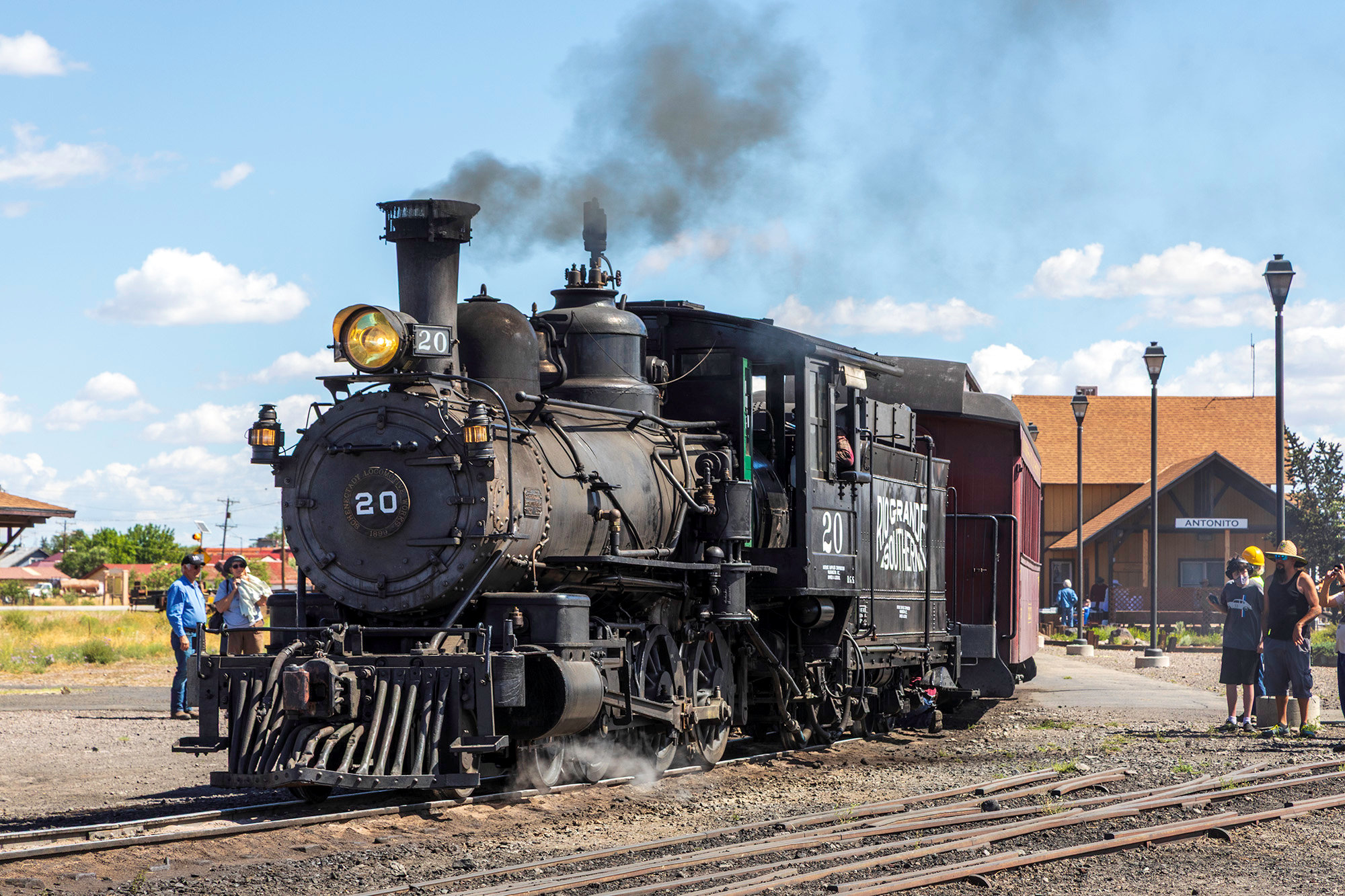
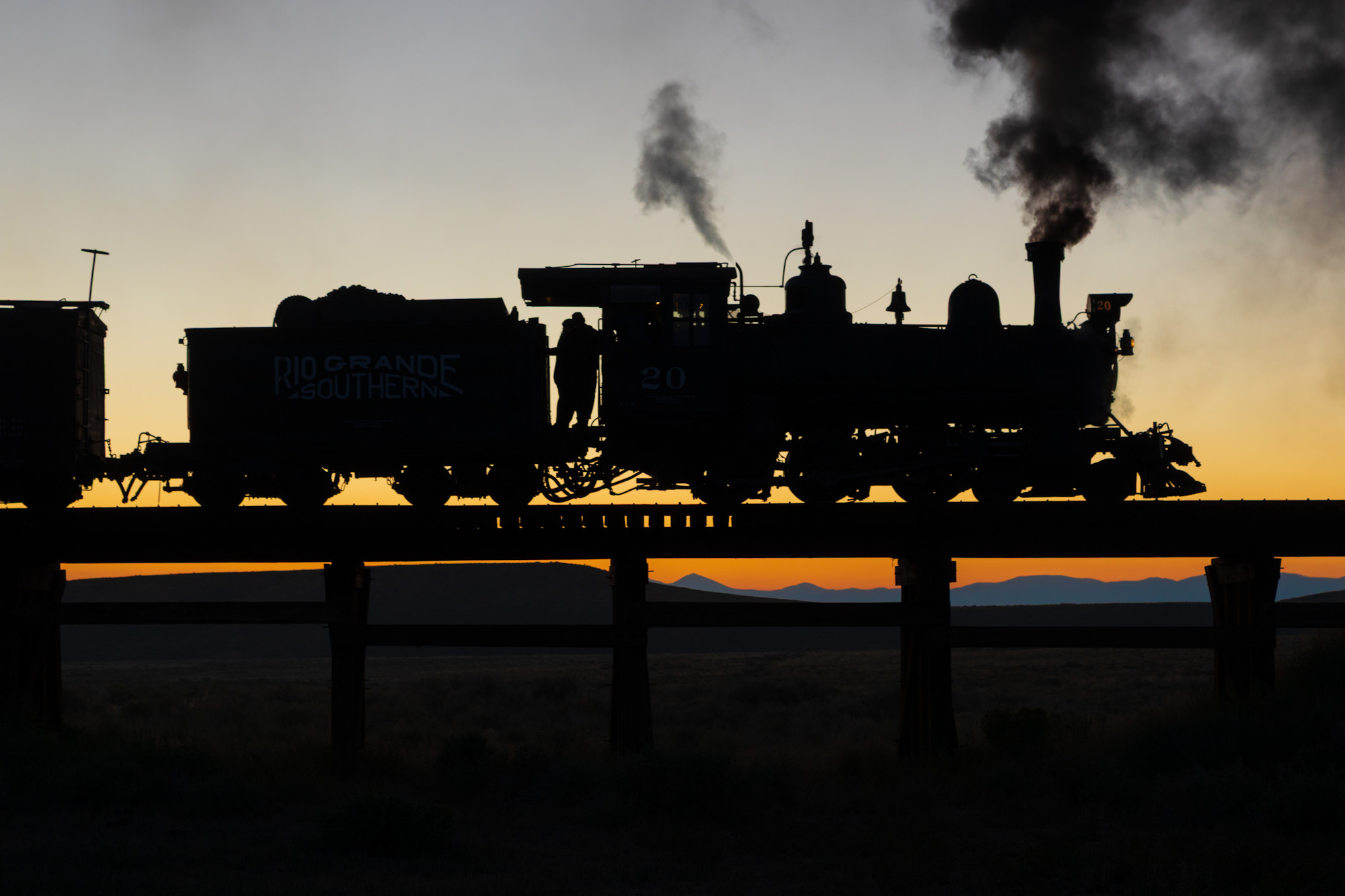
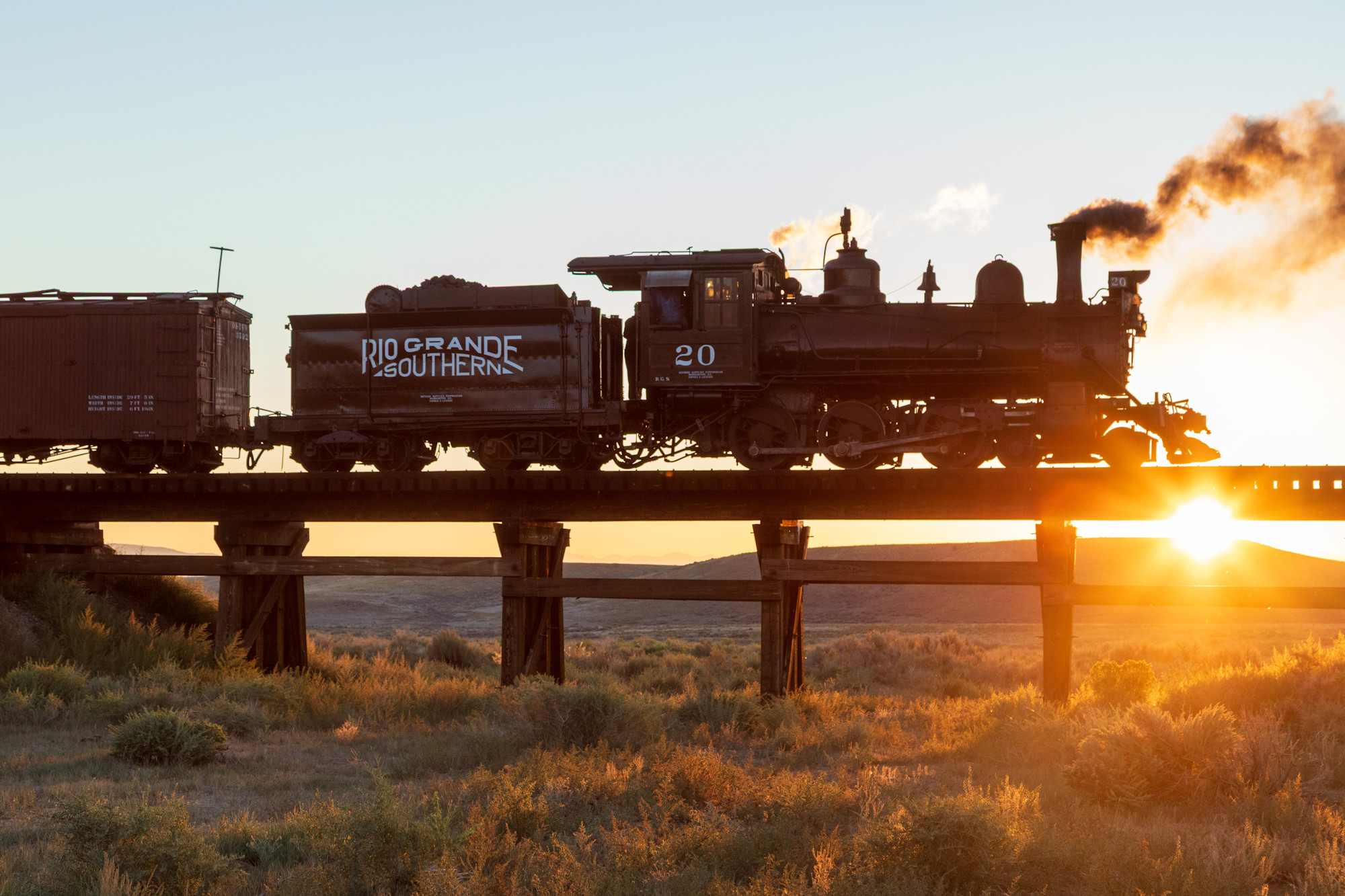
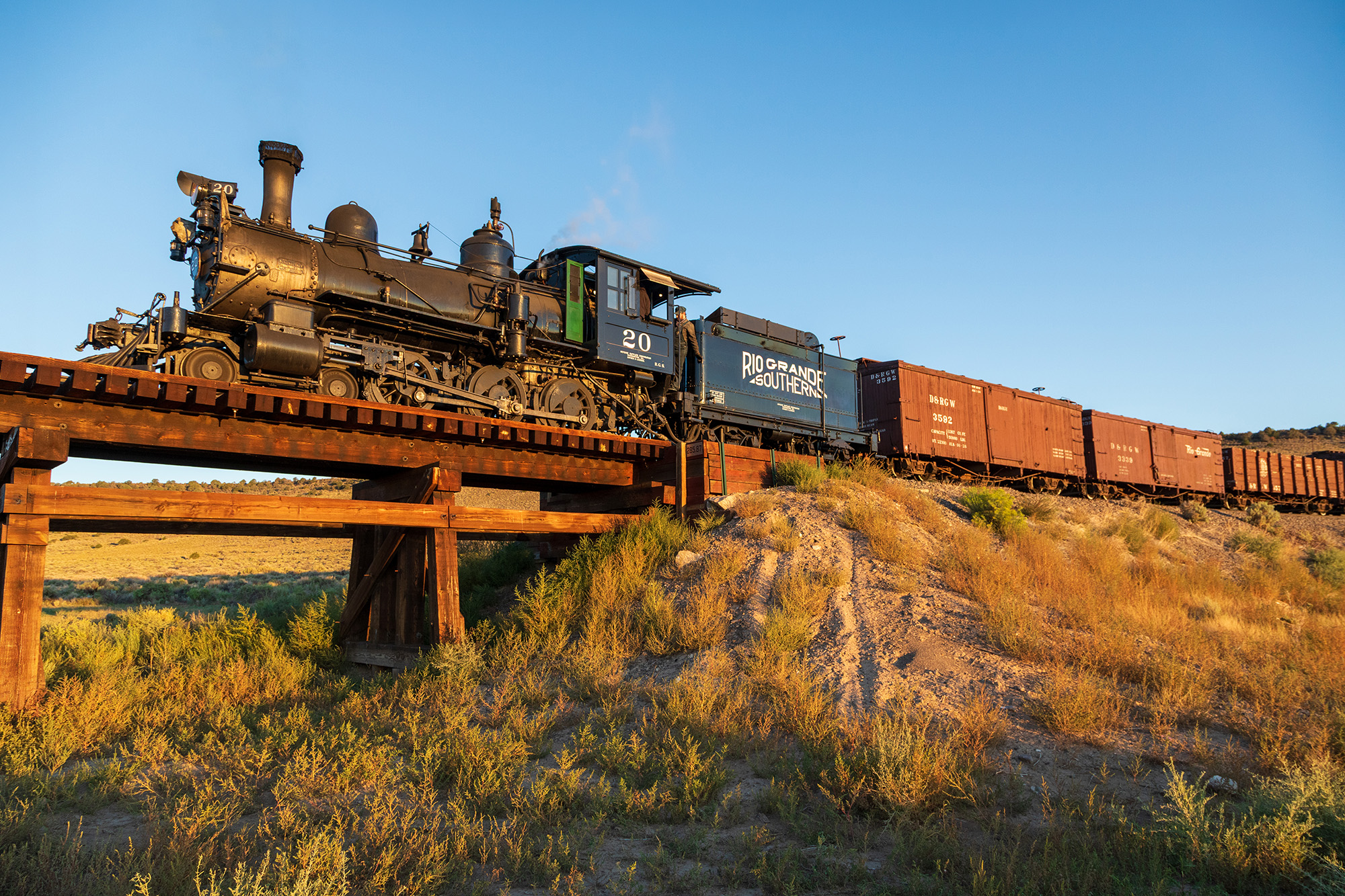
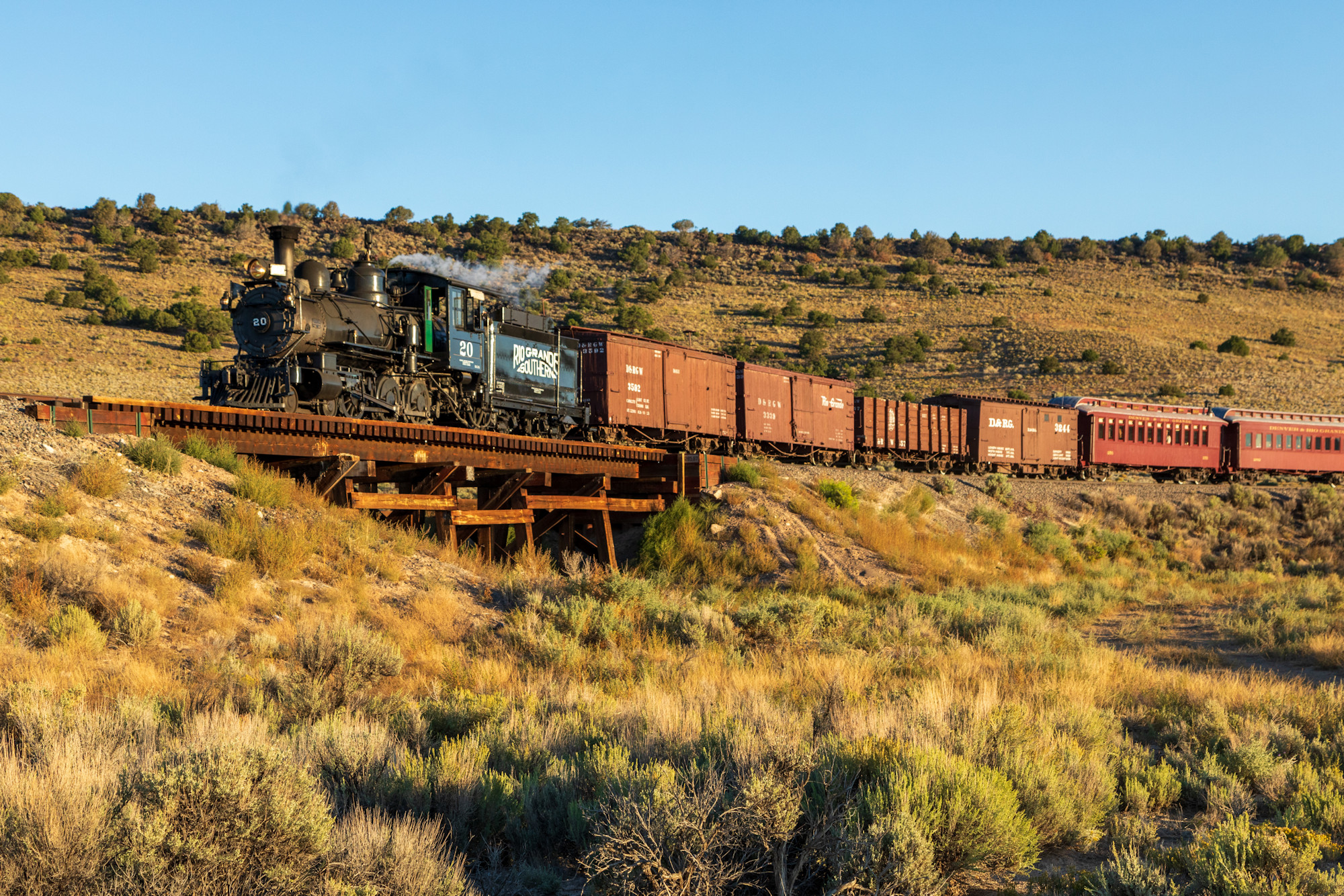
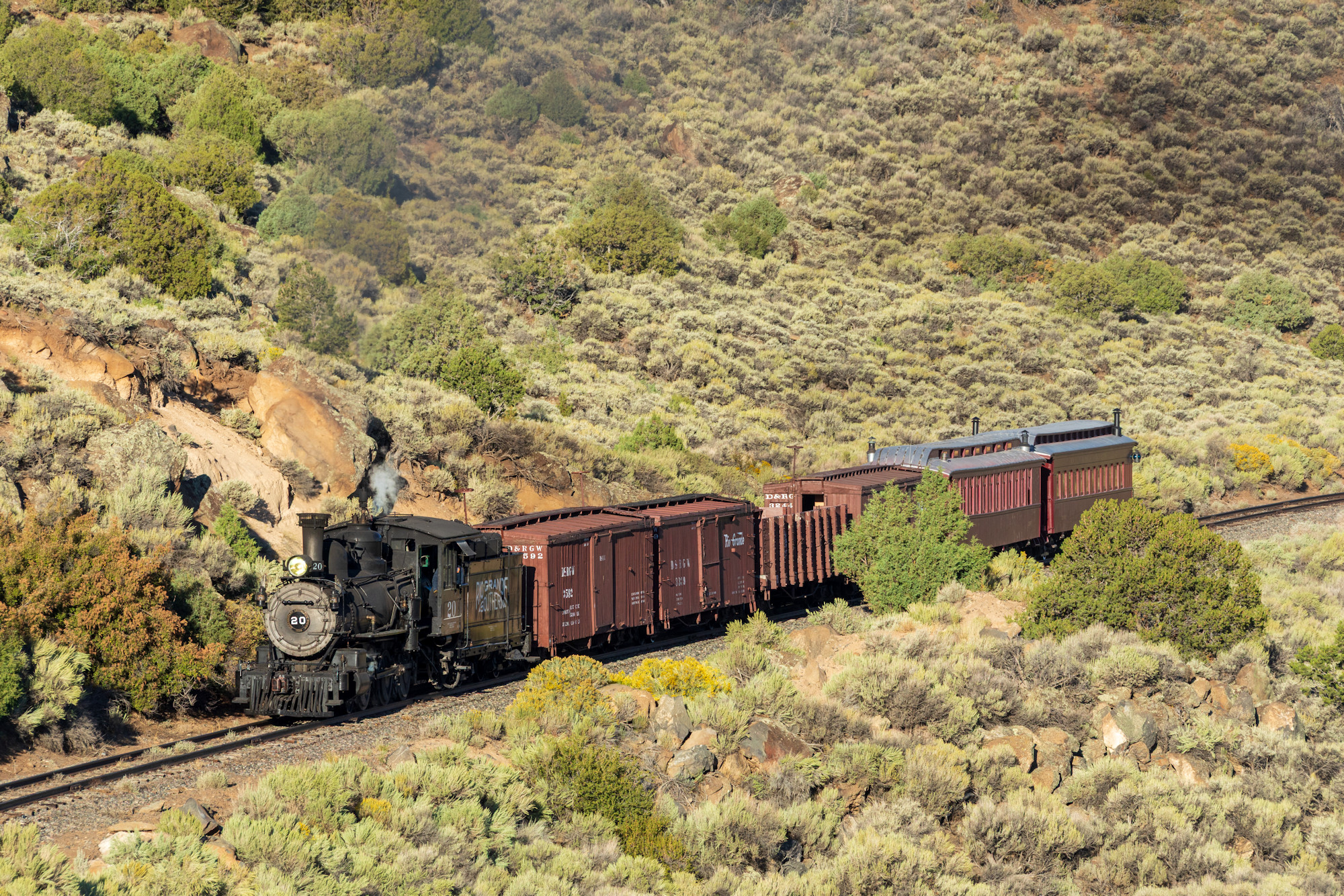
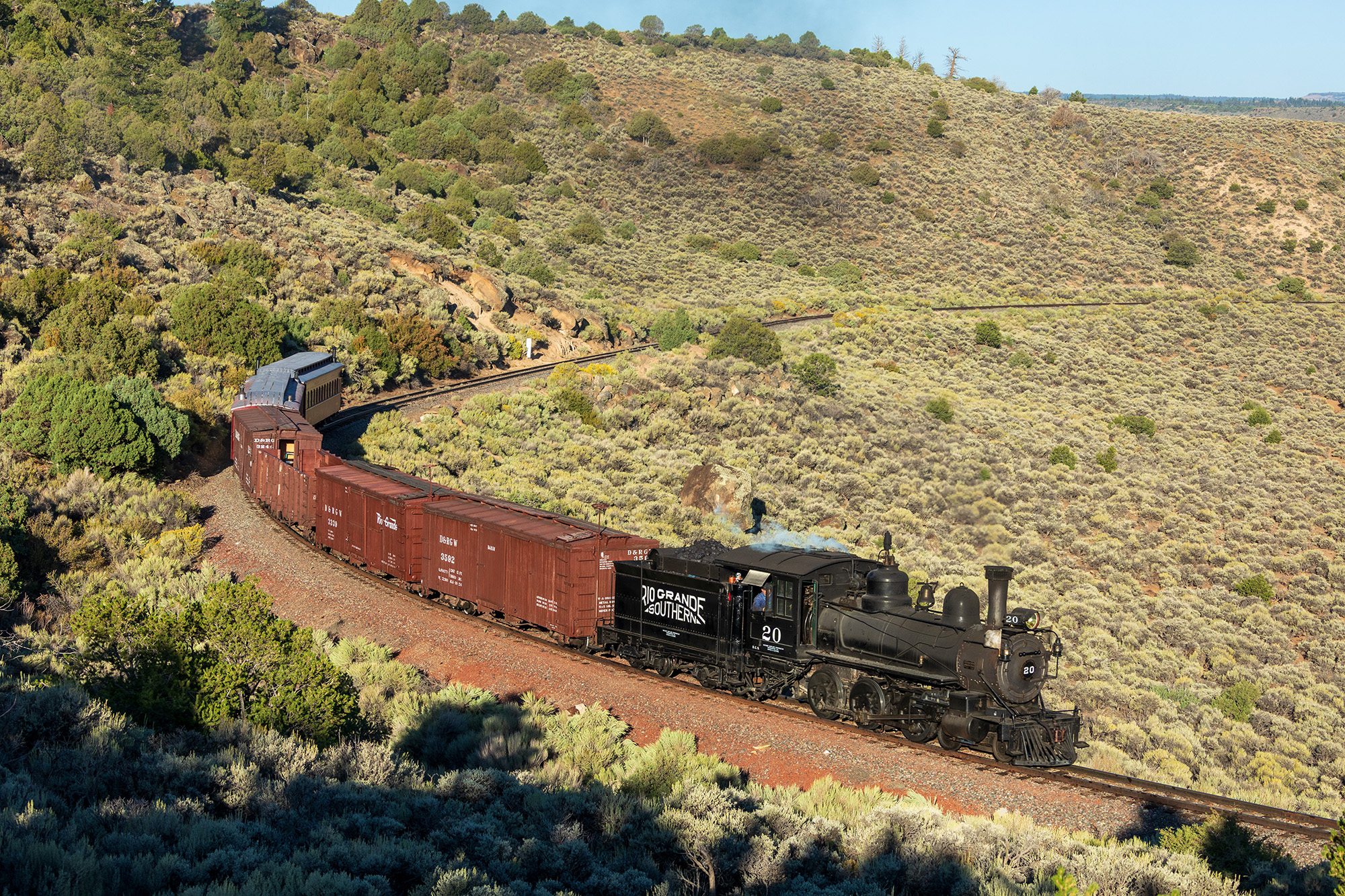
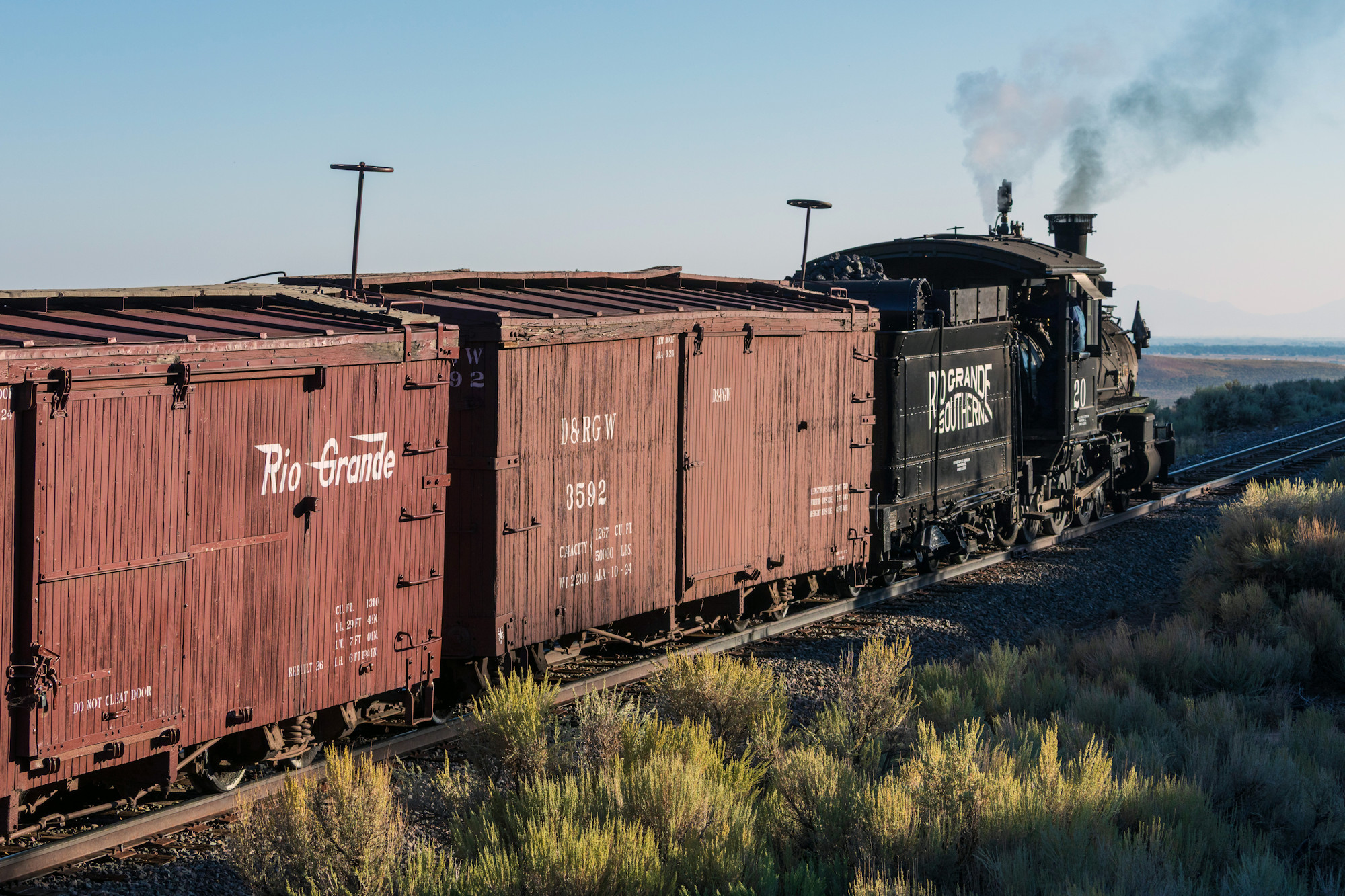
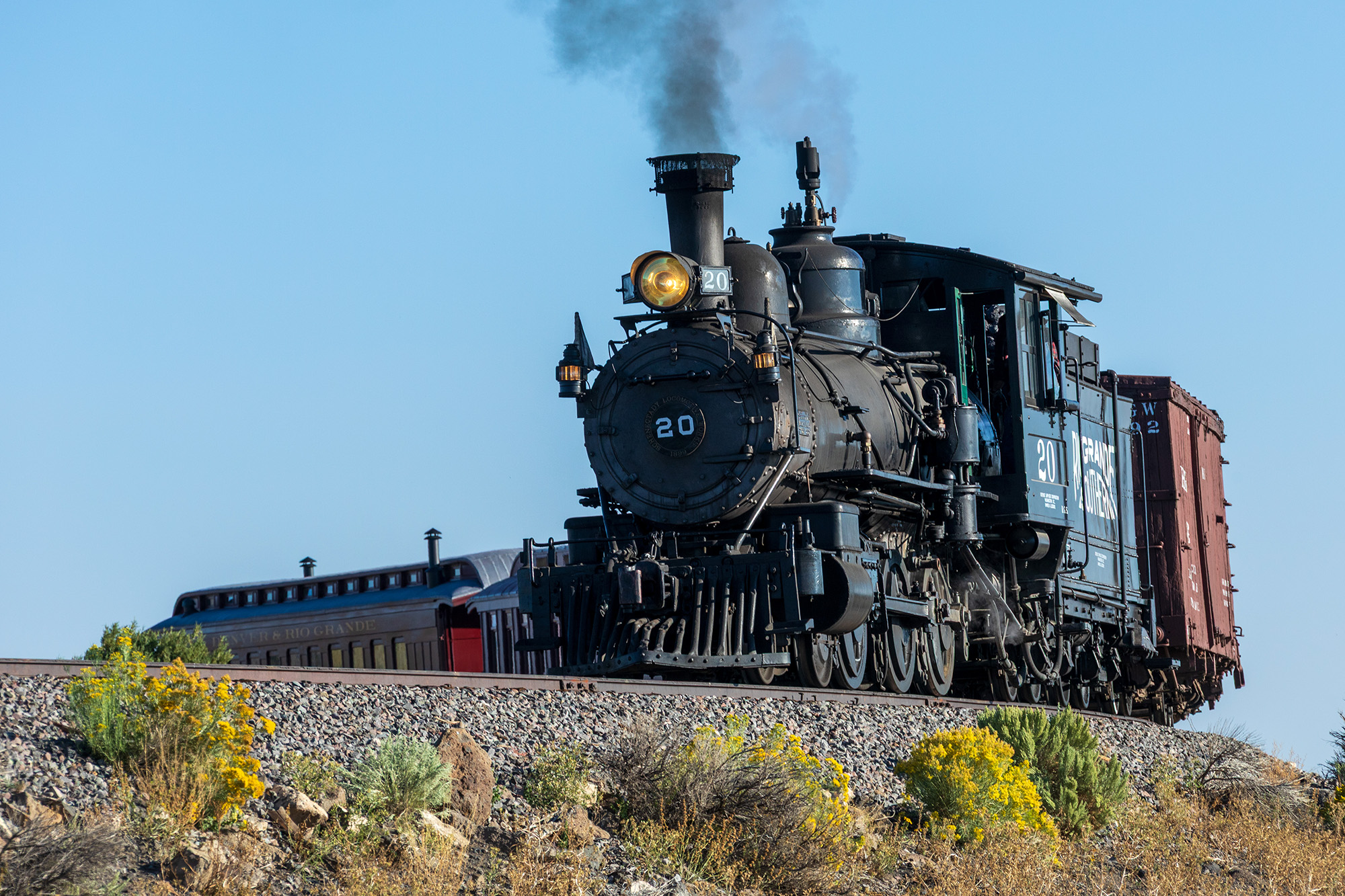
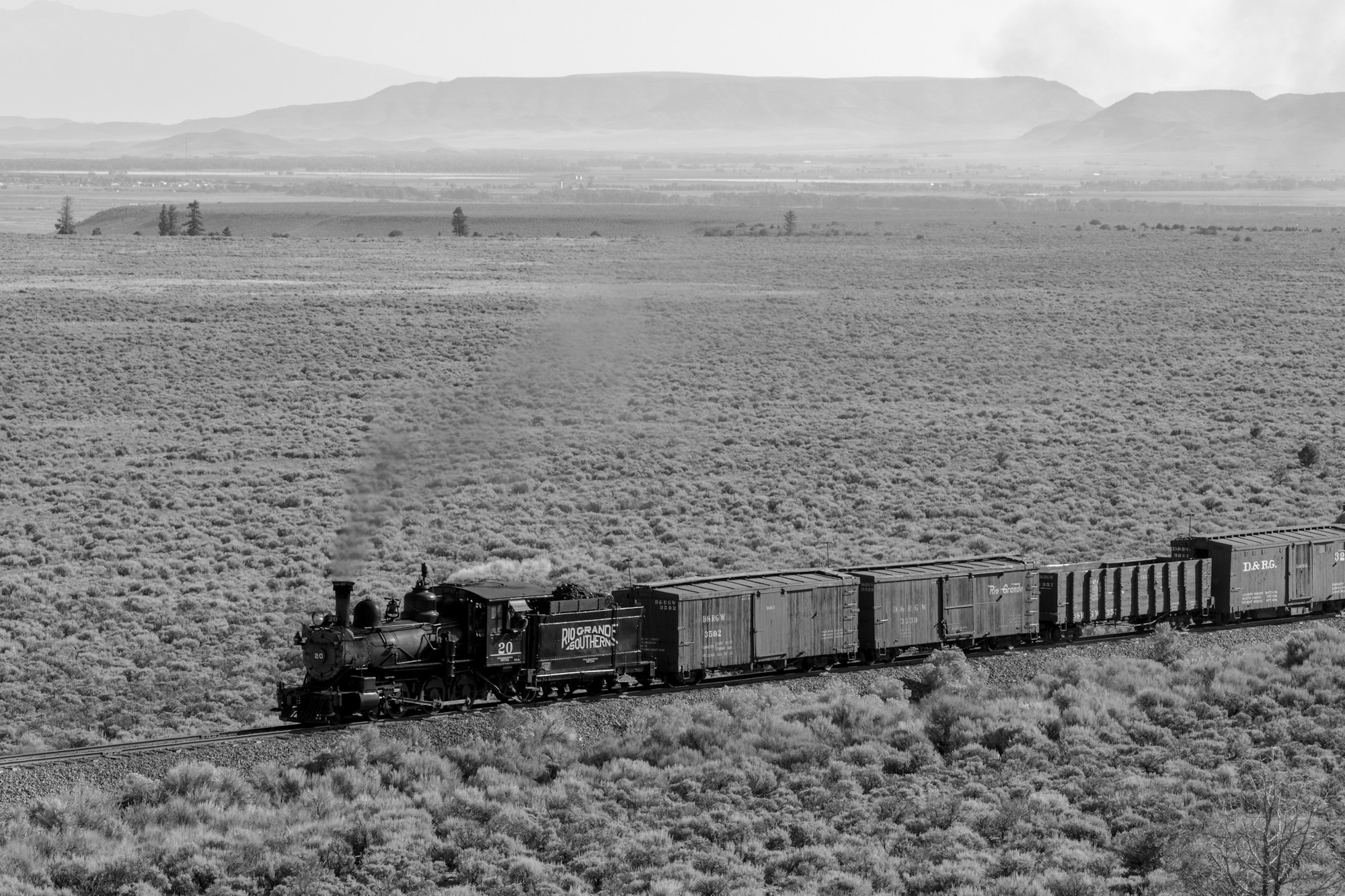
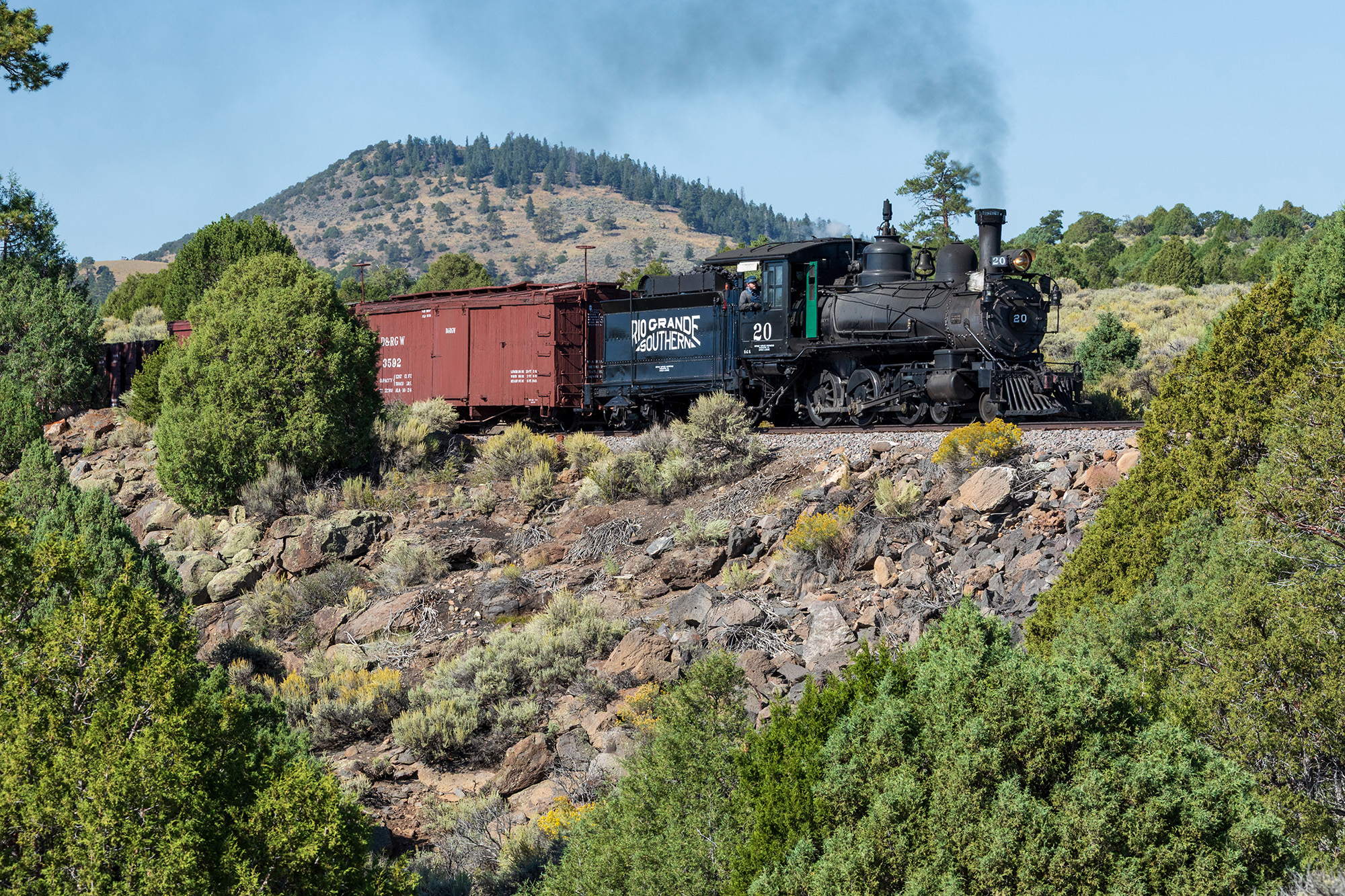
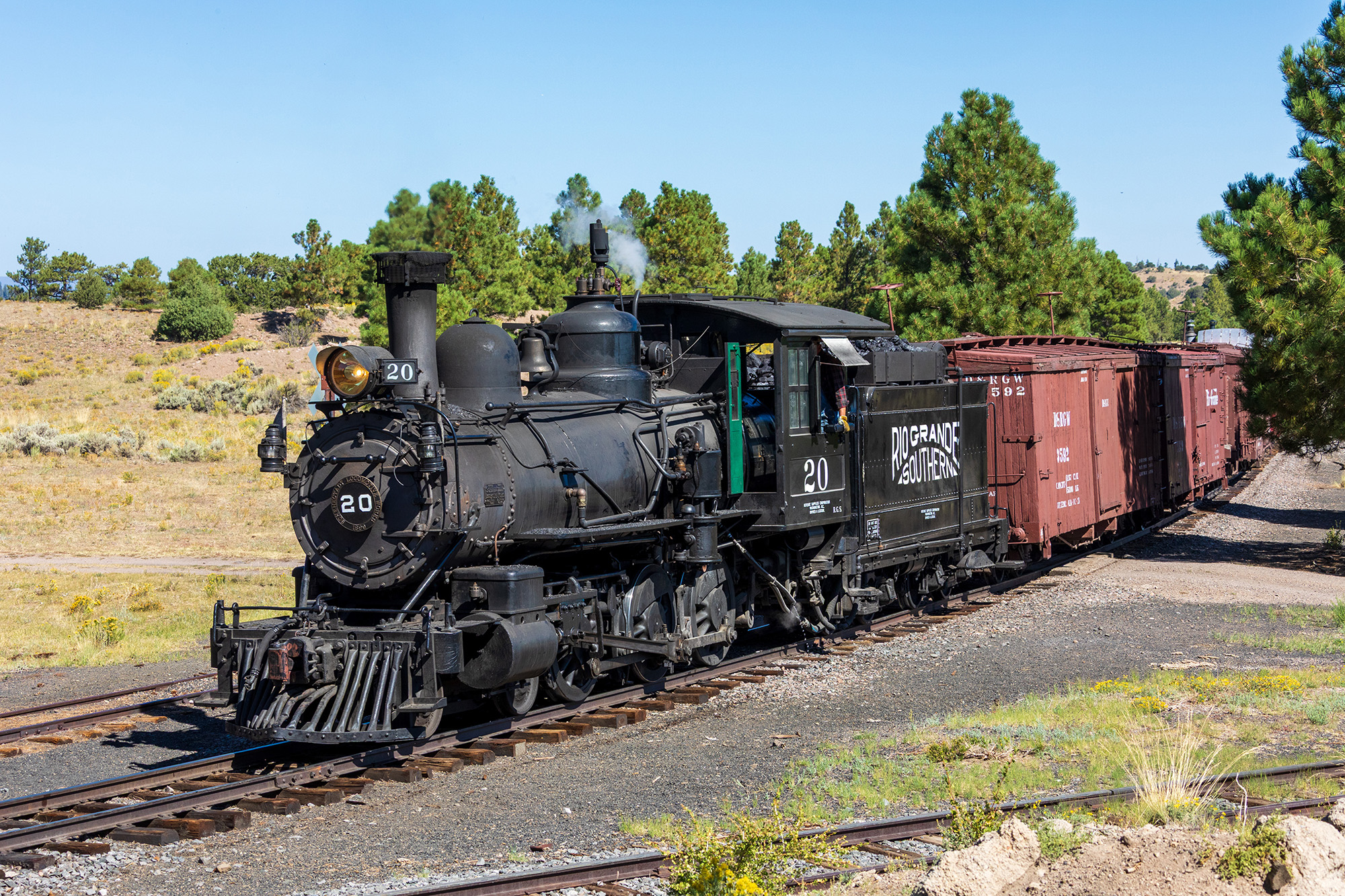
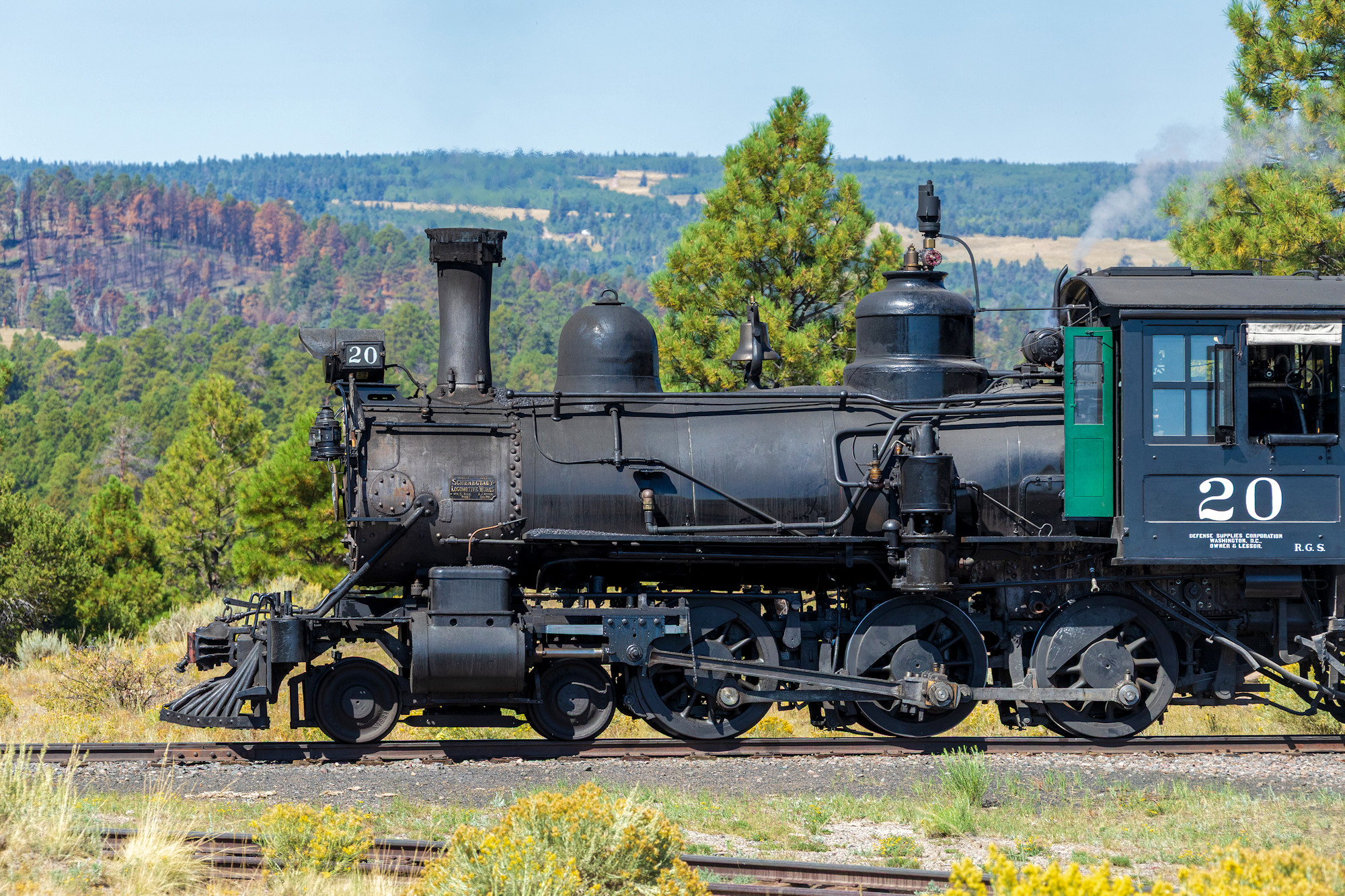
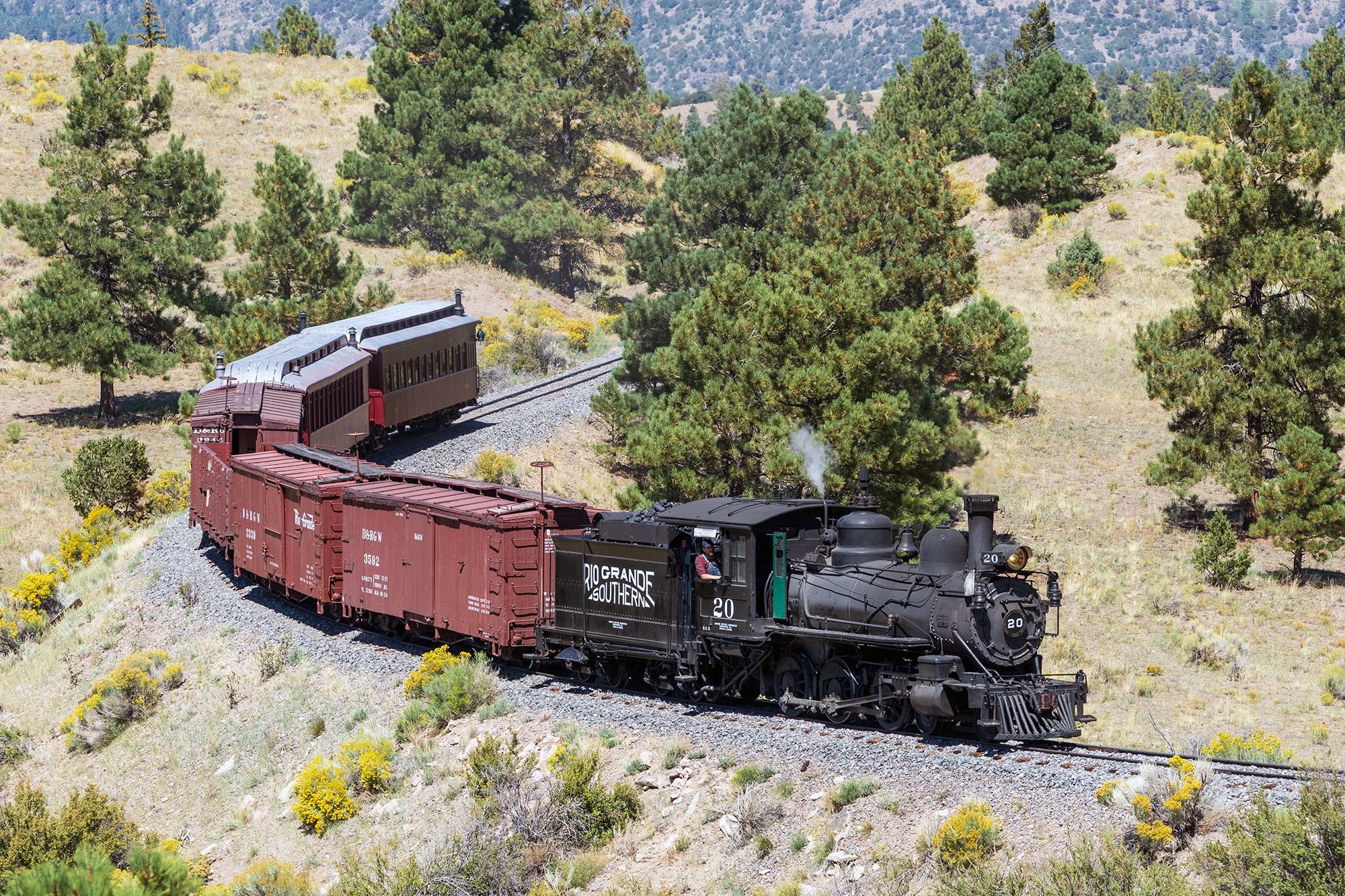
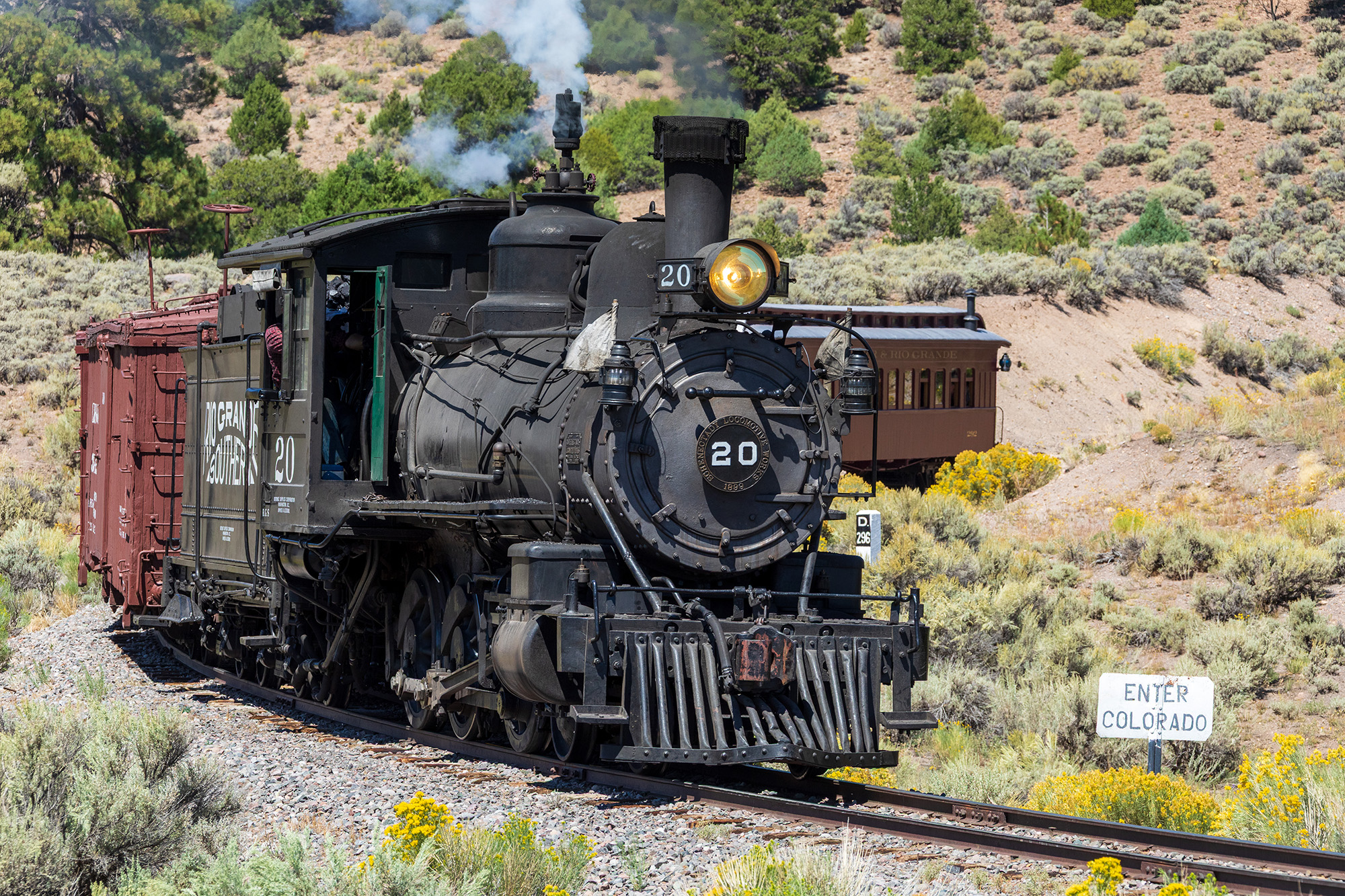
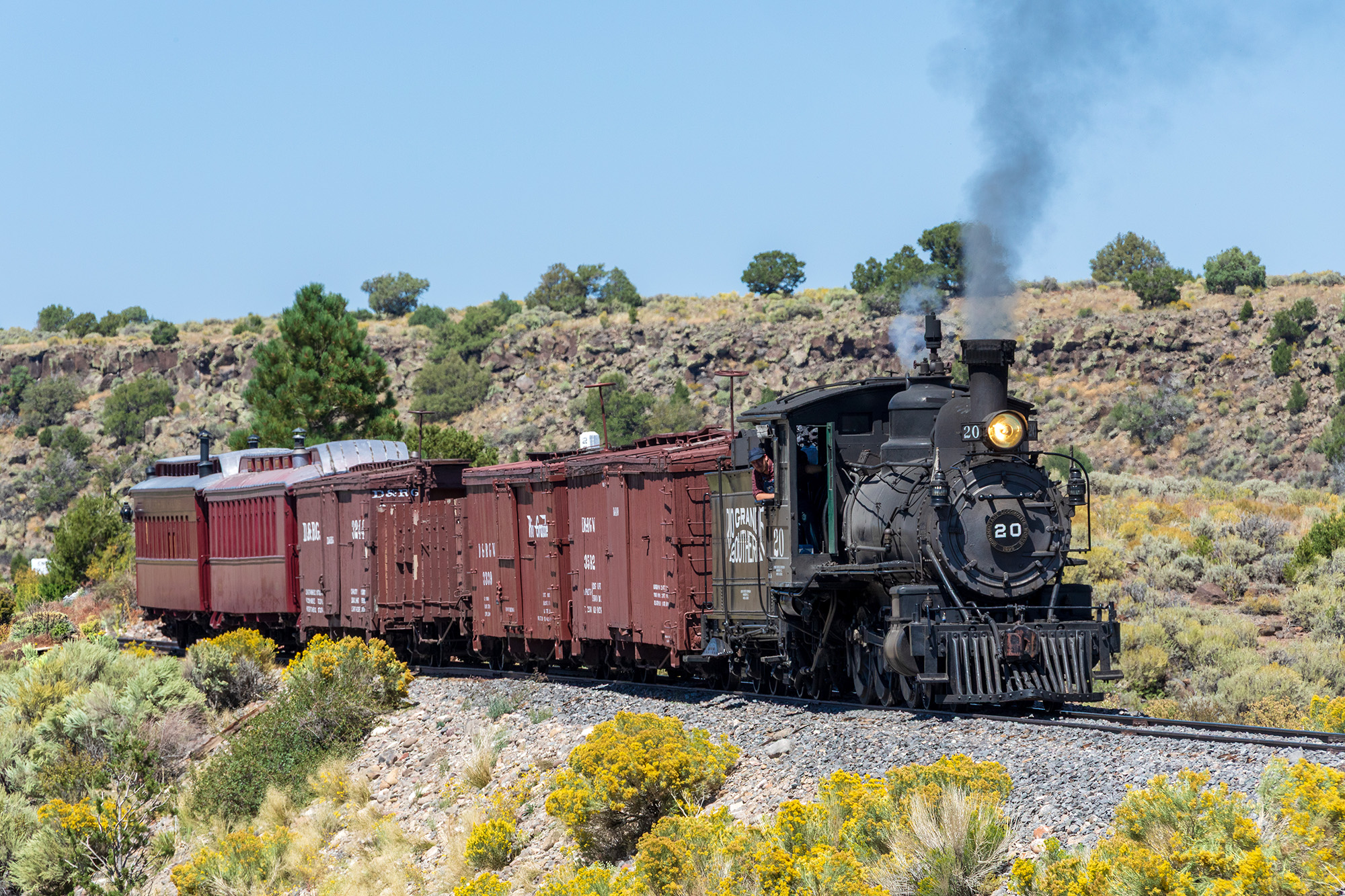
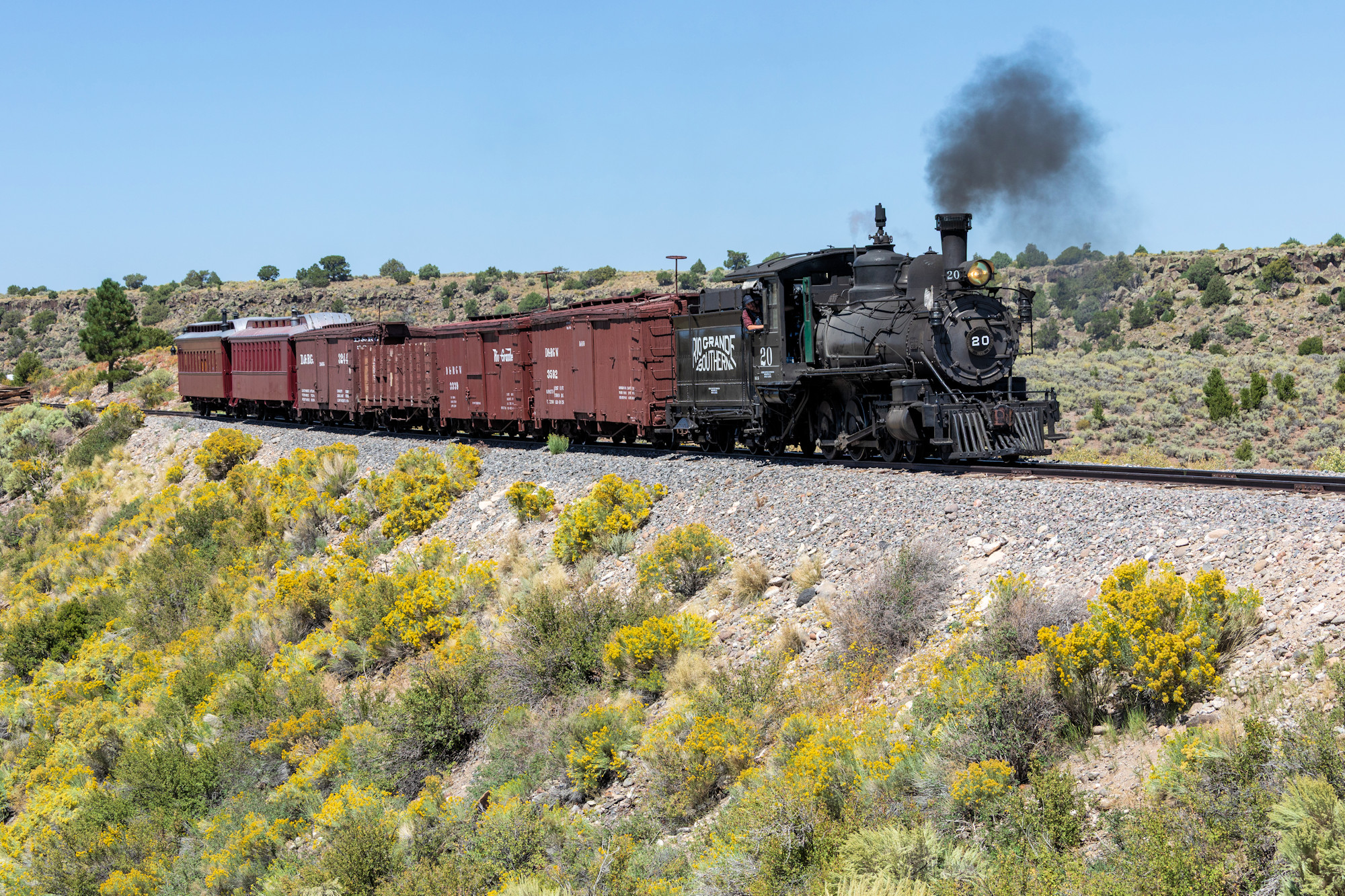
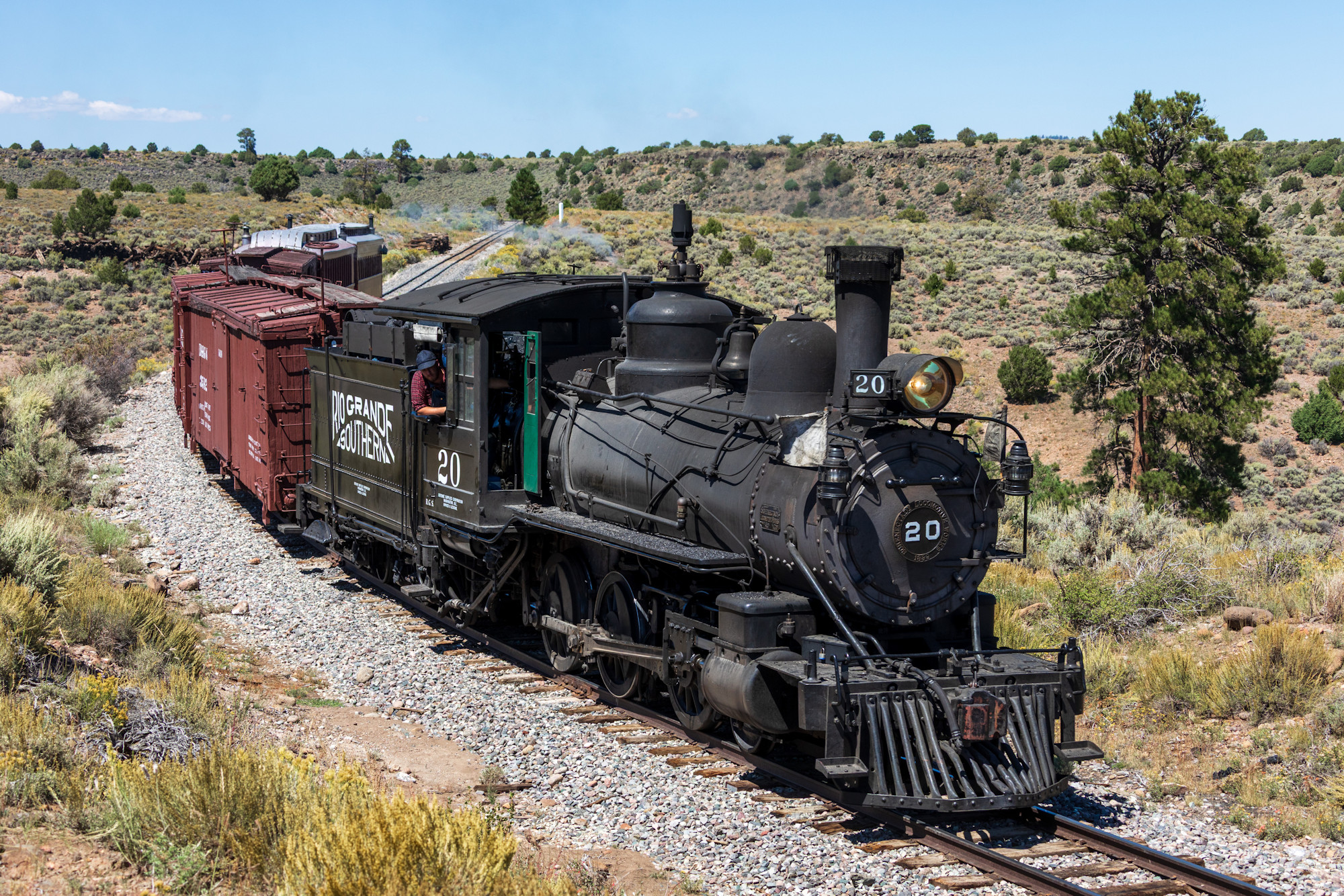
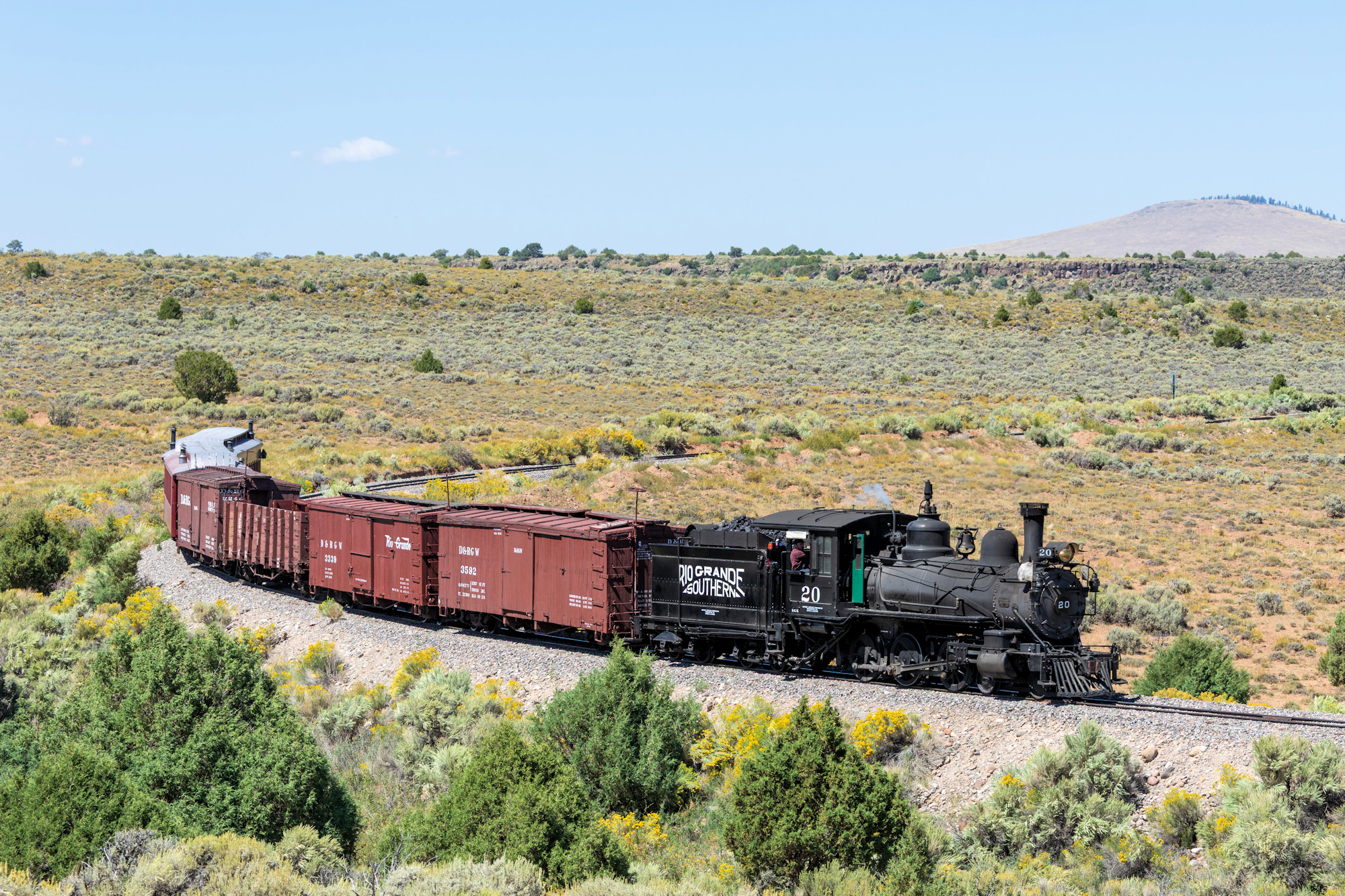
The trip left Antonito well before daybreak so we could do sunrise shots at Hangman’s. Light was somewhere between beautiful at sunrise and awkward by mid-day on account of the smoky haze blowing in from California fires. After that, it was a few more runbys in the high desert and around Whiplash before turning at Big Horn and waiting out the regular train. We shoved back to do the S-curve, and then worked back down the hill, getting in about 3:30PM.
After nearly two weeks of trains, honestly I was tired and just wanted to get back home to my own bed and my own kitchen. I know, terrible railfan, 50 demerits… So as soon as we were in to the station, I didn’t spend much time shooting them switching around but rather bolted for the car and Colorado Springs.
The train for the day was RGS 20, DRGW 3592 (box), DRGW 3339 (box), DRGW 1357 (rider gon), DRGW 3244 (latrine box), D&RG 256 (historic coach), and D&RG 292 (historic coach).
The Next Part
By mid-October 2021, RGS 20 had returned to its home at the Colorado Railroad Museum in Golden. I’d see it a couple more times at Rocky Club events or other museum functions, but it wouldn’t see mainline rails again for some time.
That would change in late 2025, when the locomotive would once again leave the museum grounds. This time, 20 and RGS caboose 0404 would make their way back to one of the places they called home for nearly four decades – Durango. While none of the RGS track survives, RGS 20 did run on the Silverton Branch during its time in the movies, and the scenery is a lot more similar to the RGS than the C&TS. While there, the 20 would make a number of charter runs, as well as run the railroad’s own Winter Photo Train and pull a few special Cascade Canyon regular winter trains.
Ready for Part 2? Then head on over and see RGS 20 in the Winter of 2026.
Sources
1 – Wilkins, Tivis E. The Florence and Cripple Creek and Golden Circle Railroads. Colorado Railroad Museum, 1 June 1976, p. 168.
2 – Rio Grande Southern Locomotive No. 20, Colorado Railroad Museum
3 – McCoy, Dell A, et al. The RGS Story – Locomotives and Rolling Stock, Volume XII. 1st ed., Sundance Publications, Limited, 2006, pp. 53-56.
4 – Ibid., pp. 58.
5 – Rocky Mountain Rail Report No. 562, Rocky Mountain Railroad Club, July/August 2006, p. 2.
6 – Rail Report No. 630, Rocky Mountain Railroad Club, January 2013, pp. 12-13.
7 – Rail Report No. 713, Rocky Mountain Railroad Club, March 2020, pp. 10-11.
8 – Goss, David C. Journeys to Yesteryear: The Chronological History of the Rocky Mountain Railroad Club & Rocky Mountain Railroad Historical Foundation. Rocky Mountain Railroad Club, 2005, pp. 160-161.
9 – Ibid., p. 14.
10 – “Re: Update on the progress of RGS #20” Post by Paul Luning, CRHF Treasurer – Narrow Gauge Discussion Forum, Dec 31, 2010, 10:48PM.
11 – McCoy, Dell A, et al. The RGS Story – Locomotives and Rolling Stock, Volume XII. 1st ed., Sundance Publications, Limited, 1 Jan. 2006, p. 126.
12 – “Re: RGS #20” Post by Herb Kelsey – Narrow Gauge Discussion Forum, Aug 9, 2008, 01:03AM.
13 – McCoy, Dell A, et al. The RGS Story – Over the Bridges… Grady to Durango, Volume IX. 1st ed., Sundance Publications, Limited, 2001, pp. 62-67.
14 – Jensen, Larry. Hollywood’s Railroads. Cochetopa Press, 7 Nov. 2014, pp 13-17.
15 – “RGS 20 with cab” Post by Jeff Taylor – Narrow Gauge Discussion Forum, Aug 16, 2019, 11:30PM.
16 – “RGS 20 lives!” Post by Jeff Taylor – Narrow Gauge Discussion Forum, Jul 2, 2020, 09:30PM.

This work is copyright 2026 by Nathan D. Holmes, but all text and images are licensed and reusable under a Creative Commons Attribution-NonCommercial-ShareAlike license. Basically you’re welcome to use any of this as long as it’s not for commercial purposes, you credit me as the source, and you share any derivative works under the same license. I’d encourage others to consider similar licenses for their works.