This isn’t going to be one of those trip reports with lots of epic shots. This is more “hey, look, exciting new equipment showed up!”
About the Airo Sets
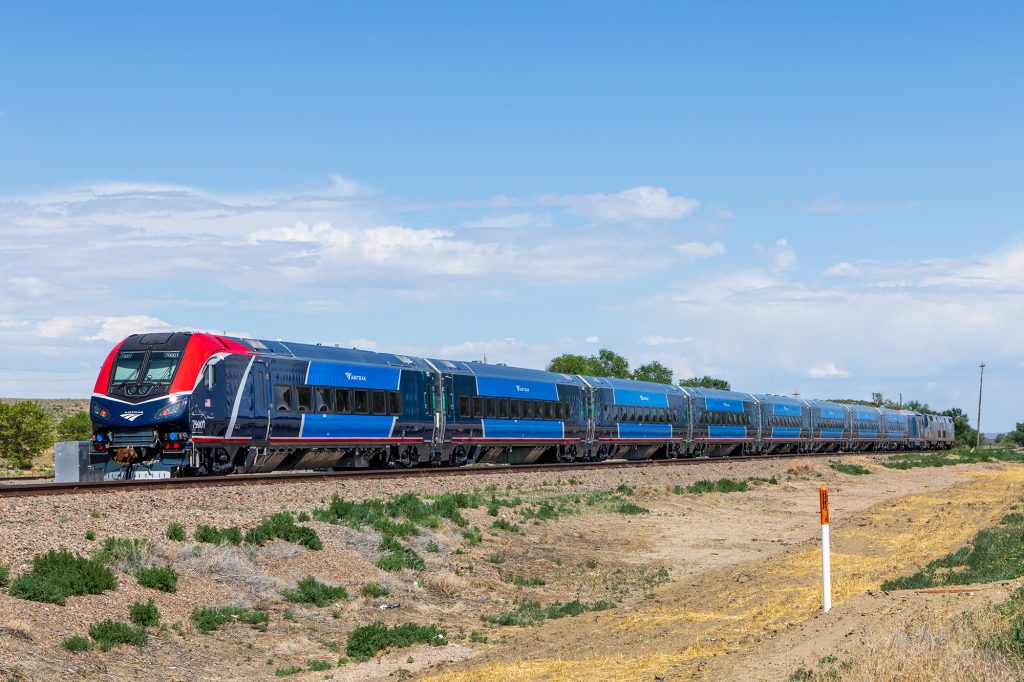
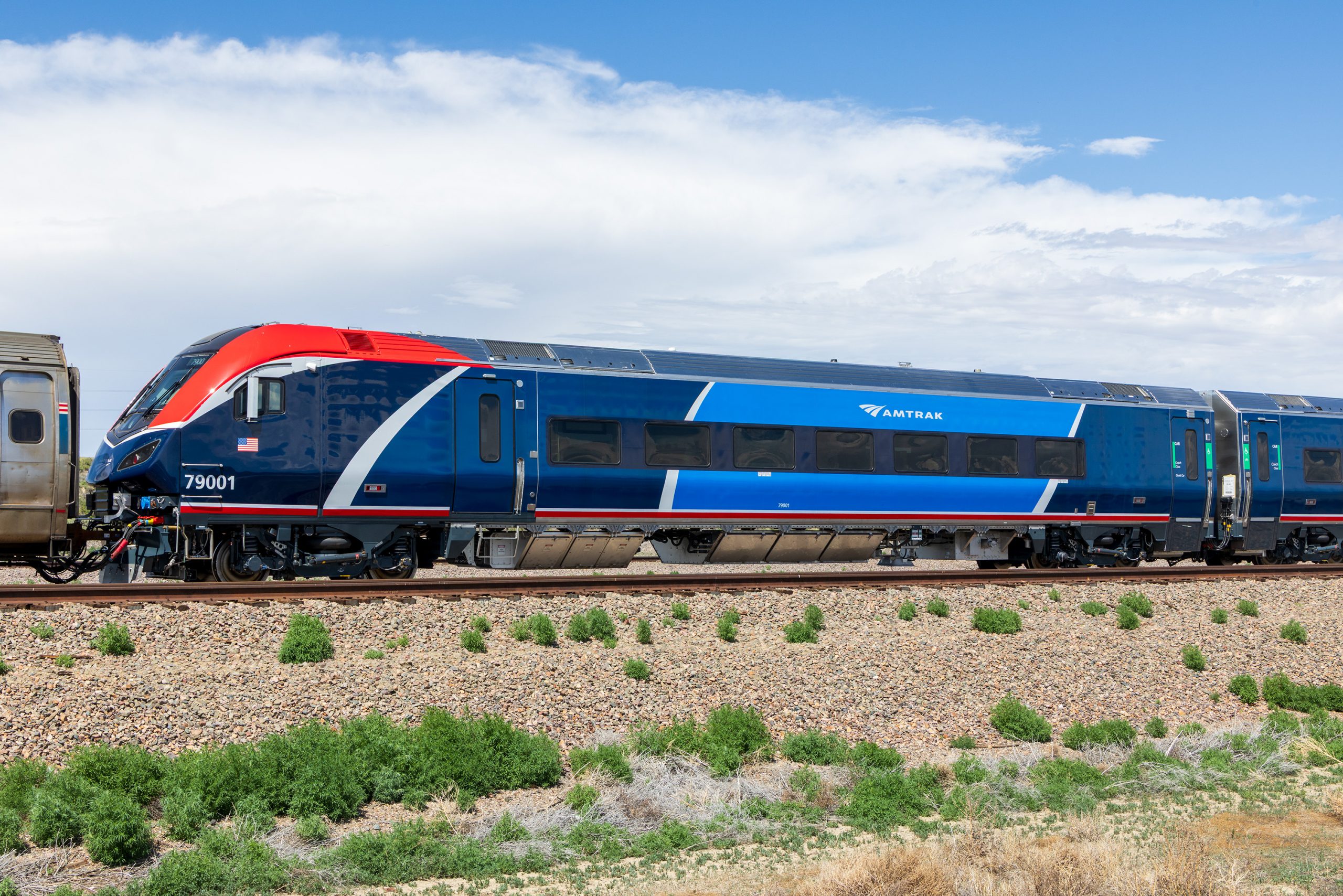
Let’s talk about the Airo train sets for a bit. These are Amtrak’s solution (and branding) for replacing the aging single-level fleets used on many regional and state trains. They’re a Siemens ALC42E (or similar, such as the SC44 on the Cascades trains) and a semi-permanently coupled set of Siemens Venture cars, with a combination coach / cab car on the opposite end.
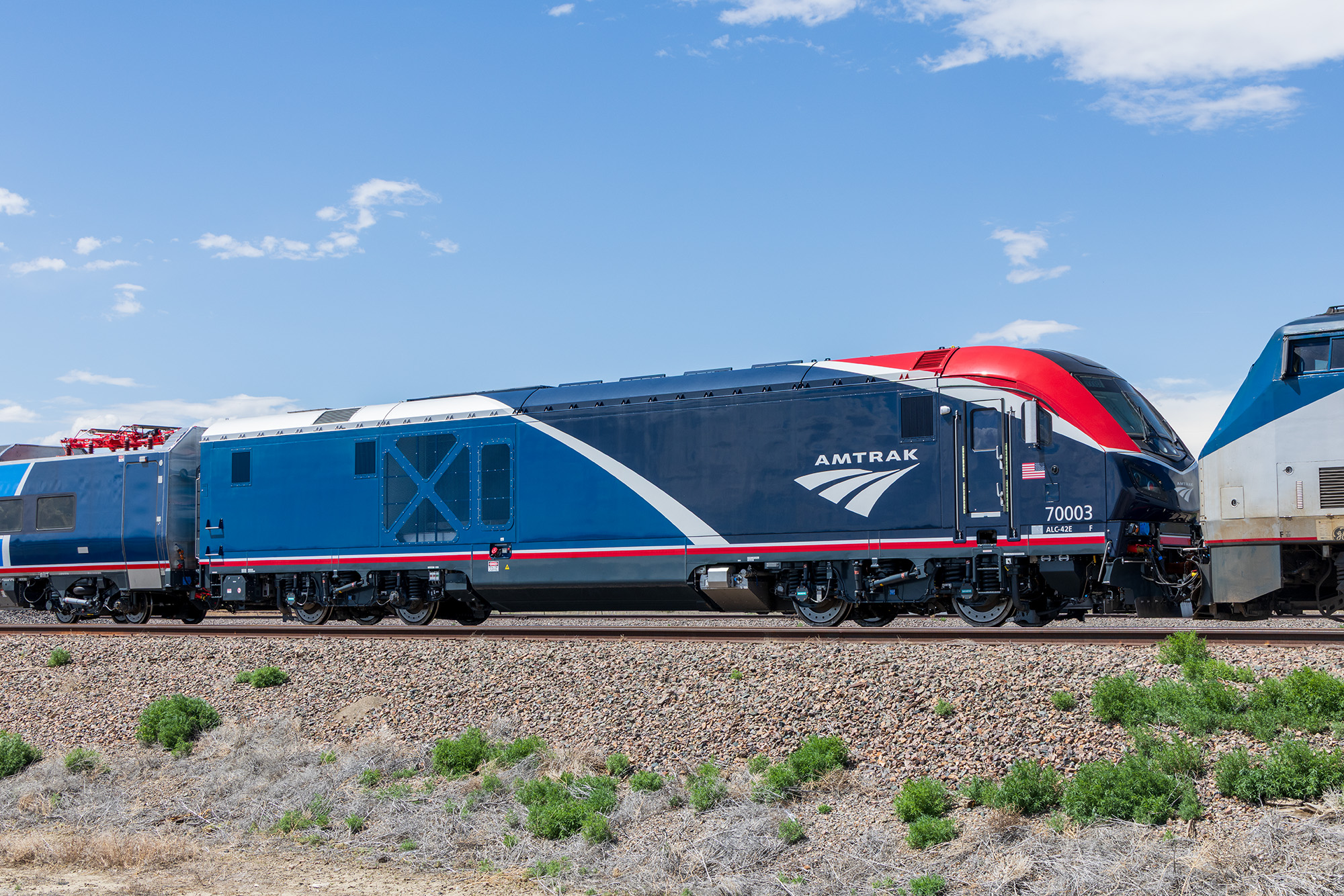
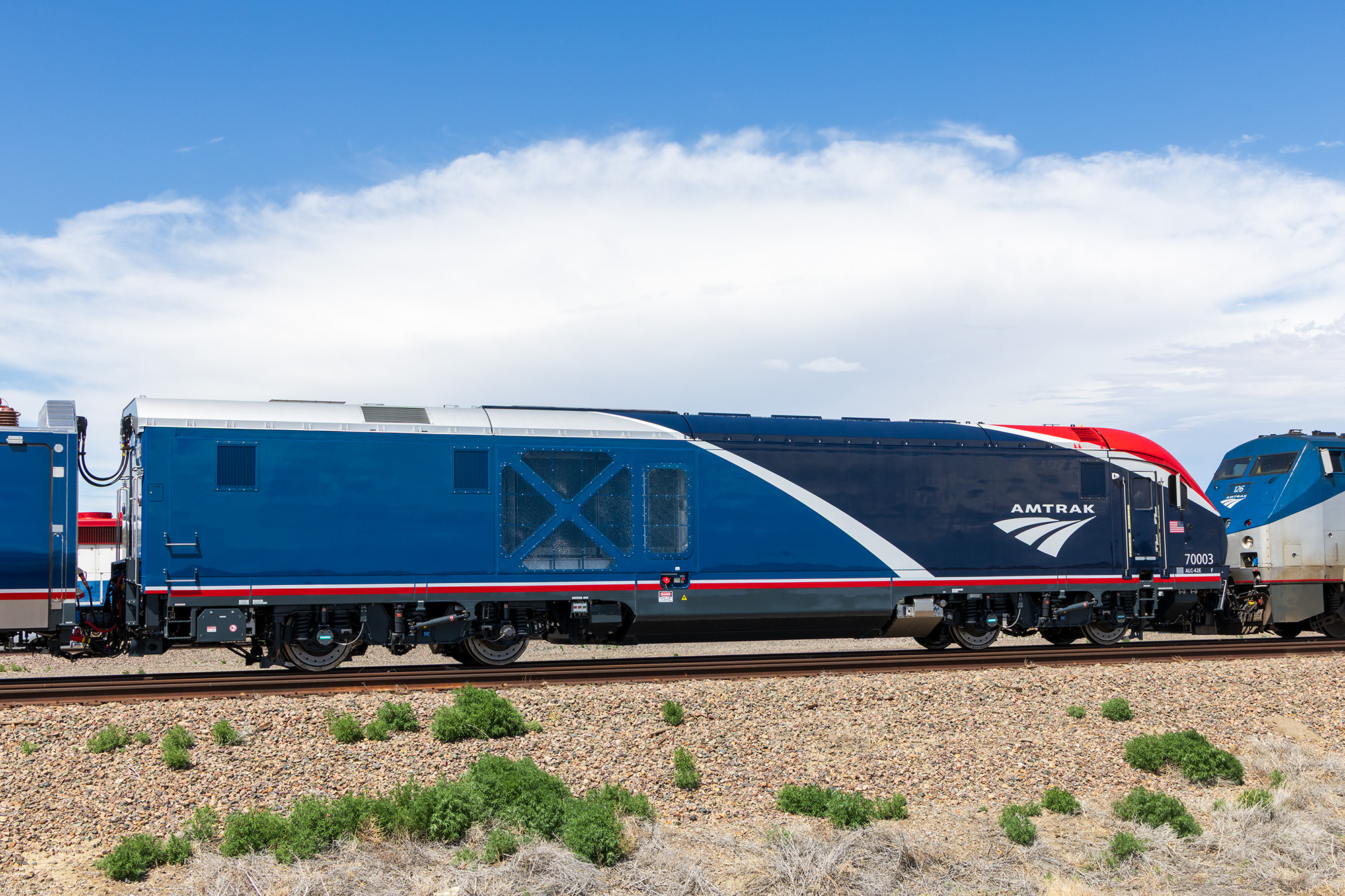
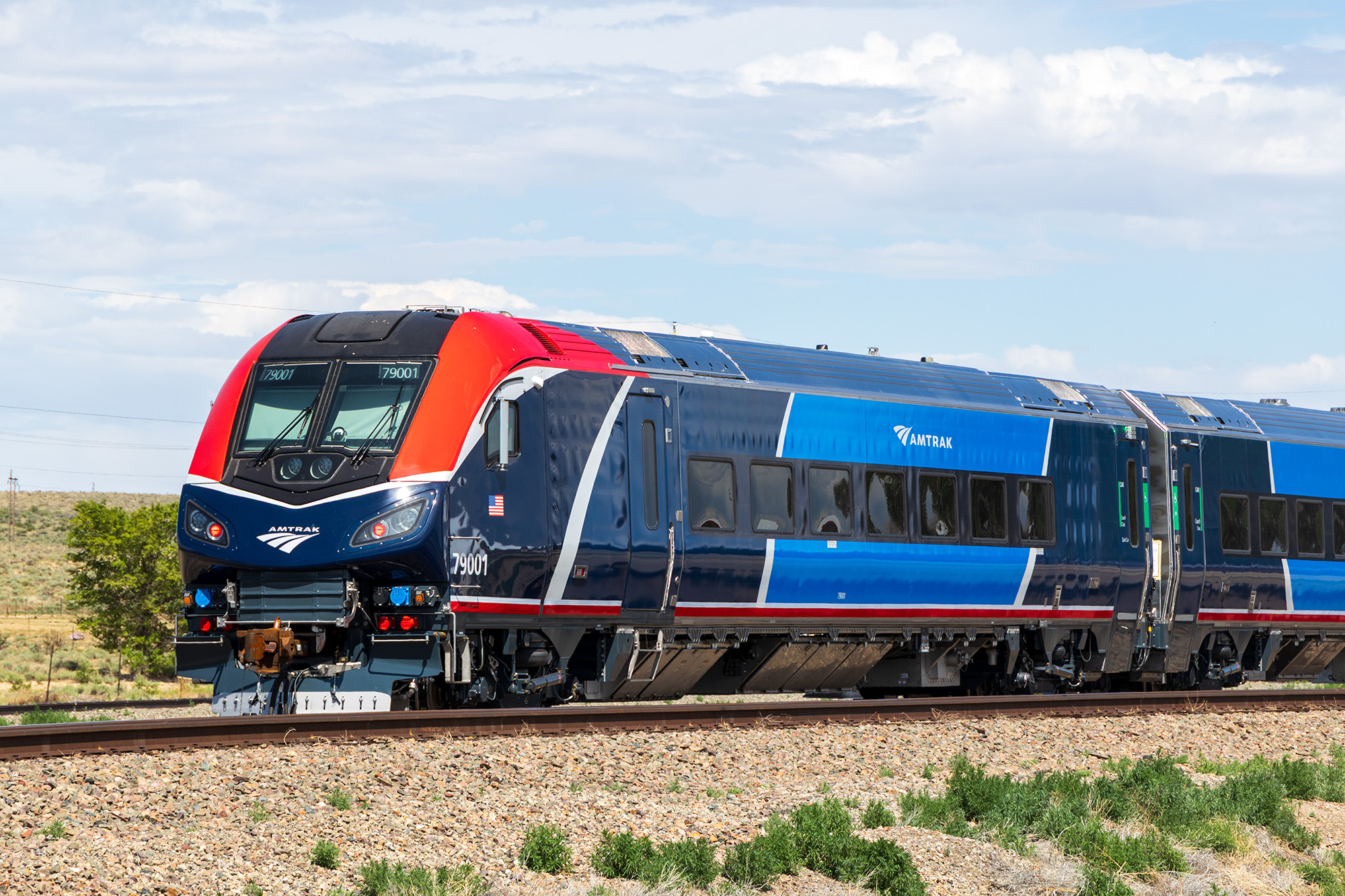
This isn’t the first set by any means. The first set was one of the Cascades sets, delivered to the TTC back in 2025 and now undergoing final testing in the Pacific Northwest. However, this is the first of Amtrak’s 75 “Northeast Corridor” dual-power sets. These have the new ALC42E variant of the Charger locomotive, which can operate either off its internal diesel engine, or accept power directly into its high voltage DC bus from a trailing power car.
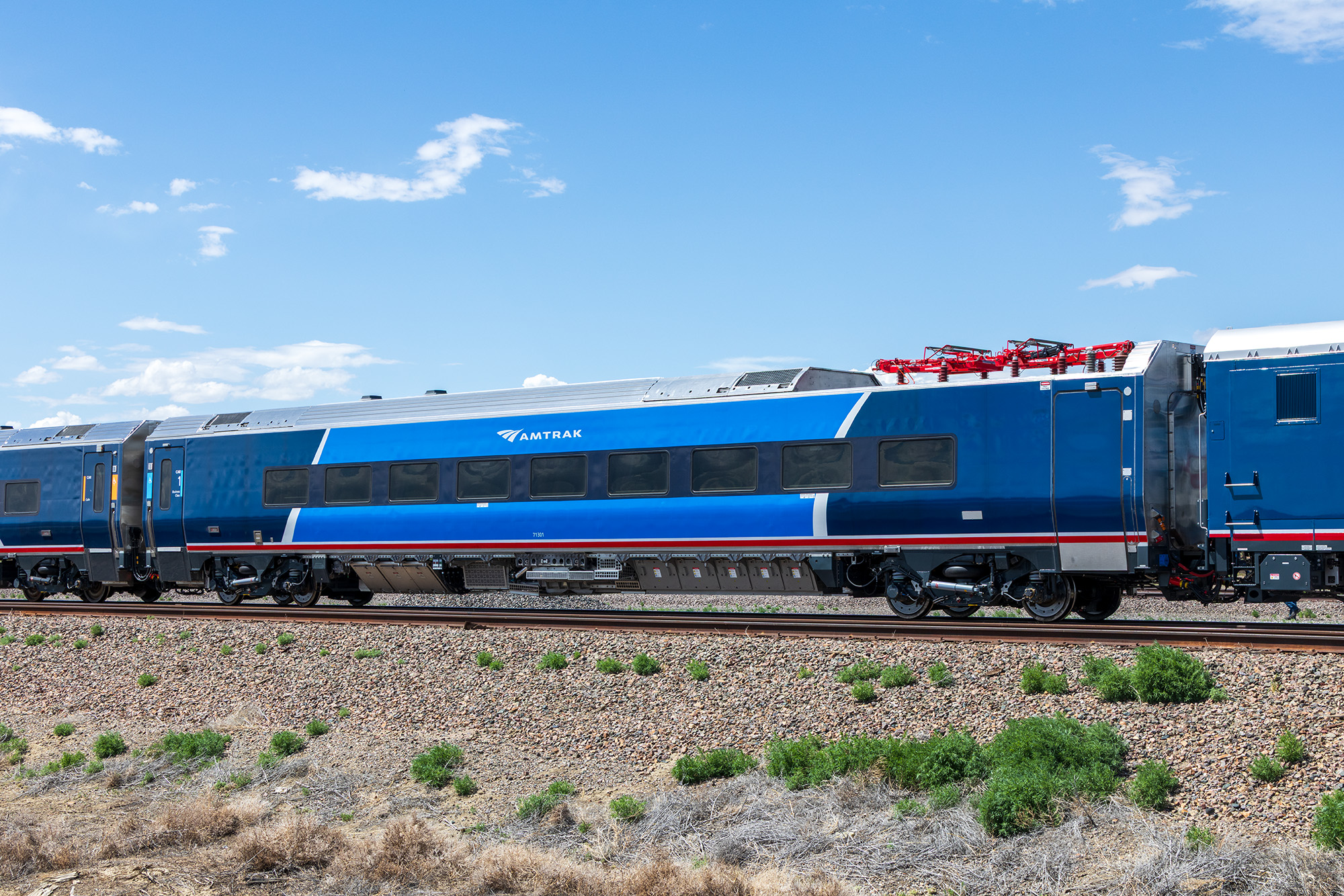
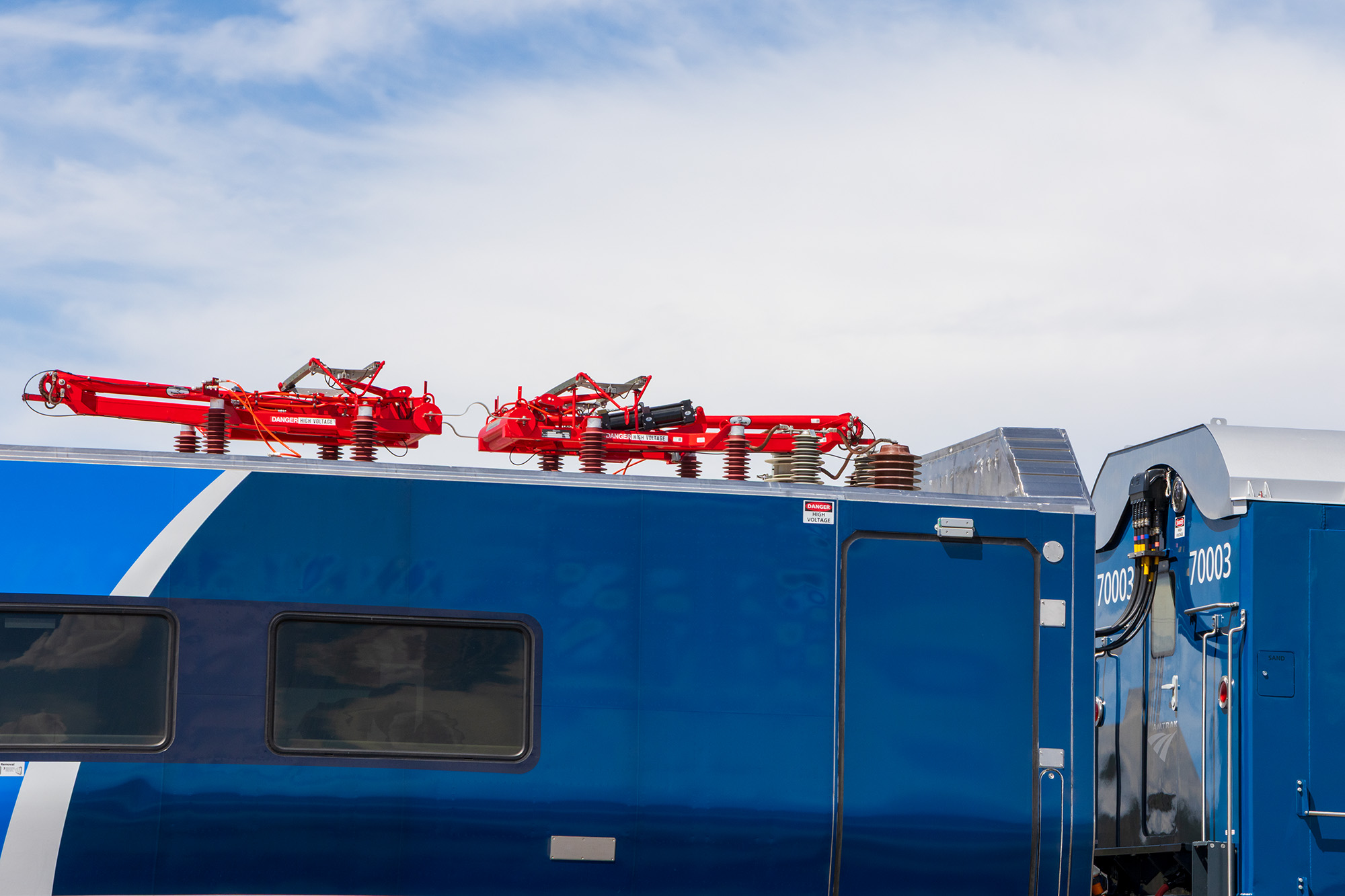
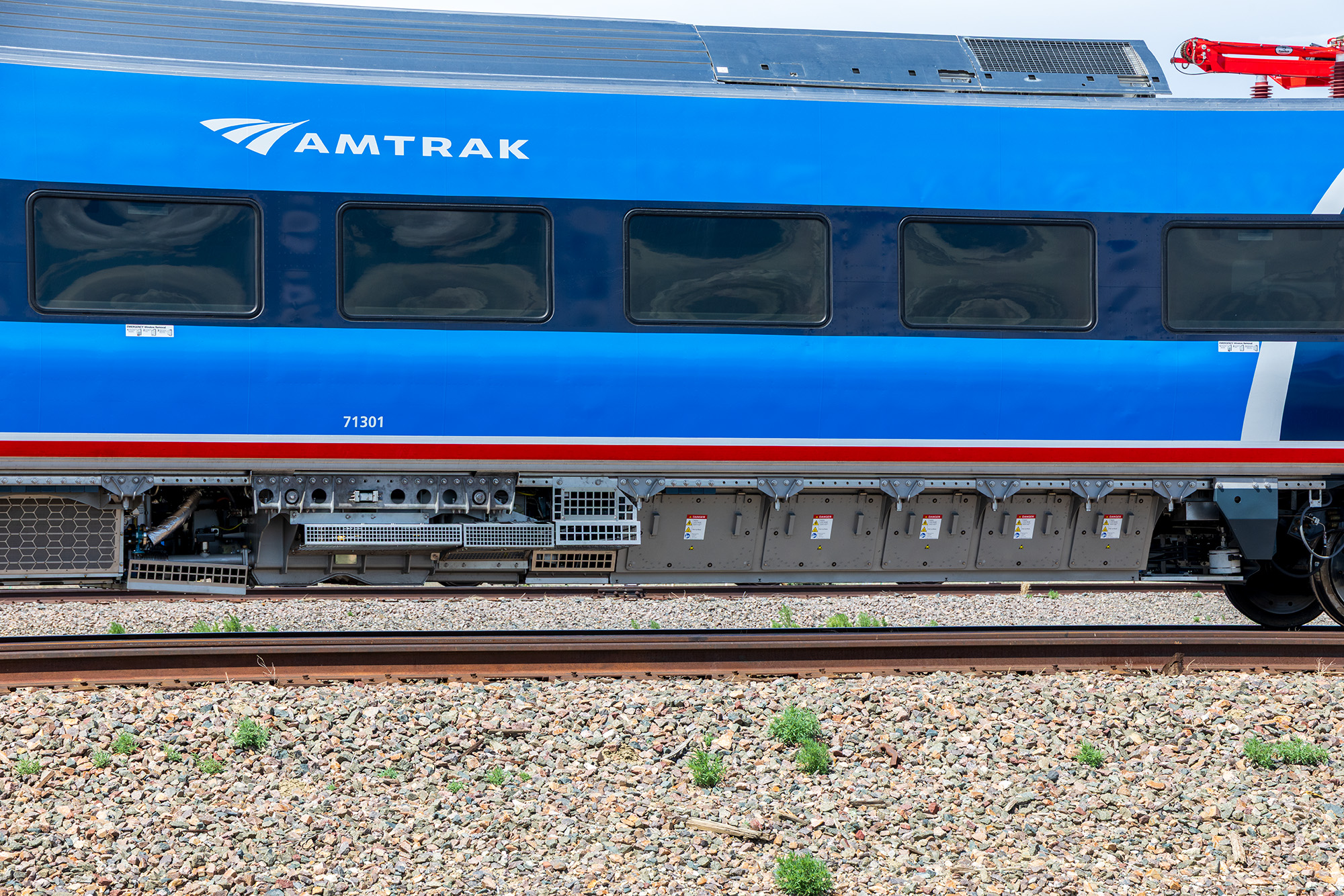
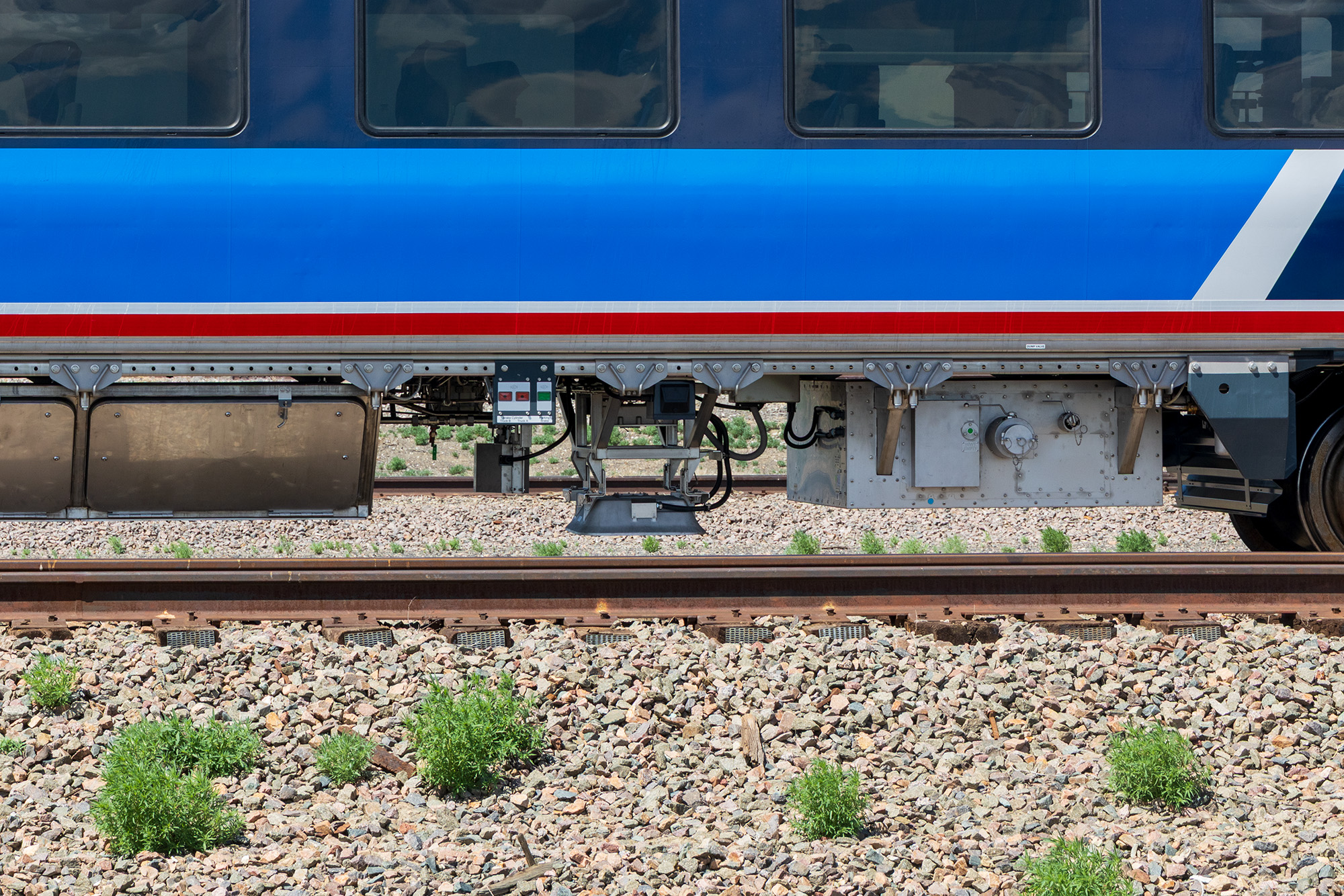
For 58 of the 75 sets ordered, this trailing car will be an “auxiliary power vehicle” or APV. The APV is a coach car with a pair of pantographs on top, a transformer and rectifiers under the carbody to convert the overhead line voltage (12.5kV/25kV) to match the locomotive’s DC bus voltage, and four additional traction motors/inverters. These trainsets are planned for use on which operate both on the electrified Northeast Corridor as well as on non-electrified track, and currently require a locomotive swap today between territories. This includes the Northeast Regional trains, the Carolinian, Downeaster, Hartford Line, Keystone Service, Palmetto, Pennsylvanian, Valley Flyer and Vermonter, per Amtrak’s press releases.
The remaining 17 sets will have a battery car – which we haven’t seen yet – which will allow them to operate the last few miles over third rail into New York City under stored electrical power (avoiding the third rail shoe entirely). The battery will be charged off the diesel while running outside the city, and will then operate the train without the diesel generator running while coming into Manhattan. This will be for trains currently using the P32DM dual mode locomotives along the Hudson River line and West Side Connector into Penn Station – the Adirondack, Empire Service, Ethan Allen Express, and Maple Leaf.
The First NEC Dual-Mode Airo
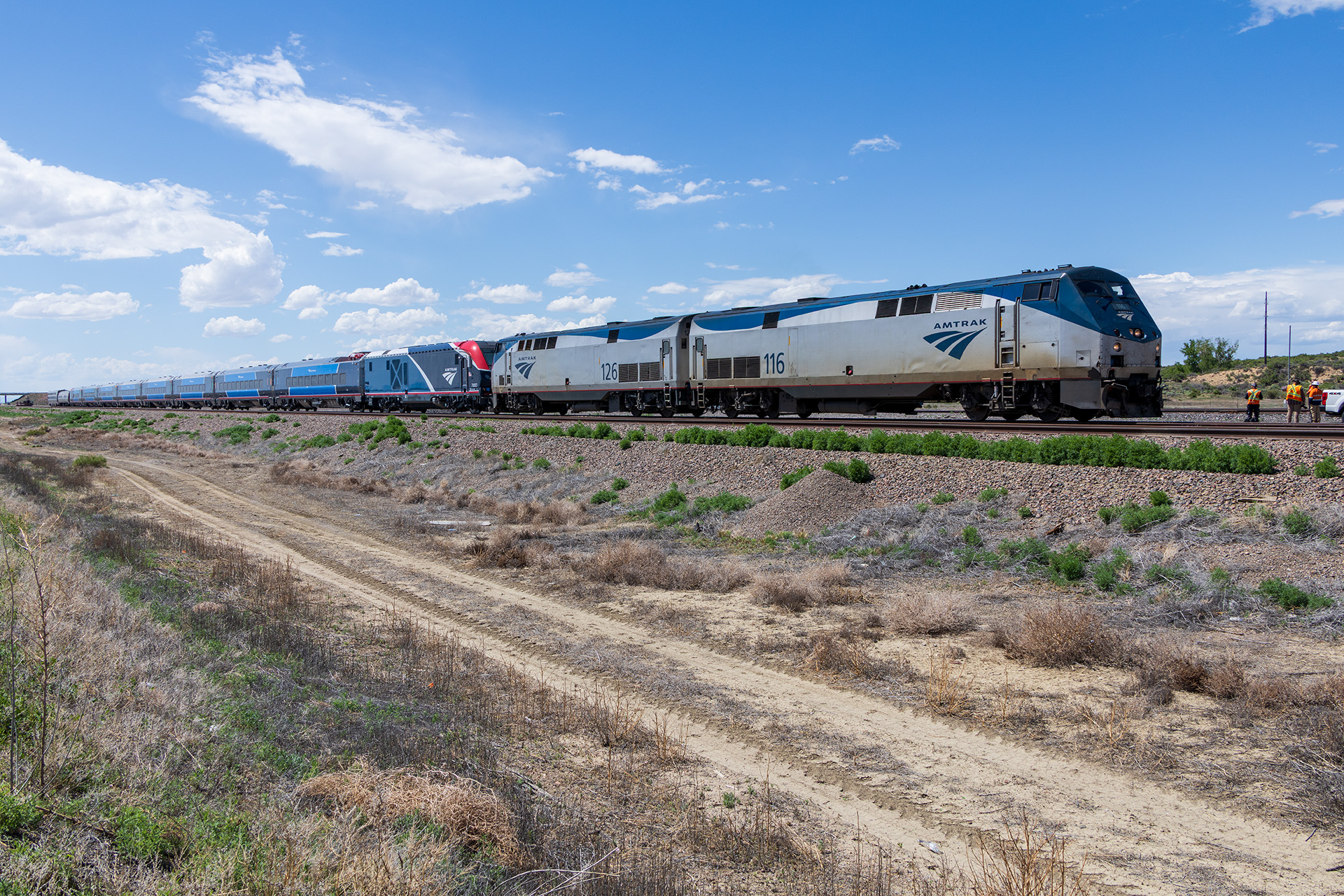
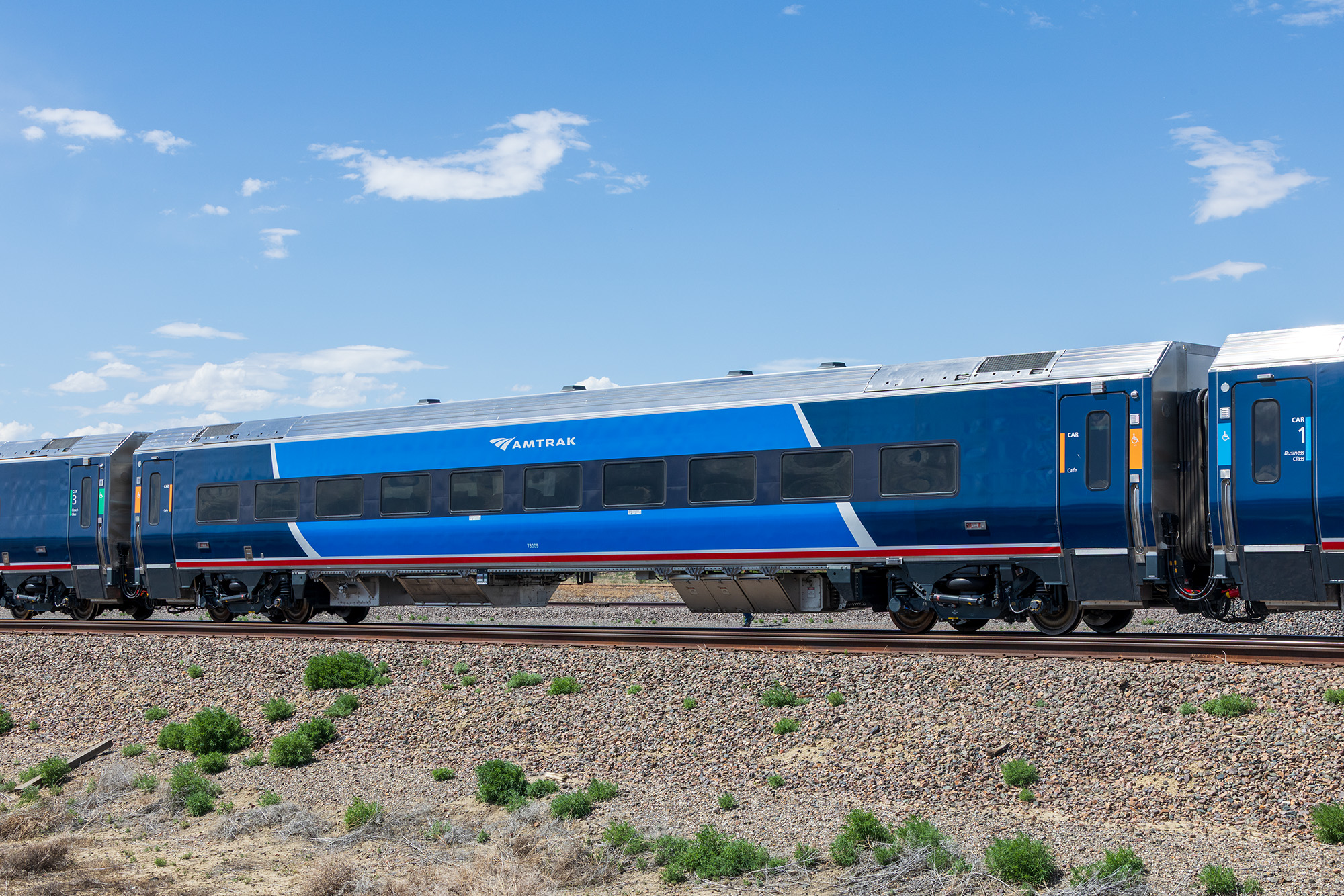
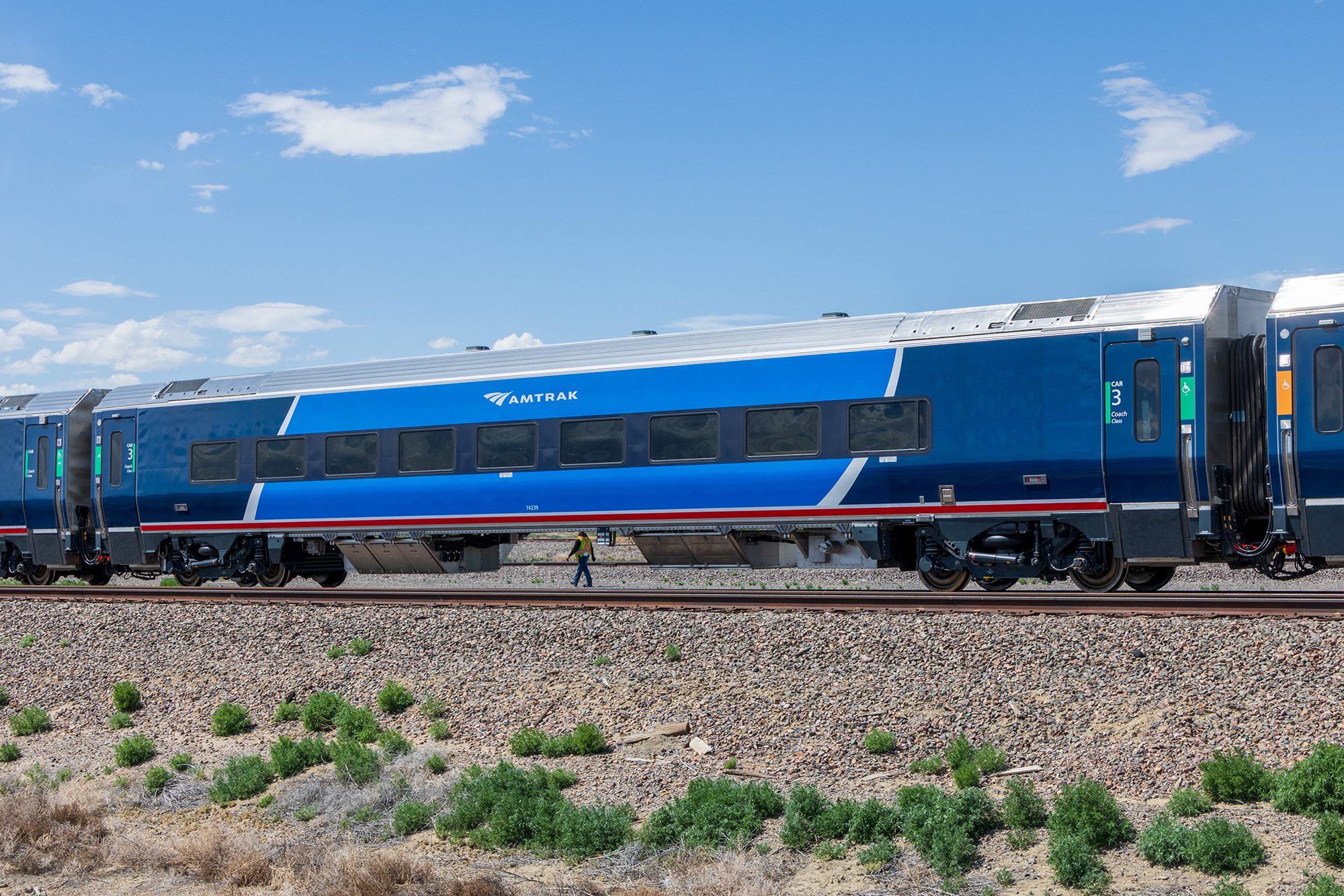
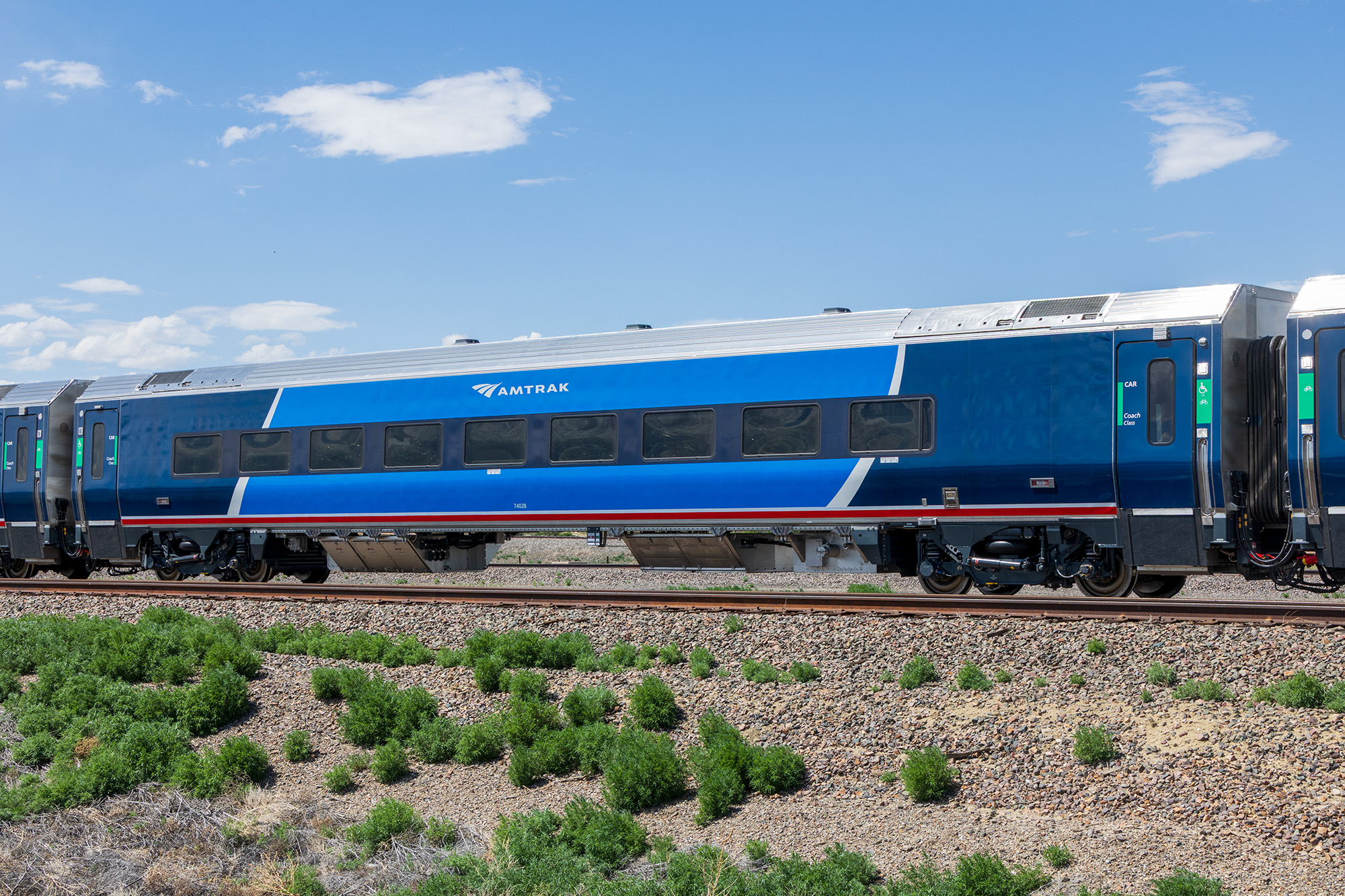
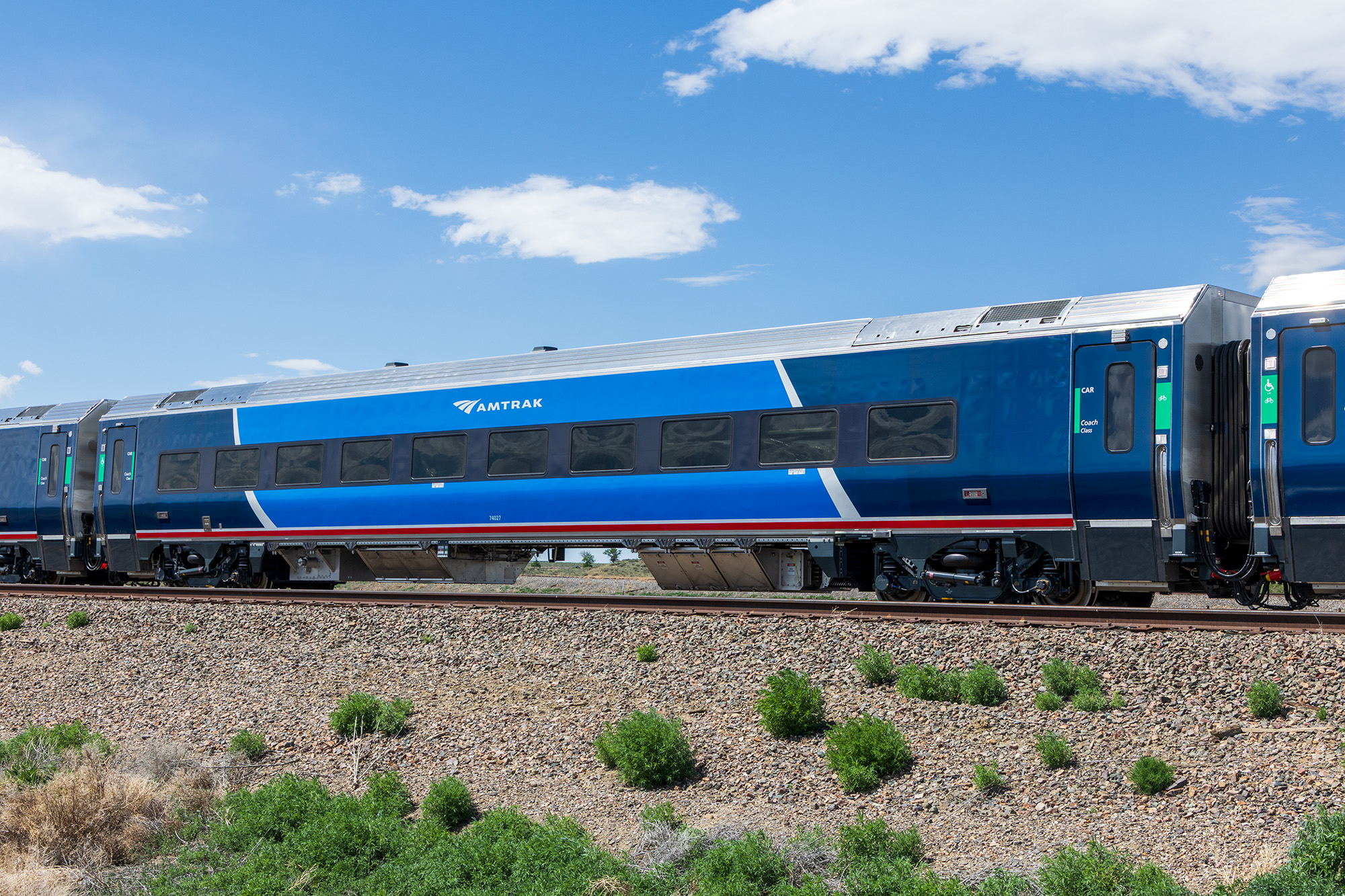
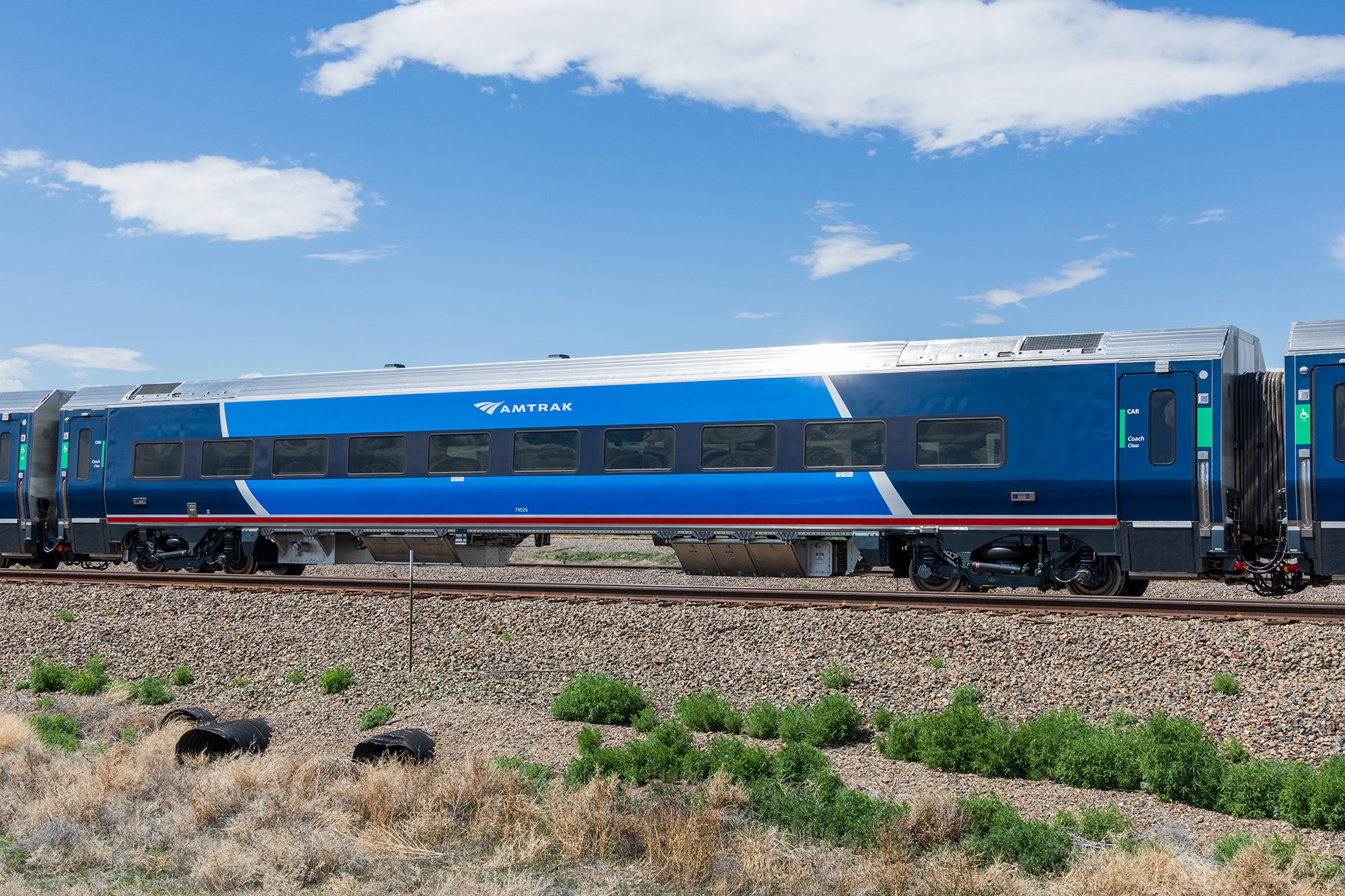
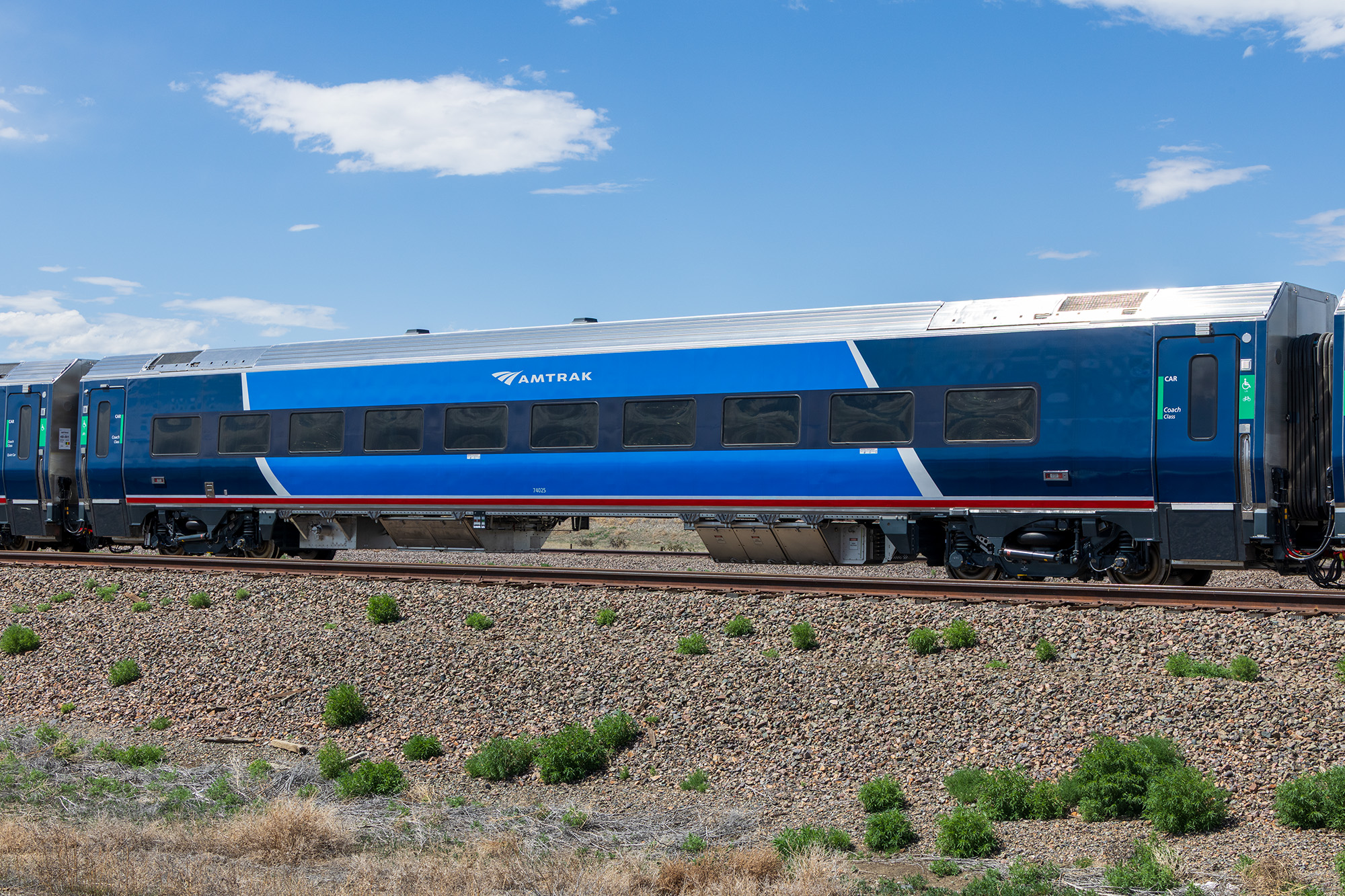
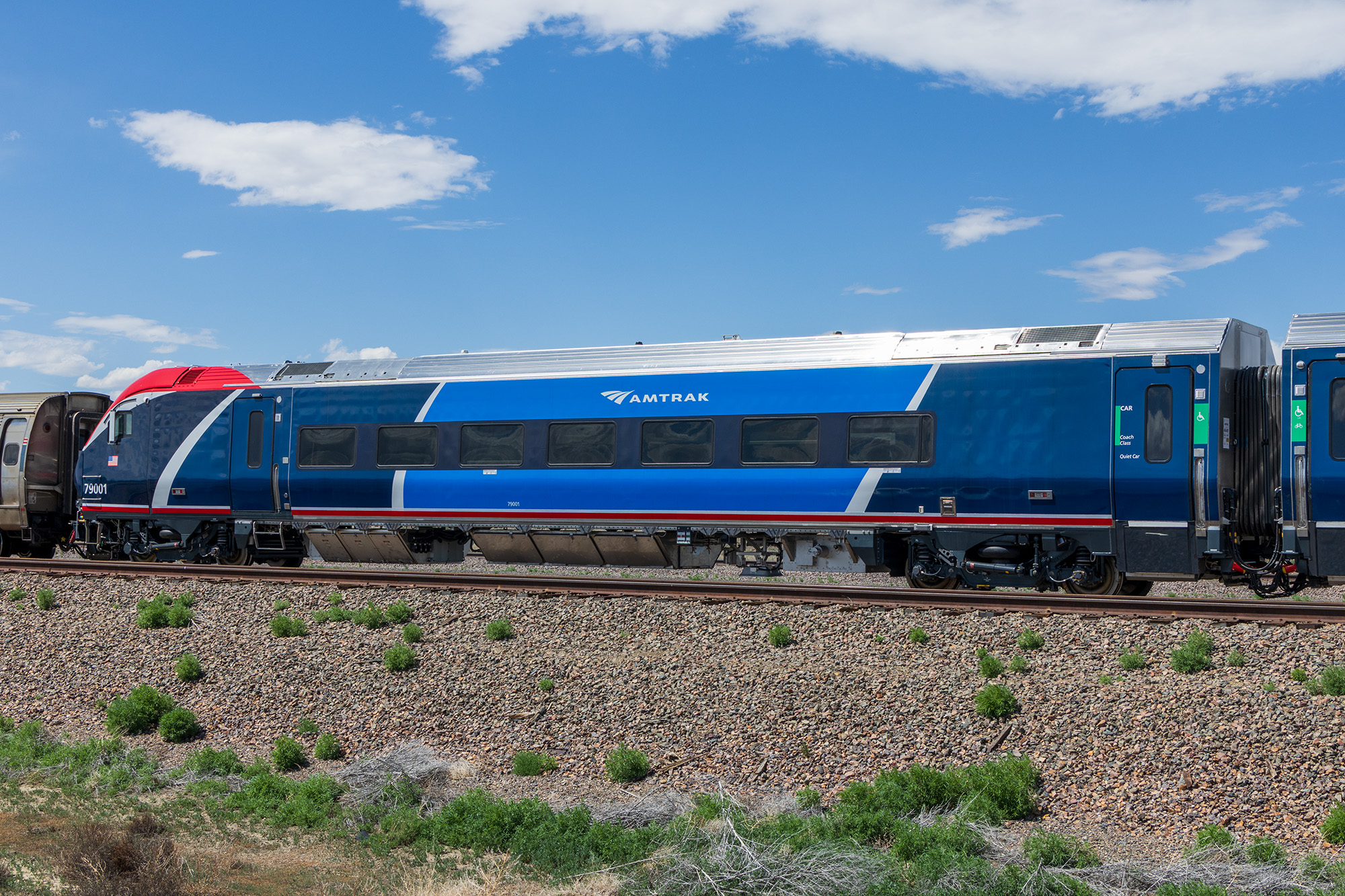
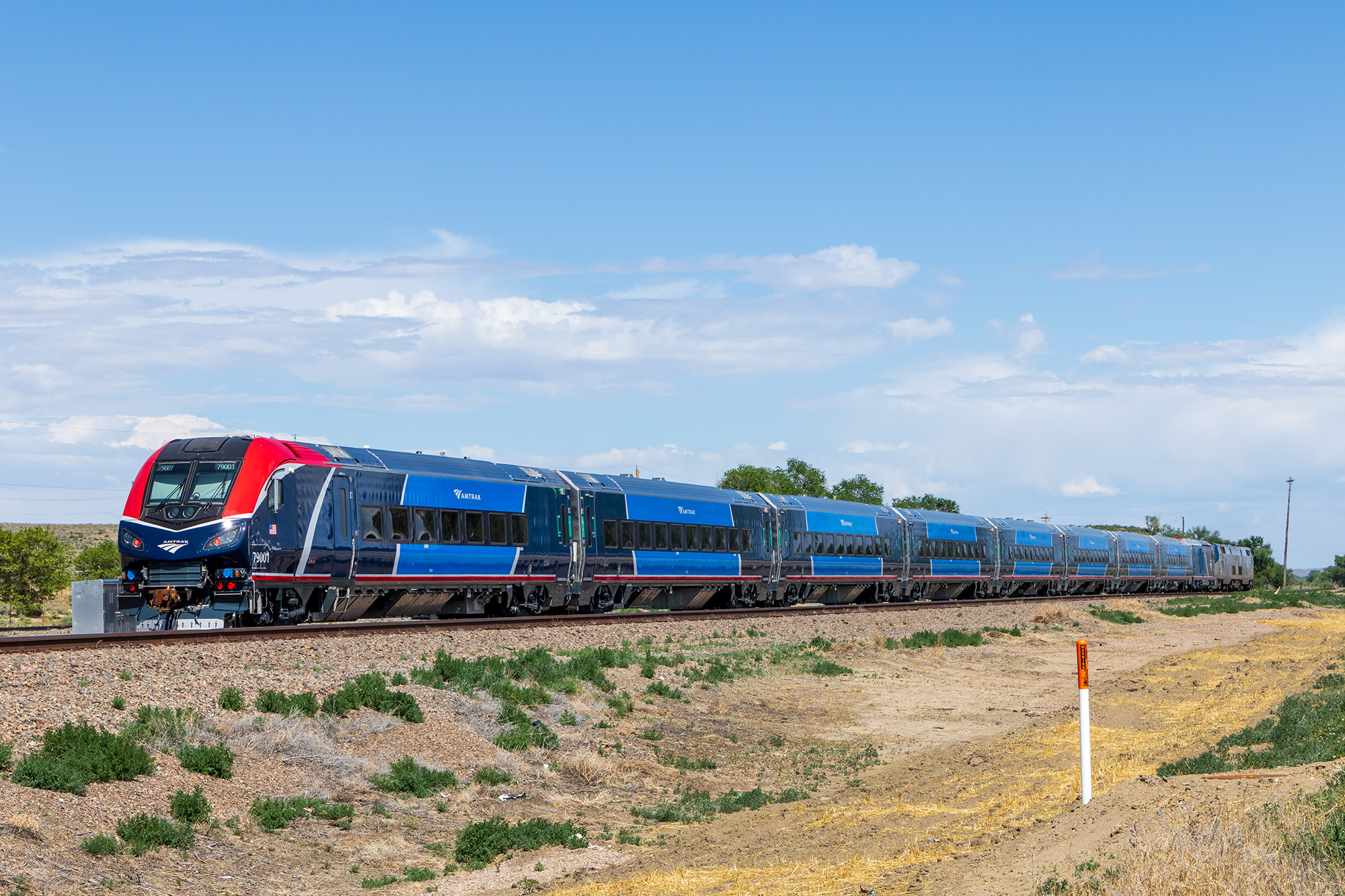
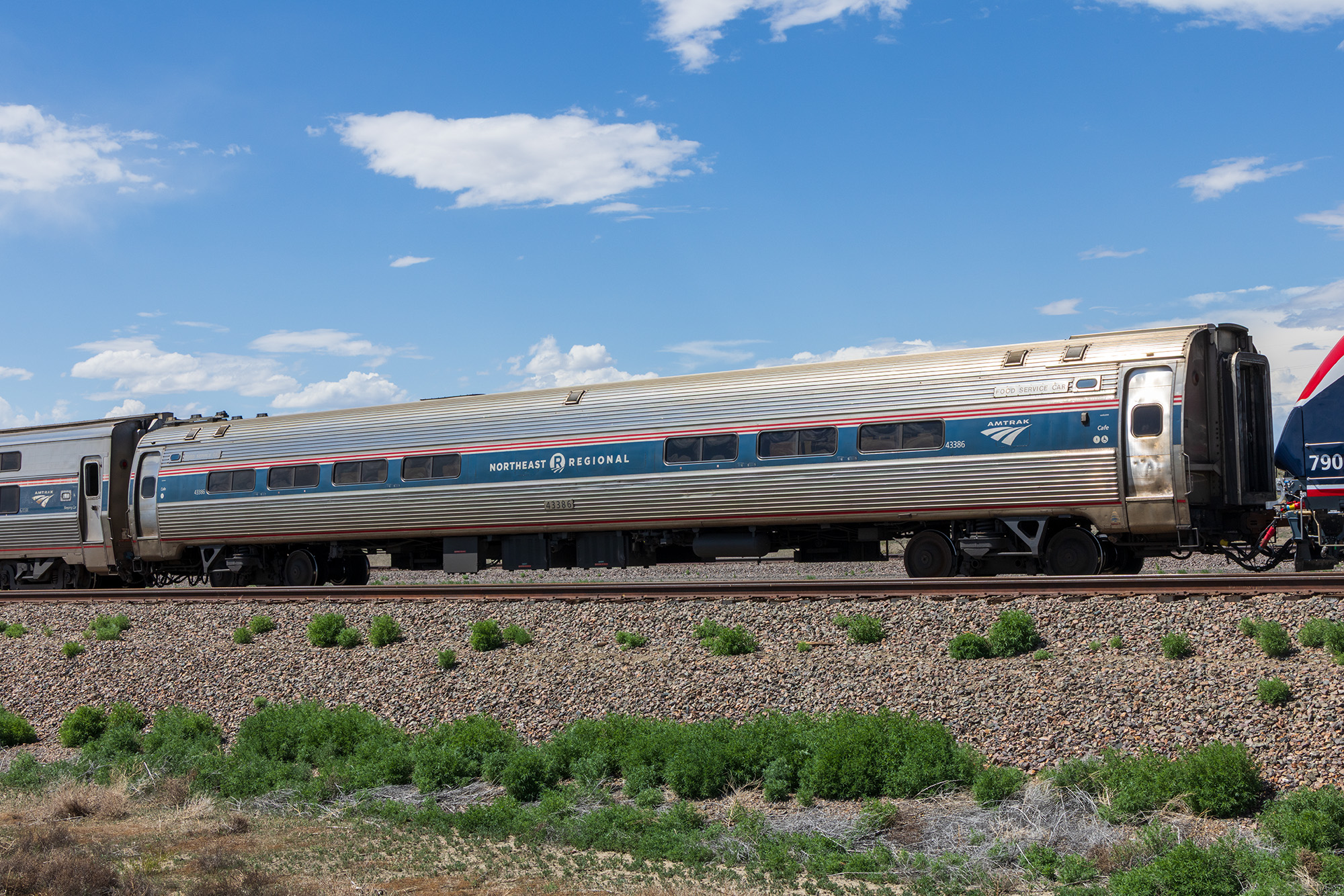
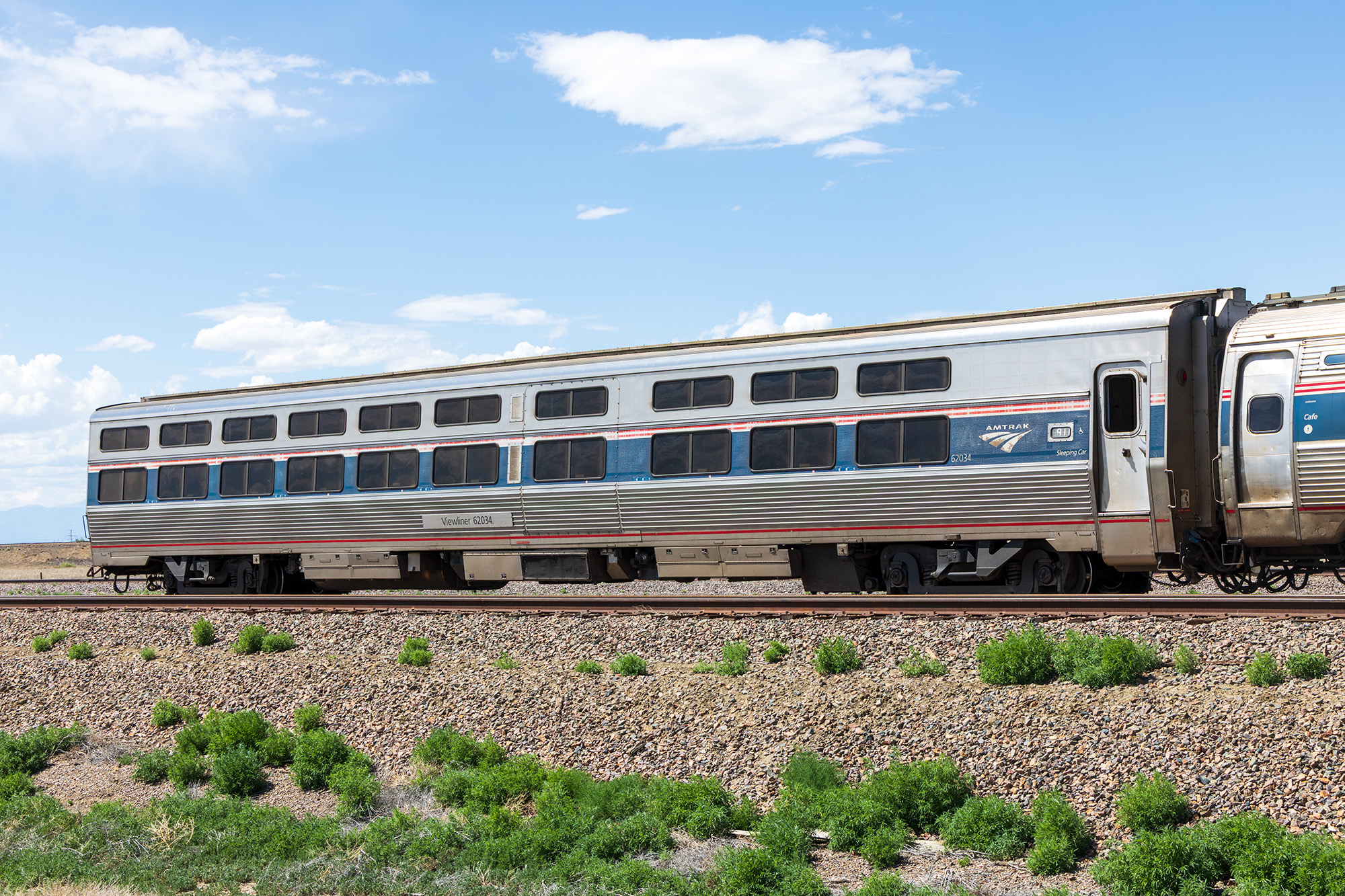
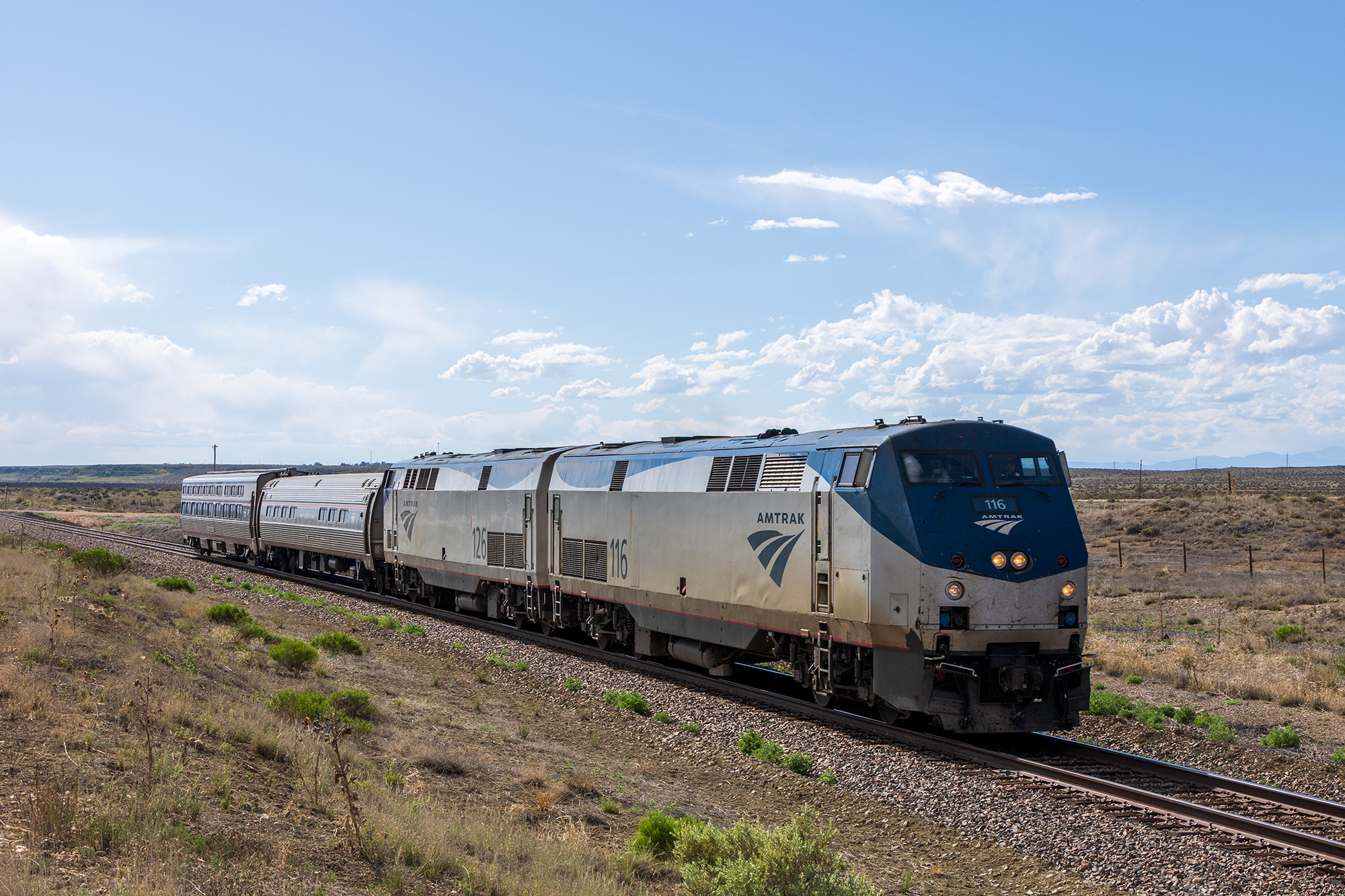
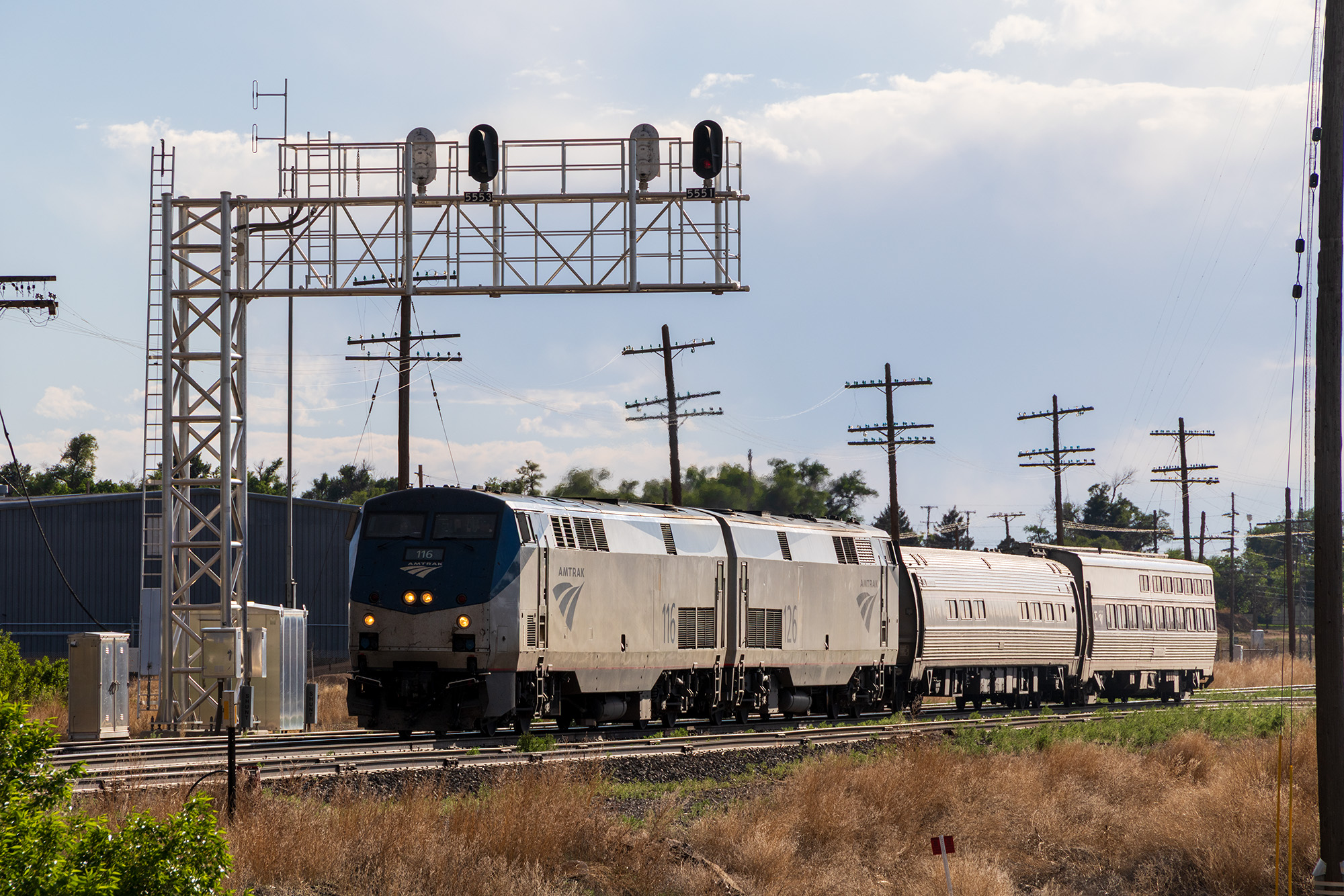
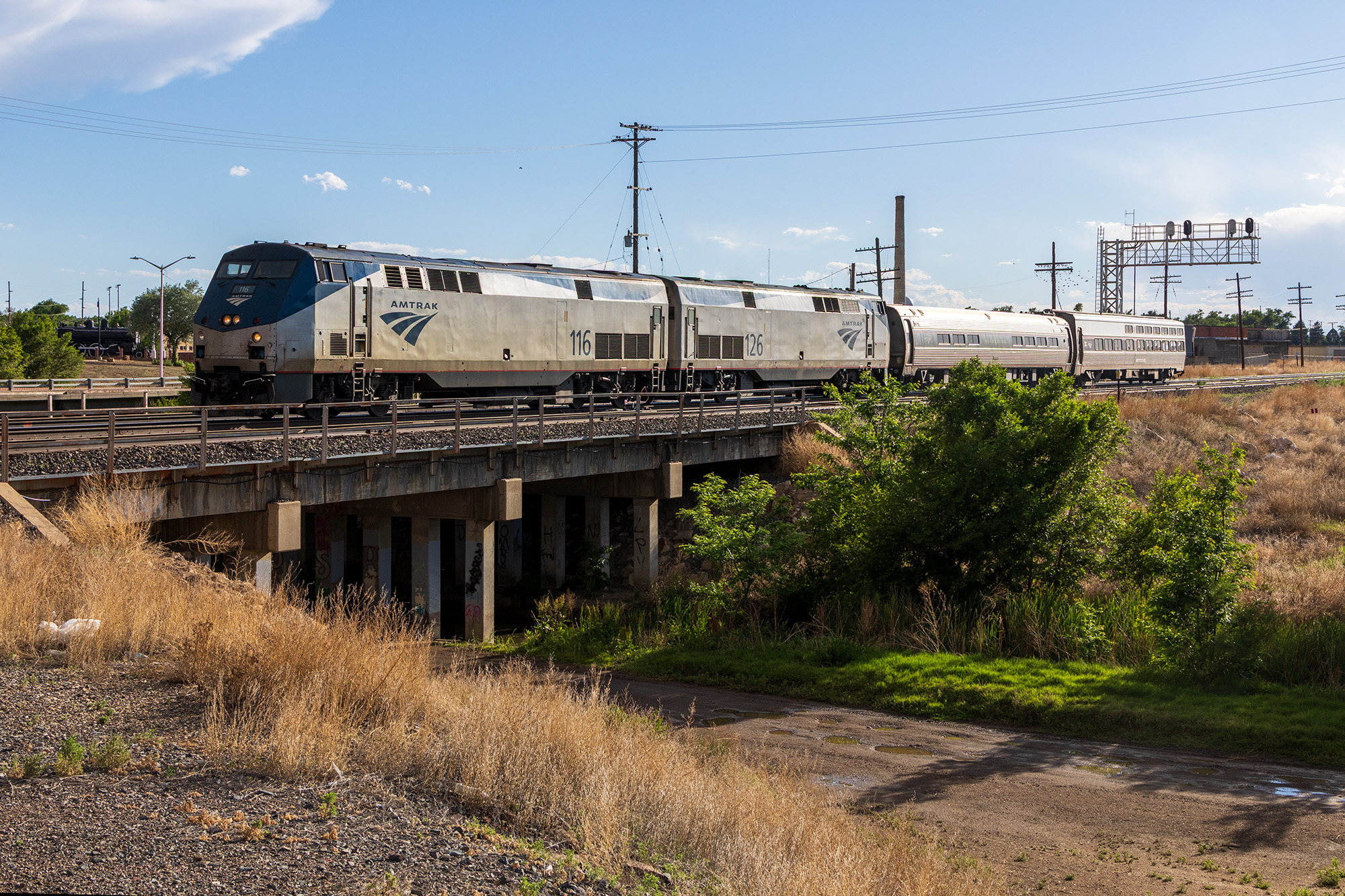
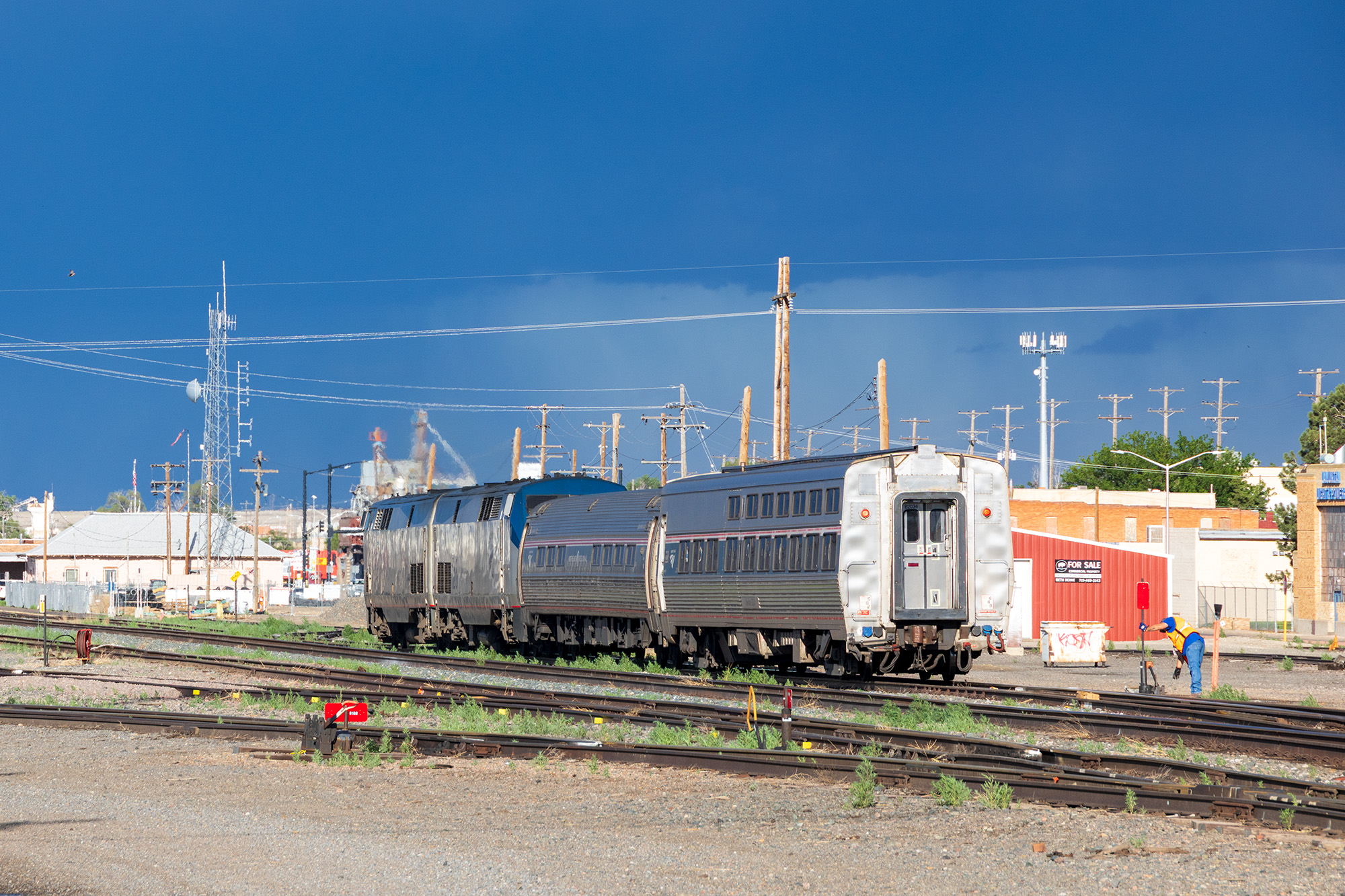
AMTK P42s 116 and 126 left California on May 27 a couple hours behind Amtrak 6 (eastbound California Zephyr), with the first of the dual-mode Northeast Corridor (NEC) Airo train sets in tow. This included ALC42E 70003, auxiliary power vehicle / business class coach 71301, cafe car 73009, coaches 74239, 74028, 74027, 74026, 74025, coach/cab car 79001, and then two cars for accompanying personnel – Viewliner sleeper 62034 and Amfleet cafe/food service car 43386. (Presumably the two extra cars also were to meet axle count requirements for the move before picking up the Airo set and after dropping it off.)
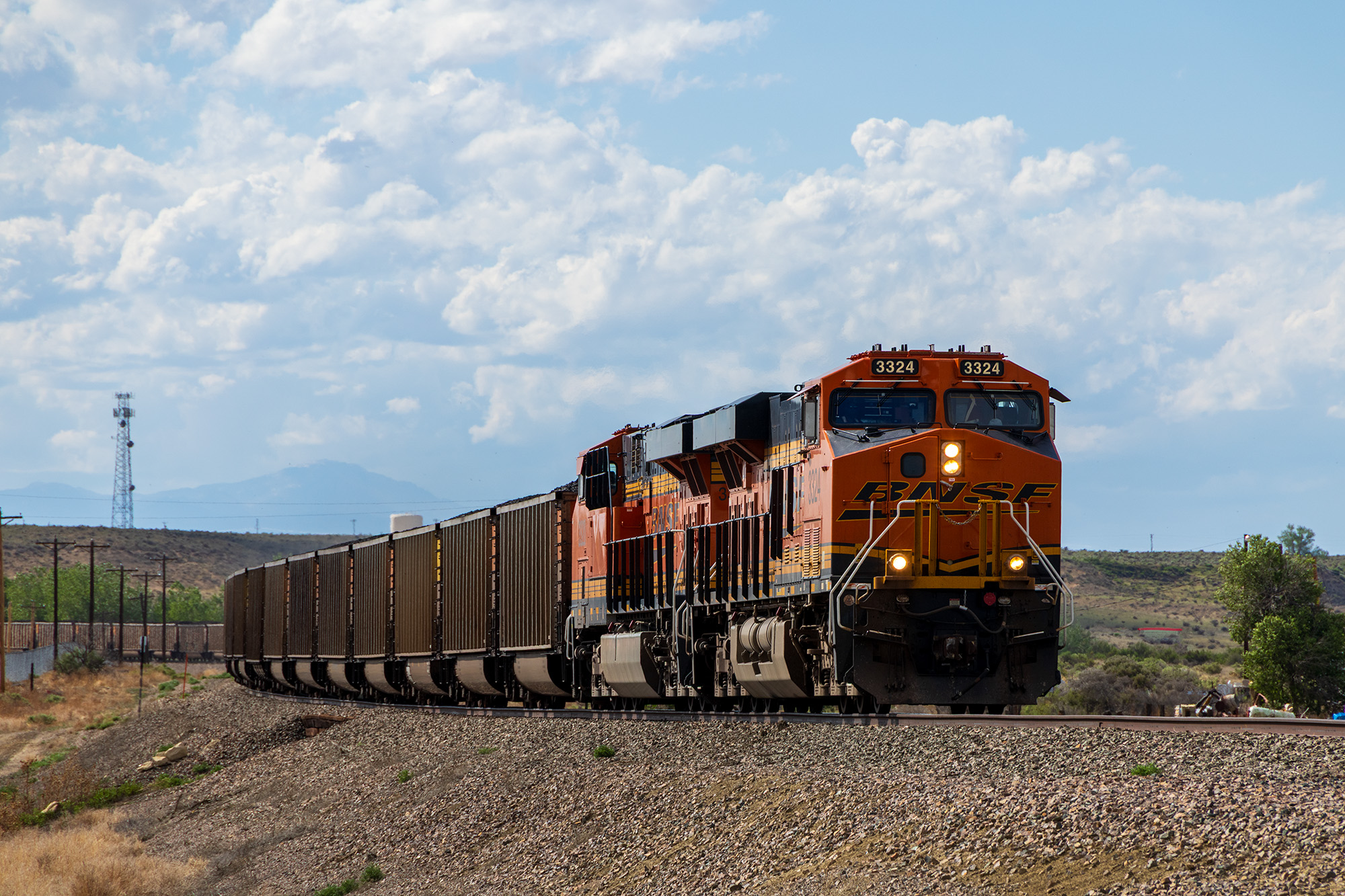
They arrived in Denver on the 28th still trailing #6, and overnighted at Denver Union Station. Around 9am on Friday, May 29th, they headed south over the Joint Line, following a loaded coal train (C-CDMSLP – Cordero Mine to Smithers Lake). The weather to the north was dreary and rainy, and I had some more important things to attend to, so I didn’t bother fighting through the traffic to see it. But I got word they had just made Colorado Springs a bit after noon and the weather to the south was clearing, so I figured I’d go see the new train.
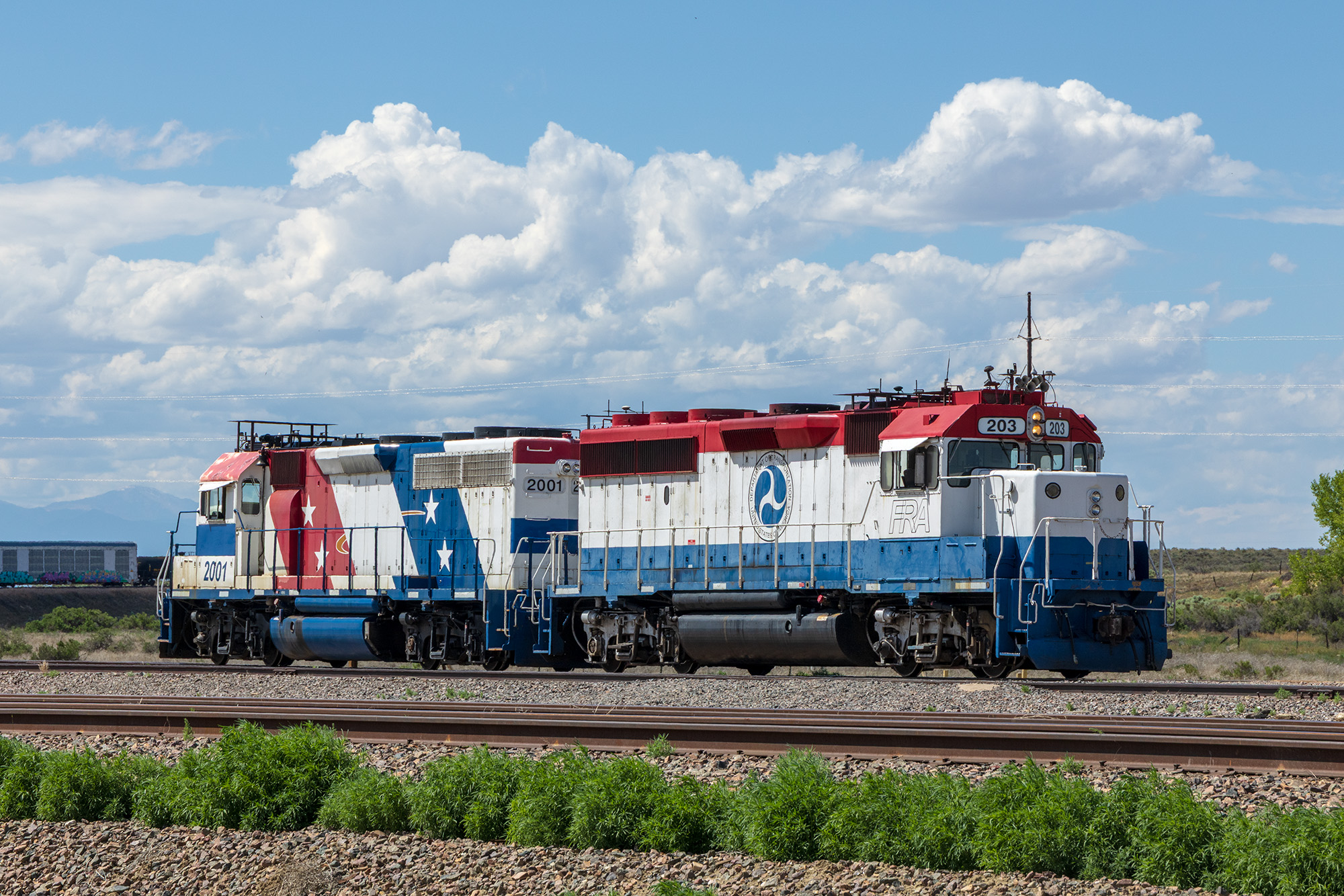
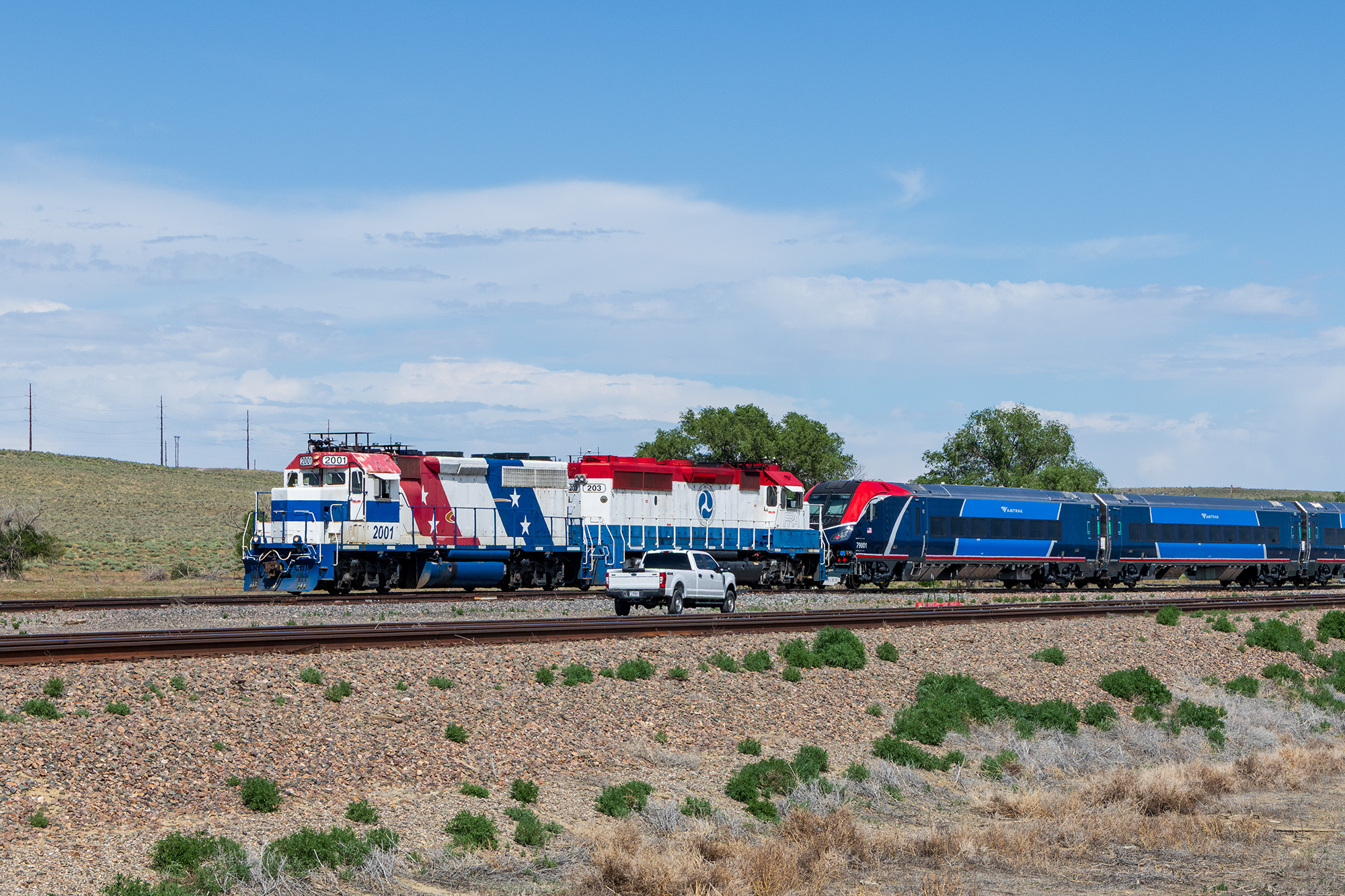
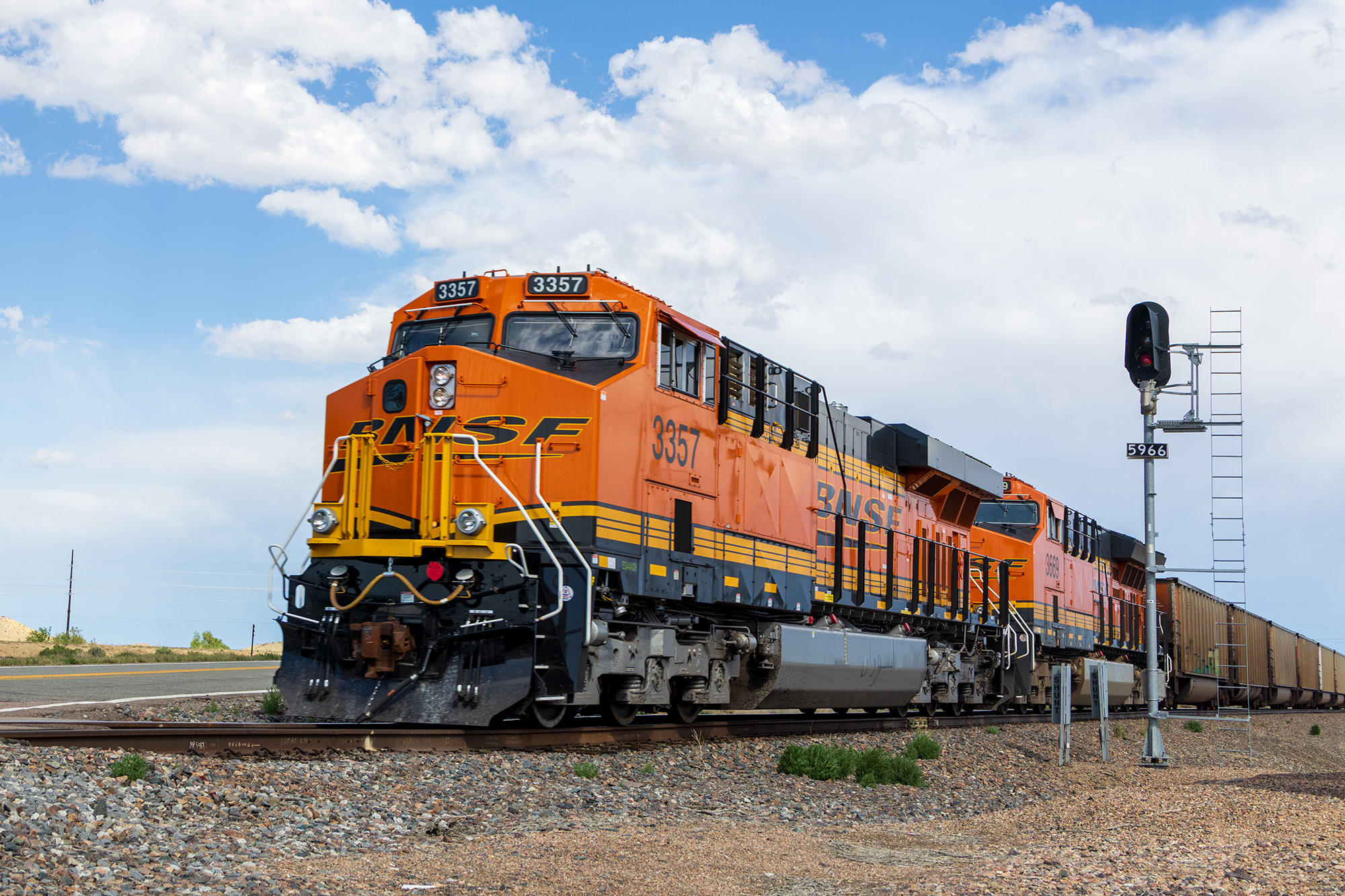
I wound up not actually finding them at Avondale. They left Denver following the coal drag, so I though they were still back there. Instead, they’d apparently run around at the Springs and were out in front and flying south of town. Still, given I was mostly out for a roster shoot and to just see the thing – in particular the APV – it was fine. Plus I got to see two the test center engines actually out at the interchange for the pickup.
It took a couple hours to get the switching done and the train off in to the test center, which gave plenty of time, if not great light or angles. From there, I figured they’d send the two P42s and extra cars east to La Junta and hook them up to #6, as they have in the past. However, once they got everything together, they just sat… and didn’t get a light at East Avondale. So I drove ahead to see if Colorado Pacific was out at NA Junction (no), and then drove back headed for home.
I met our previous coal load at Boone. Well, that’s why they hadn’t left – dispatch had once again stabbed the passenger train (okay, non-revenue passenger train, but still with a ridiculous horsepower per ton ratio, so it wouldn’t have delayed anything) for a coal drag again.
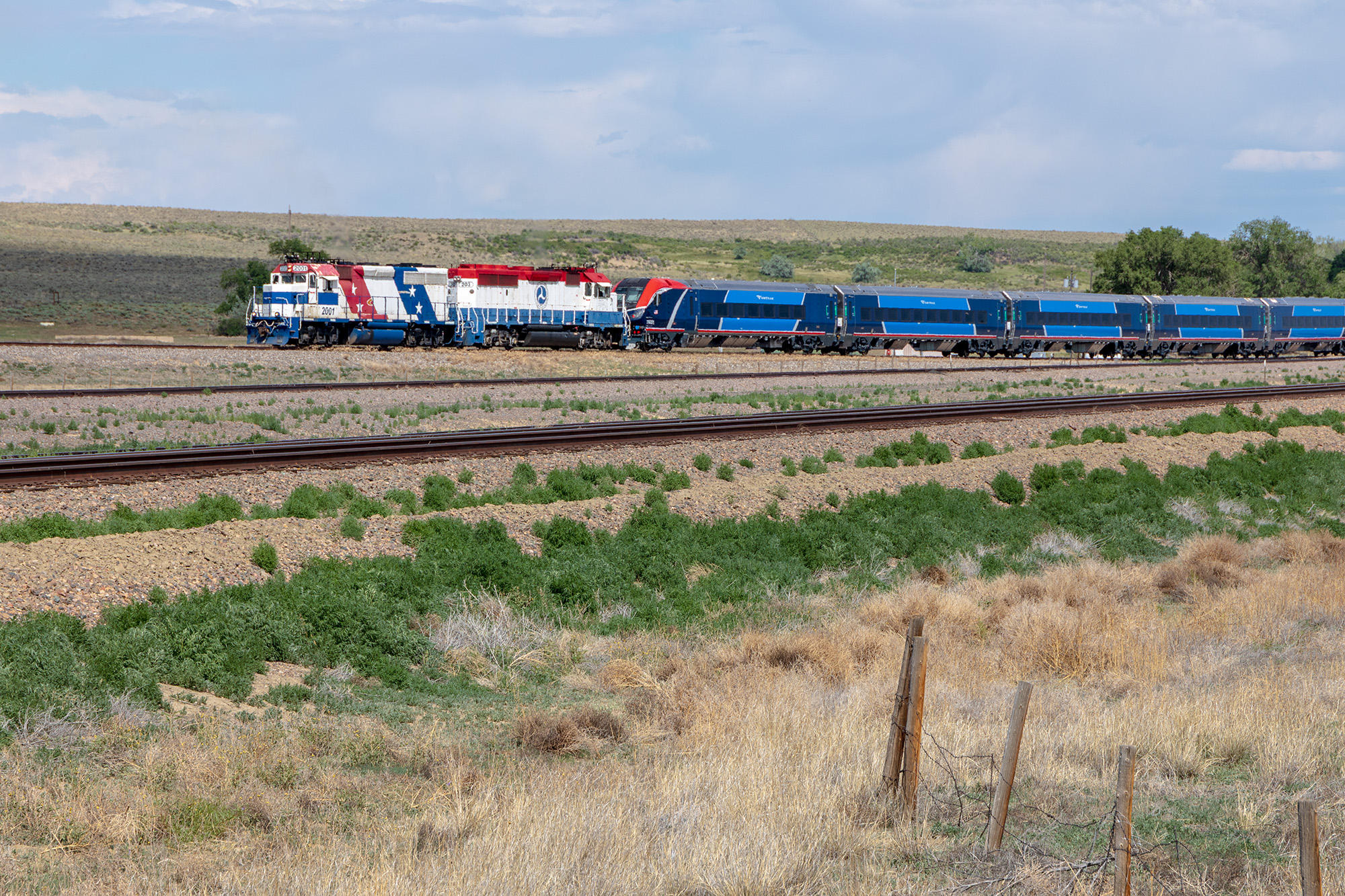
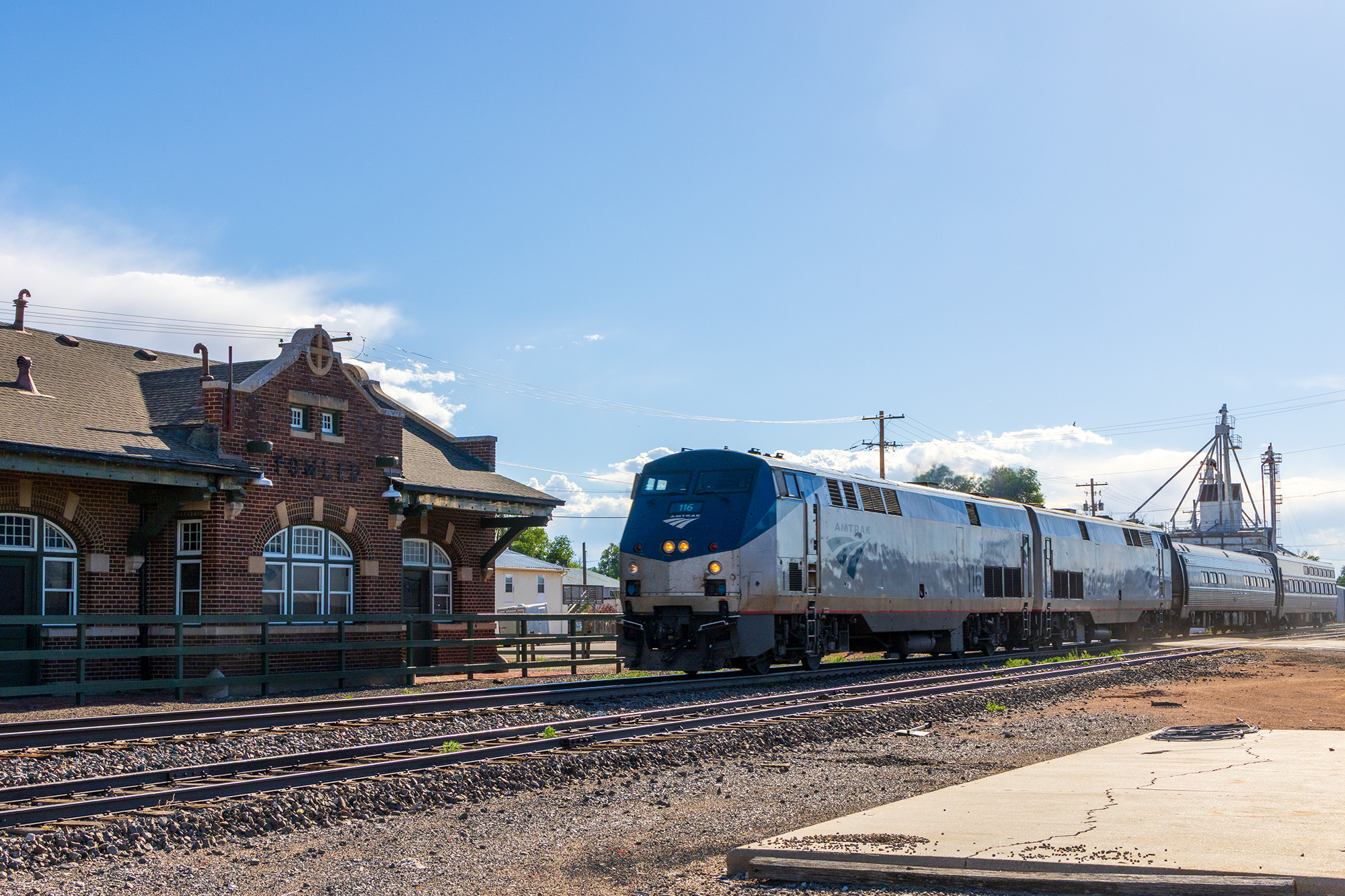
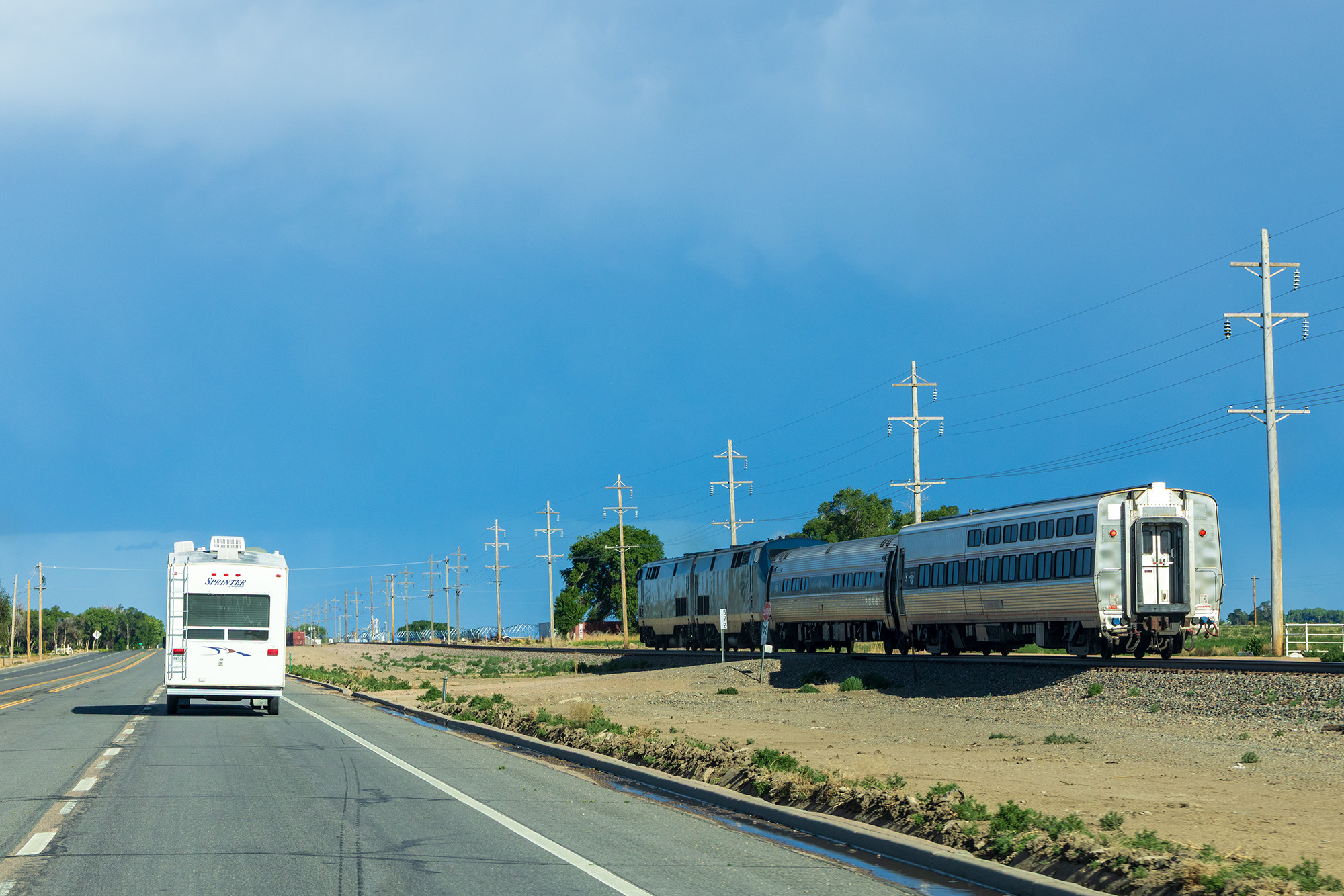
Sure enough, just behind it was Amtrak 116 with its short little train. Almost like a modern day version of Santa Fe’s Centennial State, the connector from Denver to La Junta. It took forever to go from NA Junction to Fowler. I suspect they stopped for a bit once they left CTC territory at NA Junction just to let the coal train get some distance, so they wouldn’t have to constantly be running on approach blocks.
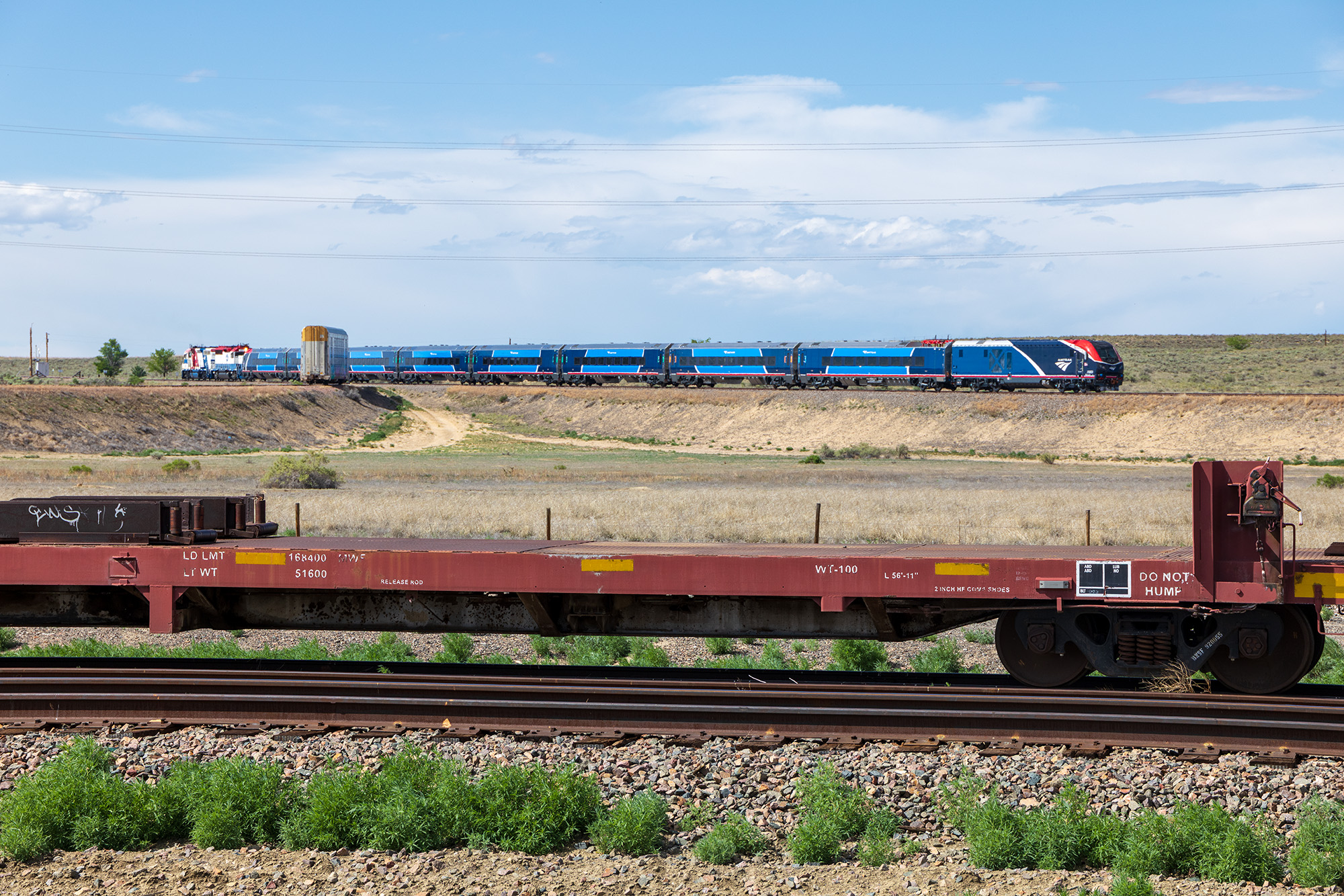
Once they finally hit Fowler, they were flying on straight track and high greens. Unfortunately the light was almost directly behind them. Oh well, fix it in Lightroom, but there’s only so much you can do. I also picked the depot at Fowler rather than Manzanola, which was probably a mistake. Manzy would have been a better angle once I started looking it it, but I was still way behind the train coming into town.
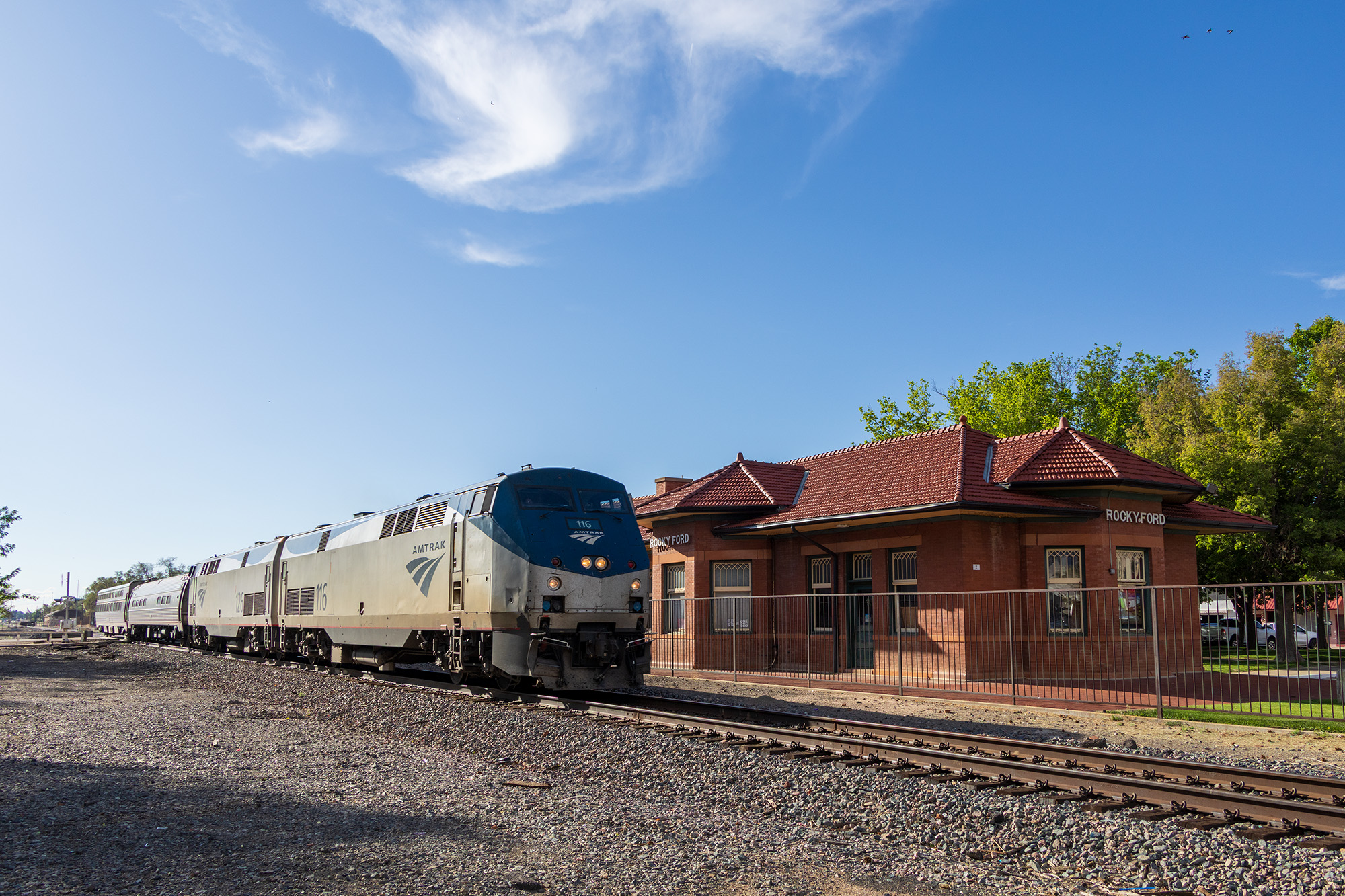
I did manage to get past them by Rocky Ford and got the depot there, as they were back to approach signals again. Again, light wasn’t great, but how many times do you see an Amtrak run on this segment? Very, very rarely. Shot them one more time coming into La Junta, then went and filled up the truck again (ouch, there goes another $100), and headed for home. I’d once again successfully found a way to procrastinate all the stuff I should have been home doing, and gotten a few half-decent shots in the process.

This work is copyright 2026 by Nathan D. Holmes, but all text and images are licensed and reusable under a Creative Commons Attribution-NonCommercial-ShareAlike license. Basically you’re welcome to use any of this as long as it’s not for commercial purposes, you credit me as the source, and you share any derivative works under the same license. I’d encourage others to consider similar licenses for their works.