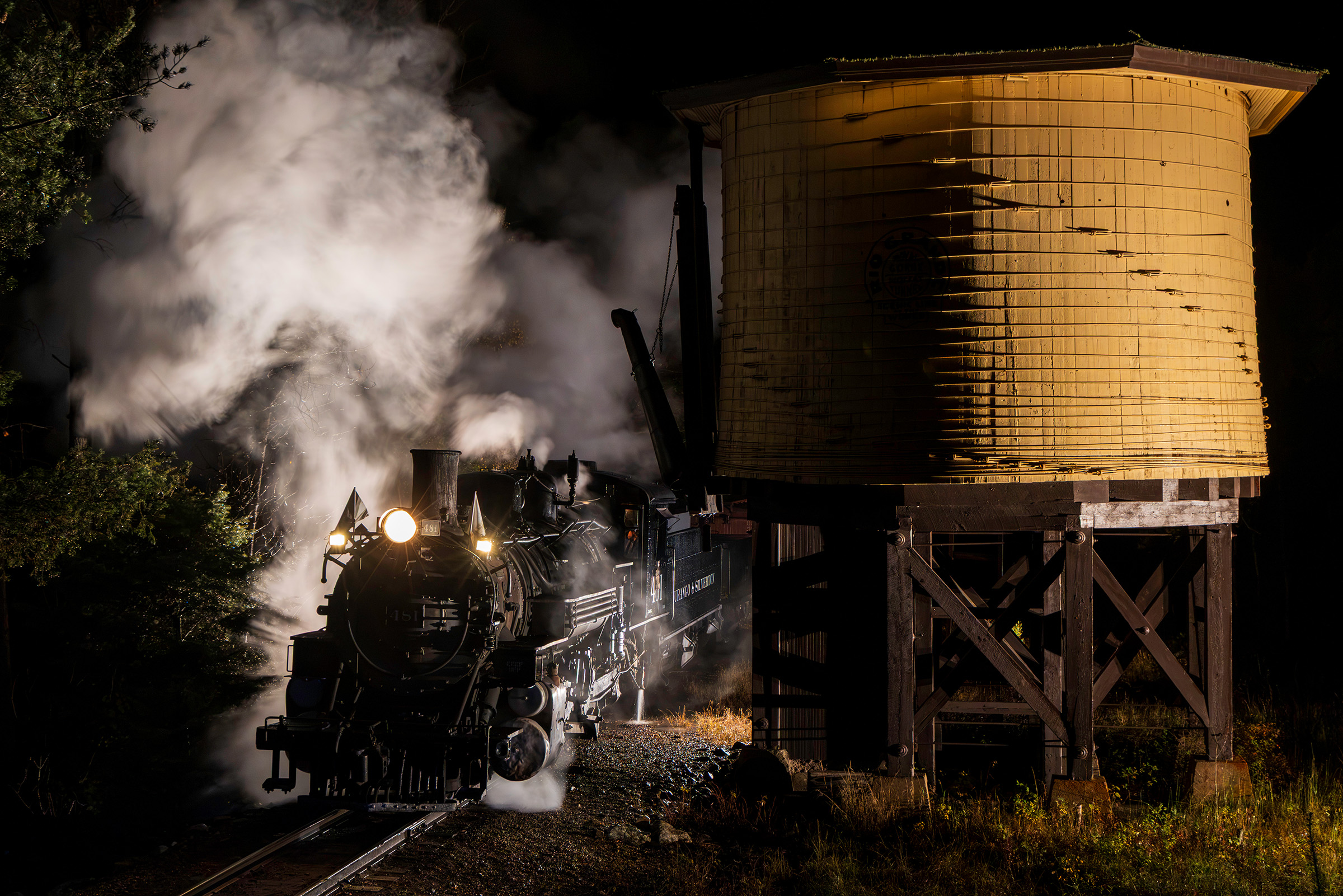
Because cameras run on photons, most photo charter trains run during the day. Sure, we might leave before sunrise to be in position for a morning shot, or do some blue light shots at the end of the day around the yard, but they’re still fundamentally day trips.
But what if they weren’t? O. Winston Link is famous for producing some of the most iconic and stunning images of steam railroading – at night. Link used dozens of high-powered flash bulbs to meticulously set up the lighting for each shot, and was shooting 4×5 film. His famous drive-in movie shot, titled Hotshot Eastbound, reportedly took 42 large flash bulbs alone. Adjusting for inflation, that’s nearly $120 in flash bulbs for a single exposure. I can’t even imagine trying to set up lighting out in the wild, make a good guess at focus and exposure, and then try to perfectly time the shutter release and flash to capture a dark steam engine in just the right spot. Miss any element and all the hours of preparation (and flash bulbs) are all down the drain.
Today, that burden is much reduced. We have high powered flash and constant LED lighting that runs off tiny battery packs. We have digital cameras that can reliably operate at ISO 6400 and above allowing for hand-held night photography. With the help of heavy computational horsepower and noise reduction algorithms, they produce relatively clean images. We can review composition and focus instantly and adjust as needed. Herding a charter’s worth of people through the wilderness at night and setting up/tearing down all that gear is still a daunting prospect, but it’s no longer bordering on impossible.
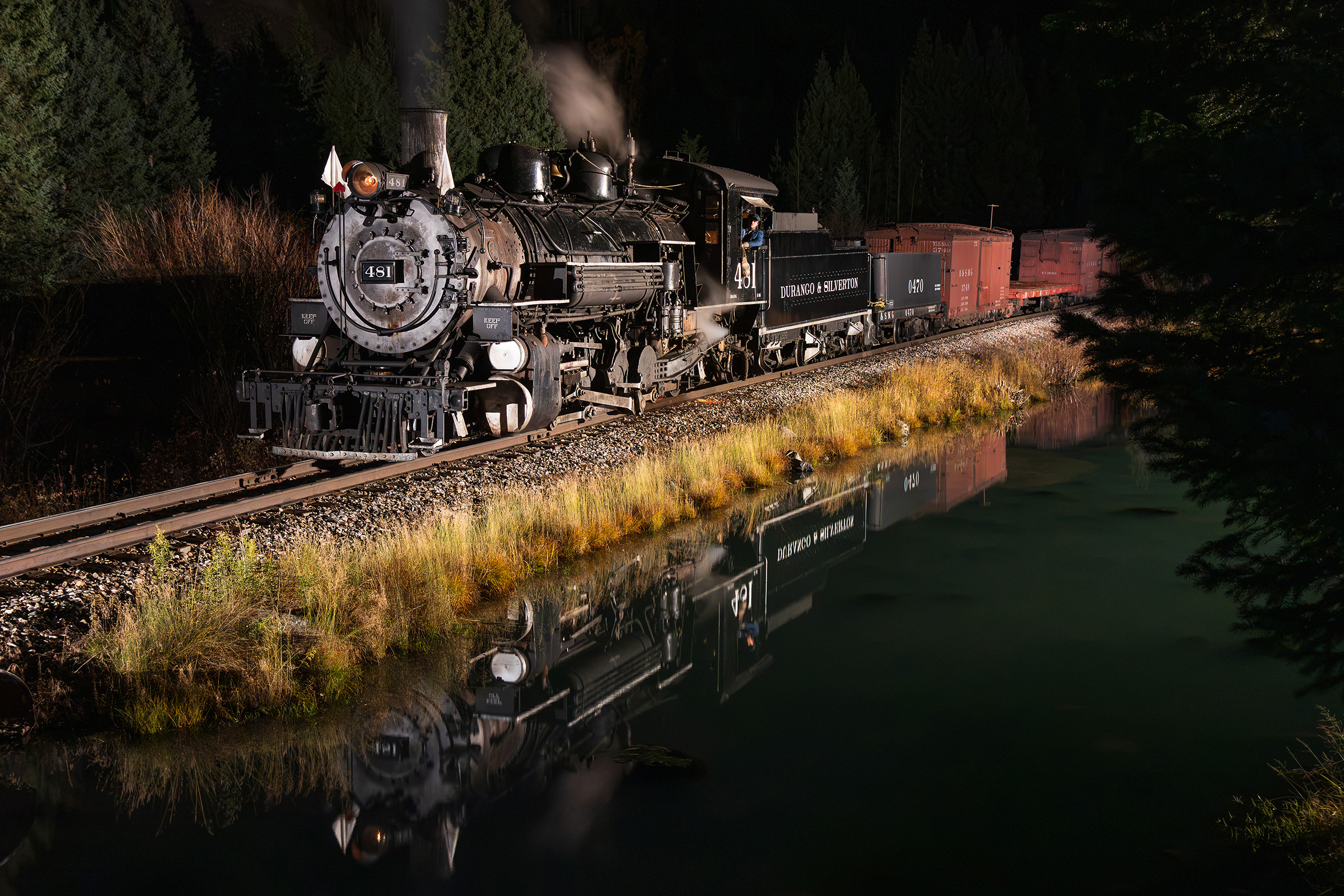
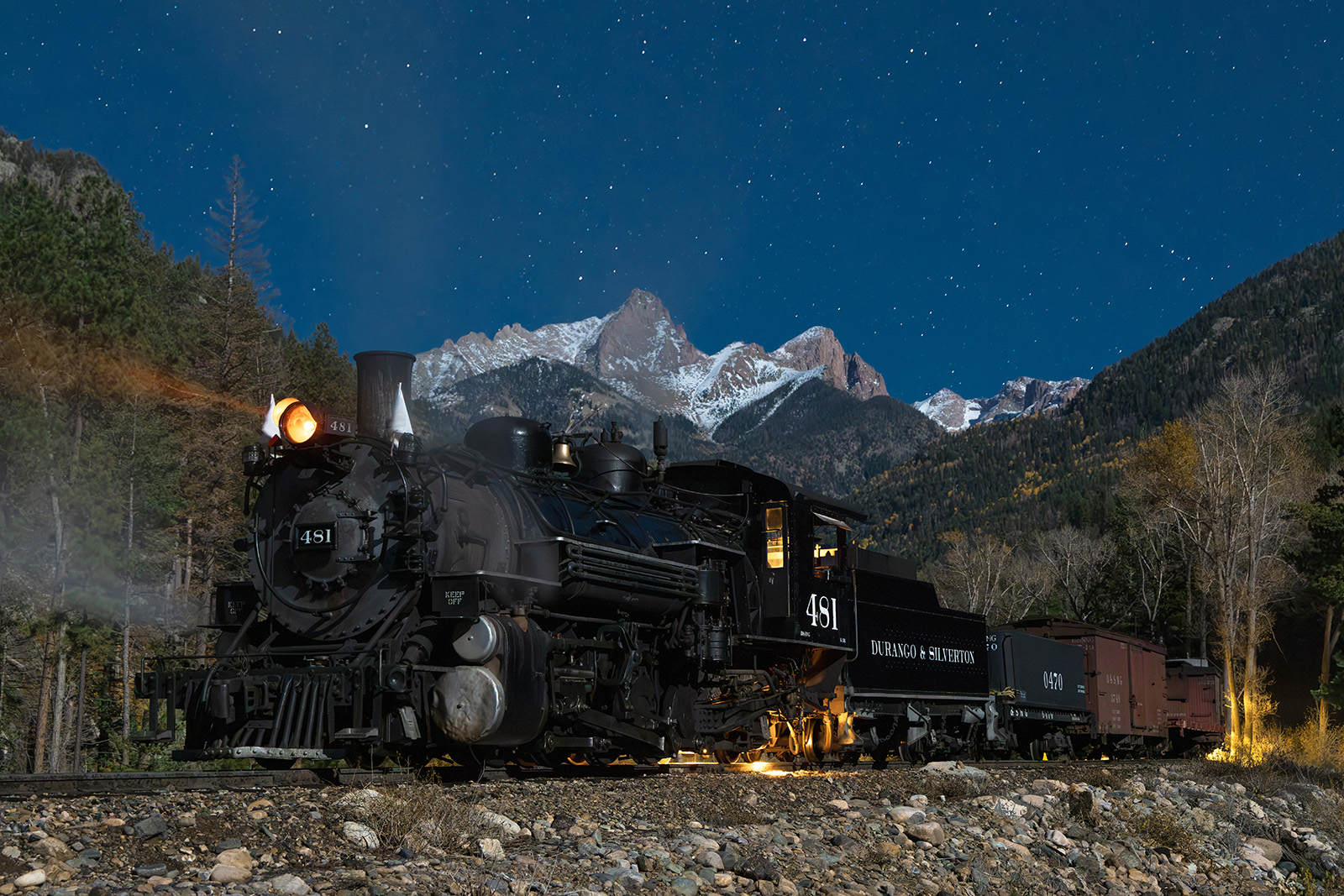
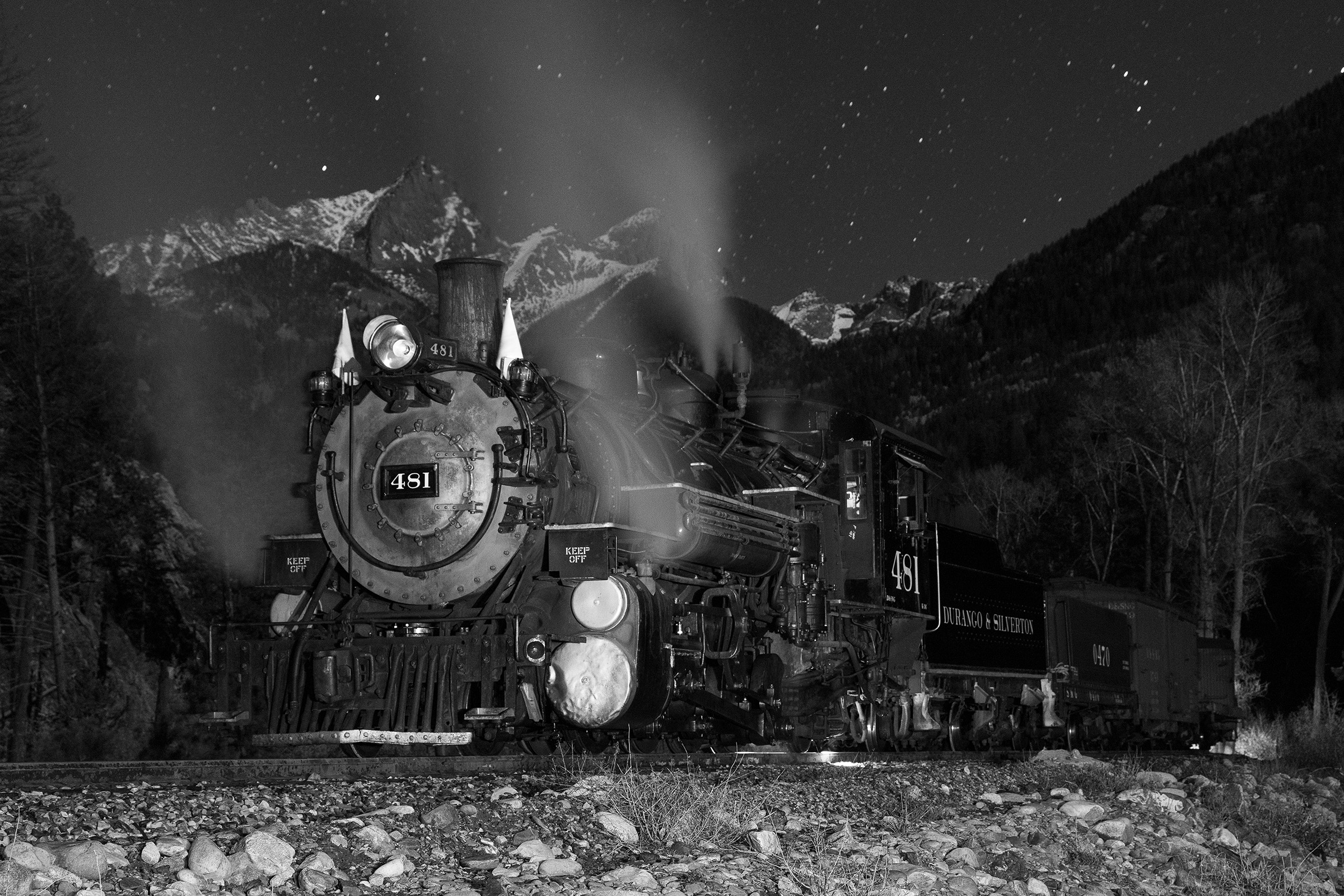
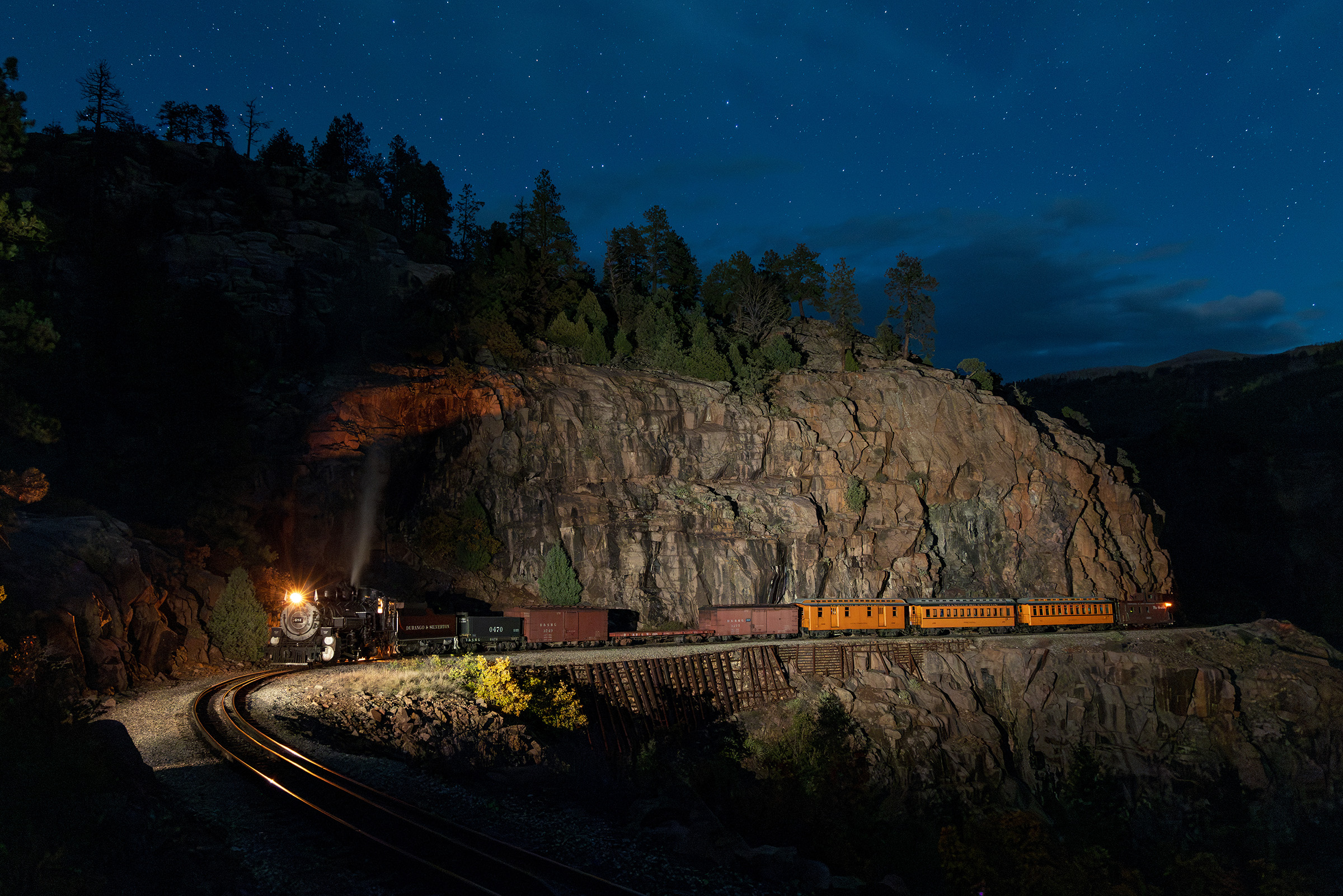
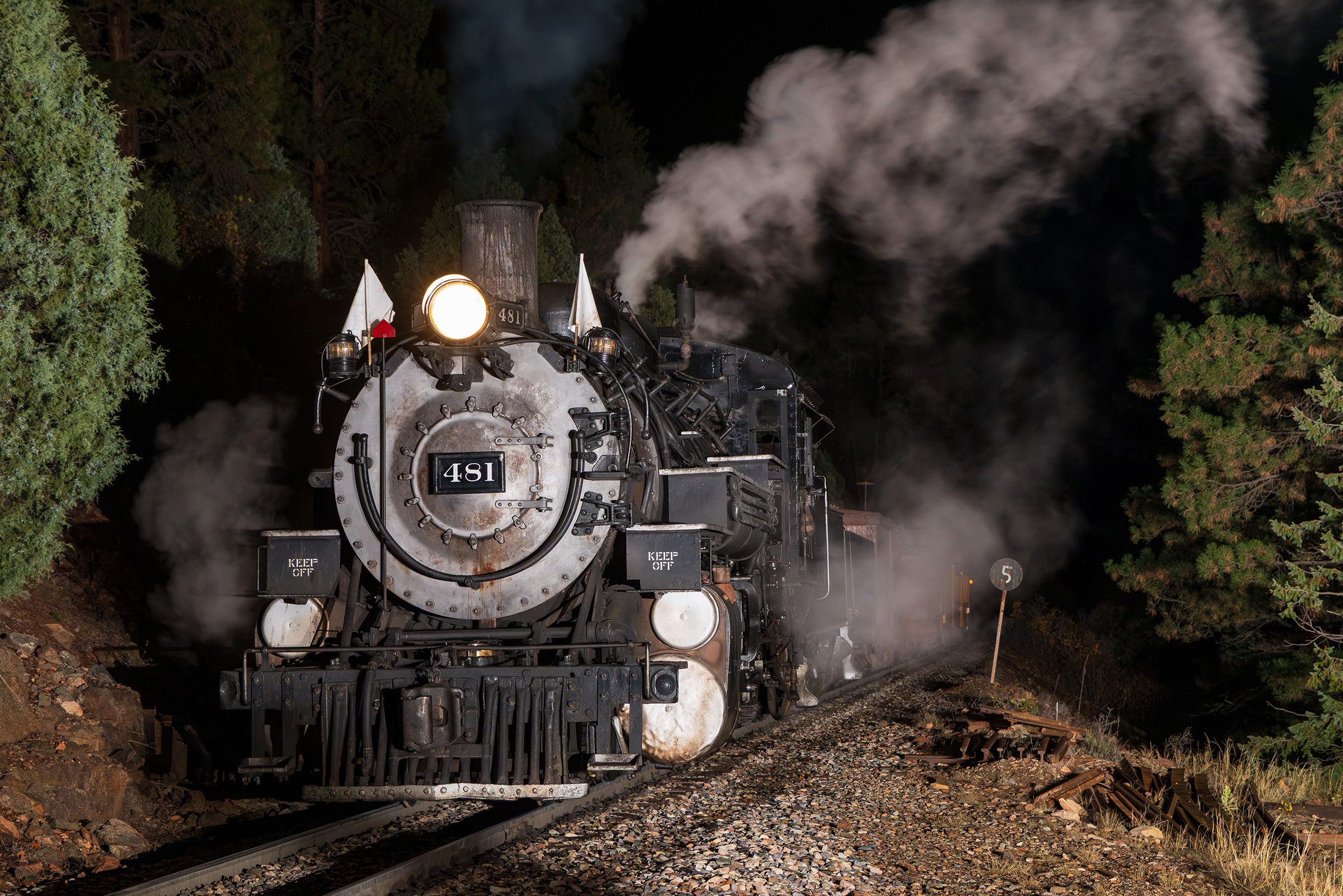
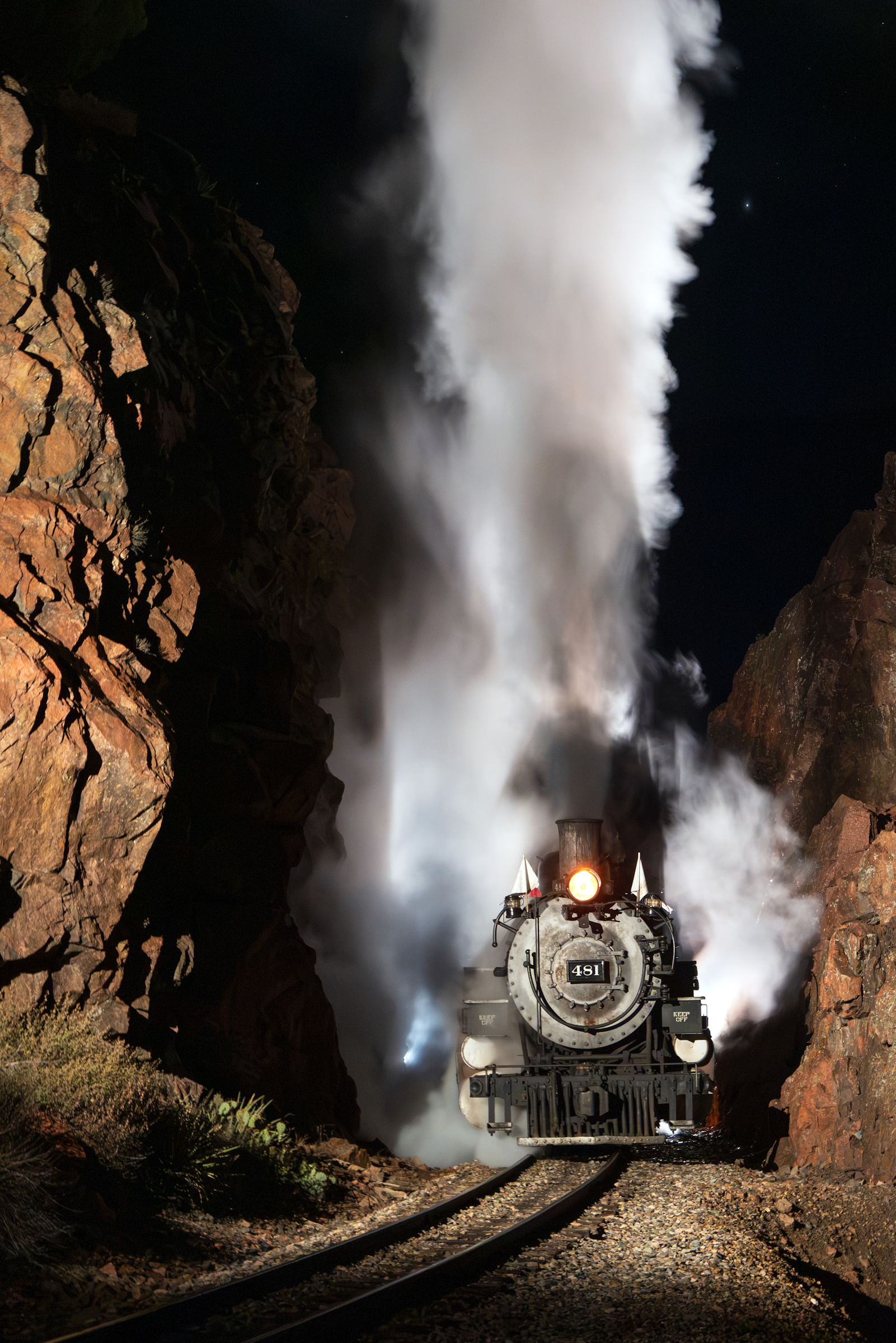
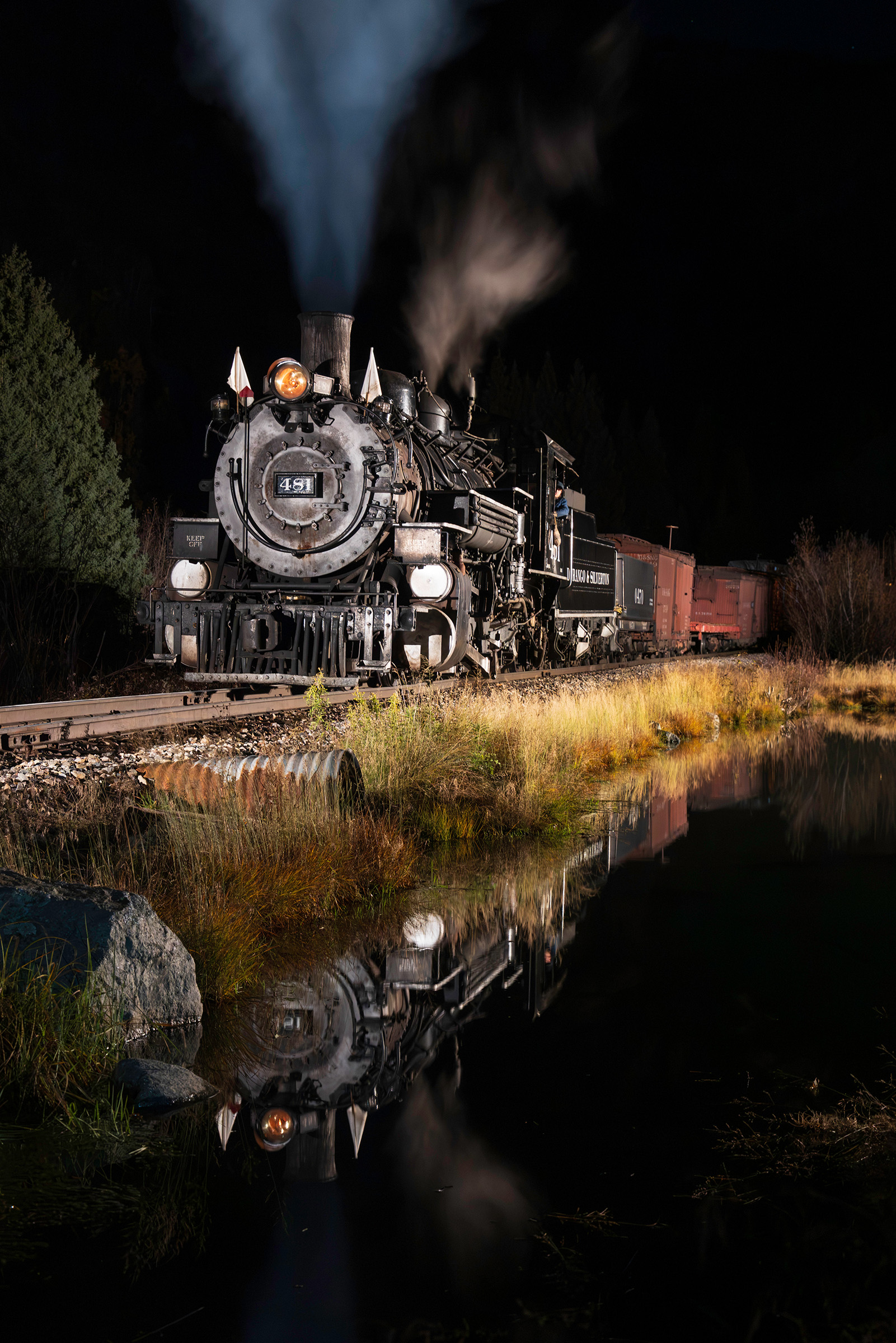
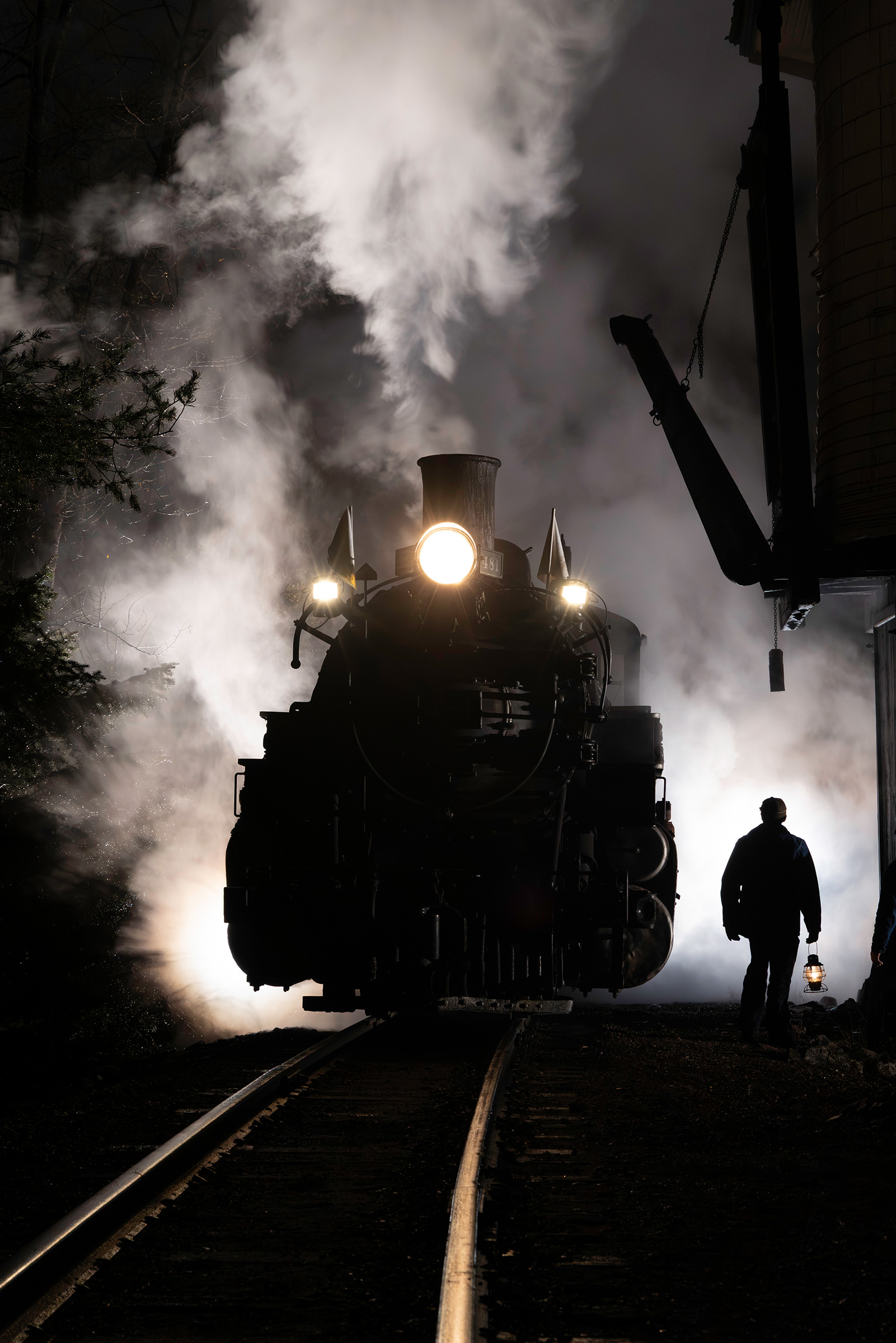
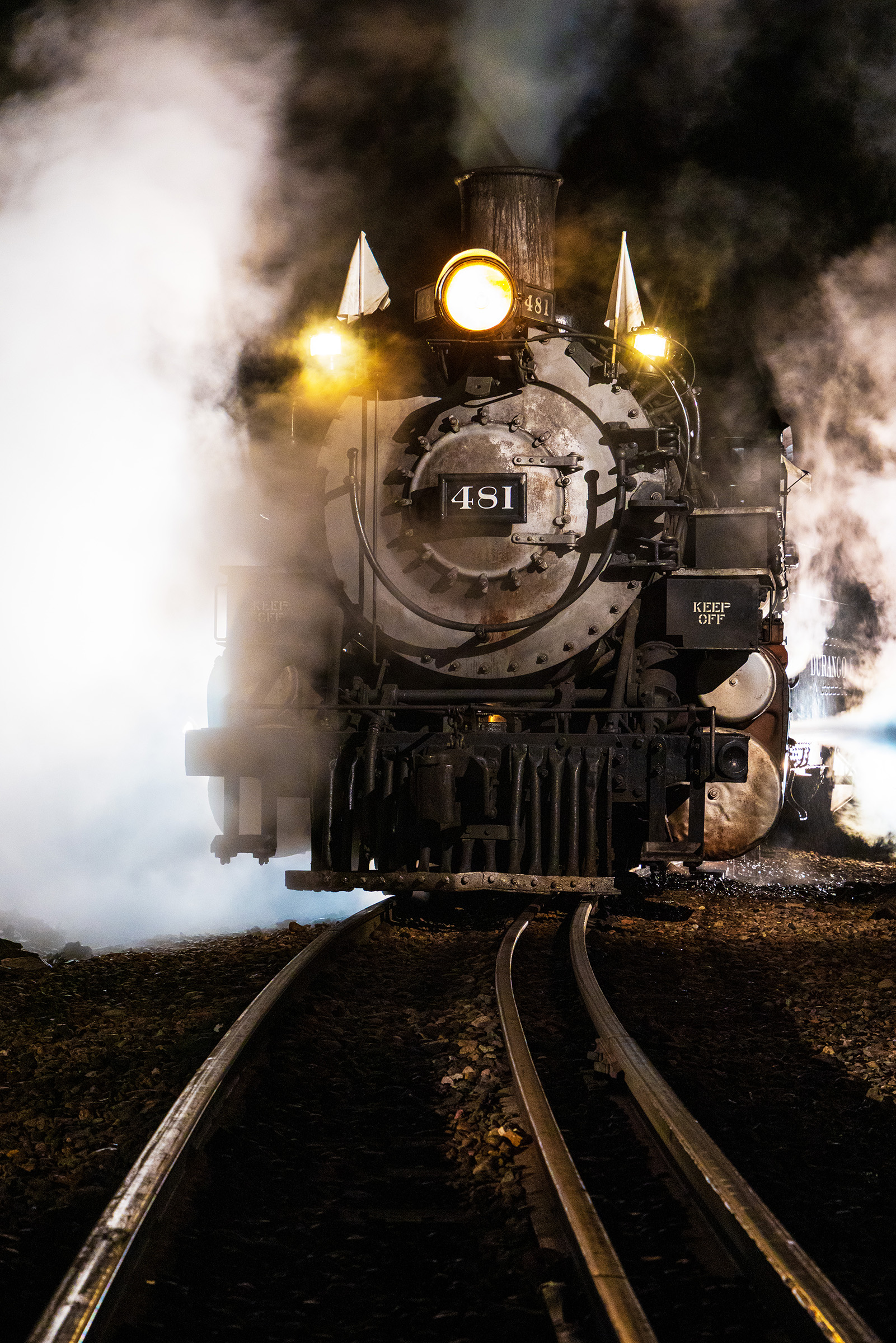
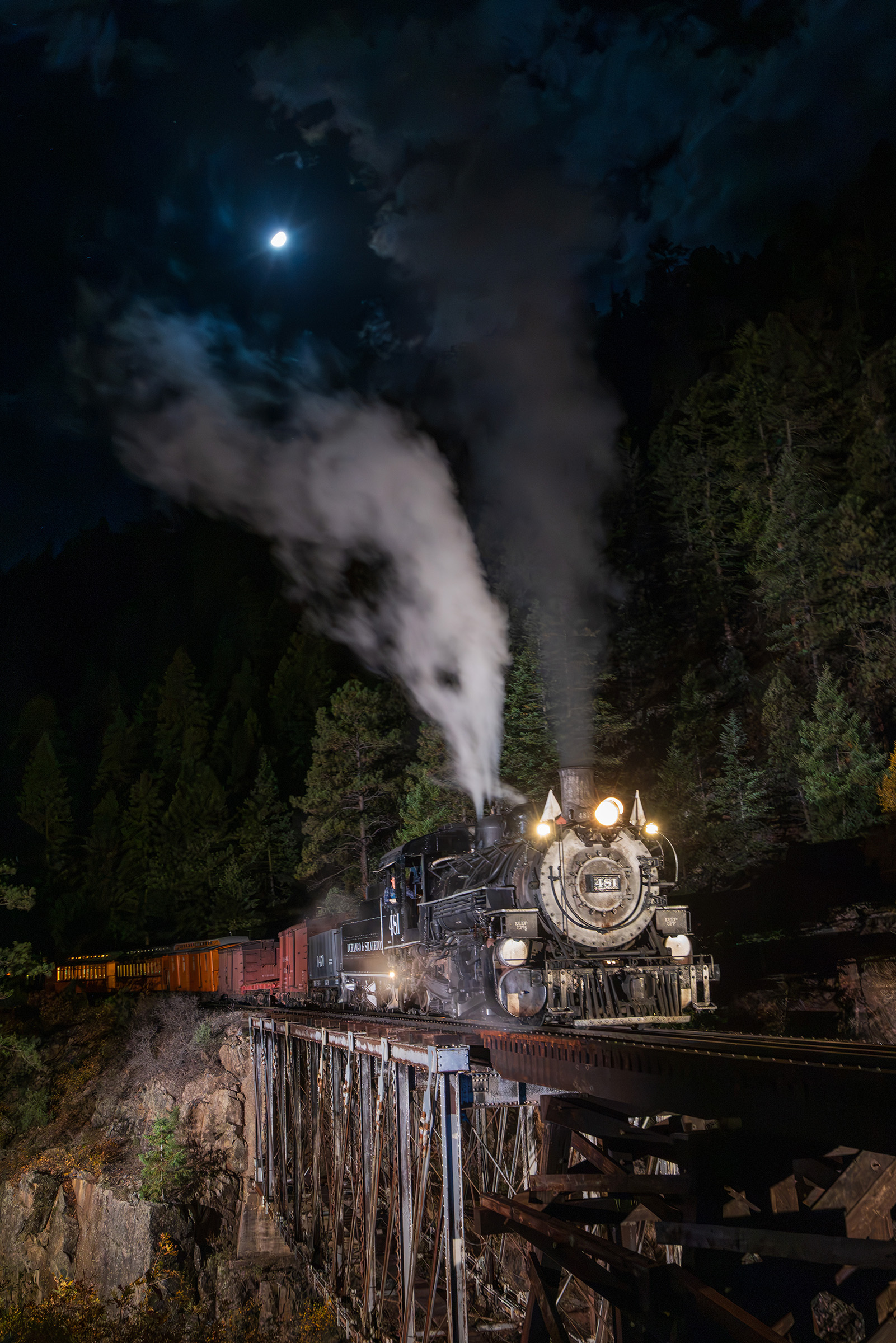
Two years ago in 2024, the Durango & Silverton decided to try something different for their fall photography train. Rather than the usual day out on the line at spots we’ve all seen a hundred times, they decided to try an overnight photo train and called in Pete Lerro to handle the lighting and staging. This one went under my radar completely, so when I saw the results and heard they’d limited it to a reasonable number of people, I immediately started kicking myself and hoping they’d do it again. And this year, they did.
On Monday, October 19, 2026, the train left Durango at 1840h and ran up to Silverton, tying down around 0430h. Then on Tuesday night, the special left Silverton around 1900h, arriving back in Durango on Wednesday morning around 0500h. The train consisted of K-36 #481, extra tender 0470, boxcar 3749, flat car 1668, boxcar 3275, concession car 566, coaches 291 (King Mine) and 311 (McPhee), and caboose 0540.
Northbound photos were staged at:
- Cut at the south end of the High Line (northbound)
- North End of the High Bridge (no river level access due to high water)
- Restored phone booth around milepost 480
- Old Needleton Tank
- Elk Park (natural light shots only)
Southbound photos were staged at:
- New Animas River bridge just south of Silverton
- Colorado Trail Crossing north of Elk Park
- Goblin Fire with Needle Mountains in the background (natural moonlight)
- High Line big curve
- Cut at the south end of the High Line (southbound)
- Just east of the Rockwood Cut (explosives shack)
That’s about all there is to say. This isn’t one of those trip reports with a whole bunch of history – it’s just a look at the Silverton branch from the other half of the day. It was a great trip that ran smoothly and safely, which is a testament to both the railroad crew, Pete, and all the volunteers helping keep things running. Thanks to all for making this happen!
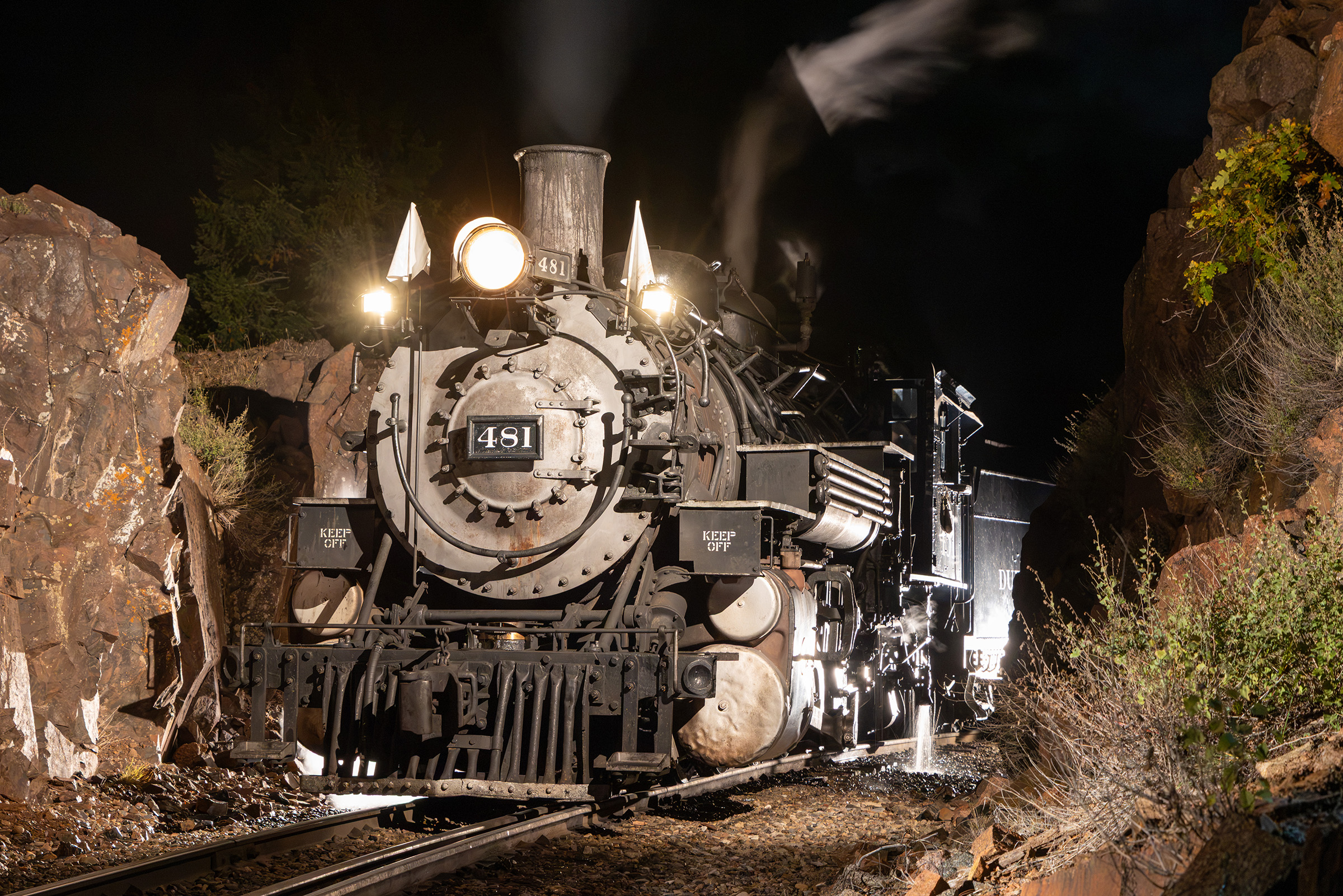
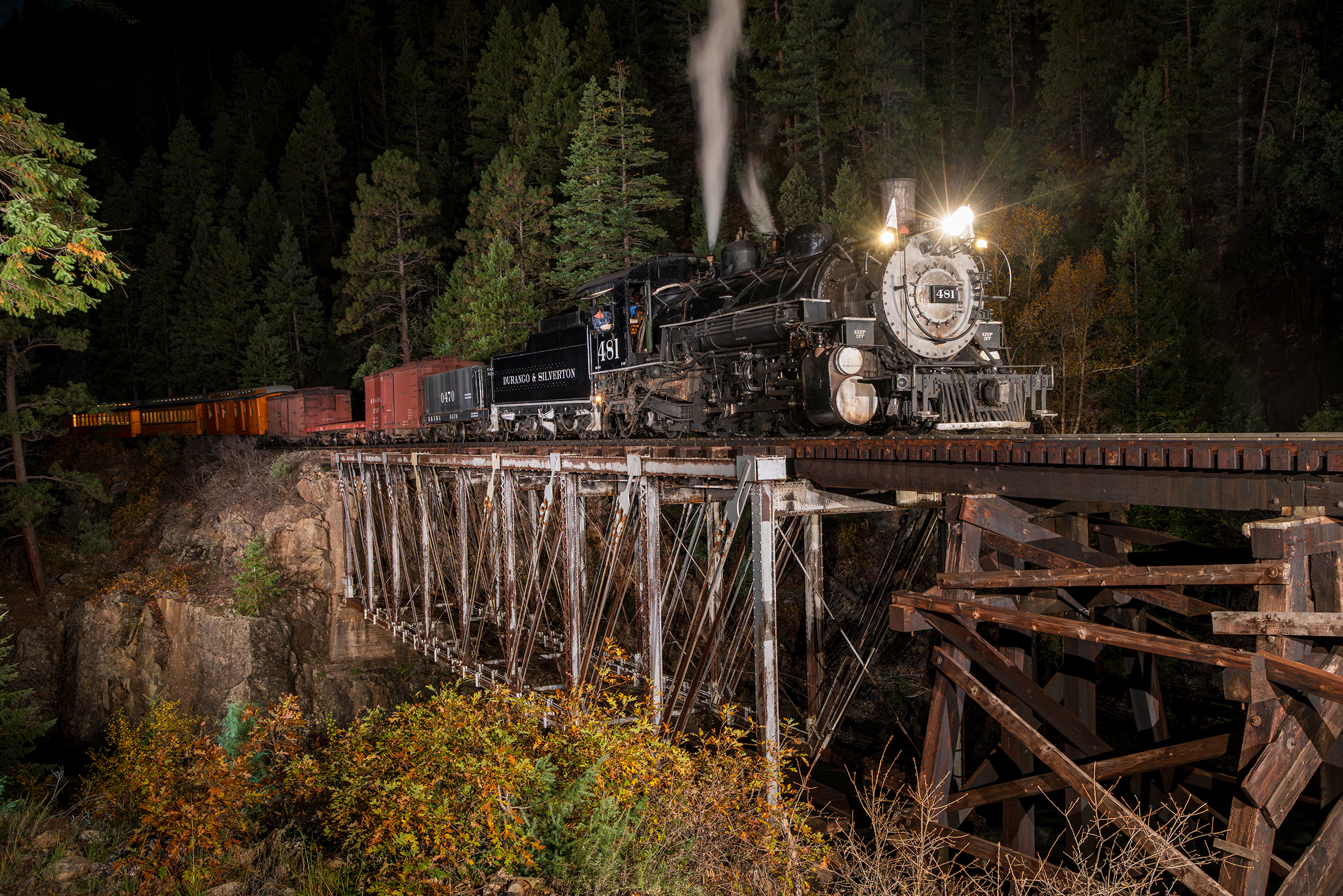
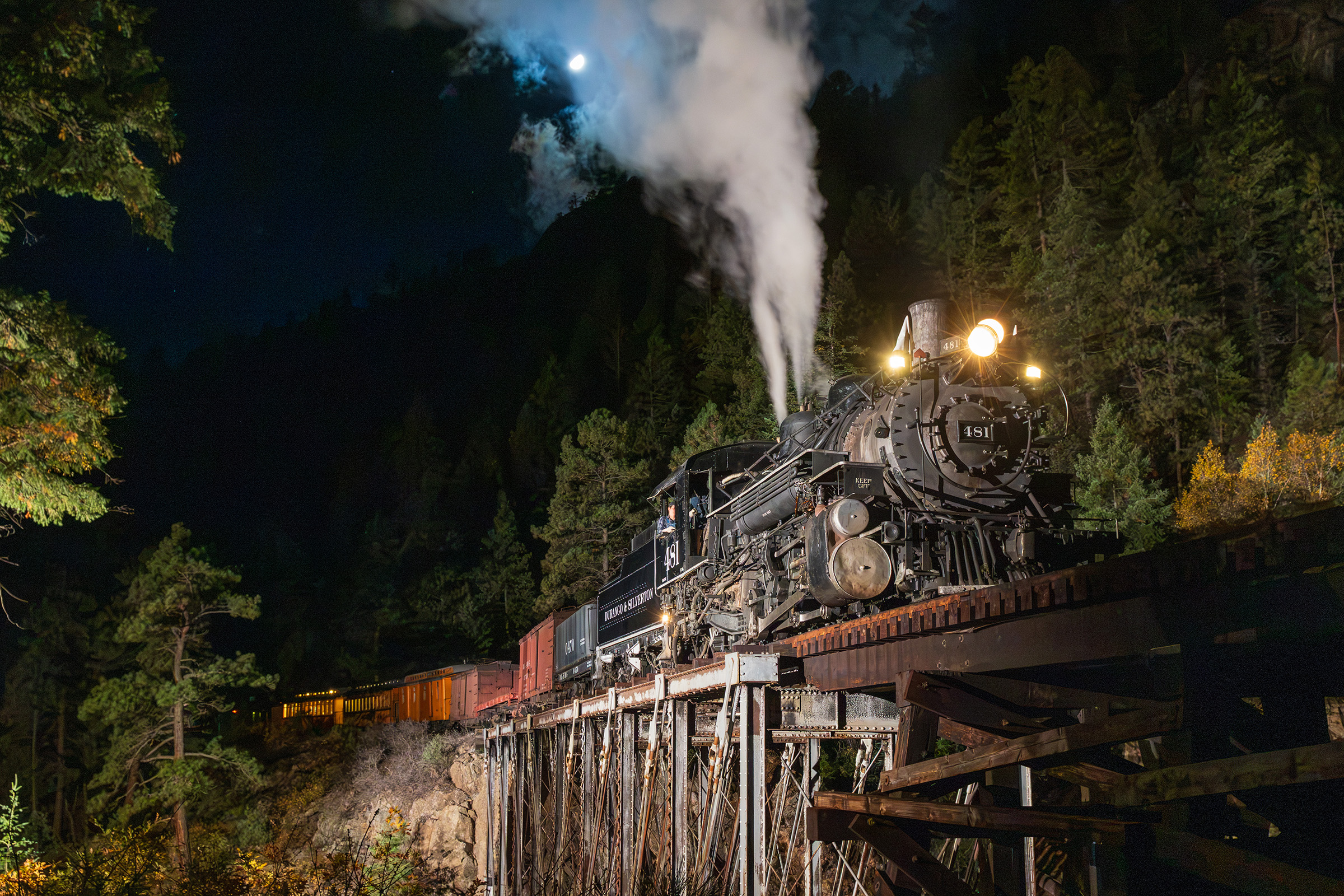
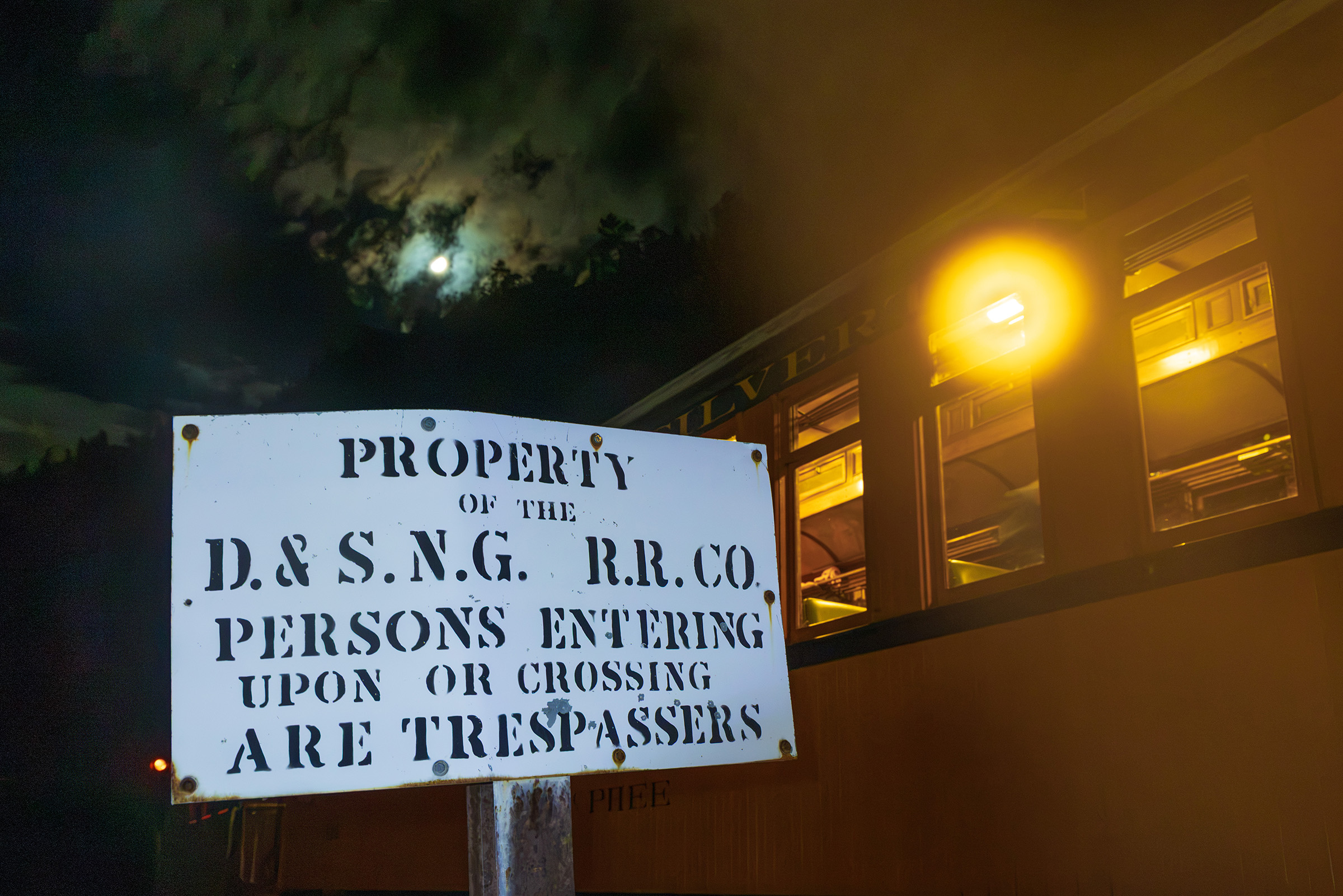
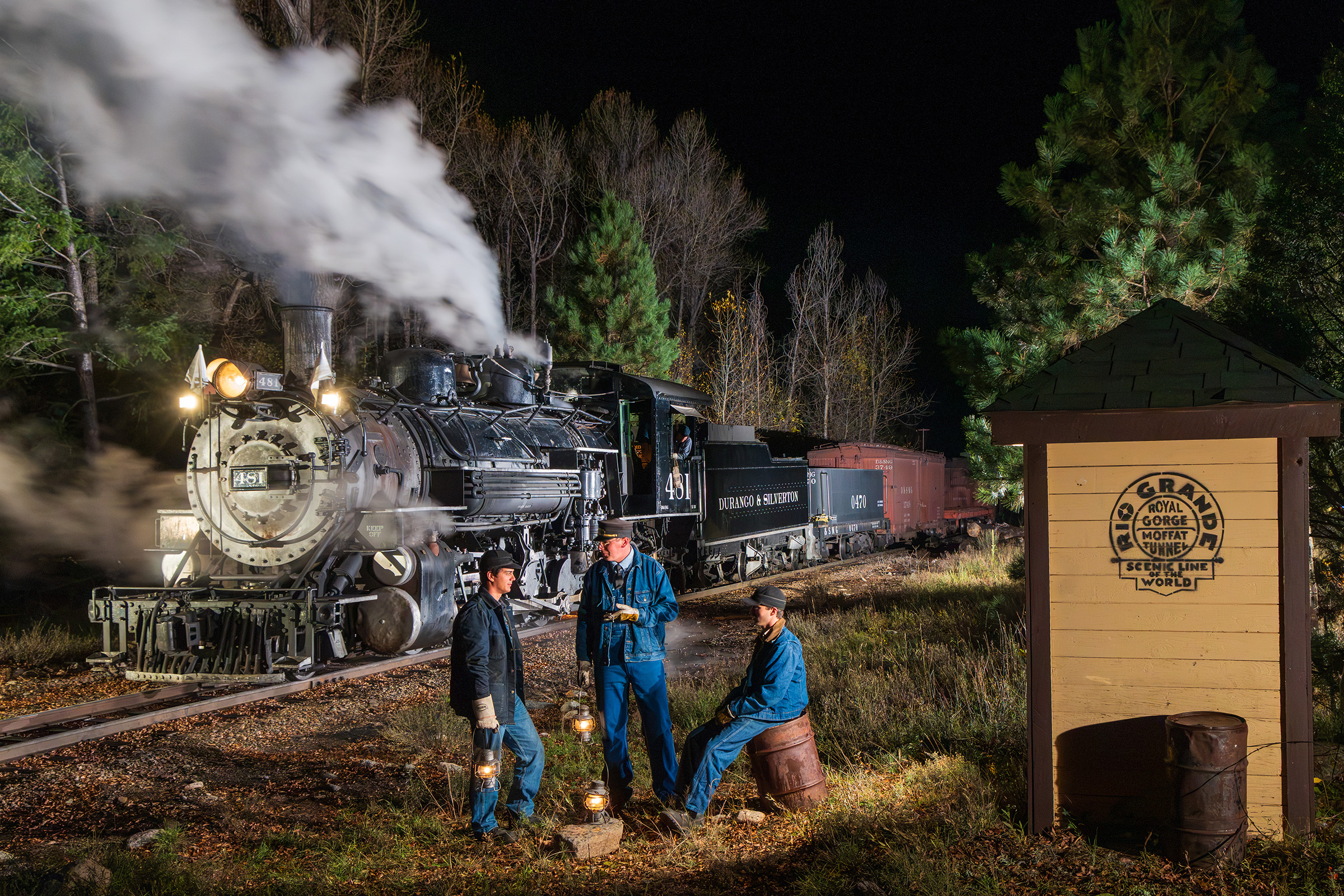
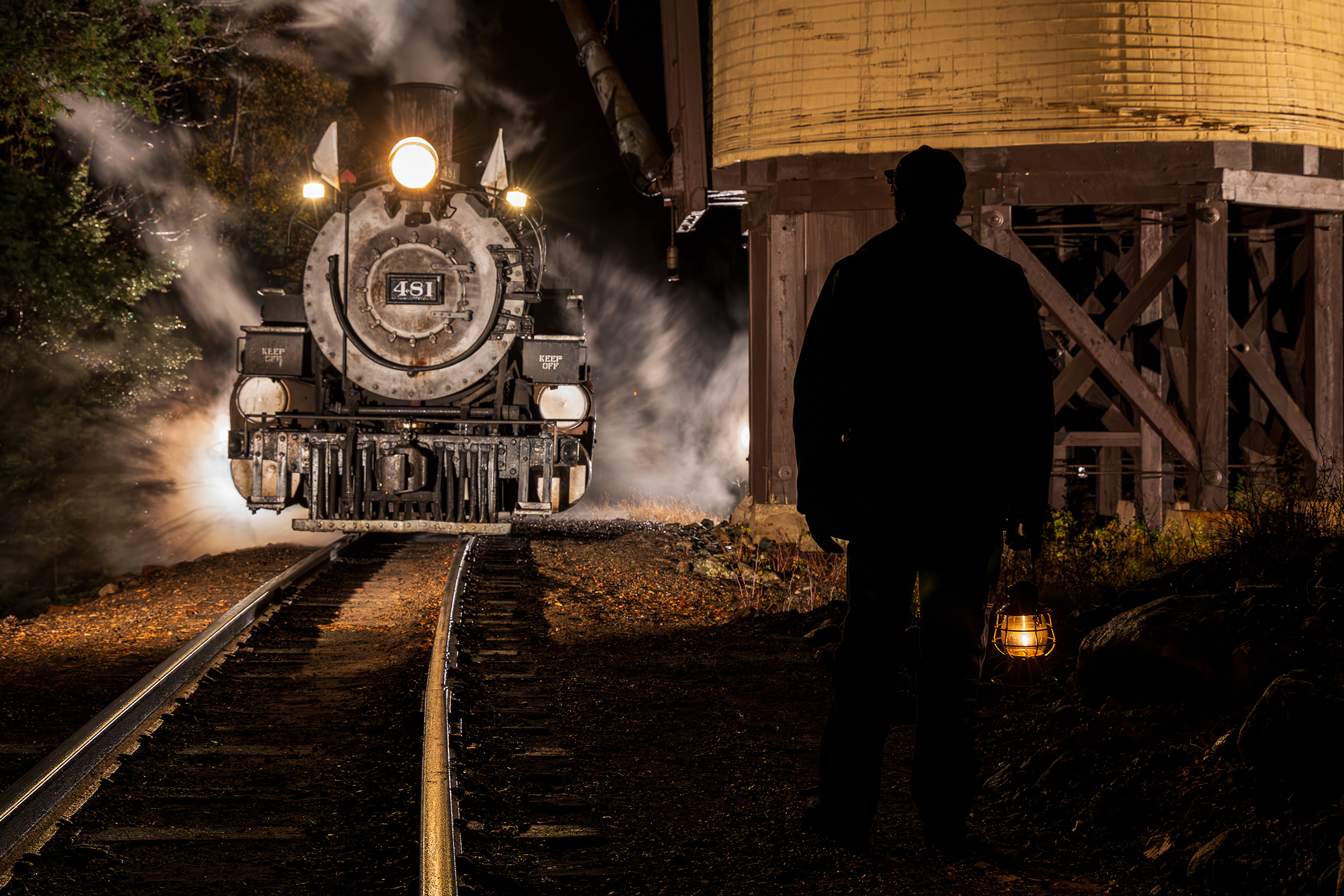
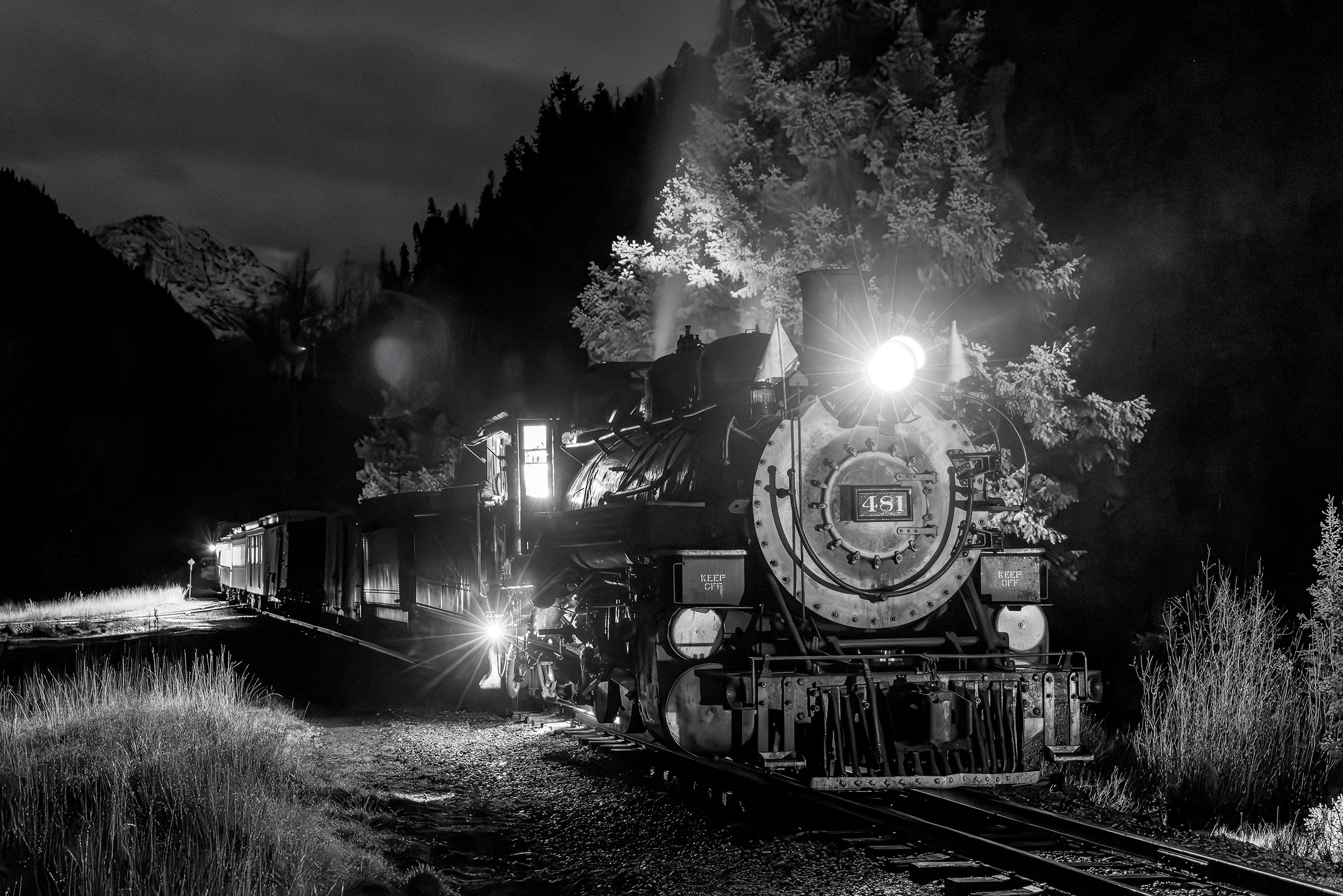
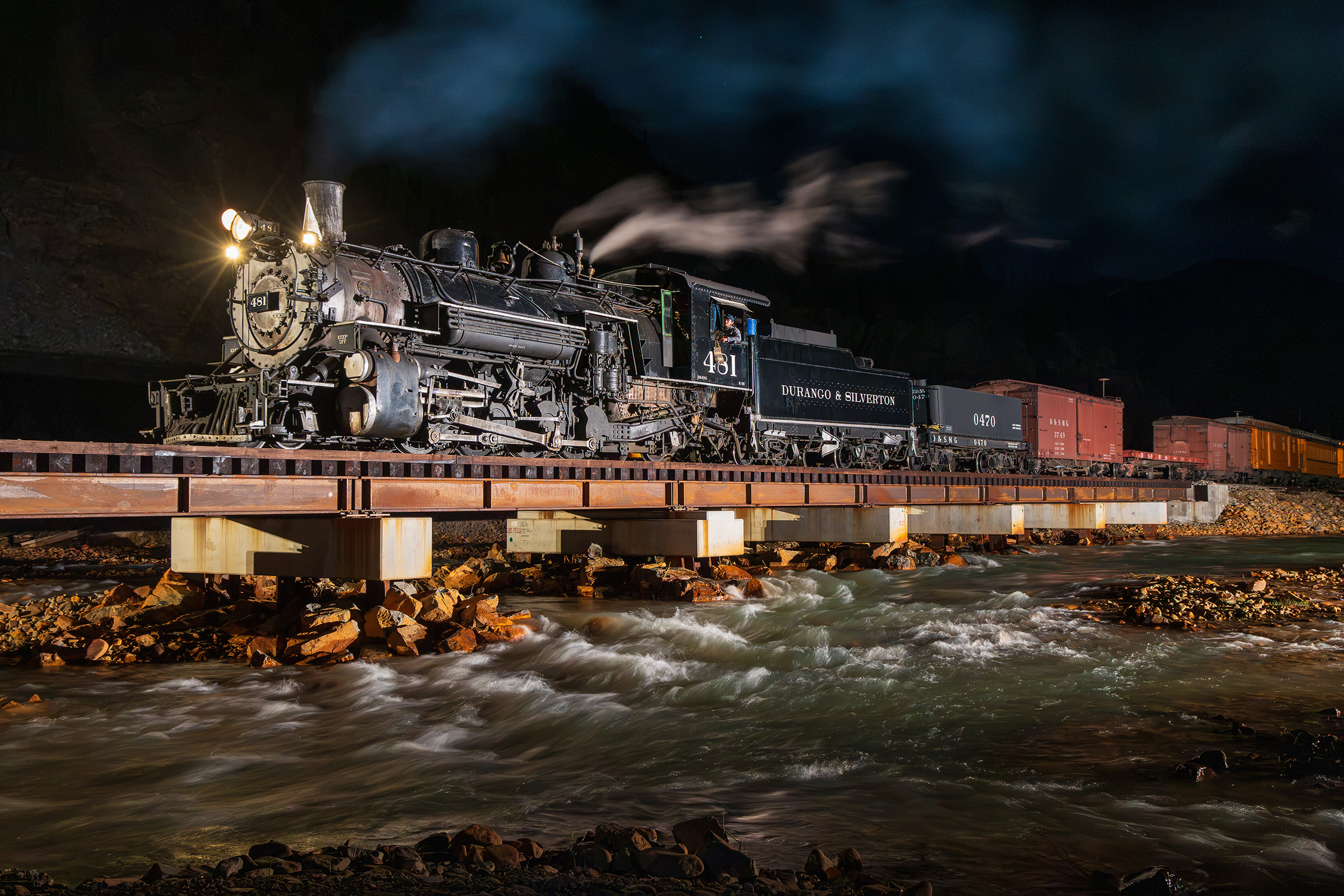
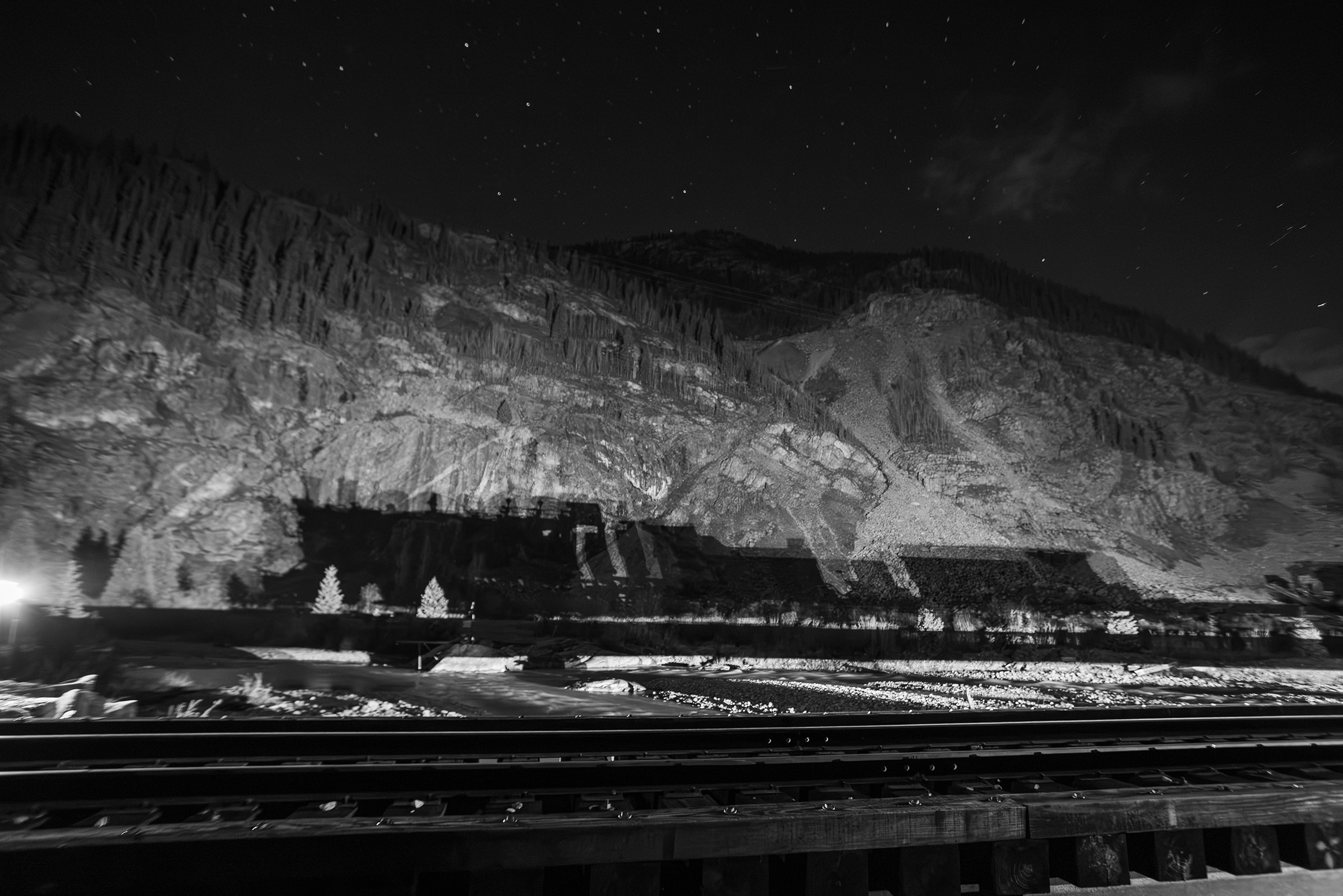
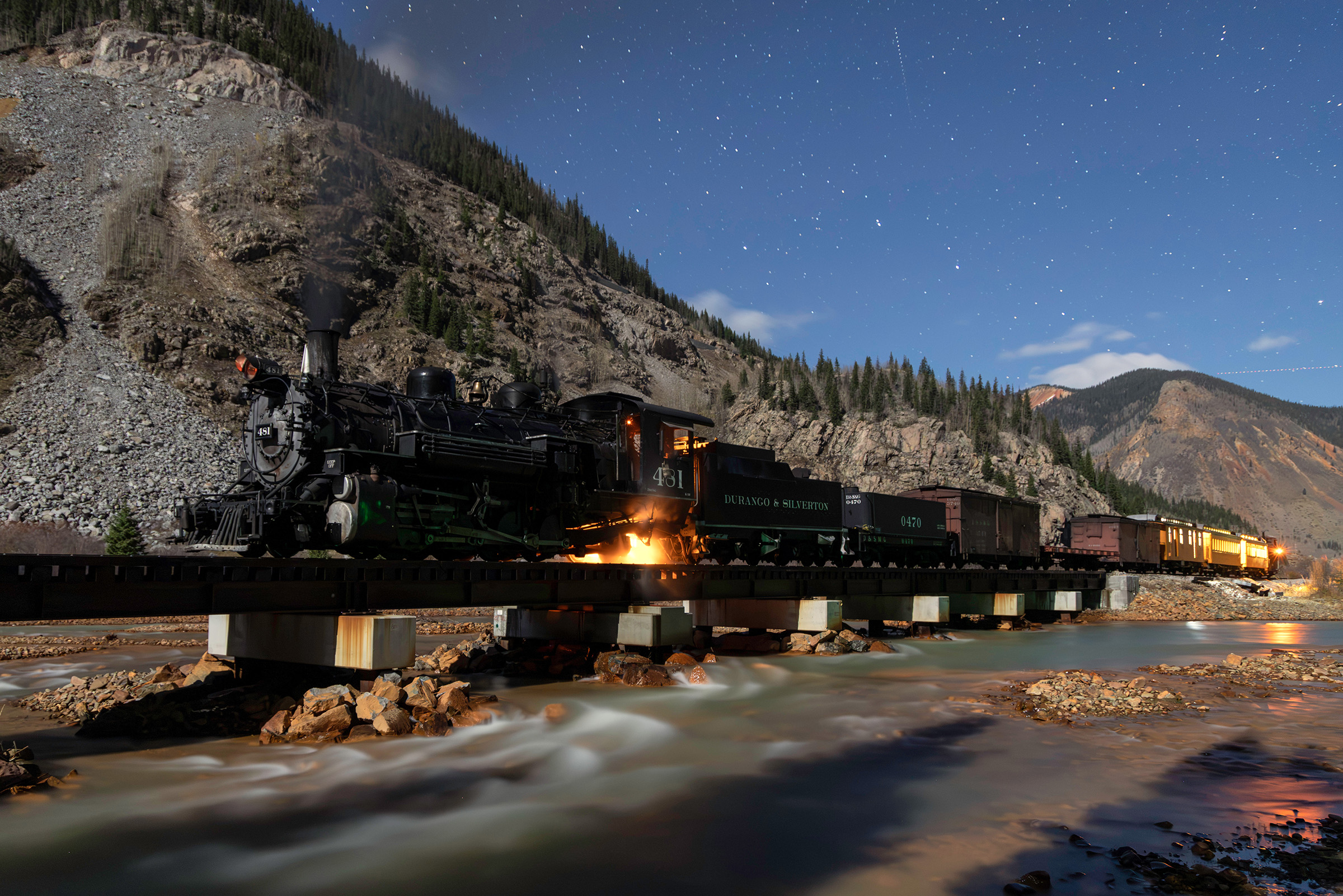
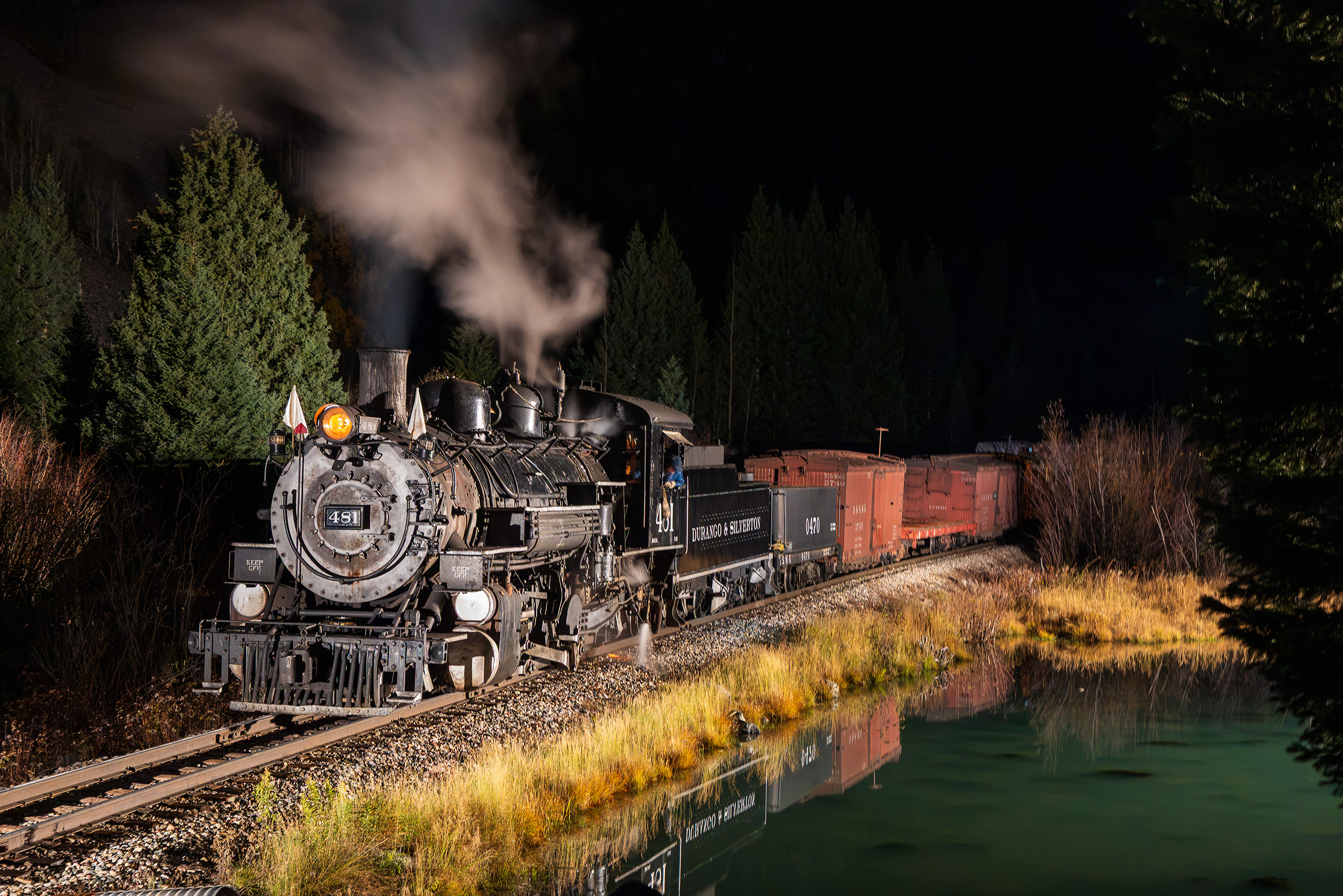
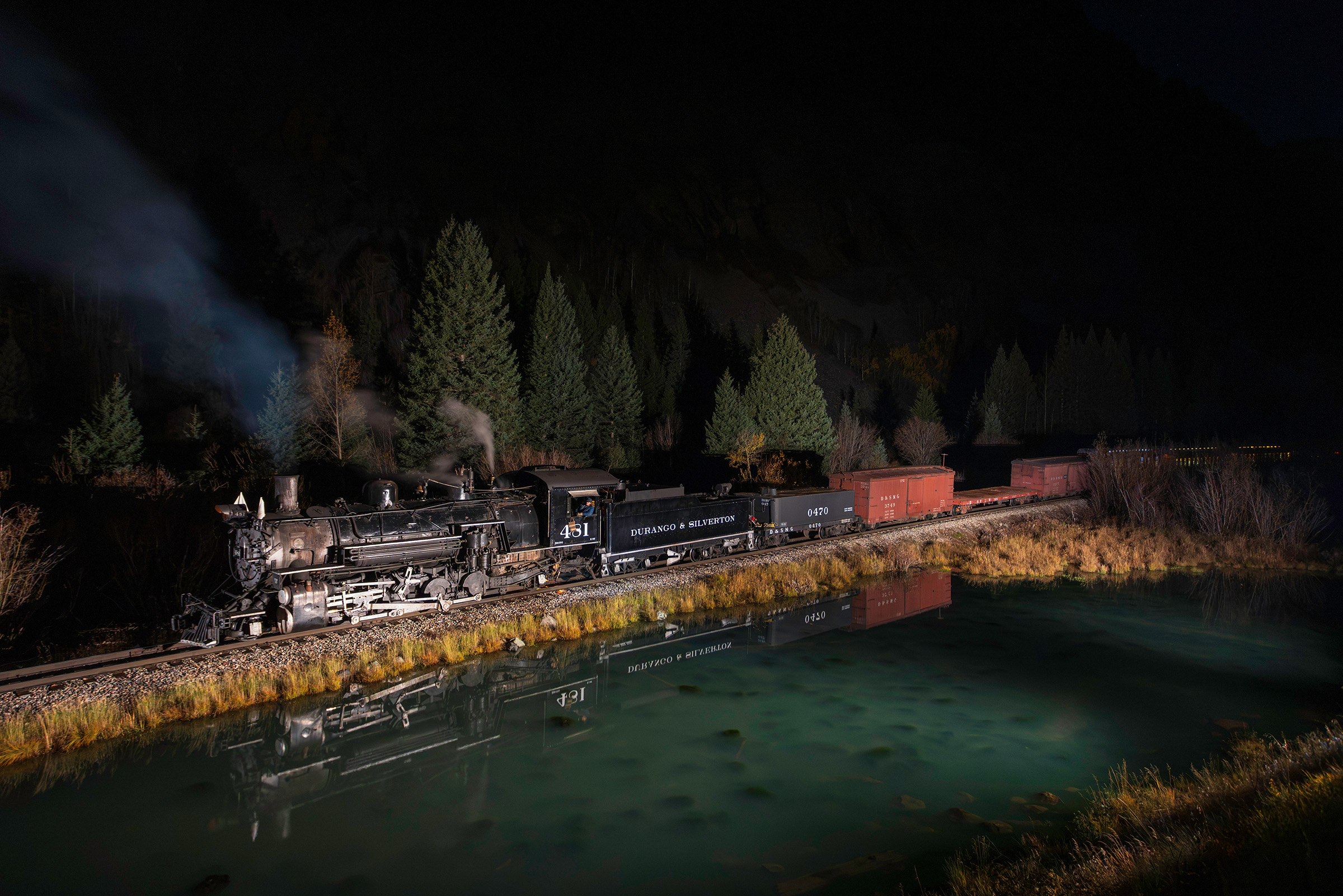
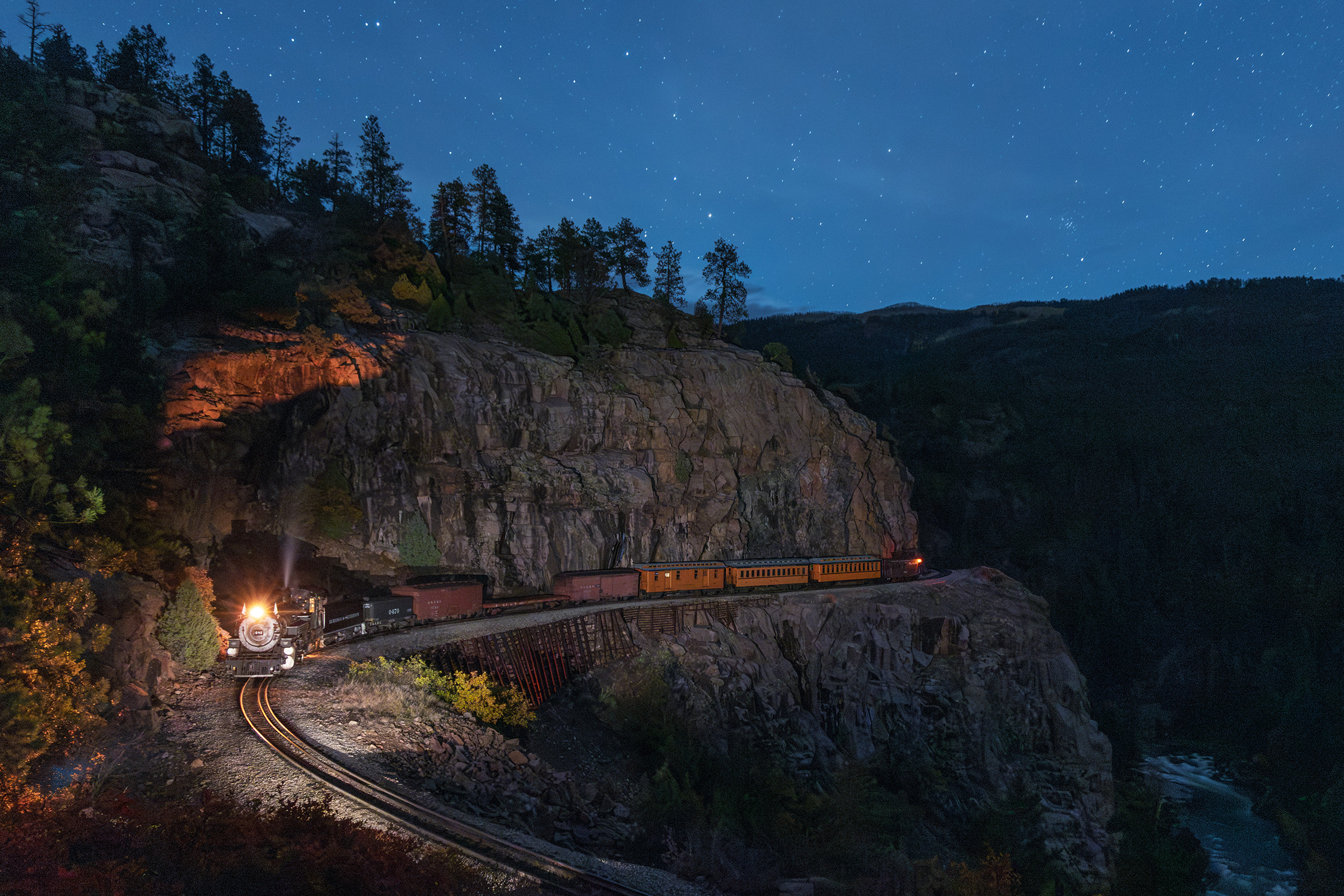
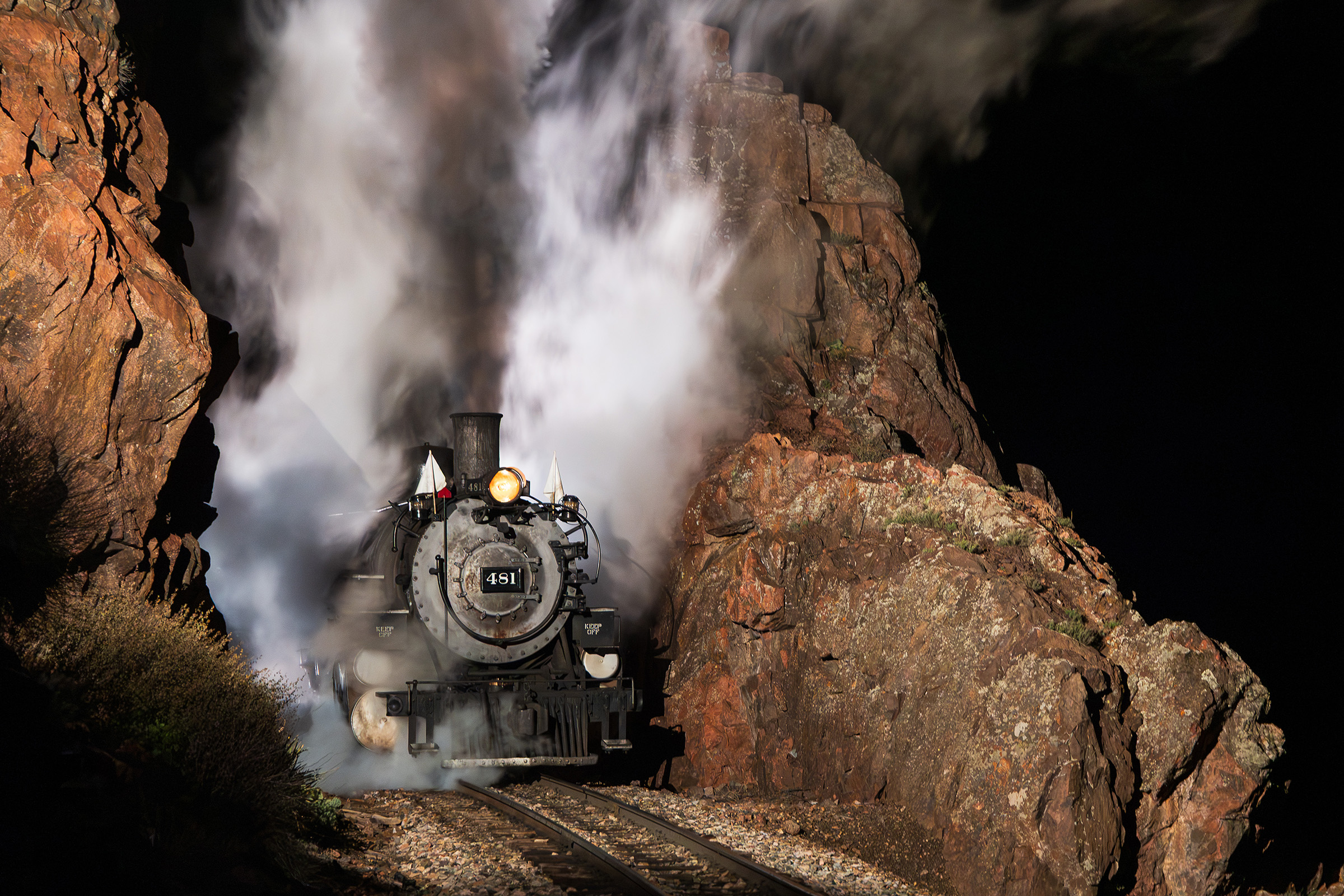
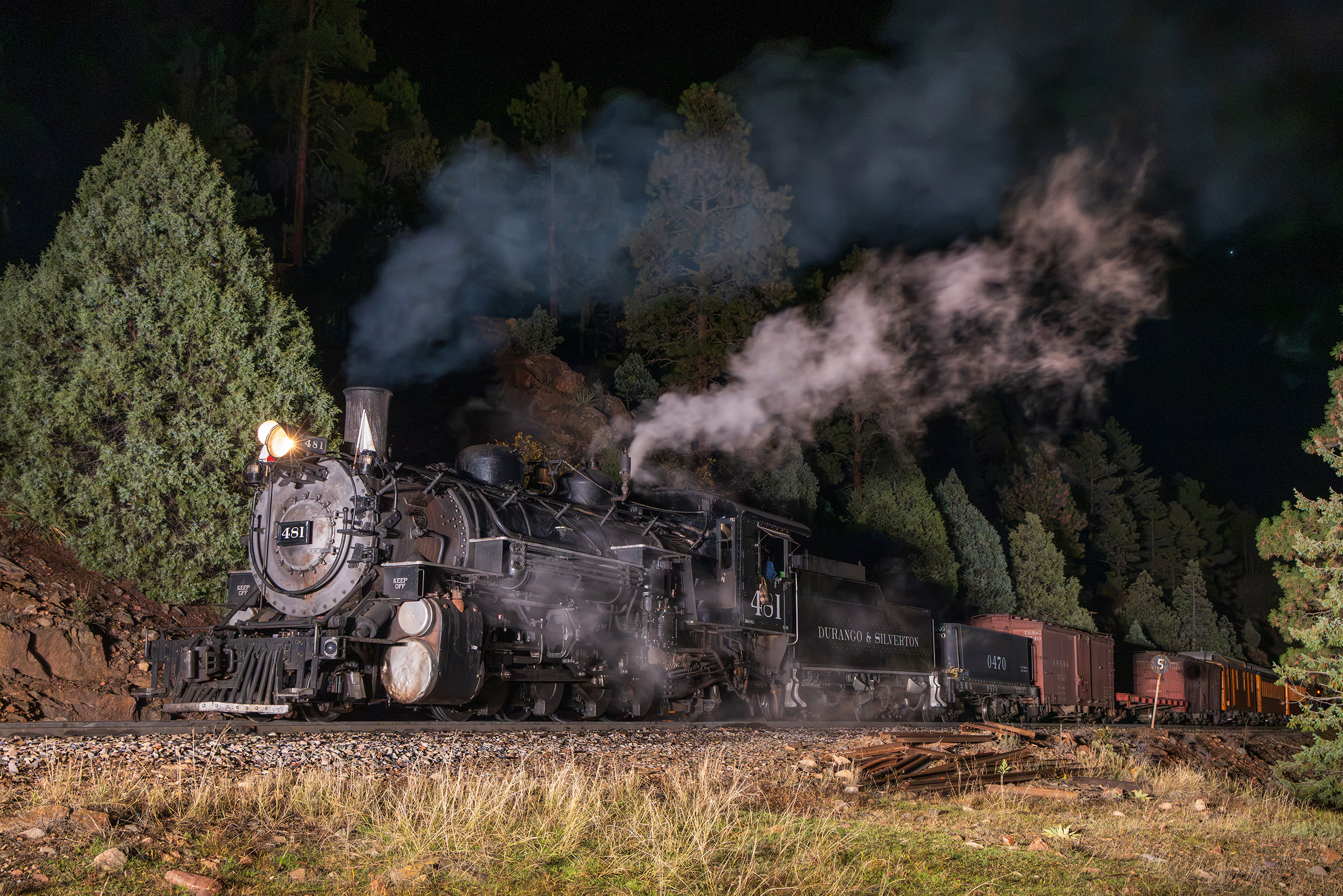
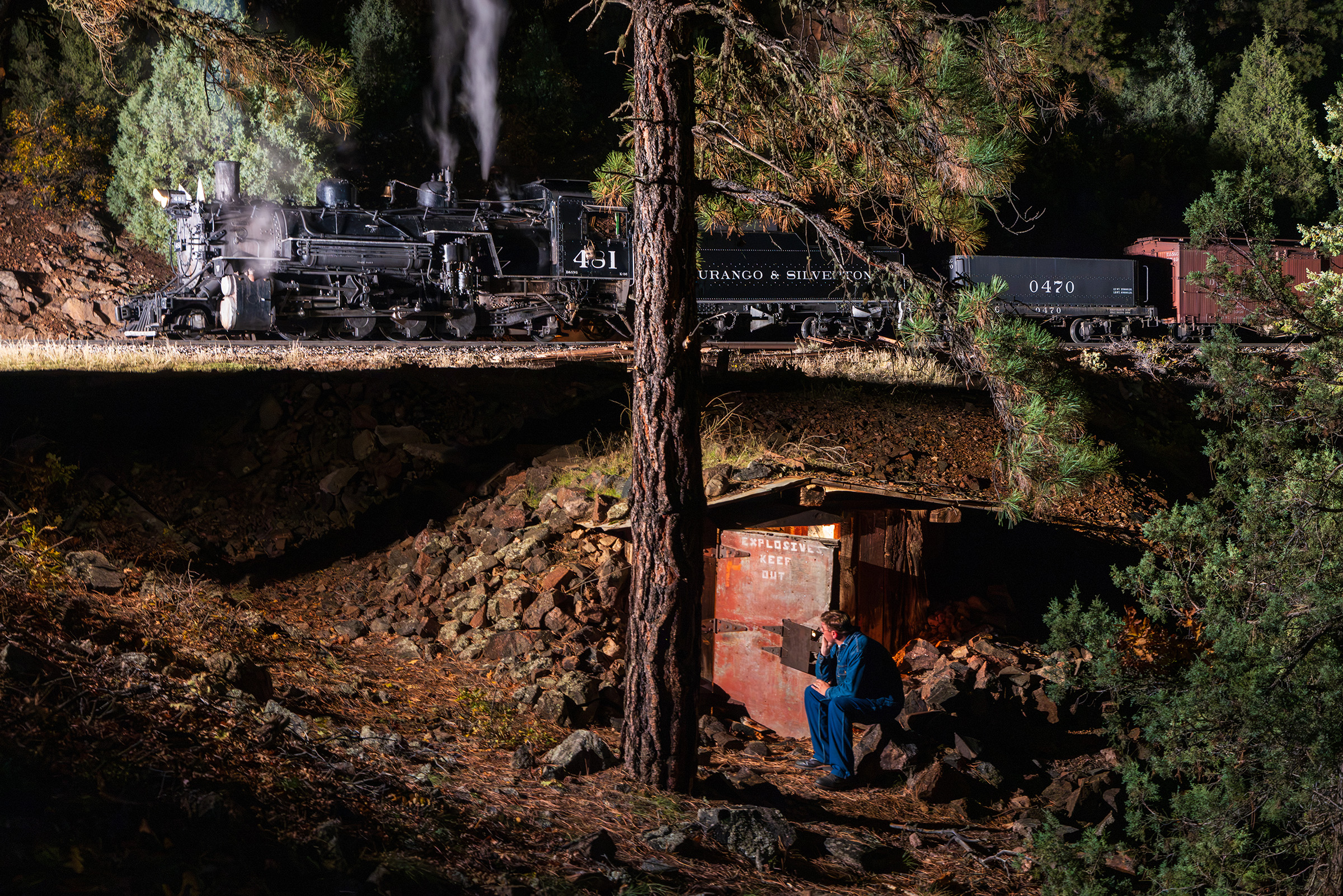
Flooding
The timing couldn’t have been better for the trip. What was left of Hurricane Trudy came up out of the Pacific and arrived in southwestern Colorado shortly after we pulled into Durango on Wednesday, with the real rain starting in Wednesday afternoon and continuing through Thursday and Friday. The result was widespread flooding and property damage throughout the Four Corners region. Colorado has officially issued a disaster declaration on Friday for 12 of the southwestern counties due to all the flooding.
Many of the major highways (US 550, US 160, Colorado 17, Colorado 151) in the region were closed for several days due to washouts and slides, starting Thursday afternoon. I was through a couple hours ahead of the closures. As of when I’m writing this – Monday, October 26 – CO 151 and US 160 are still closed, and US 550 over Red Mountain is restricted to a single lane through a section. The Durango & Silverton turned Thursday’s regular Silverton train at Cascade and sent it back, and then annulled further departures. It looks like they’re planning to run an abbreviated train as far as the High Line starting tomorrow – Tuesday, Oct 27. Apparently there are washouts in the canyon above Tacoma. It’s a mess down there. Here’s to hoping for a speedy recovery for all those affected as the waters recede this week.
Bonus Material – Colorado Pacific and BNSF 2026
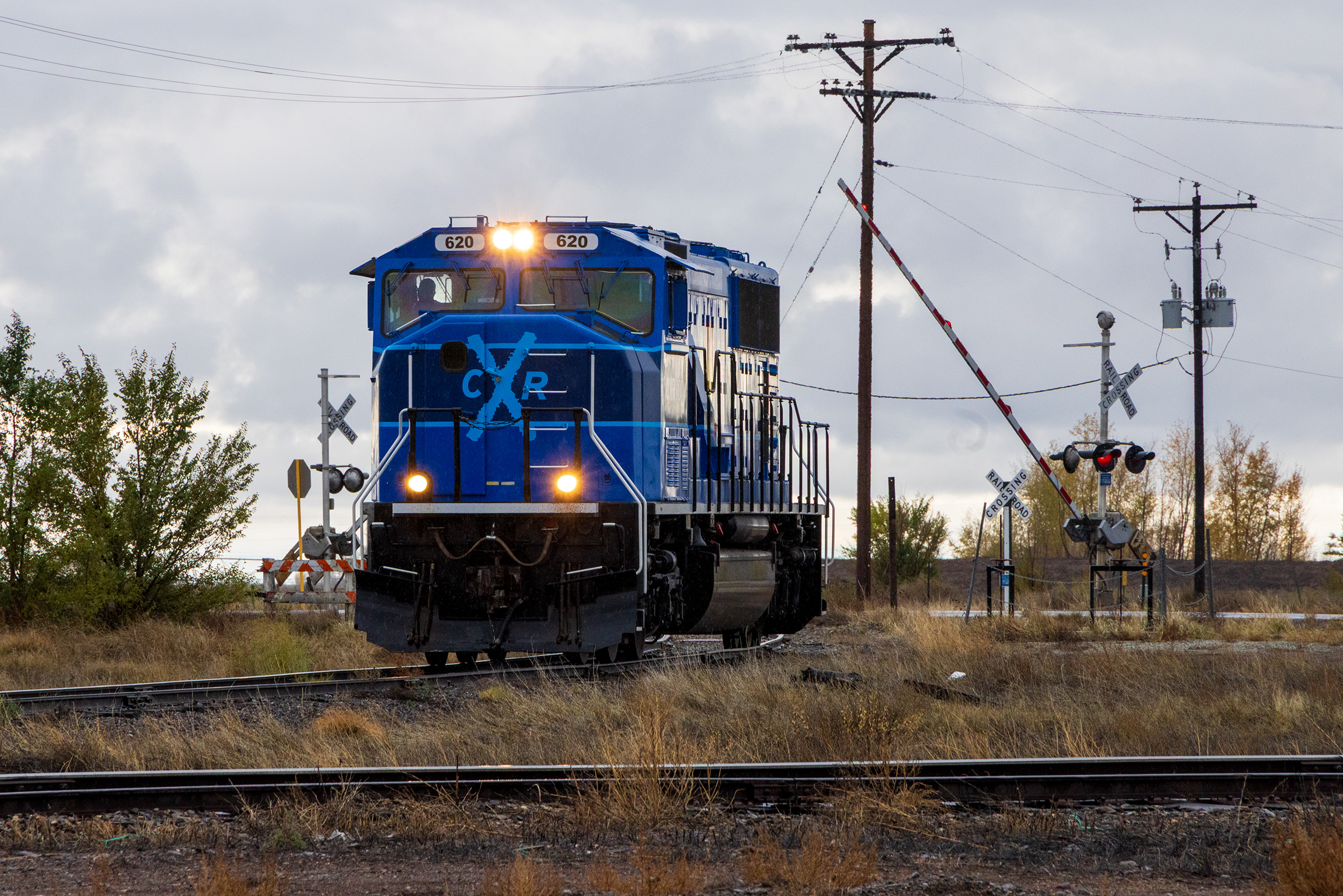
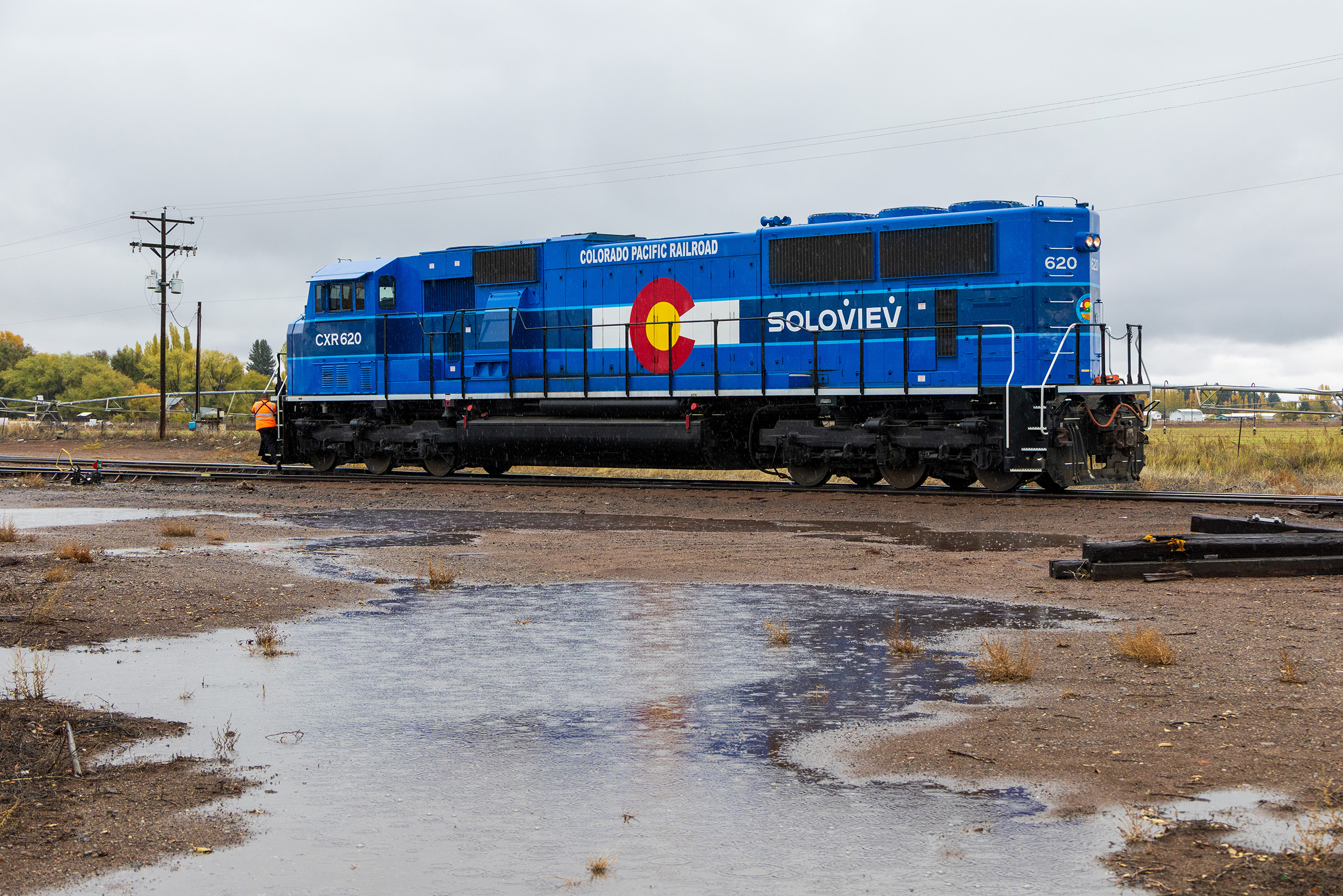
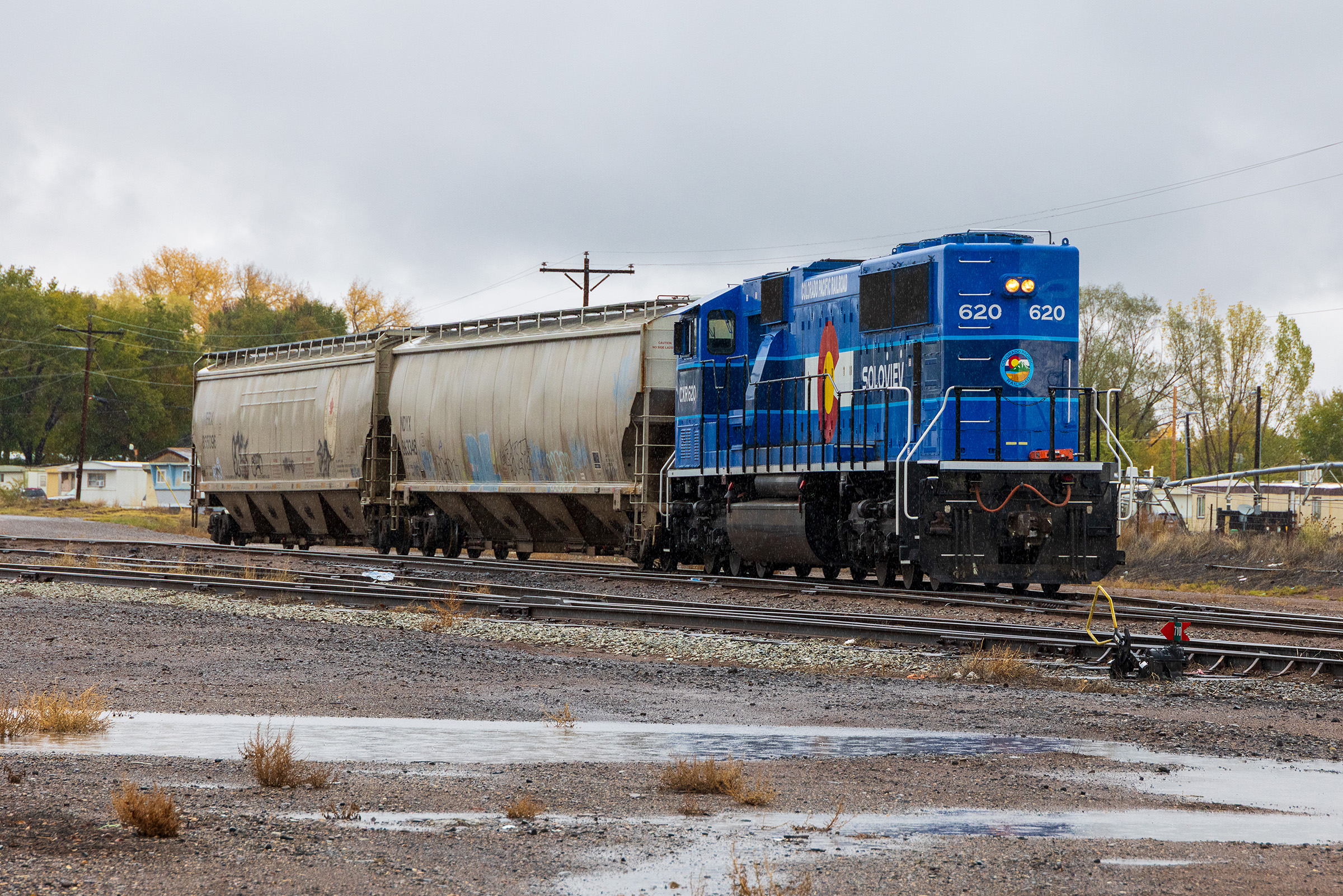
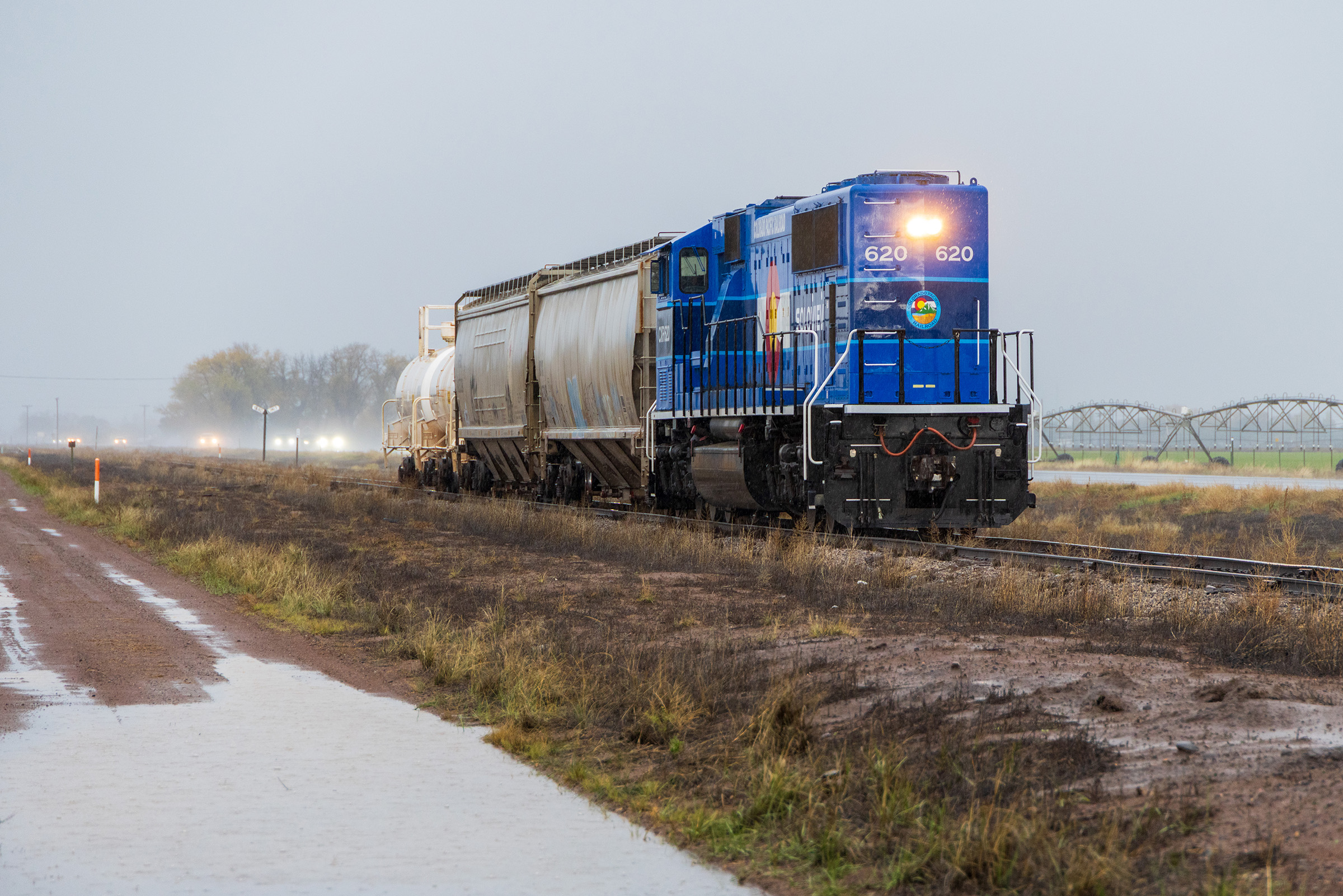
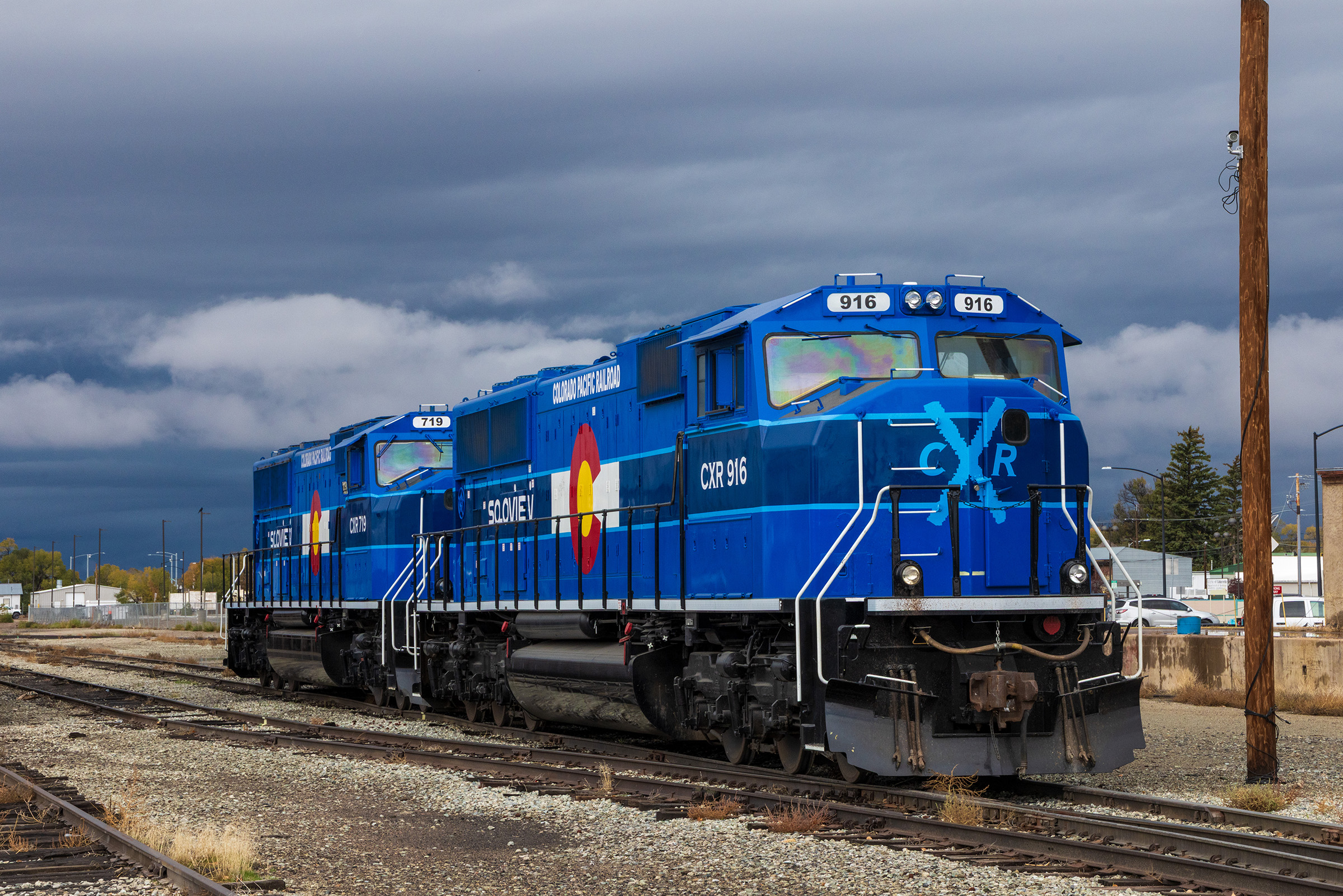
On the way home, I ran into the Colorado Pacific’s local over to Sugar Junction (east of Monte Vista) and the San Luis Central interchange. It was just CXR 620 running light with nothing to drop off, but they had four cars to pick up and drag back to Alamosa – two loaded grain hoppers and two empty tank cars. Since it was pouring rain, and there was a hail-warned storm coming up from Antonito towards Alamosa, I decided to grab a few shots and beat the road for home.
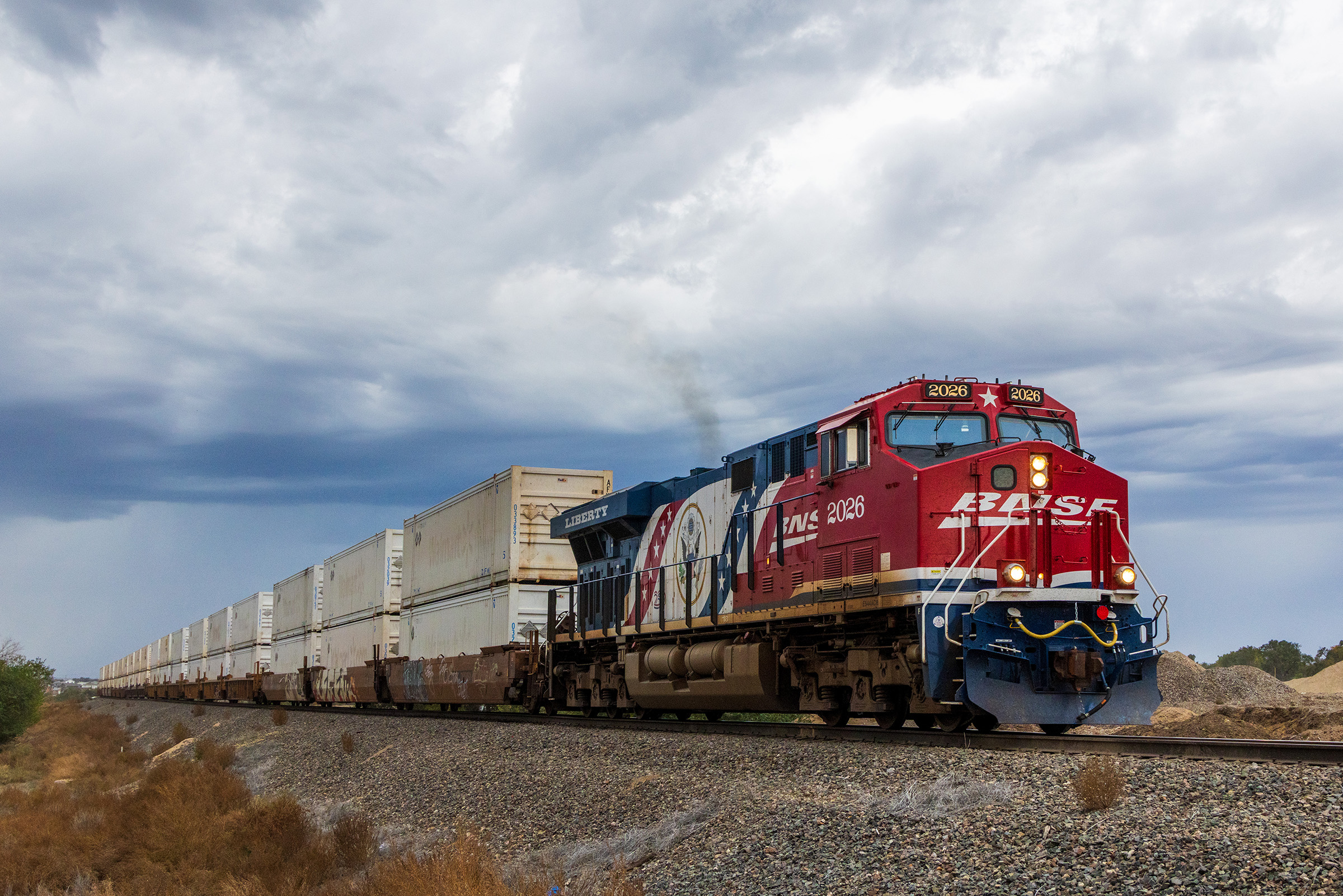
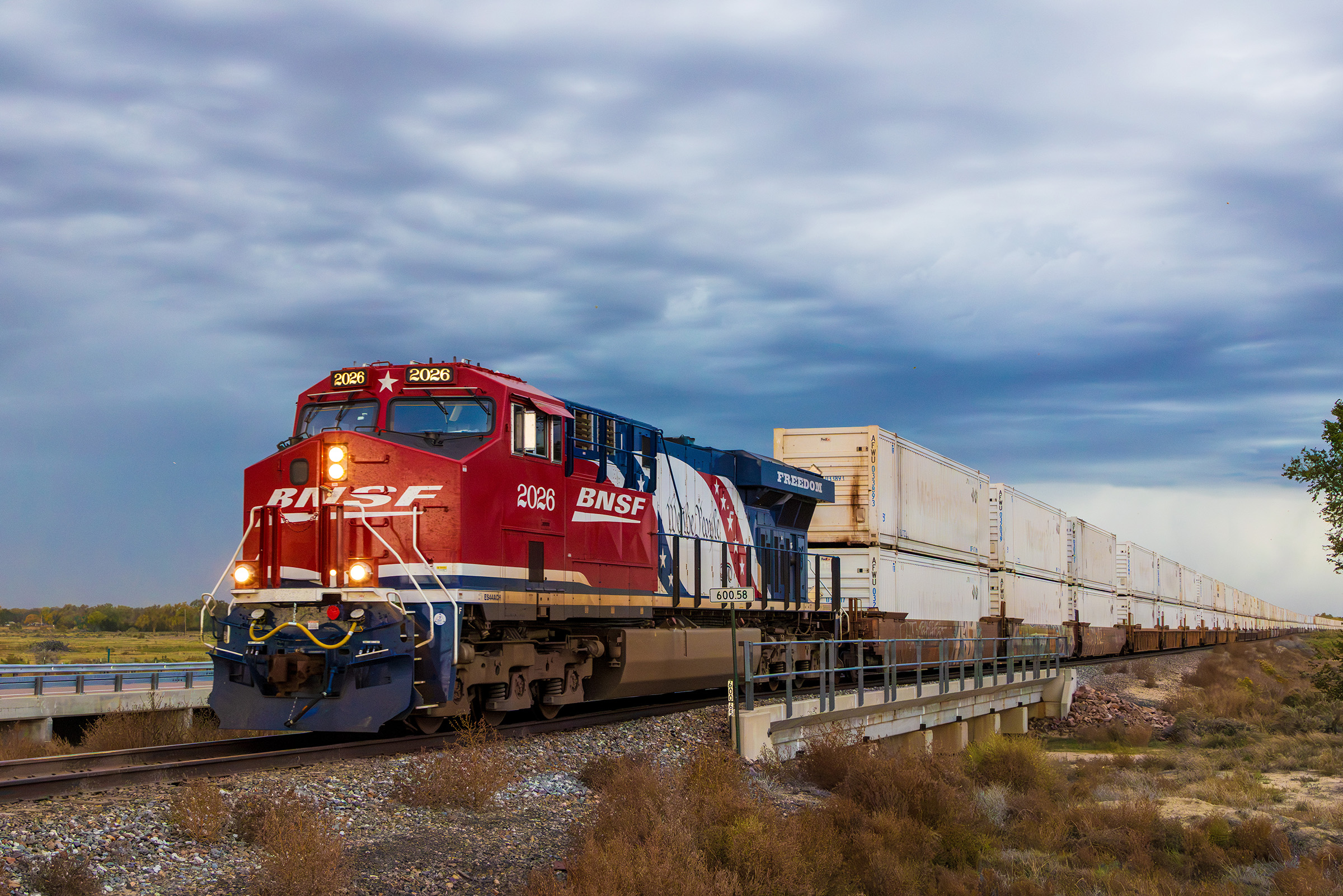
The other thing that showed up was BNSF 2026 – one of the three BNSF America 250 units – leading Q-PTLLAC4. I got word that it had an 0500h call time out of Denver, so I figured it would be long gone by the time I reached the Front Range. Not so much – as I came through Pueblo around 1630h, I saw it pulling east through Pueblo Junction. Despite crappy light and being tired, I couldn’t pass it up. They were only running about 35 due to winds at the time. As the storm front overtook them, high winds forced them to stop about a mile from the NA Junction switch. At that point, the light was gone and I finally headed for home.