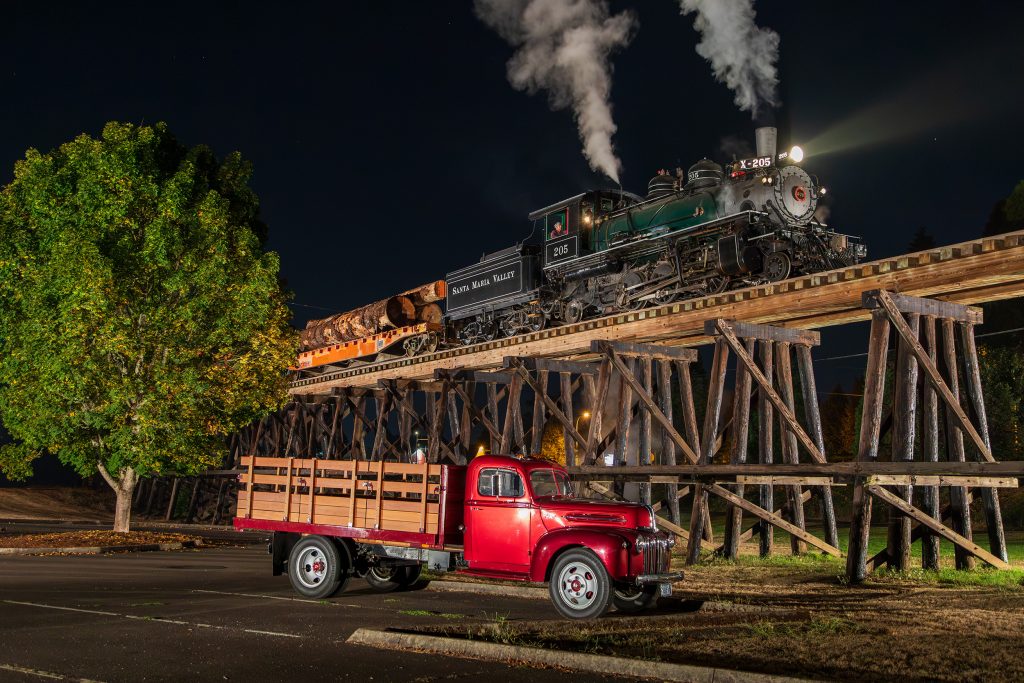
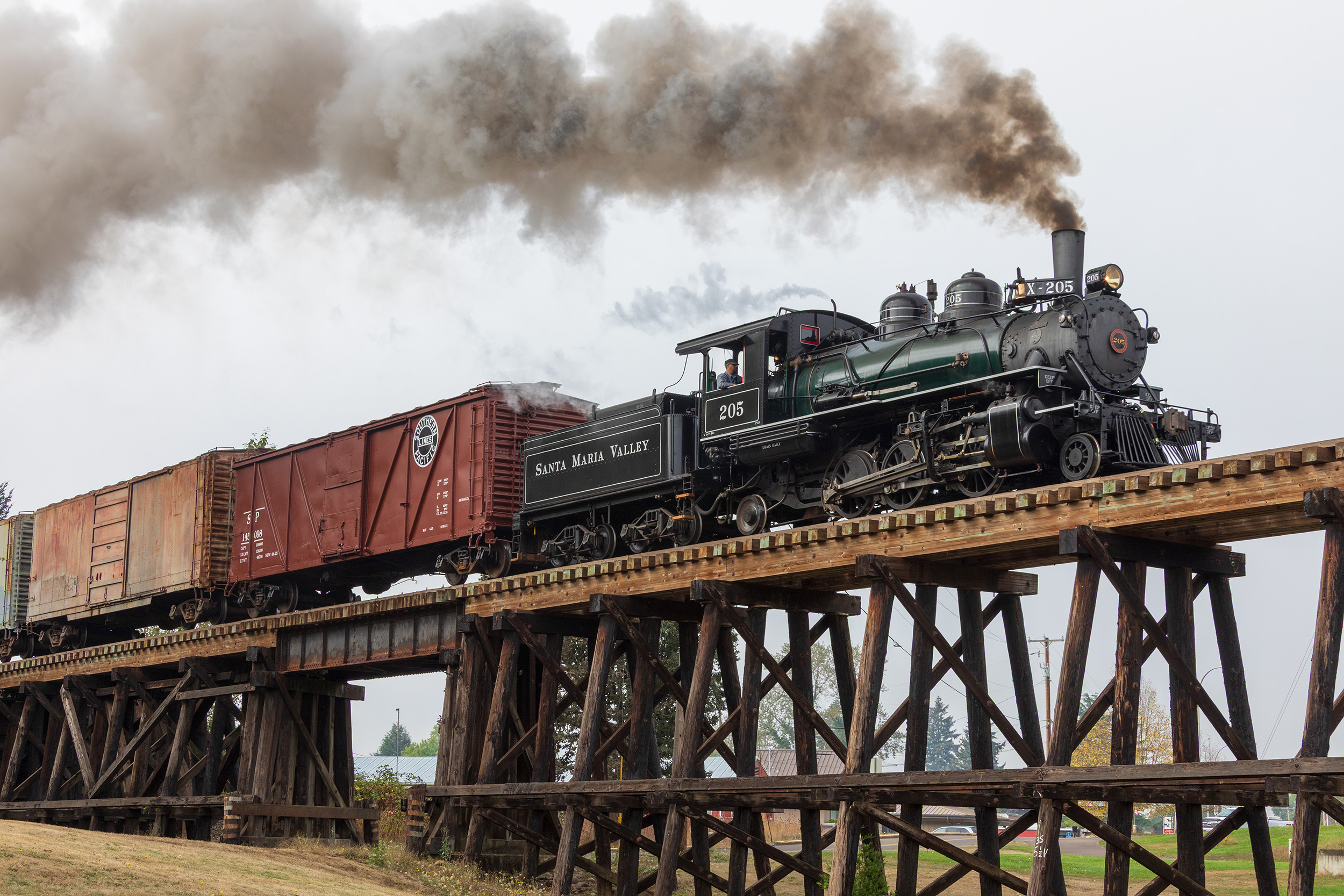
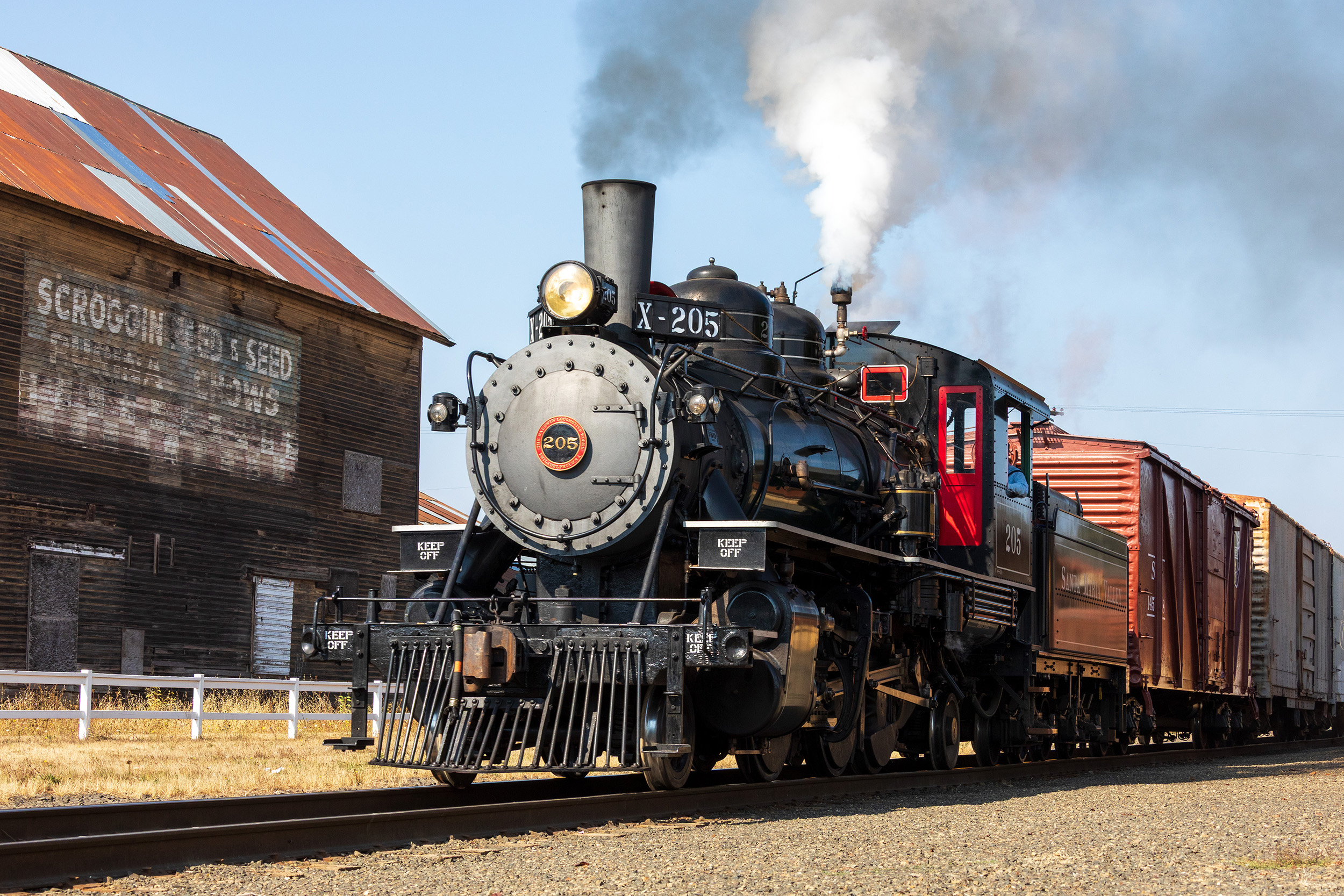
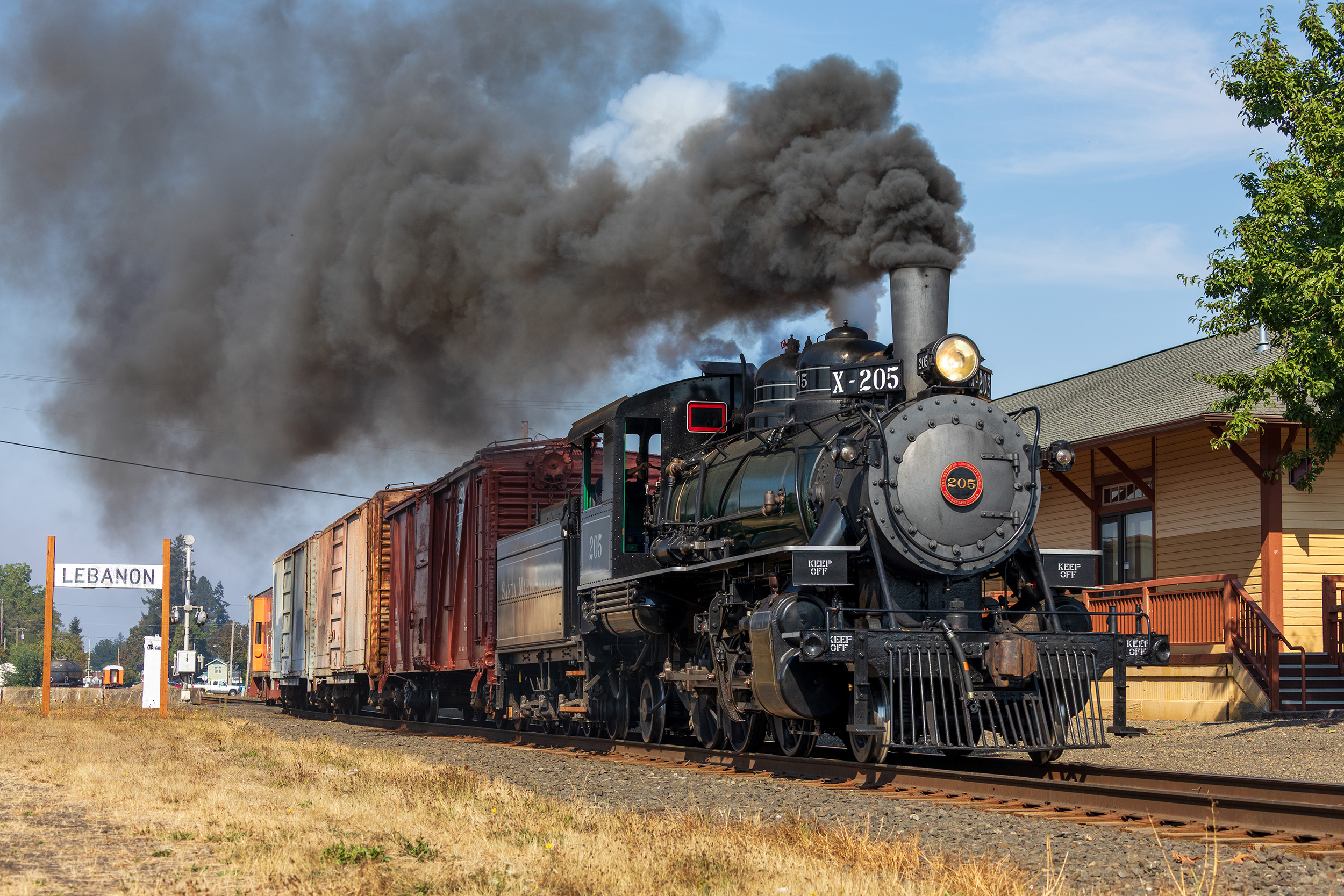
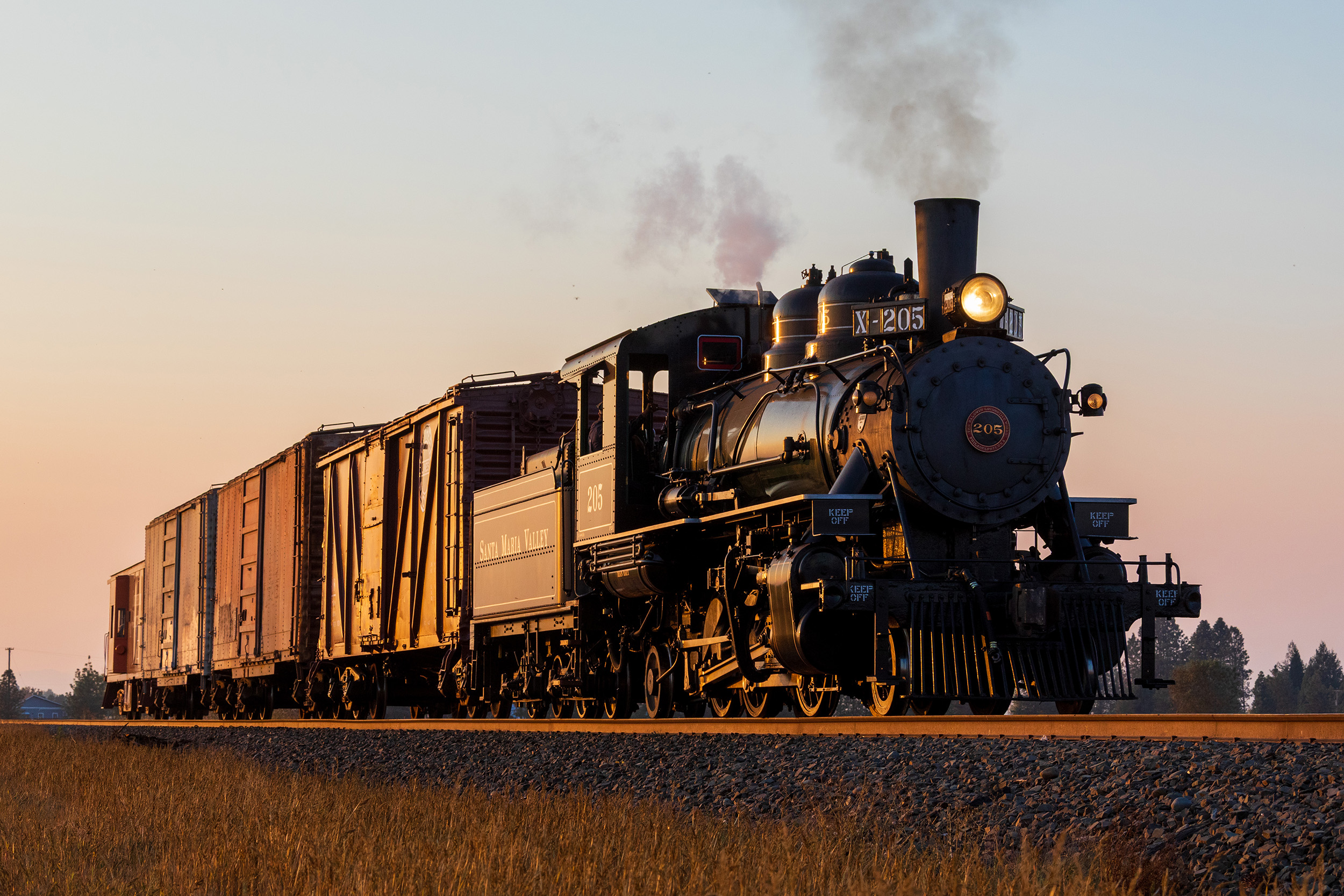
Back in 2022, there was a photo charter on Oregon’s Albany & Eastern using their recently-restored Baldwin 2-6-2, Santa Maria Valley #205. It was the day after an Oregon Coast charter, so I was out there for the whole week.
As opposed to the last couple trip reports I’ve posted that have been mainly “look at the pretty pictures,” this one actually has a lot of interesting history tied into it. First we’ll look at the history of the railroad itself and how the AERC came to be. Then we’ll look at the history of Santa Maria Valley 205 and its origins working in the canyons of the Sierra Nevada on one of California’s great hydroelectric projects to feed the insatiable electrical demands of Los Angeles.
If you just want the pictures, you can skip there with this link.
History of the Albany & Eastern Route
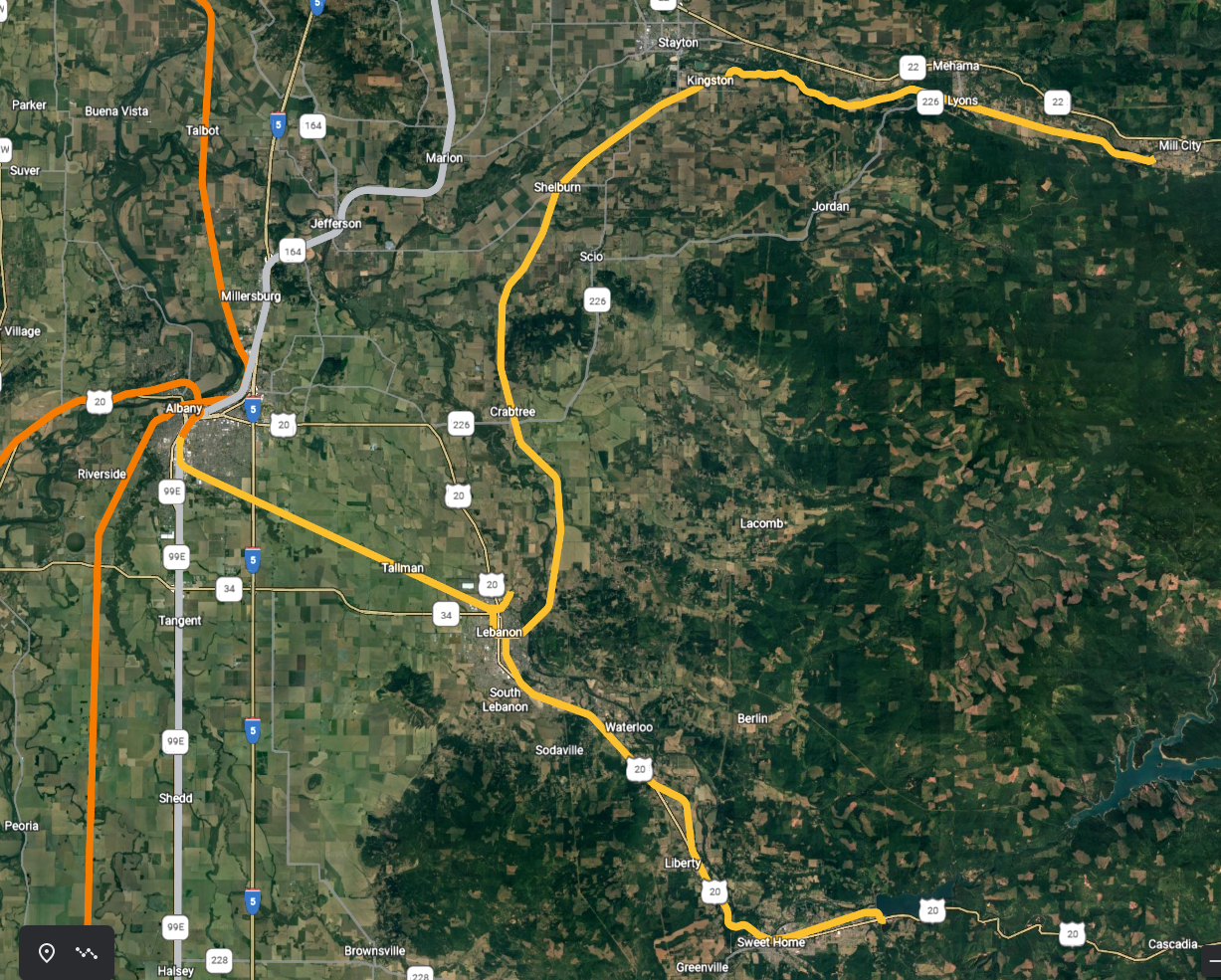
The Albany & Eastern Railroad (AERC) is a shortline operating about 60 miles of track centered around Lebanon, Oregon. The line runs east from the Portland & Western and Union Pacific interchanges at Albany to Lebanon, where it splits into two branches running up to lumber mills at Mill City and at Foster (near Sweet Home). The grey on the map is Union Pacific’s Brooklyn Subdivision between Portland and Eugene, and the orange is the current Portland & Western Railroad.
The Albany to Lebanon trunk handles the majority of the traffic. When I was there, they were running 5 days a week to serve customers in Lebanon. Trains would traverse the other two branches as there was customer demand, but that usually amounted to service once or twice a week.
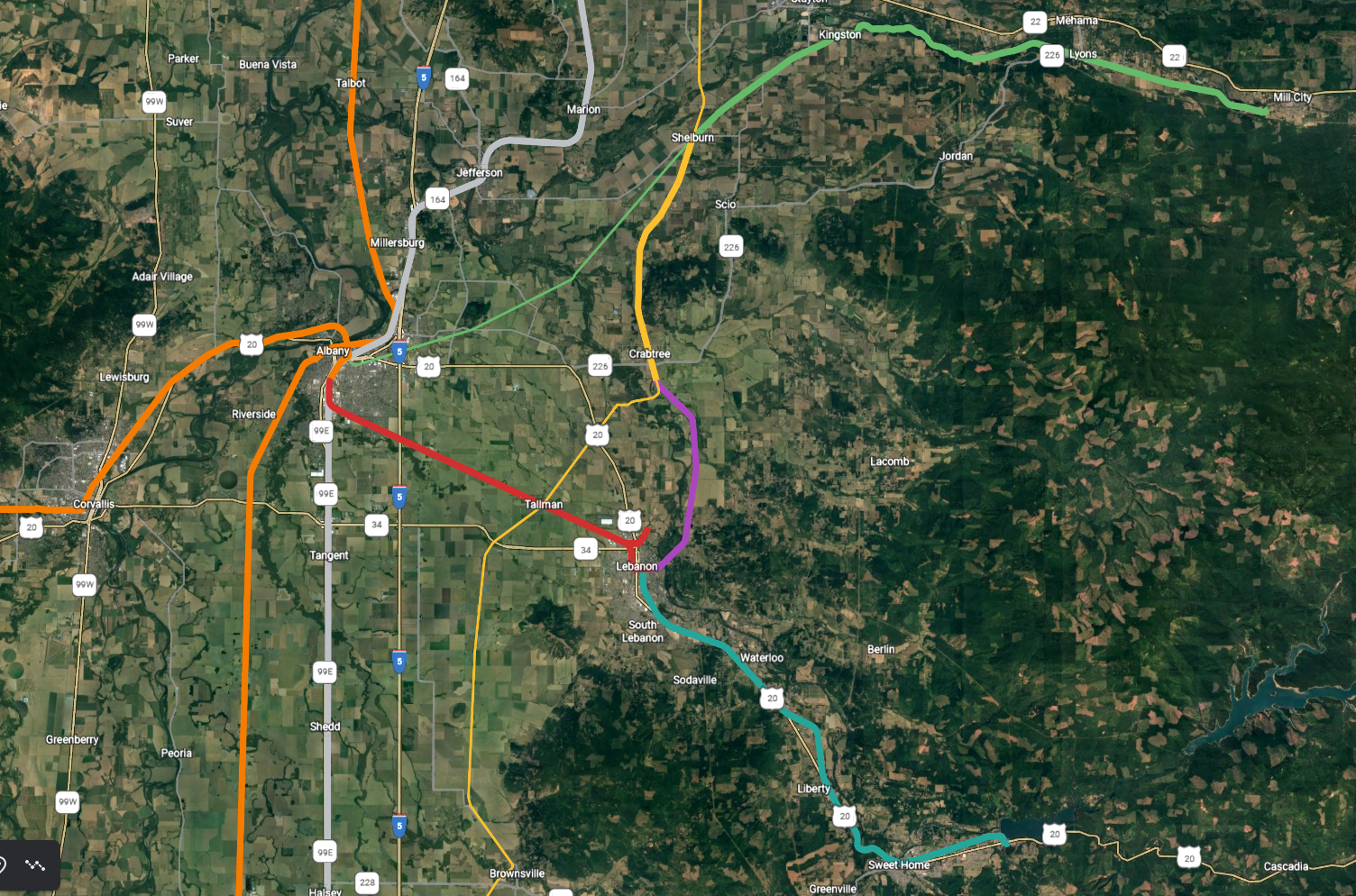
What today looks like a very simple set of branch lines actually has a rather rich and complex history. The system today consists of pieces of four different railroads that were pieced together over the years, as well as one reroute. Let’s take a look at another version of that map, this time showing the abandoned segments (thinner lines) between them and color coding the various pieces by their heritage.
The Albany & Lebanon Railroad
Let’s look at the red line first. From Albany to Lebanon, the line was built by the Albany & Lebanon Railroad Co and completed in September 1880. The line linked the fledgling town of Lebanon to the new Oregon & California Railroad, which had built south from Portland and would eventually complete the mainline over Siskiyou Summit (in 1887) and become SP’s original north-south mainline into Oregon. The A&L line was folded into the O&C system eight months later, in May 1881.
The Oregon Electric / Sweet Home Branch
The Lebanon-Sweet Home line, shown in teal green at the southeast corner of the map, started as the Linn County Logging and Lumber Railway in early 1928, and the project was taken over by the Oregon Electric Railway in April 1928. The Oregon Electric obtained trackage rights over the SP between Albany and Lebanon in 1911, a result of an agreement between the OE and SP to keep the OE from pursuing an extension to the Pacific Coast. The route become operational on April 1, 1932, and was alternately known as the Santiam Branch or the Sweet Home Branch. Despite the owner’s name, the line was never electrified and was operated by steam and later diesel.
Along with the original main line, the Holley Branch was constructed from Sweet Home south towards Holley and eventually to Dollar, up along the Calapooia River. Traffic on the branch was entirely timber-industry related, and declined in the early 1960s. Storm damage brought about its abandonment by 1966.
The Oregon Electric was owned by the Spokane, Portland & Seattle at the time the line was built, which in turn was equally owned by Great Northern and Northern Pacific. Along with its parent roads, the SP&S became part of Burlington Northern with the March 1970 merger. Burlington Northern gave way to BNSF in 1995, and BNSF sold the line to the Albany & Eastern in May 1998.
The Mill City Branch
The Mill City line north from Lebanon is actually the remnants of two different railroads, both of which eventually came under Oregon & California / Southern Pacific control and were stitched together.
From Shelburn to the end of track at Mill City, the line was the eastern end of the Oregon Pacific Railroad. The line’s history goes back to 1872, when Colonel T. Egenton Hogg incorporated the Corvallis & Yaquina Bay Railroad Company, with the intention to link the two namesake points by rail. Nothing happened. The C&YBR was supplanted by the Willamette Valley & Coast Railroad in 1874, and then by the Oregon Pacific in late 1880, but again, very little actual railroad building occurred. Finally the OPR was able to attract sufficient capital to begin actual construction in 1881, with the first train running between Corvallis and Yaquina Bay in 1885.
The Oregon Pacific then turned its sights on extending eastward. The eventual target was Boise, in the interest of reaching rails less hostile to interchange than the Oregon & California. By connecting into Boise, the line would bring competition to the Oregon freight market. Rails reached Albany in early 1887, and by late 1890 rails had reached Idanha, only 12 miles short of Santiam Pass. Then the money ran out, and the railroad went into receivership. The line would be sold a few more times and change names (Oregon Central and Eastern in 1894, Corvallis and Eastern Railroad in 1897), but never extended any further east. By 1907, it was sold to E.H. Harriman and his Southern Pacific.
The former Oregon Pacific east of Albany is shown on the northeast part of map in green, with the abandoned sections shown as a thinner line between Shelburn and Albany. The former Oregon Pacific west of Albany is the Portland & Western’s Toledo Branch today, and is shown as a larger orange line representing its ownership as part of the Genesee & Wyoming subsidiary Portland & Wester.
From Balm to Shelburn, the route is part of the former Oregonian Railway. The Oregonian was a 3-foot narrow gauge line that started on the banks of the Willamette River northeast of St. Paul, Oregon, and extended down through Woodburn, Silverton, over the Oregon & California (later Southern Pacific) Lebanon Branch at Tallman, and continued south to Coburn. Construction started in 1880 and was completed to Coburg in 1882. The line was never a financial success, and was purchased by the Southern Pacific in 1890. Its route is shown on the map in yellow, with the abandoned sections shown as a thinner line.
With that 1890 purchase, the Southern Pacific had the east-west former Albany & Lebanon and the north-south former Oregonian line. SP’s first move was to standard gauge the Oregonian and to allow it to interchange at the Tallman and Woodburn. The SP also extended the line south from Coburg to Springfield in 1906.
By 1907, Southern Pacific owned the Oregon Pacific line as well. All the pieces of the puzzle were now in place except one, and that was provided by a massive flood on the Santiam River system that very year. The flooding destroyed the old Oregonian Railway’s South Santiam River bridge and sections of track from Tallman to Balm (south of Crabtree). The SP built a new bypass from the end of the Lebanon Branch across a new high level bridge and onward over higher ground east of the river between 1907 and 1910. It’s shown on the map in purple.
The SP still had duplicate routes from Albany to Shelburn. It could either use the former Oregon Pacific, or it could use the Lebanon Branch and its new connector north from Lebanon. Consequently, they abandoned the former Oregon Pacific between Albany and the Shelburn diamond in 1929. The easternmost end of the Oregon Pacific from the end of track at Idanha to Gates was abandoned in 1946, as the waters impounded behind the Detroit Dam were about to flood the right of way. The line was cut back again from Gates to its current Mill City terminus in 1956.
For most years under the SP, the Albany-Tallman line was known as the Tallman Branch, and the former Oregonian route (including the 1910 bypass at Lebanon-Crabtree) was known as the Woodburn-Springfield branch, and the Shelburn-Mill City section known as the Mill City Branch.
The former Oregonian north of Shelburn to West Stayton was abandoned in the early 1970s with the bridge over the Santiam River was deemed insufficient for heavier modern rail traffic, isolating the northern Woodburn-West Stayton segment. The south end of the former Oregonian was severed when the bridge over the McKenzie River was weakened by a flood in 1973. With the former Oregonian line severed in multiple places, SP made the entire Albany-Mill City line the Mill City Branch around 1980. The last 30 miles of the former Oregonian south from the junction at Tallman – now known as the “Wilkins Branch” – was abandoned in 1985.
From SP and BN to the Albany & Eastern
In 1992, Southern Pacific was looking to spin off many of its remaining shortlines, in the interest of trimming down and improving financial performance. Mike and David Root, as well as partner George Lavacot, had been involved in the Oregon short line railroad scene since 1980 and started discussions on some of these lines. In February 1993, they signed a 20-year lease-purchase agreement with the SP for Mill City Branch (Albany to Mill City), along with the the West Stayton Branch (Woodburn to Stayton) and the Geer Branch (Salem to Geer). These three lines became the newly formed Willamette Valley Railway. A few years later in 1996, the lease on the lines became a purchase, with SP shedding branchline mileage permanently ahead of the UP merger.
BN (or BNSF after 1995) still had their old trackage rights over the Albany to Lebanon segment to serve the Sweet Home Branch. Apparently there was a little hiccup in the transition, but for five years BN crews continued to operate over the Willamette Valley to serve their isolated branch. Eventually somebody realized this didn’t make a lot of sense, and the Root brothers bought the Sweet Home line from BNSF in 1998 under the new banner of Albany & Eastern. In 1999, they did a bit of reorganizing. They bought out Lavacot and made all of the lines out of Lebanon part of the Albany & Eastern. The Willamette Valley would continue on the West Stayton line.
In August 2007, the Rick Franklin Corporation, a heavy construction and railroad services contractor, purchased the line from Mike Root. Mike was wanting to retire, and Rick Franklin Corp. had been providing railroad services for many years, from derailment cleanup to car repair and scrapping to contract maintenance and construction. Actually buying a railroad was a natural fit.
The new owner has invested heavily in rebuilding the line, allowing for heavier cars and better speeds. The hauler from Albany to Lebanon operates on weekdays, and local service runs up the two branches as needed, but usually once or twice a week. In addition to freight service, the A&E started operating the Santiam Excursion Trains in 2014.
Santa Maria Valley #205
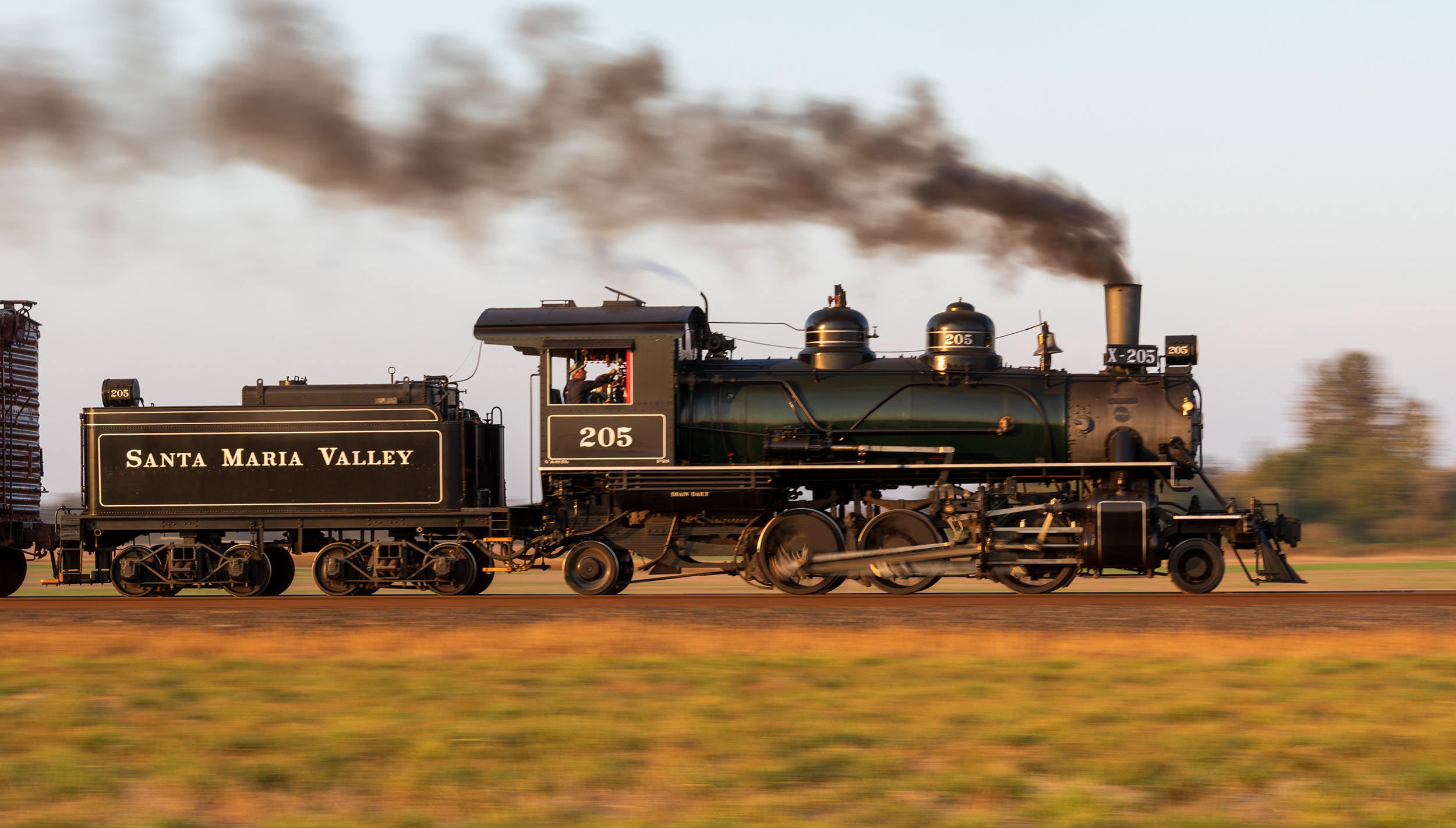
The star of our photos will be a little Baldwin 2-6-2 known as Santa Maria Valley #205. Let’s take a look at the history of this engine, because 205’s story actually starts on the San Joaquin & Eastern, which in turn starts with the story of Los Angeles and the Pacific Electric Railway.
In the Beginning – the San Joaquin & Eastern
Henry E. Huntington, nephew of C.P. Huntington of Central Pacific and Southern Pacific fame, had been aiming for president of the Southern Pacific, but his career ambitions had been thwarted by E.H. Harriman when the later was promoted to president of the line. Huntington decided to cash out his stock and move to Los Angeles, where he invested in unifying all the various streetcars into one system, the Los Angeles Railway. That shortly led into founding Pacific Electric, a standard gauge interurban system linking the streetcar network out to the booming suburban area around the city.
The problem was power. All of these lines were electrified, and were supplied by little power companies that were rapidly being gobbled up through mergers and acquisitions. Huntington didn’t want his new electric railway empire completely beholden to something he didn’t control, so he set about securing his own source of power.
Along with William Kerckhoff, they founded Pacific Light & Power in 1902 to assume the assets of Kerckhoff’s San Gabriel Electric and secure their energy supply. San Gabriel Electric was one of the original hydroelectric power companies of the region, having built the Azusa plant on the San Gabriel River that started delivering power in 1898. To meet the railway’s needs, they began acquiring other small power companies, such as Sierra Power and Kern River Power in 1902. They also began building steam plants burning coal and oil, such as the original Redondo plant.
However, by 1910 the load on the system was exceeding capacity, caused by the rapidly expanding railway system and other customers. More generation was needed, and Huntington realized it needed to be hydroelectric. Published cost estimates vary from a 1/4th of the cost to 1/40th the cost for hydroelectric vs combustion steam plants of the era, but regardless it was massively cheaper.
The narrow canyons of the San Joaquin River east of Fresno were recognized in the 1890s as excellent locations for developing large hydropower projects, but it took nearly another decade before electrical transmission technology and financing could make it happen. The location was over 200 miles from LA, and at the time electrical transmission technology did not allow for moving energy over such long distances. By the time PL&P was looking for generation in 1910, transmission technology had matured to the point where it was just barely practical. By recapitalizing PL&P, they raised the funds to start construction on what would become known as the Big Creek Hydroelectric Project.
To haul men and supplies to the construction site high the Sierras, they built the San Joaquin & Eastern Railroad. Starting at El Prado, near Friant on the Southern Pacific northeast of Fresno, the SJ&E line ran 55 miles up to Big Creek. Since its only reason for existing was to build the dams and powerhouses, and only needed to last long enough to achieve those goals, the line was built on the cheap in terms of grading. It was also built quickly, since the power company wanted to get dam construction going and begin filling the reservoirs as quickly as possible. The line, started in February, was completed in December of 1912.
From El Prado to Auberry (milepost 26, the road’s headquarters), the line was pretty much like any other lightly-graded standard gauge branch. It had some sharp curvature and steep grades but nothing too out of the normal, and certainly nothing normal railroad equipment couldn’t handle. Above Auberry, the line became steep with dozens of sharp curves to navigate the steep canyon, with grades up to 5.3% and curves up to 60 degrees. At Cascada, called “Big Creek” today, it amazingly got worse. To reach the dam sites far above, the mainline connected to an incline cable railway. The incline had grades up to 80%, and used a 250hp winch with an 1.5″ steel cable to drag cars up and down into the future Huntington Lake storage basin. Once at the top, the incline connected with another ~13 miles of temporary construction track in the future lake basin to facilitate tree-clearing and dam building.
Standard rod engines operated only from El Prado to Auberry, within the Huntington Lake basin, and as local construction switch engines. The route between Auberry and Cascada was usually exclusive domain of the line’s Shays and Climaxes.
The speed of construction paid off. The first powerhouse and the 240 miles of 150kV power line – the longest, highest voltage line in the world at the time – were completed and energized to deliver power in November 1913, when the Redondo plant suffered a major failure. The second powerhouse came online a month later. Pacific Light & Power would merge into Southern California Edison in 1916, and the Big Creek project would continue to be an important part of that system.
After World War I, Big Creek would see another decade expansion, with more powerhouses and dams being built to feed growing demand. That expansion brought renewed traffic to the SJ&E. Whether it was for replacing worn-out equipment or to expand capacity isn’t clear, but in November 1923, the San Joaquin & Eastern apparently decided it needed more power for the flatter parts of the line. They turned to Baldwin and ordered a little oil-burning 2-6-2 with a Vanderbuilt tender. The brand new #205 was delivered in 1924.
By 1928, the railroad’s job was largely done, with the big expansion projects wrapping up. In addition, the capabilities of trucks on the load roads had improved to the point that the railroad was no longer a necessity. Still, as a common carrier, it was vulnerable to noisy customers who didn’t want service discontinued. The line carried on for another five years, with service becoming less frequent and losses mounting each year. Eventually in 1933, abandonment was approved. #205 served right through the end.
For those interested in more about the Big Creek Project or the San Joaquin & Eastern, I recommend Hank Johnston’s The Railroad That Lighted Southern California and The Hardest Working Water in the World by Dr. Laurence H. Shoup. For more information on the Pacific Light & Power Company, have a look at William A. Myer’s Iron Men and Copper Wires.
Santa Maria Valley Years
The Santa Maria Valley was incorporated in 1911 to run 23 miles from Southern Pacific’s Coast Line at Guadalupe, California, up to a location known as Roadamite, just south of Sisquoc, CA. Roadamite was apparently the name of a road asphalt product made out of the local heavy oil, and the railroad was originally built to haul it down to the SP mainline. The oil business didn’t pay off, and bankruptcy followed in 1925. It was purchased by oil magnate Capt. George Allan Hancock. The railroad eventually developed other traffic, such as a steady stream of sugar beets headed to the mill from all over California, and abandoned some of its branches and the easternmost 9 miles of the mainline.
The railroad dieselized in 1948 with the arrival of two GE 70-tonners, though Capt. Hancock’s favorite steam engine continued to run at least until 1962. However, 205 was surplus, and donated to the city of Santa Maria in May 1950. It sat at the Santa Barbara County Fairgrounds until 1983.
At some point in its Santa Maria Valley years, the engine lost its Vanderbuilt tender and instead received the normal square tender off SMV 150, a larger 2-8-2 that had been built as Vance Lumber Company #4.
Restoration
George Lavacot, one of the investors later involved with the Willamette Valley, purchased the engine in 1983. He moved it from the and moved it to his Independence, Oregon, shop facility and began restorations. Those restorations stretched over nearly three decades, with the first steam-up in 2015. Rick Franklin had apparently known George for many years, and now with his own short line and excursion trains, it would give the 205 a place to run. In 2021, 205 was transferred to the Albany & Eastern for use on their excursion trains. On November 19, 2021, it made its first public run over the AERC from Lebanon to Sweet Home and back. That’s why I figured it would be appropriate around the 5th anniversary of that event to finally get through processing these pictures and get them posted.
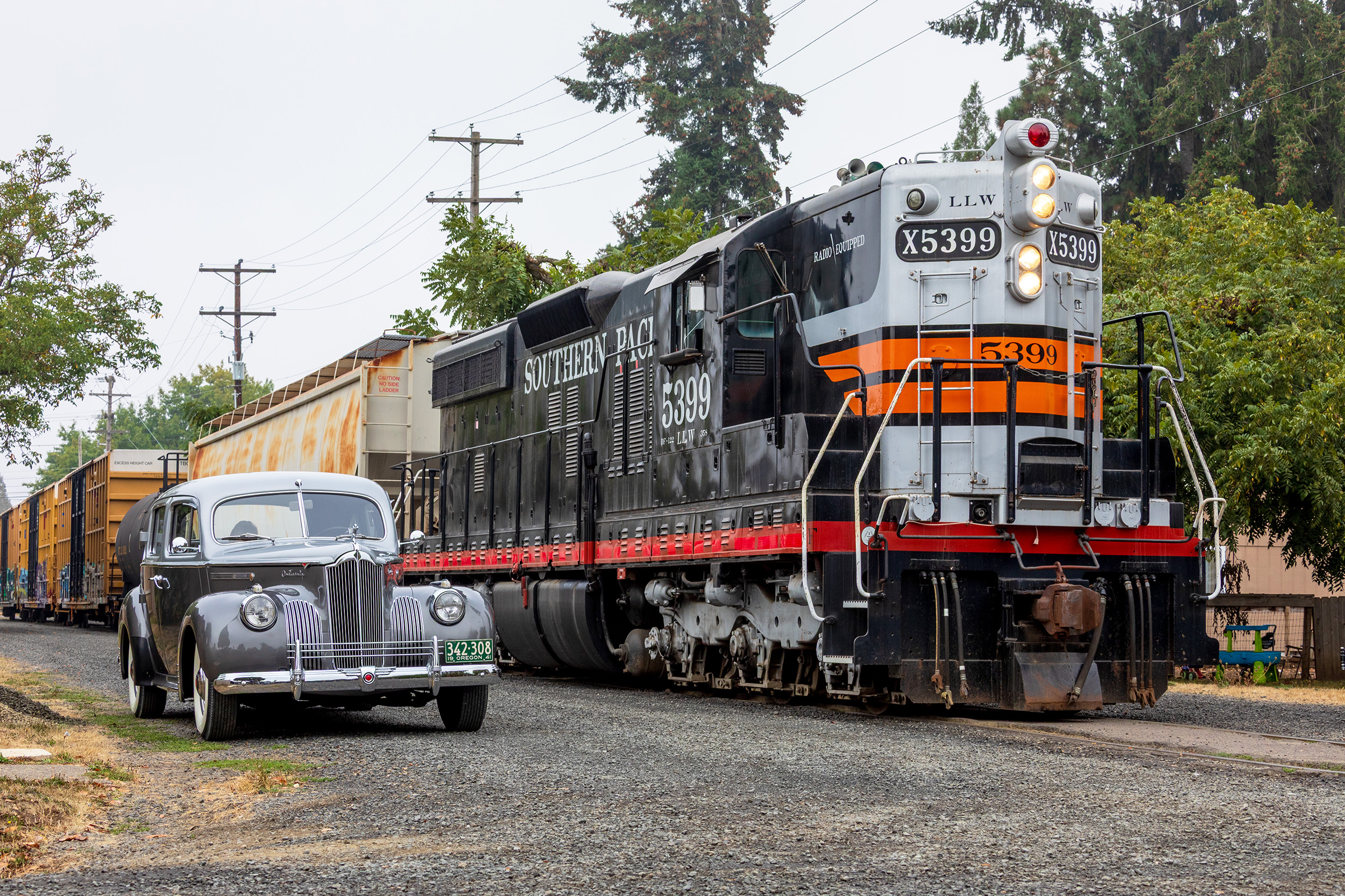
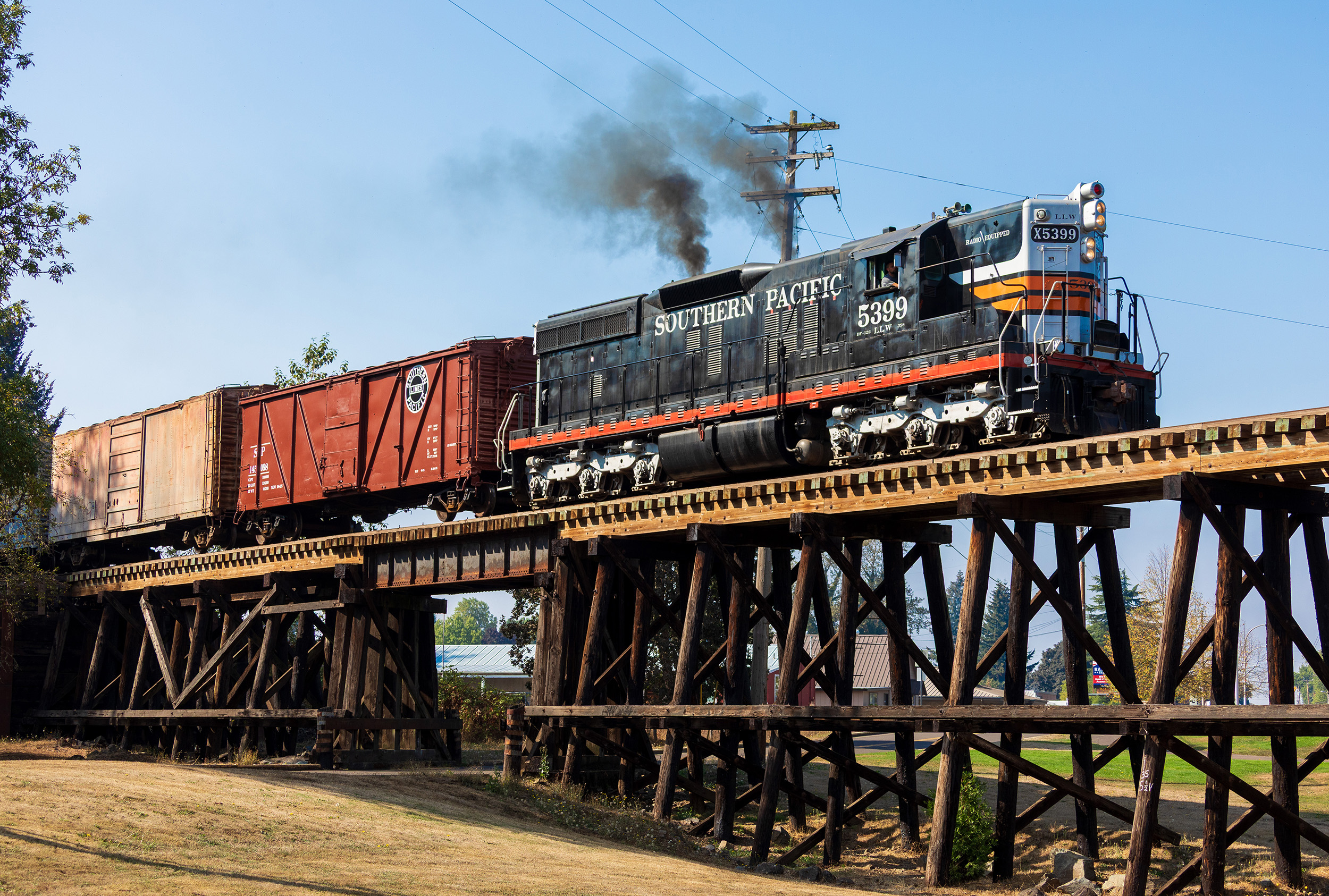
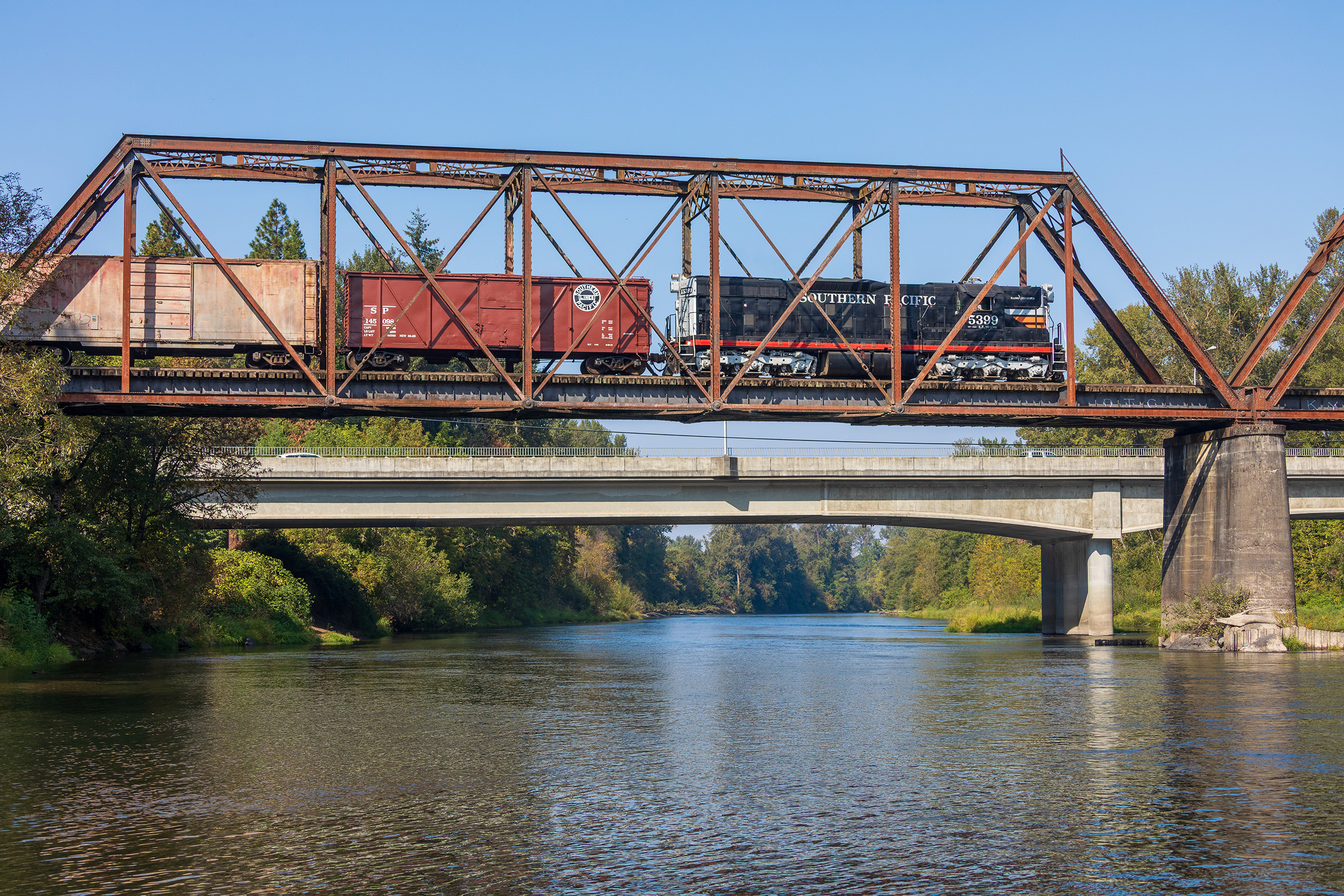
As a note, Lavacot was also responsible for saving several other notable engines, including the SP SD9E 5399. SP 5399 is now LLW (Lavacot Locomotive Works) 5399 and is painted in SP “black widow” paint, and we’ll get to see it in this photo shoot as well.
The Albany & Eastern at Work – Oct 3, 2022
October 2022 had a series of Lerro-run photo charters in Oregon. We started with two days (Oct 4-5) out on the Oregon Coast Scenic Railroad, and then headed down to the Lebanon, Oregon, area for two days with Santa Maria Valley 205 on the Albany & Eastern.
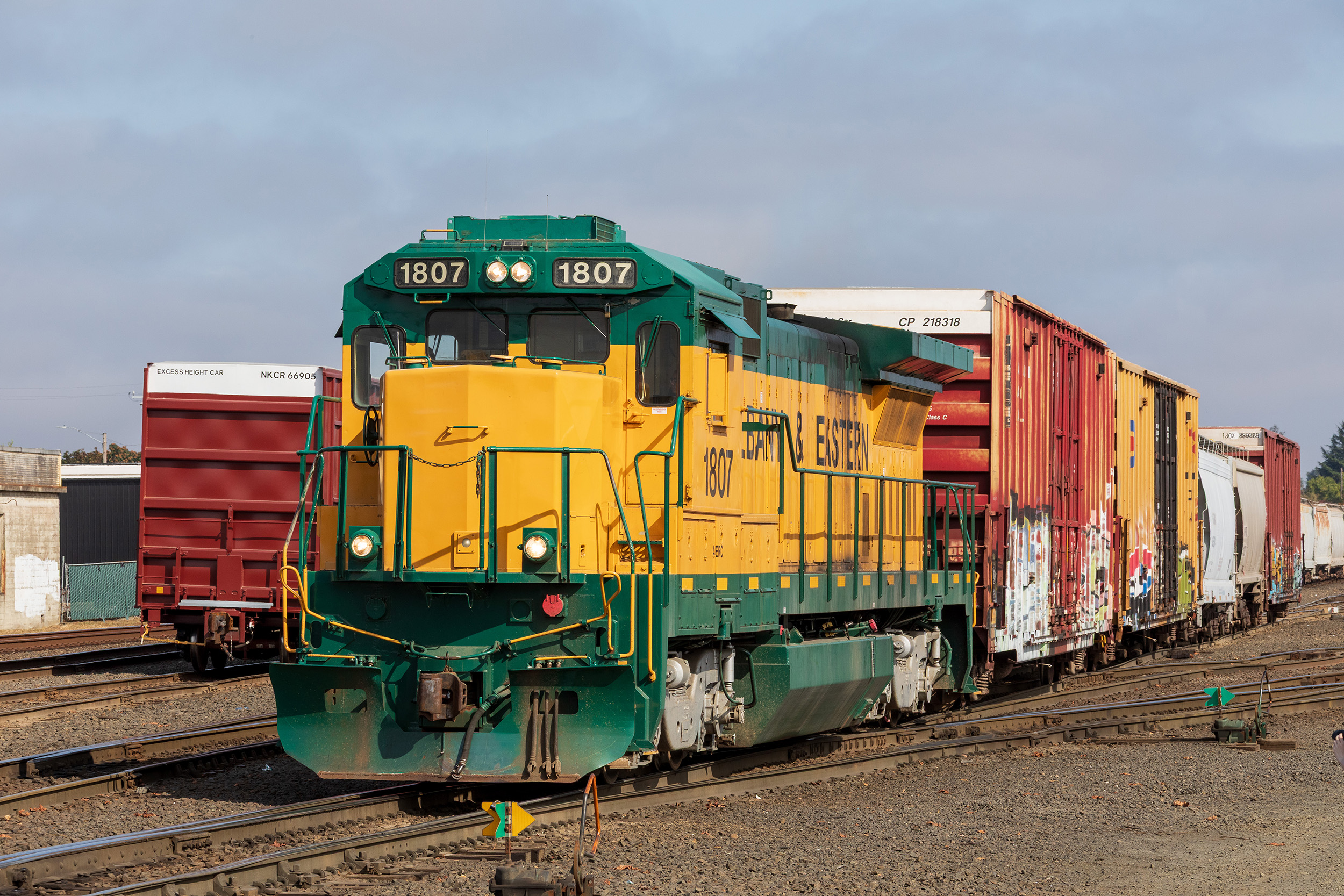
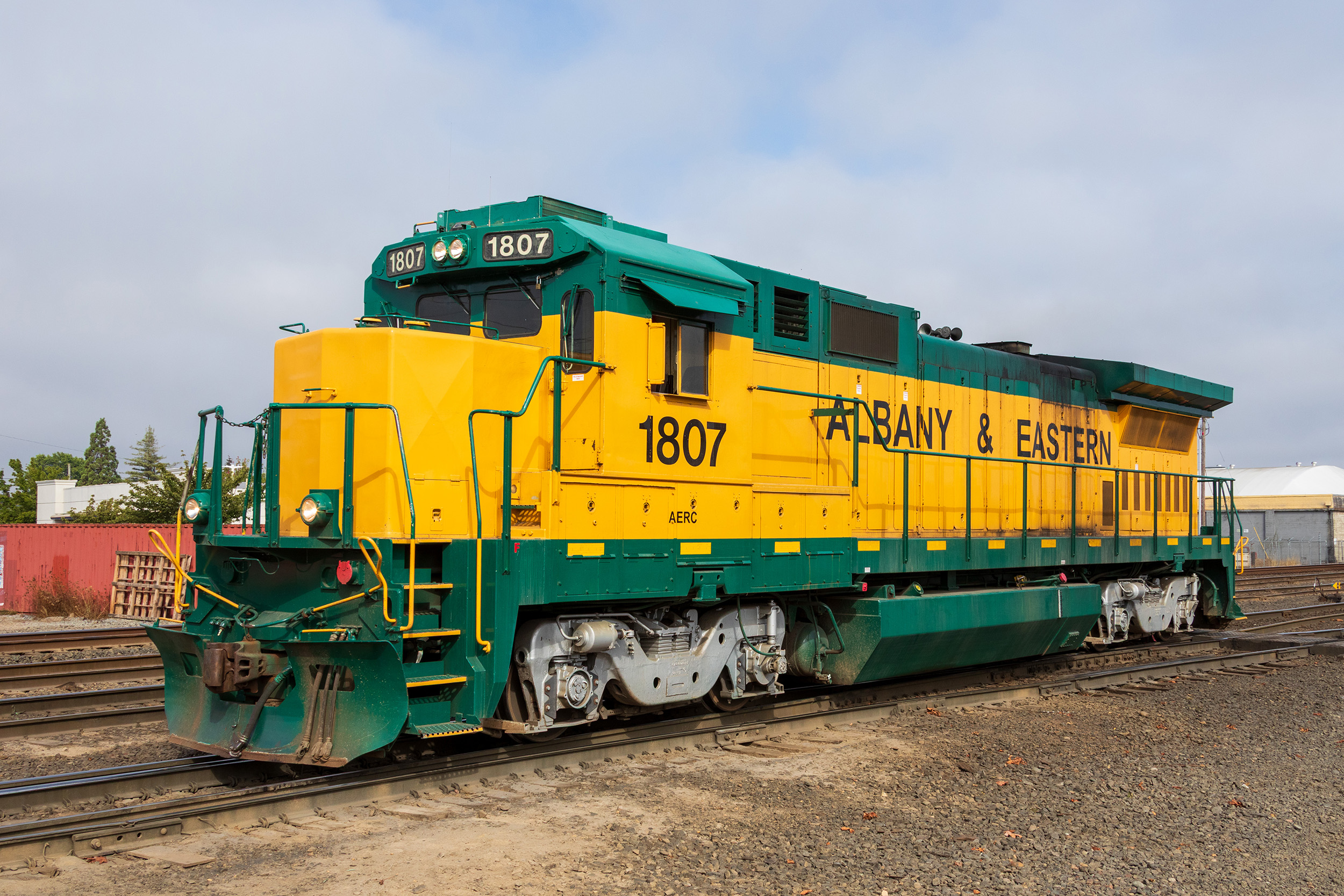
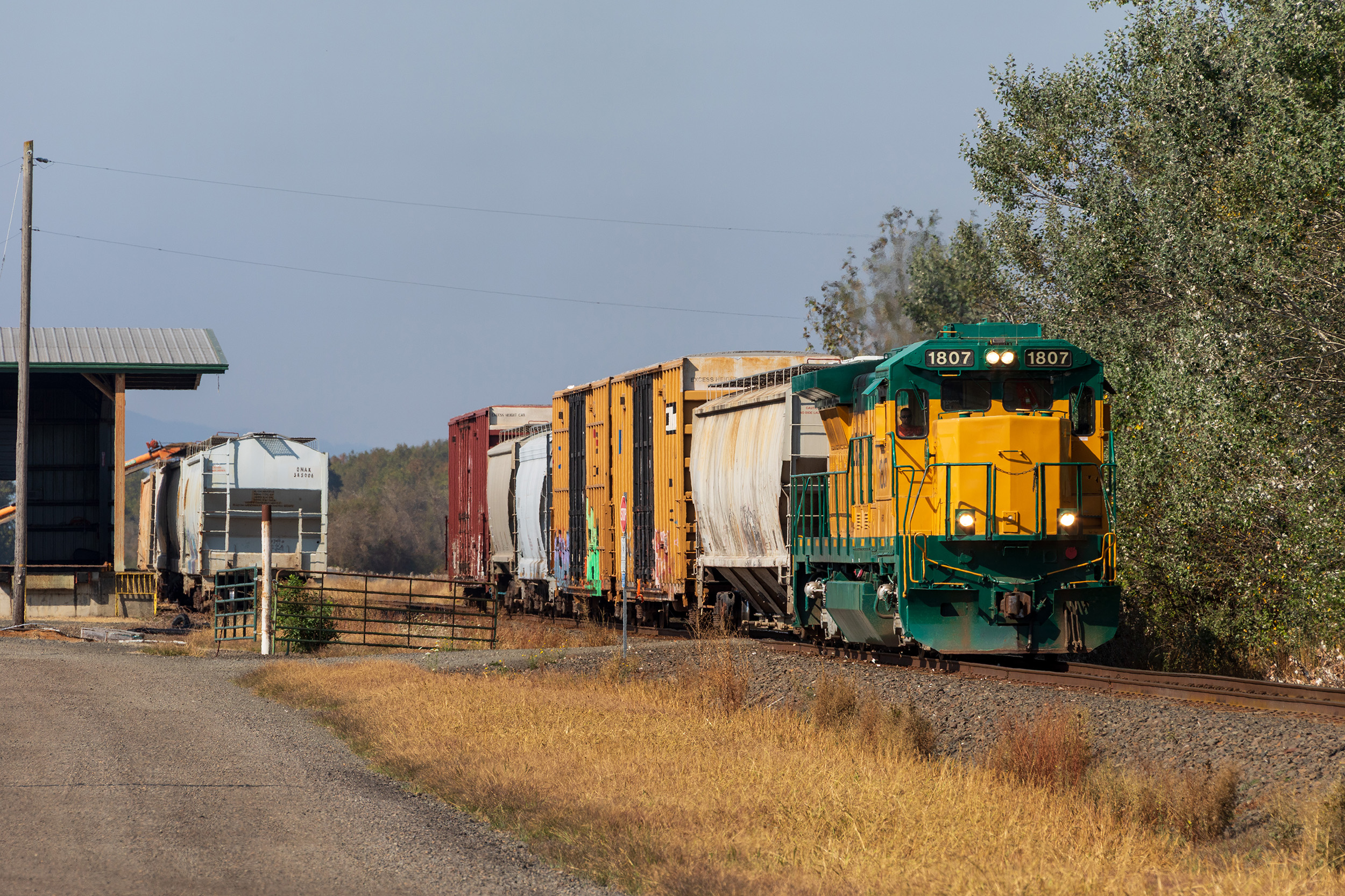
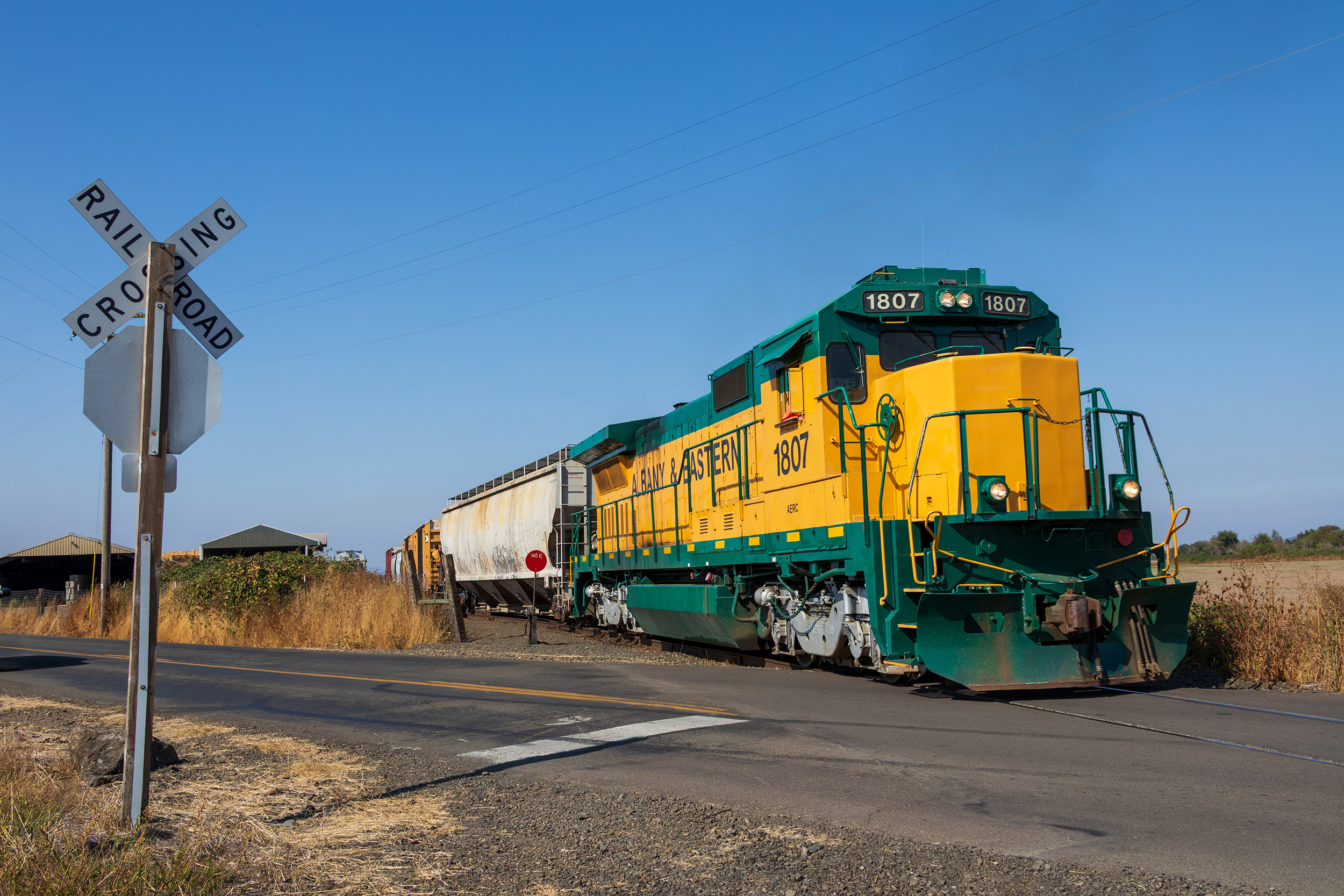
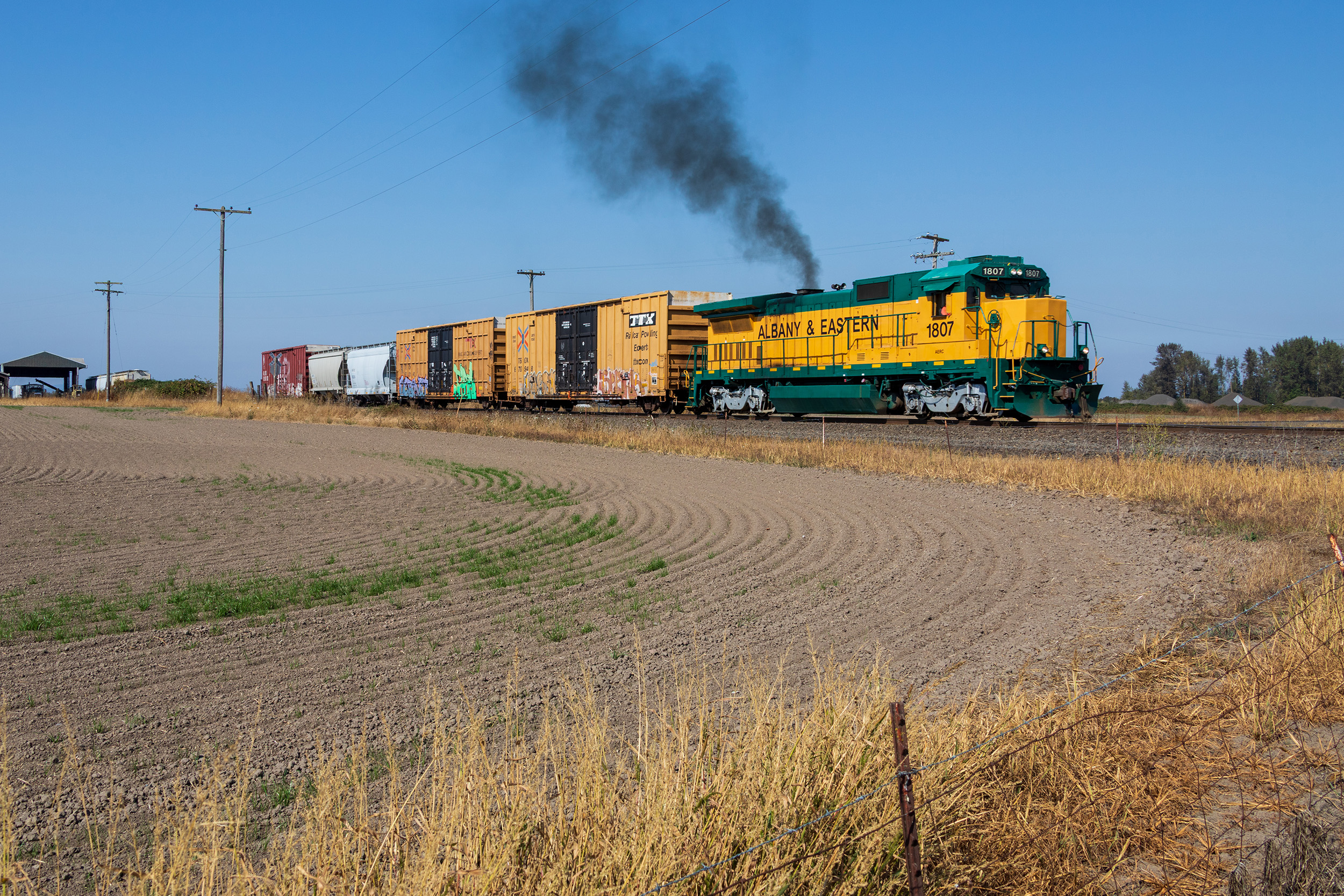
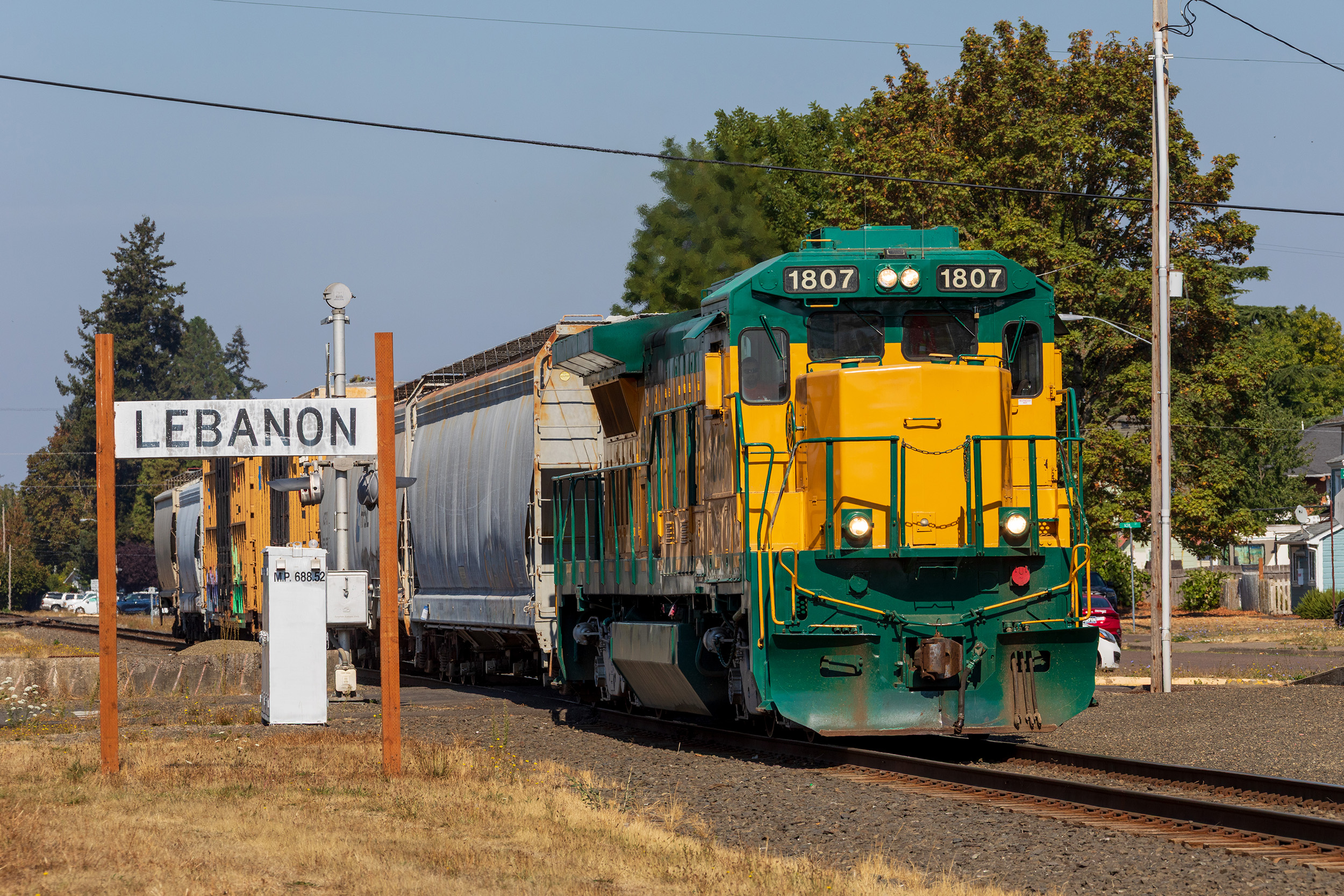
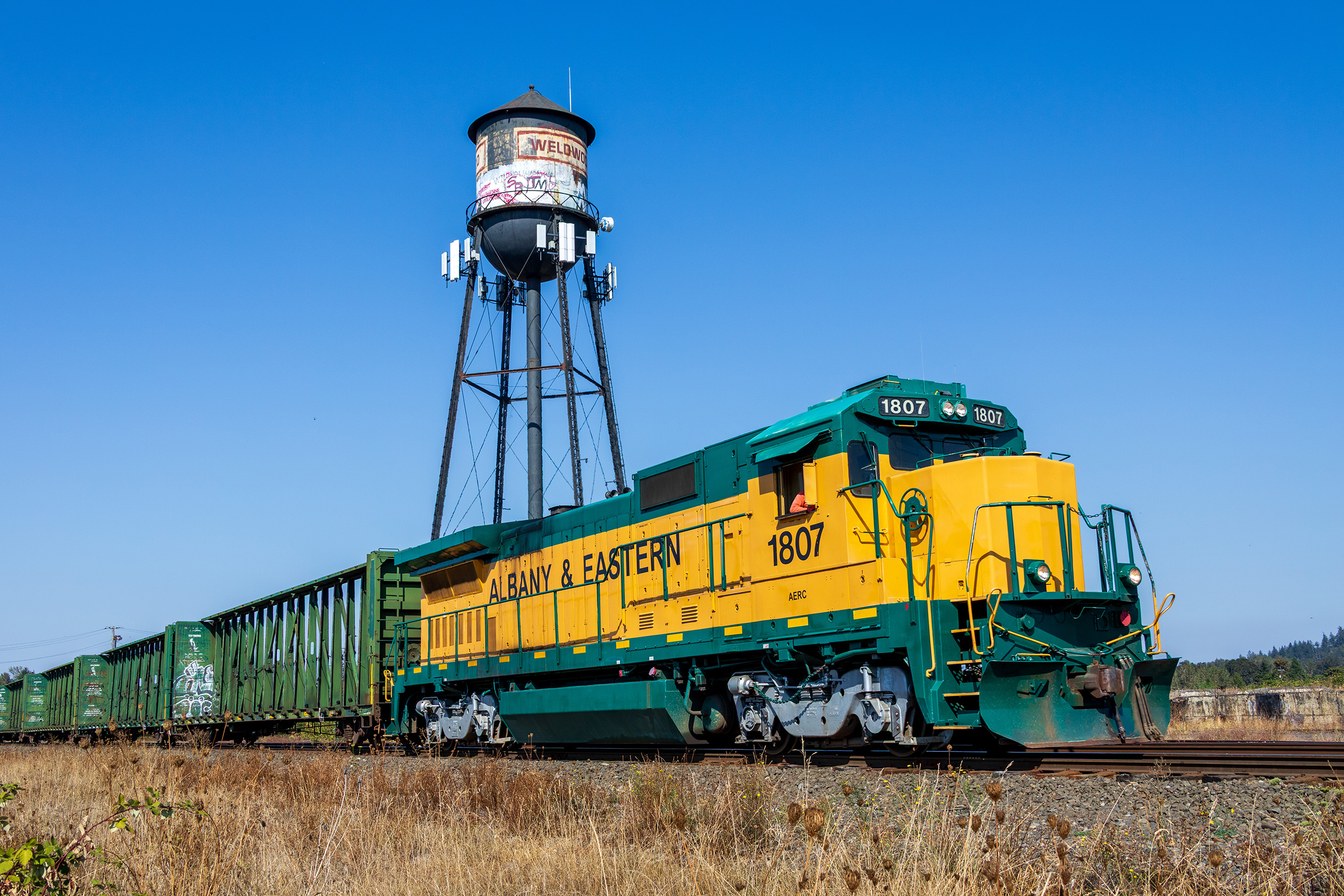
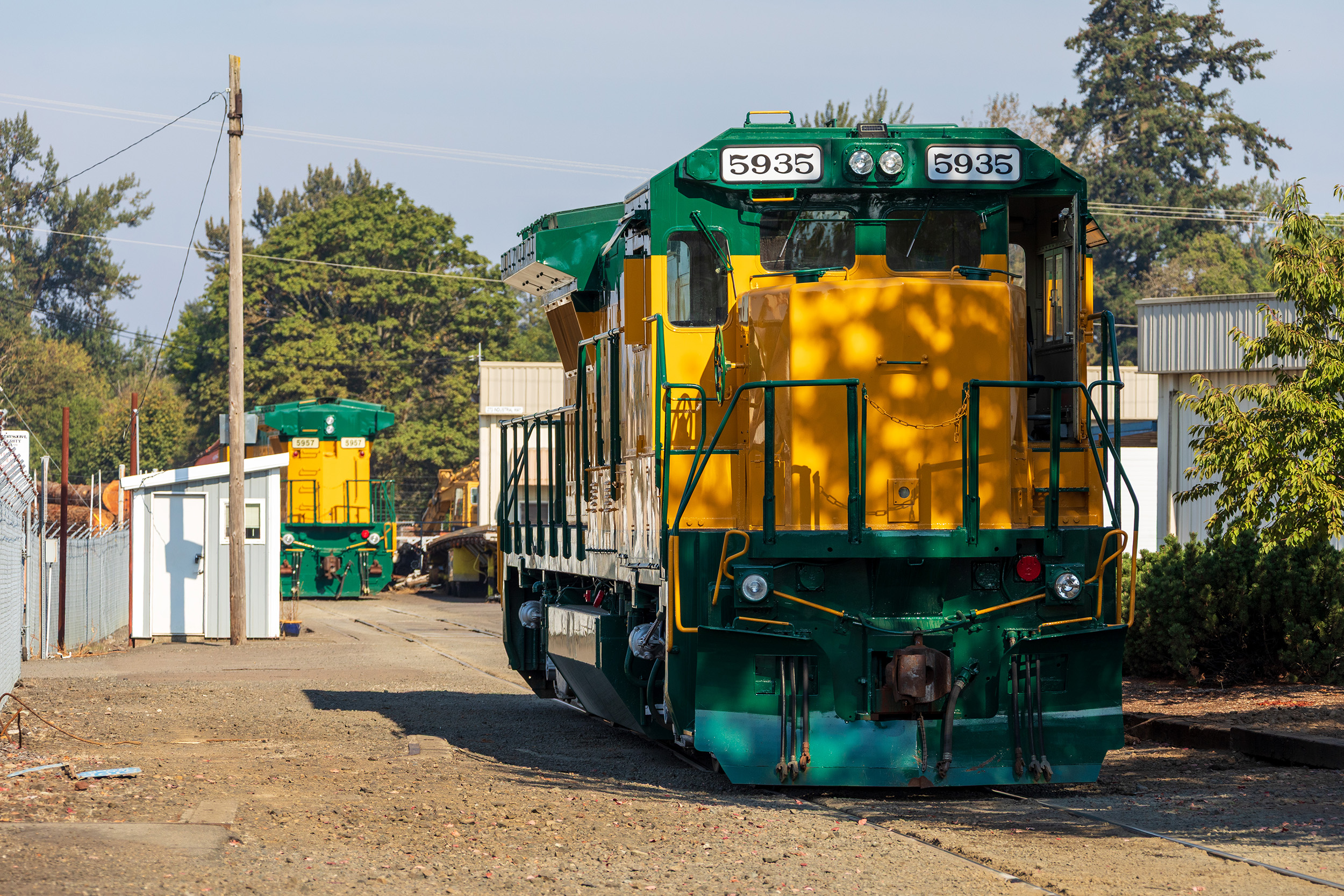
The day before I had to head out to the coast, I started off in Lebanon as well. I wanted a day to capture the AERC just doing its day-to-day work. The railroad has a fleet of GE Dash 8s that handle much of the work, and the ones that get used are nicely painted in a CNW-esque yellow and green paint scheme. As much as it pains me to say this – given I remember when they first came out – vintage standard cab Dash 8s are becoming a rarity and a chance to see them in action wasn’t to be missed. While everybody else drove to Portland, I headed for Albany.
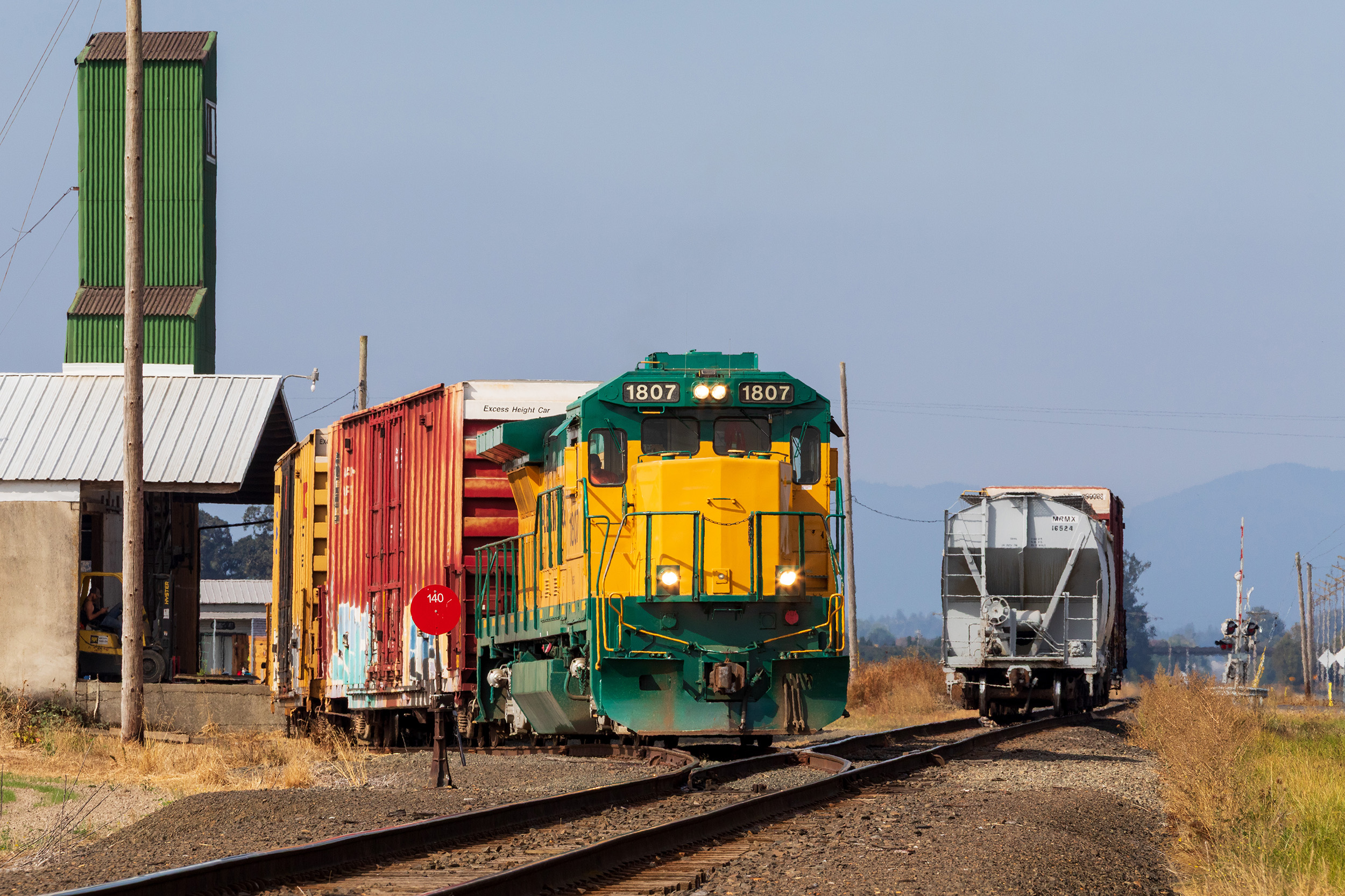
Monday morning, October 3, dawned with pea soup fog blanketing the town. (I know, fog in Oregon, what a shock…) With it being dark and dreary and having had a long couple days before, I wasn’t exactly in any hurry to get up and on the move. About 10am or so, I wandered out and found AERC 1807 at work on the south end of the Albany yard. The crew was moving blocks of cars around that they’d brought in and getting ready to head out with the stuff headed for Lebanon.
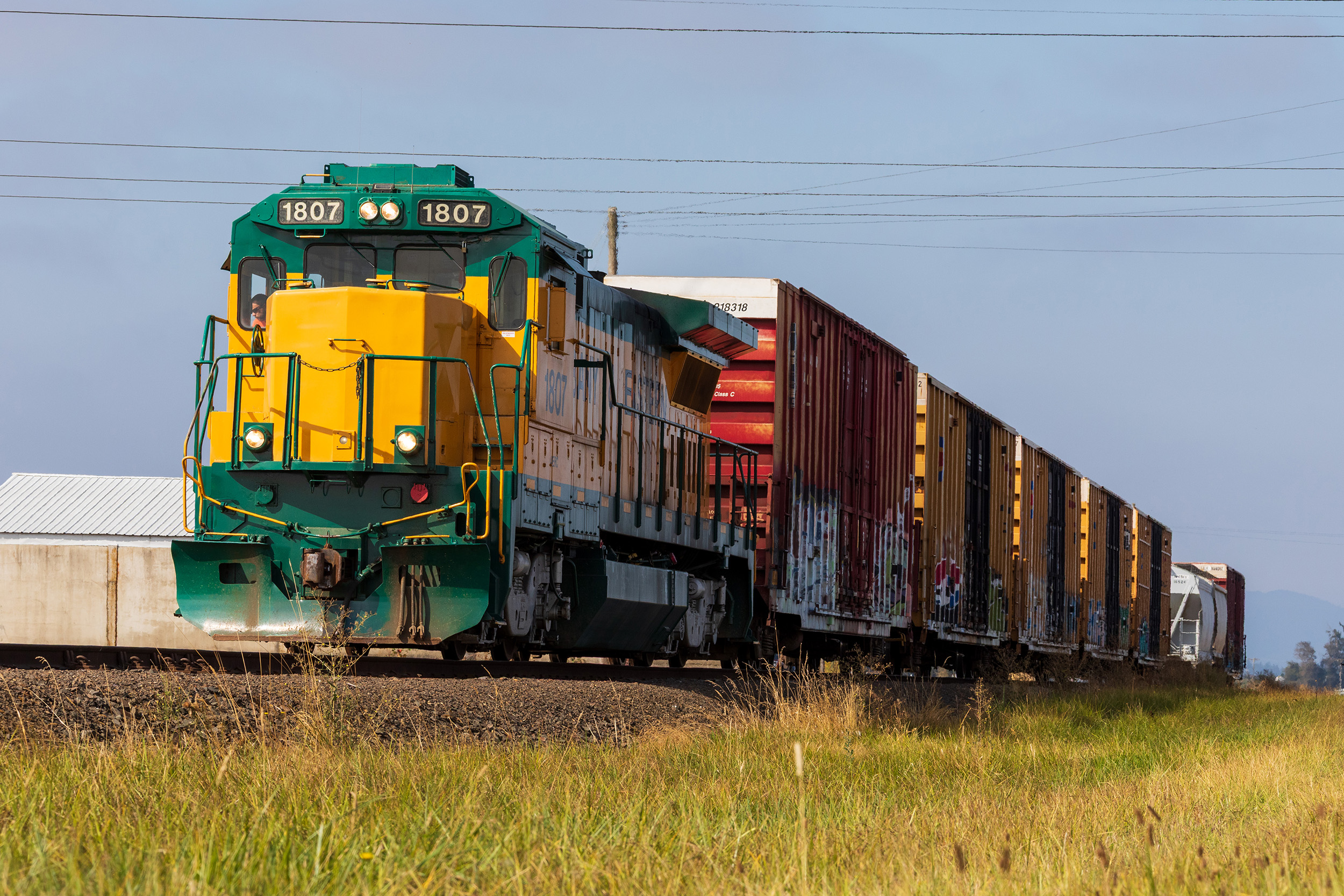
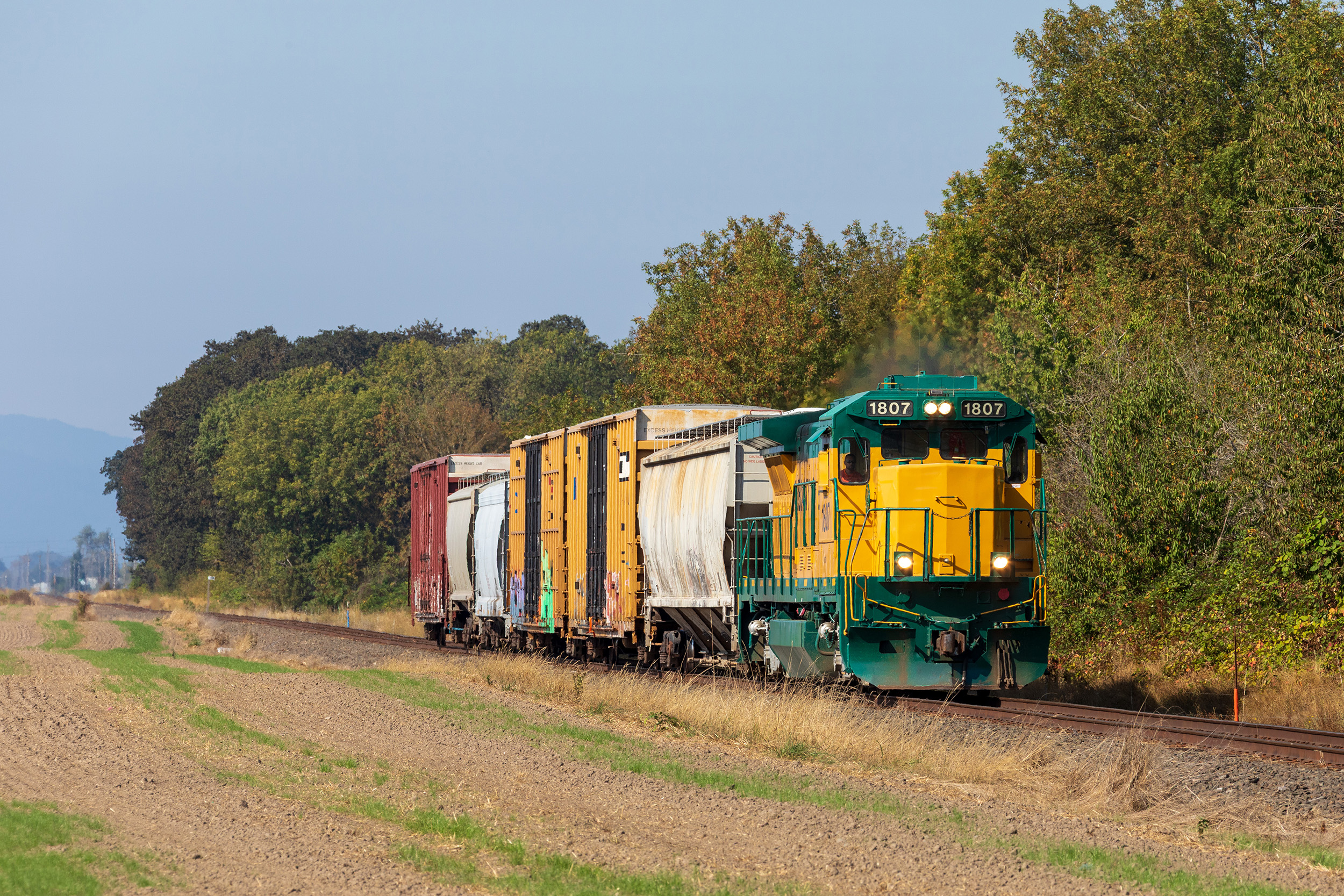
When I arrived in Albany, AERC 1807 had just arrived and was dropping a cut of cars in the yard. It took almost two hours, but by about 12:30pm they were finally ready to head east again. Having done no prep work and no idea where I was going, I stumbled my way east following the line the best I could on backroads using a GPS that quite unhelpfully didn’t show railroads. Fortunately, these guys put the “switcher” in road switcher, and there were a couple of industries along the way to stop and switch. One was just east of Albany, and the other was out at Tallman.
Once they got in to Lebanon, they headed straight out towards the Sweet Home branch. There, they dropped their cars in a small yard near the old Champion Mill property and picked up some empty lumber centerbeams to push back into town. At that point, I was hungry from not having eaten lunch, so I left them to their work and then went out exploring a bit.
One of these days I’m going to head back and spend a week or two on both the AERC and the Portland & Western. It just hasn’t been in the cards quite yet.
Charter Day 1 – Thursday, Oct 6, 2022
During the charter, I wound up staying in Albany instead of Lebanon, despite the train leaving from the Lebanon depot each morning. This was largely due to the greater prevalence of hotels in Albany, but it proved a poor choice with the morning weather. Given we left before dawn each day, it was a white knuckle drive over in thick fog each day.
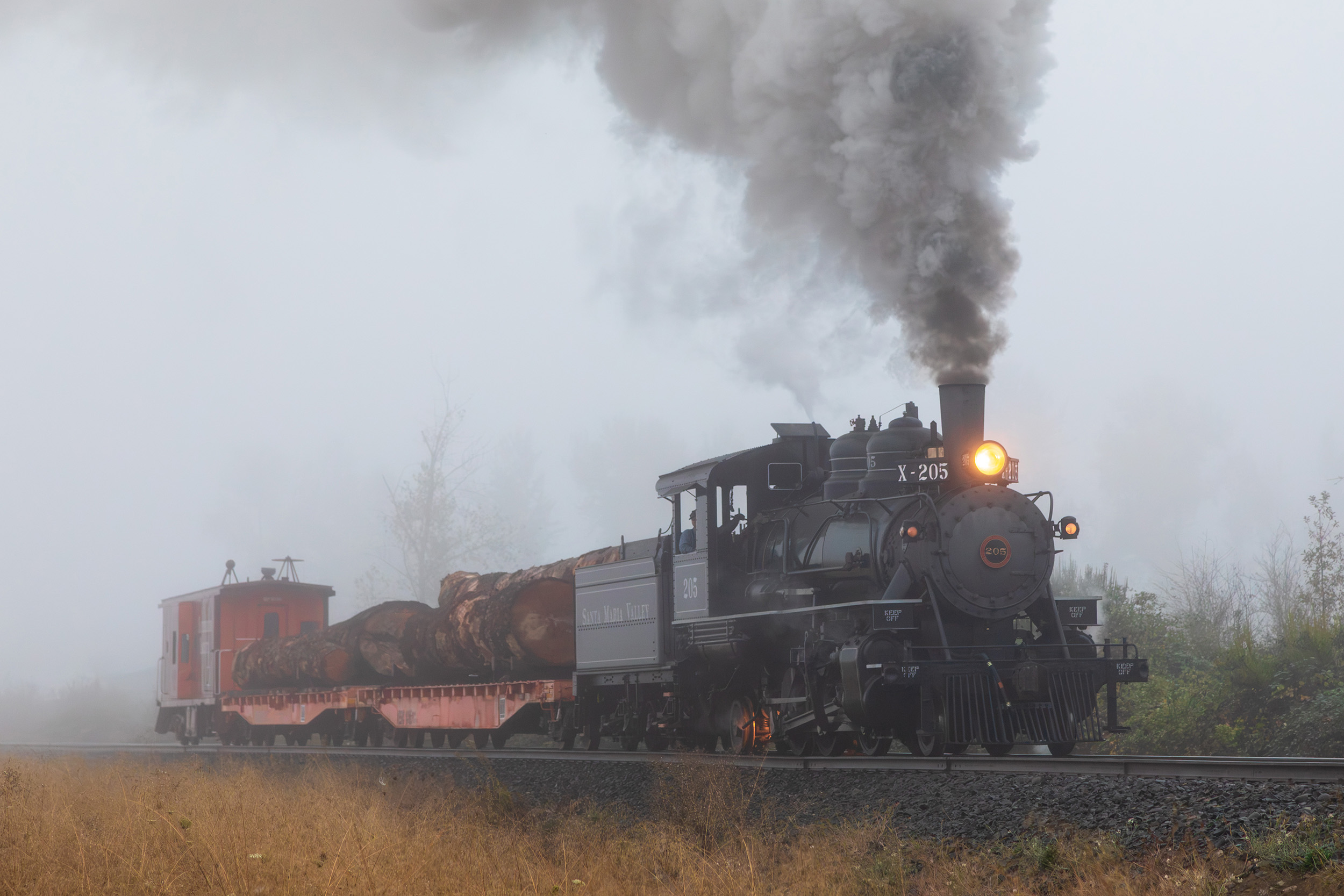
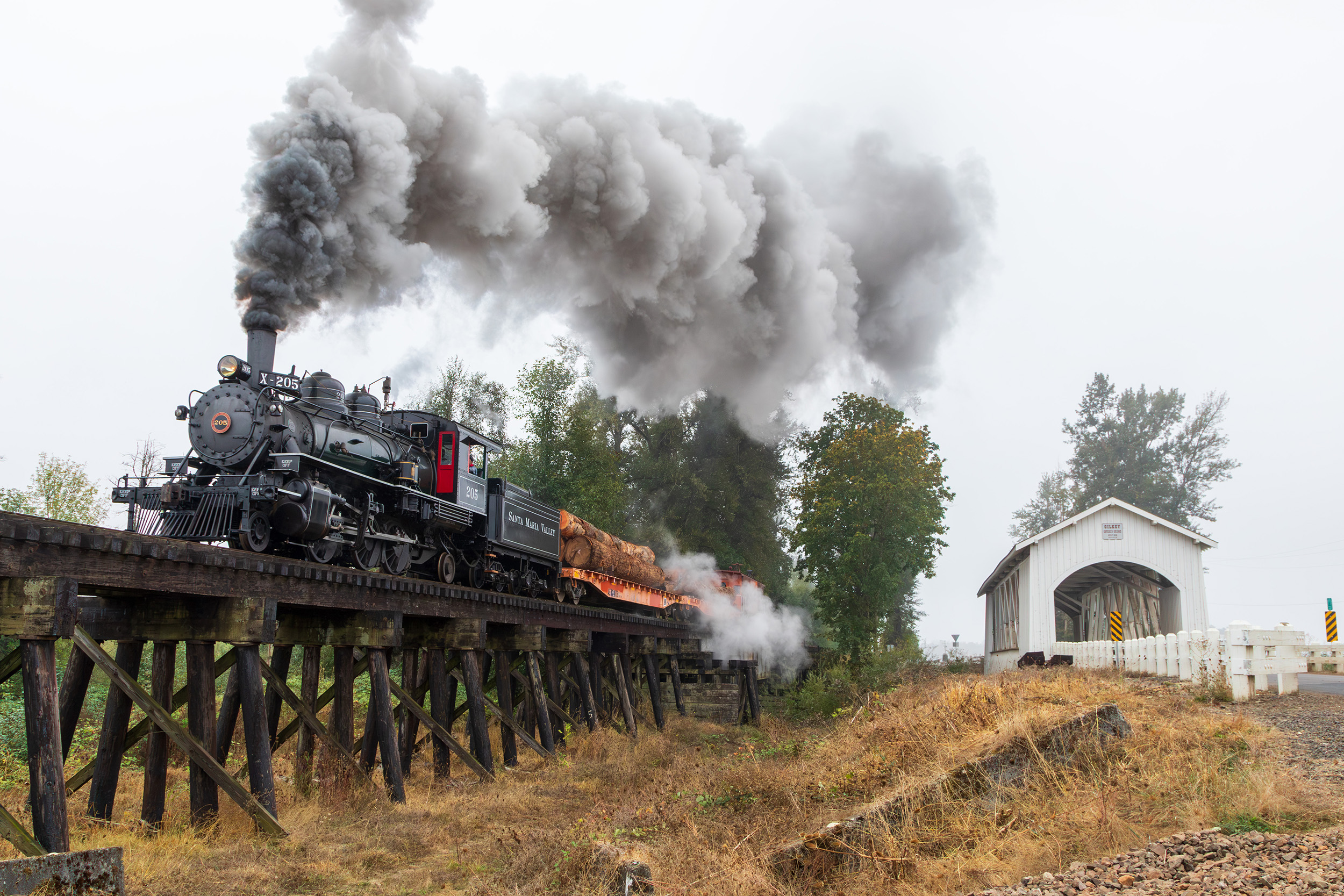
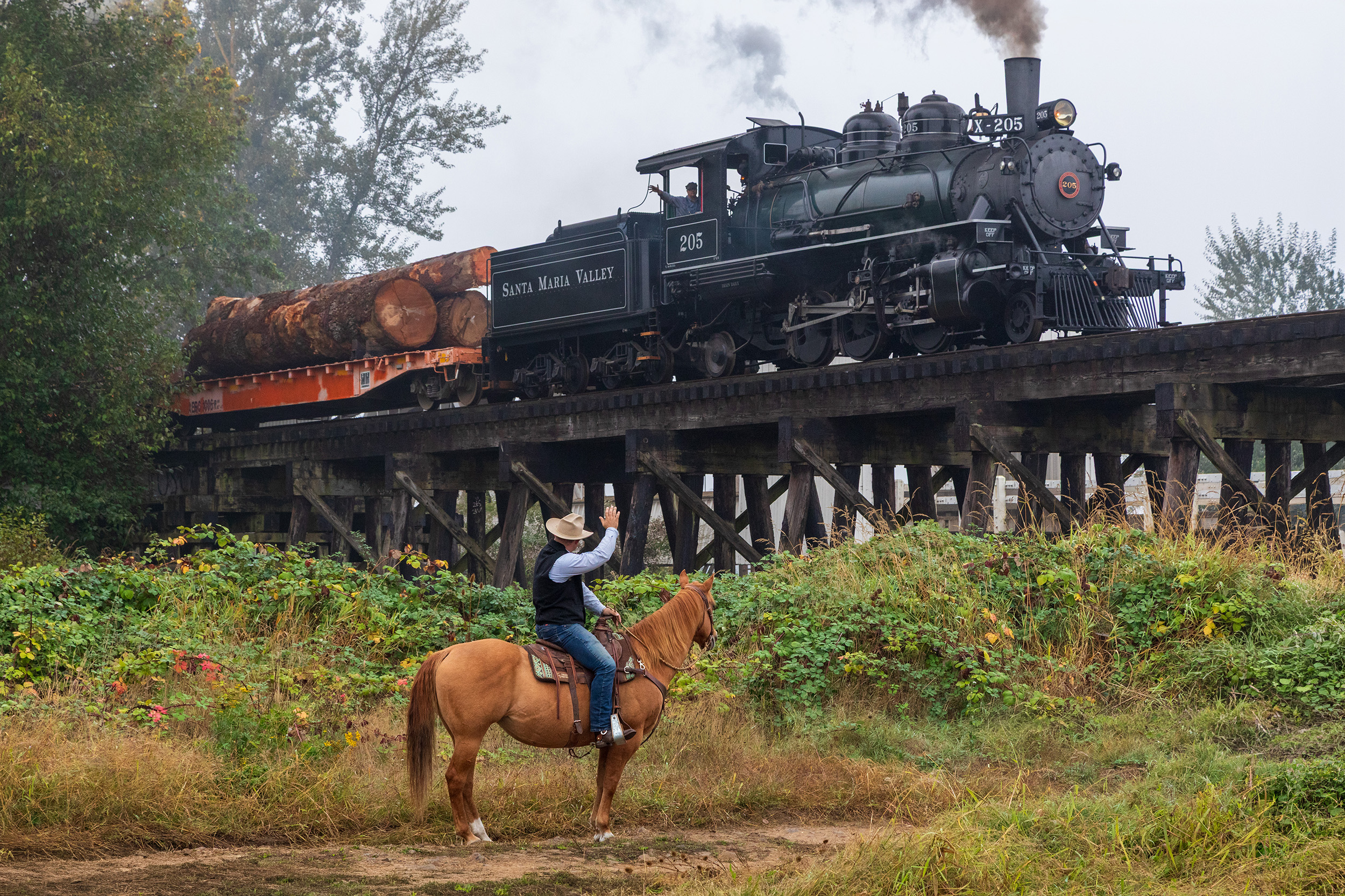
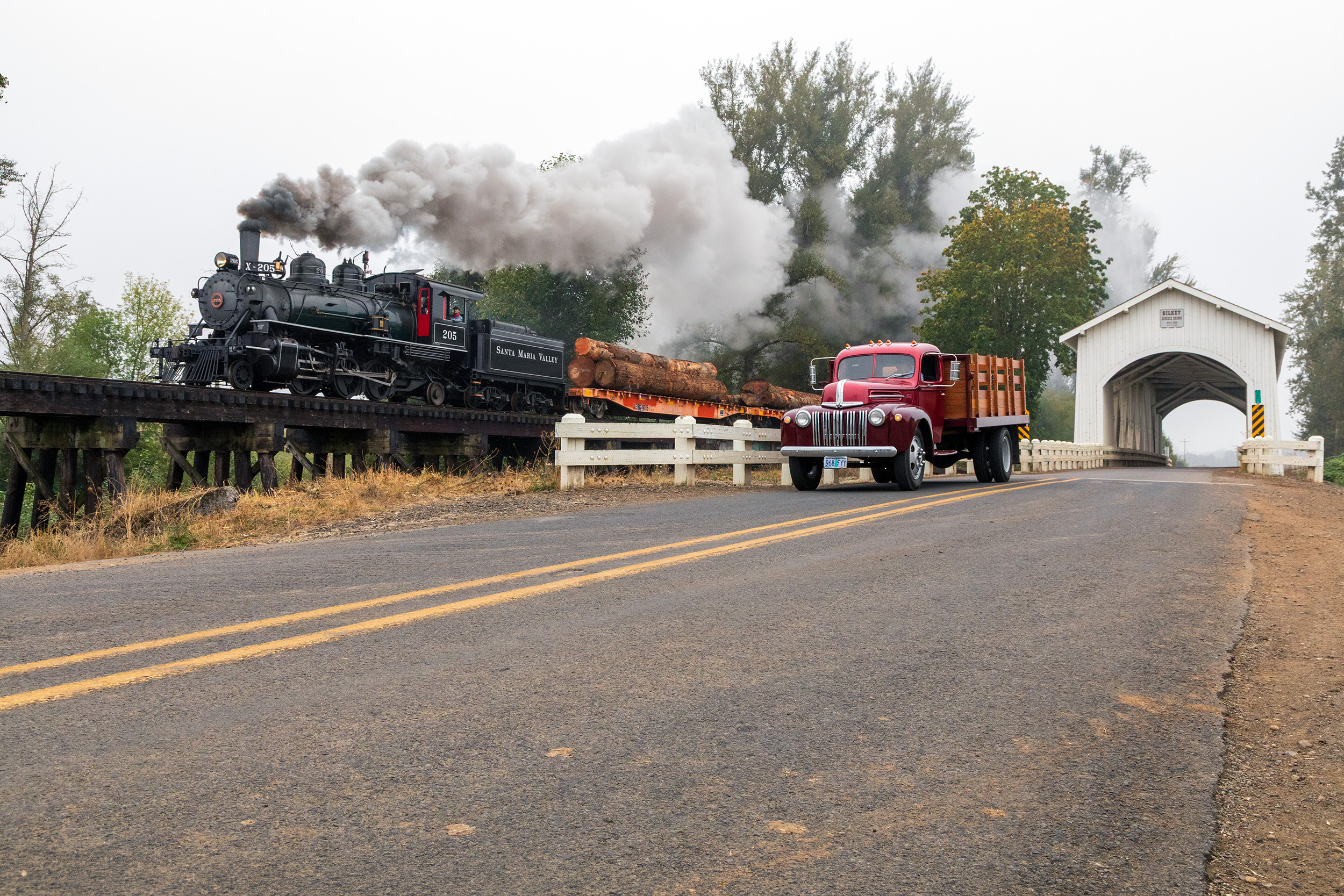
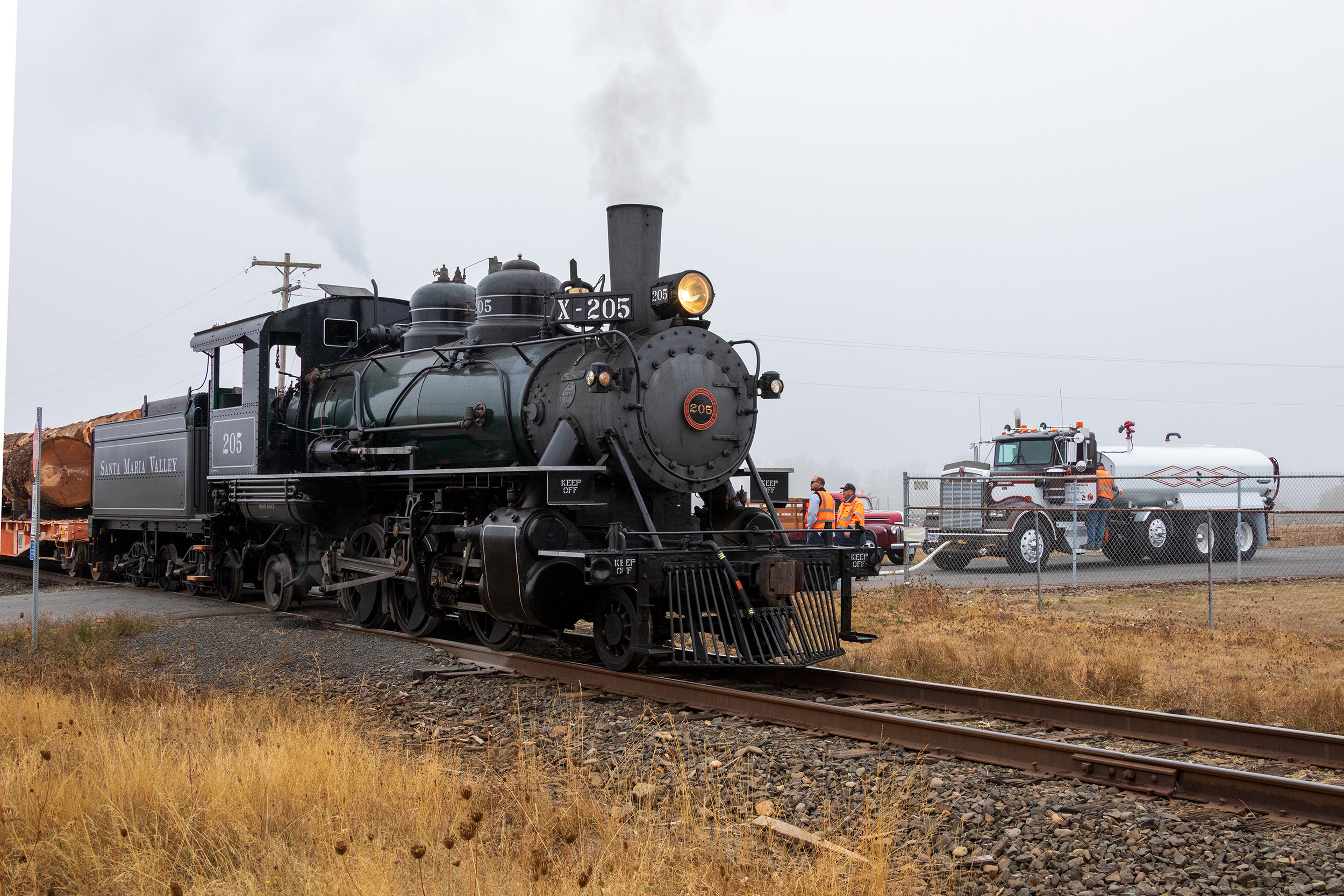
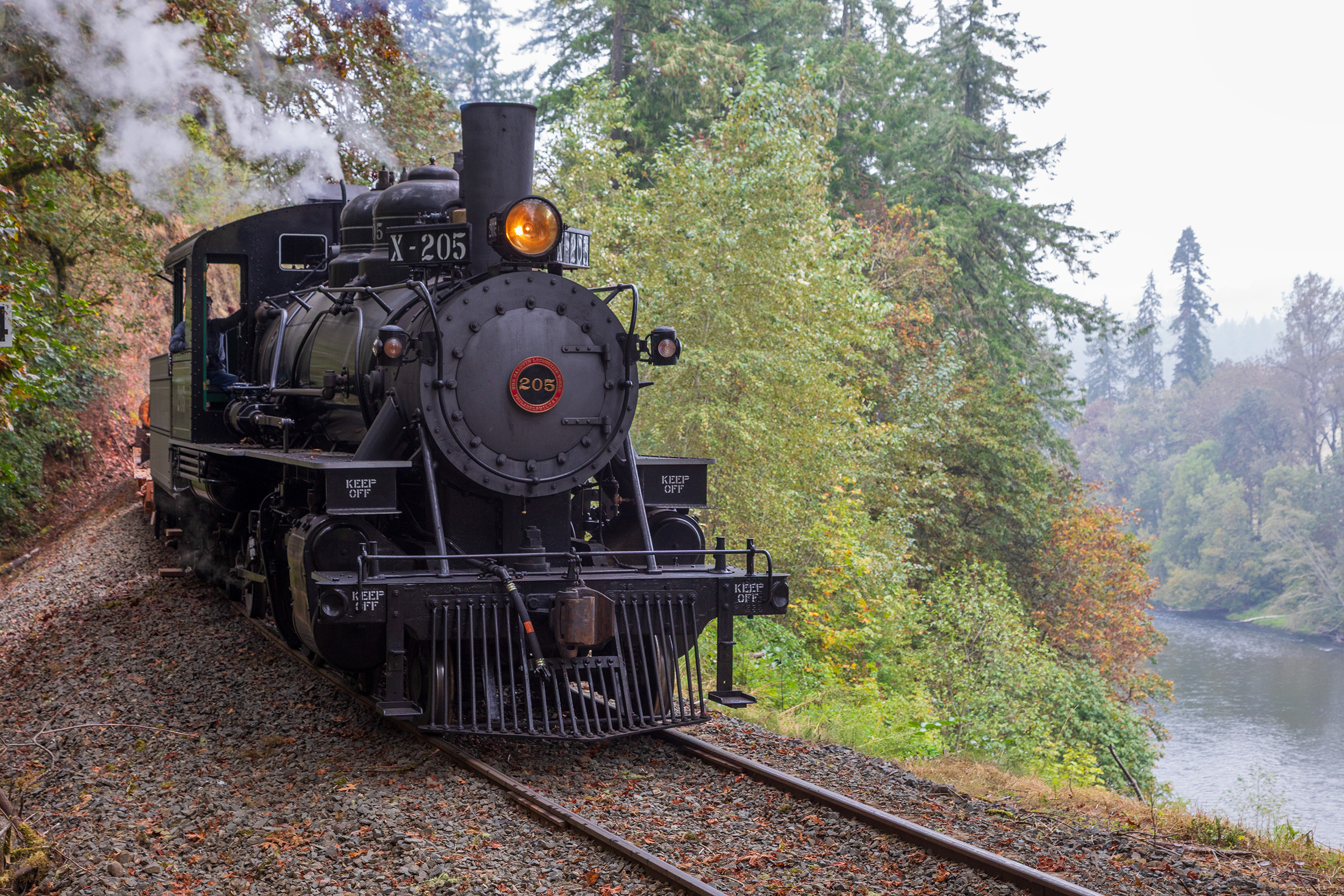
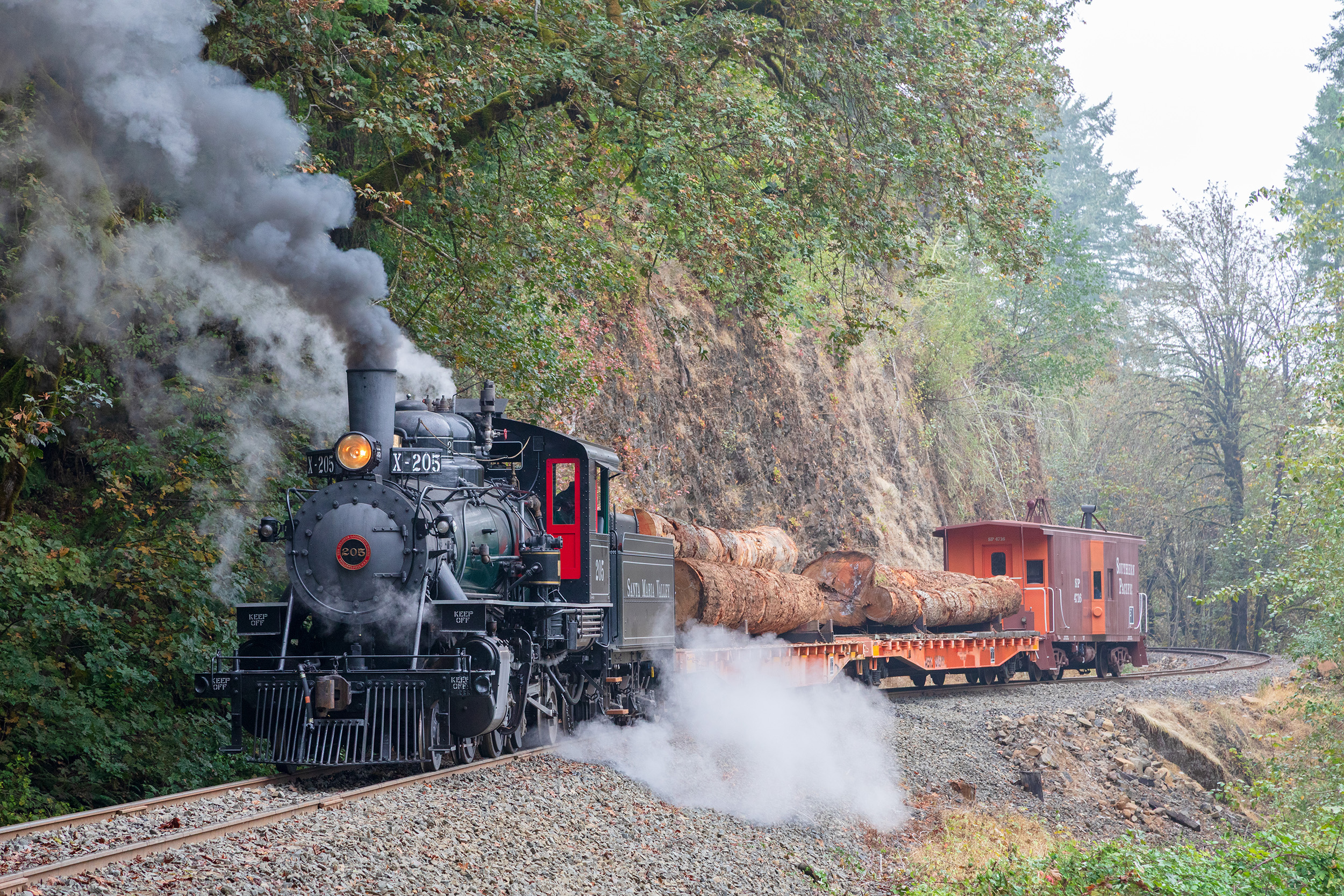
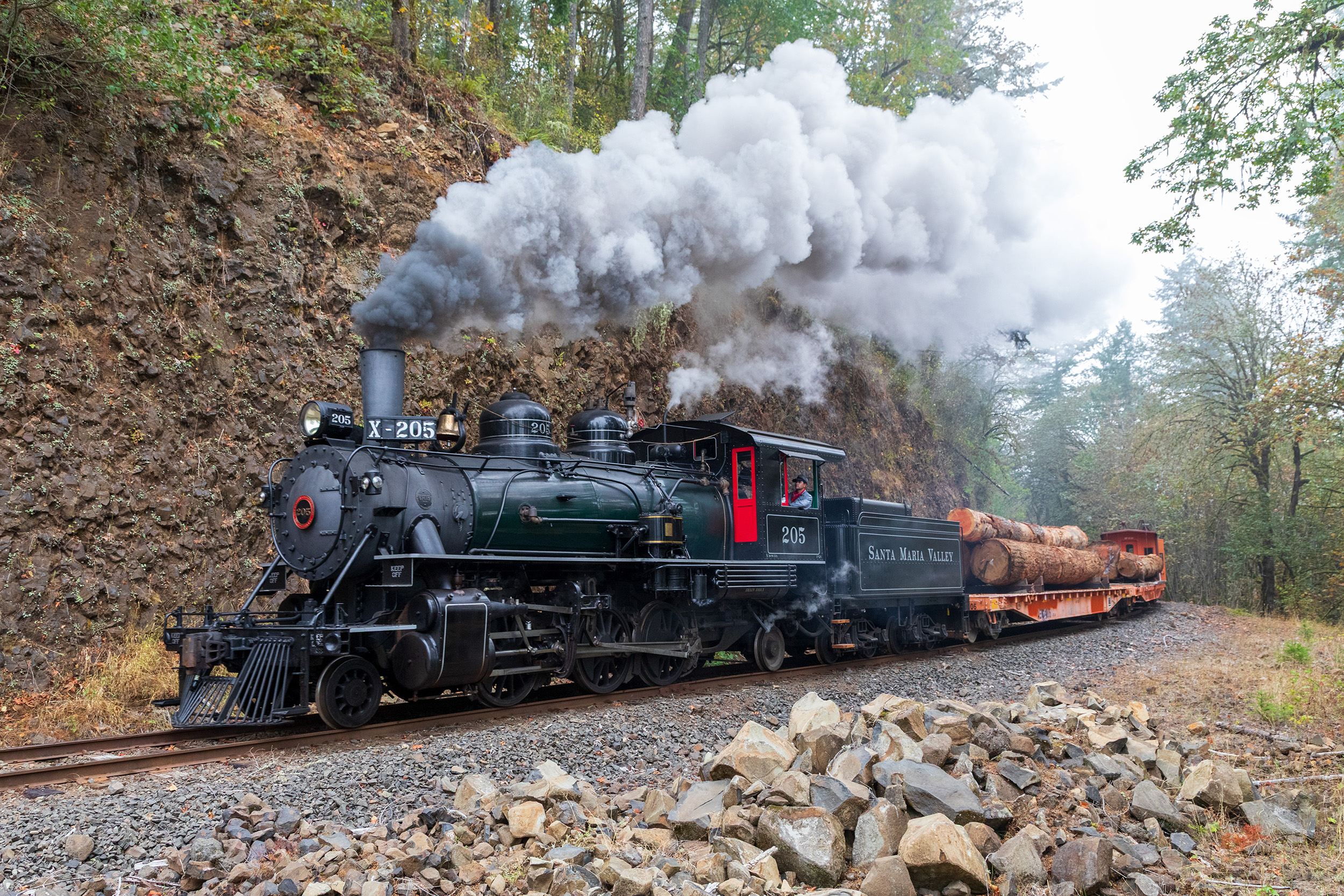
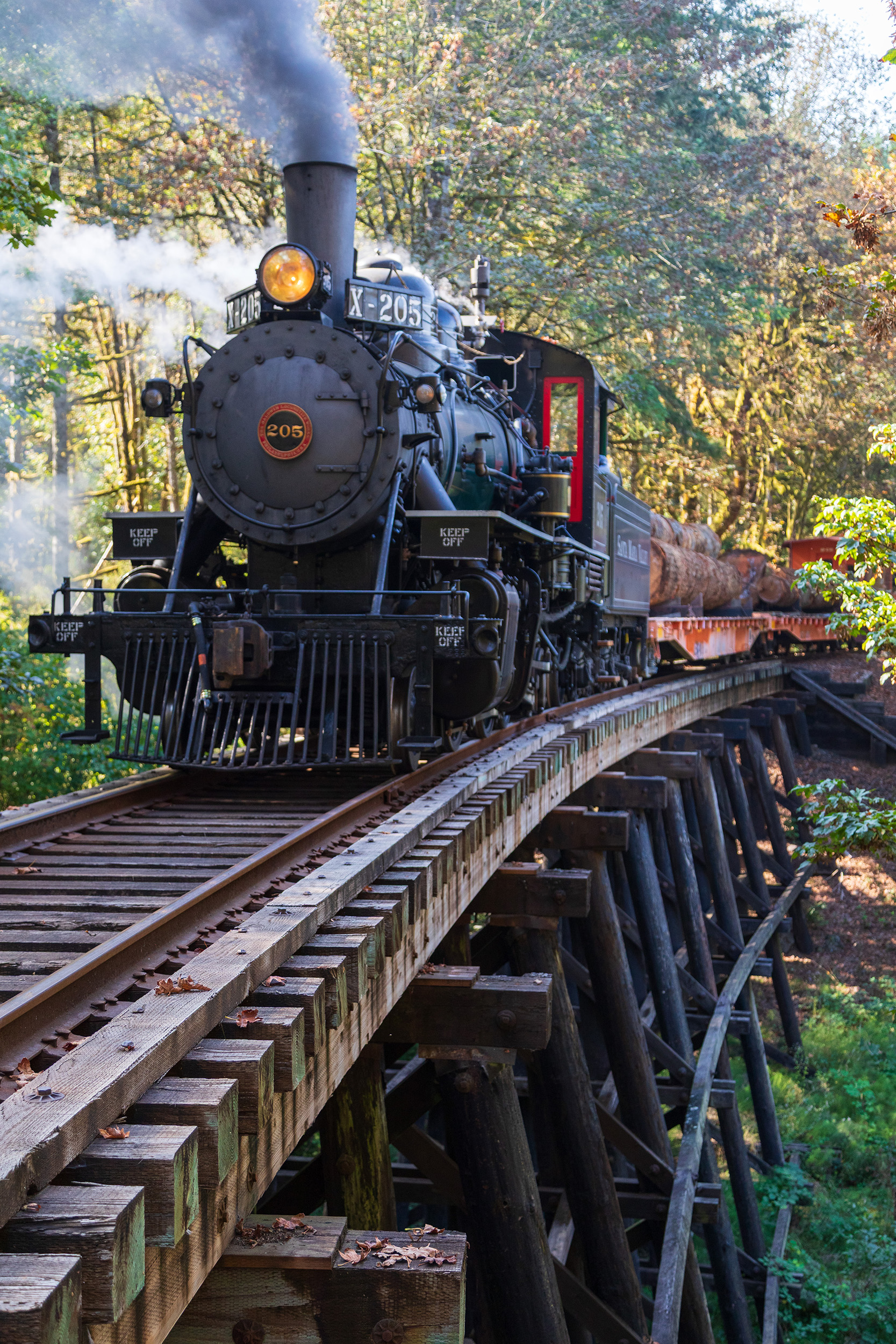
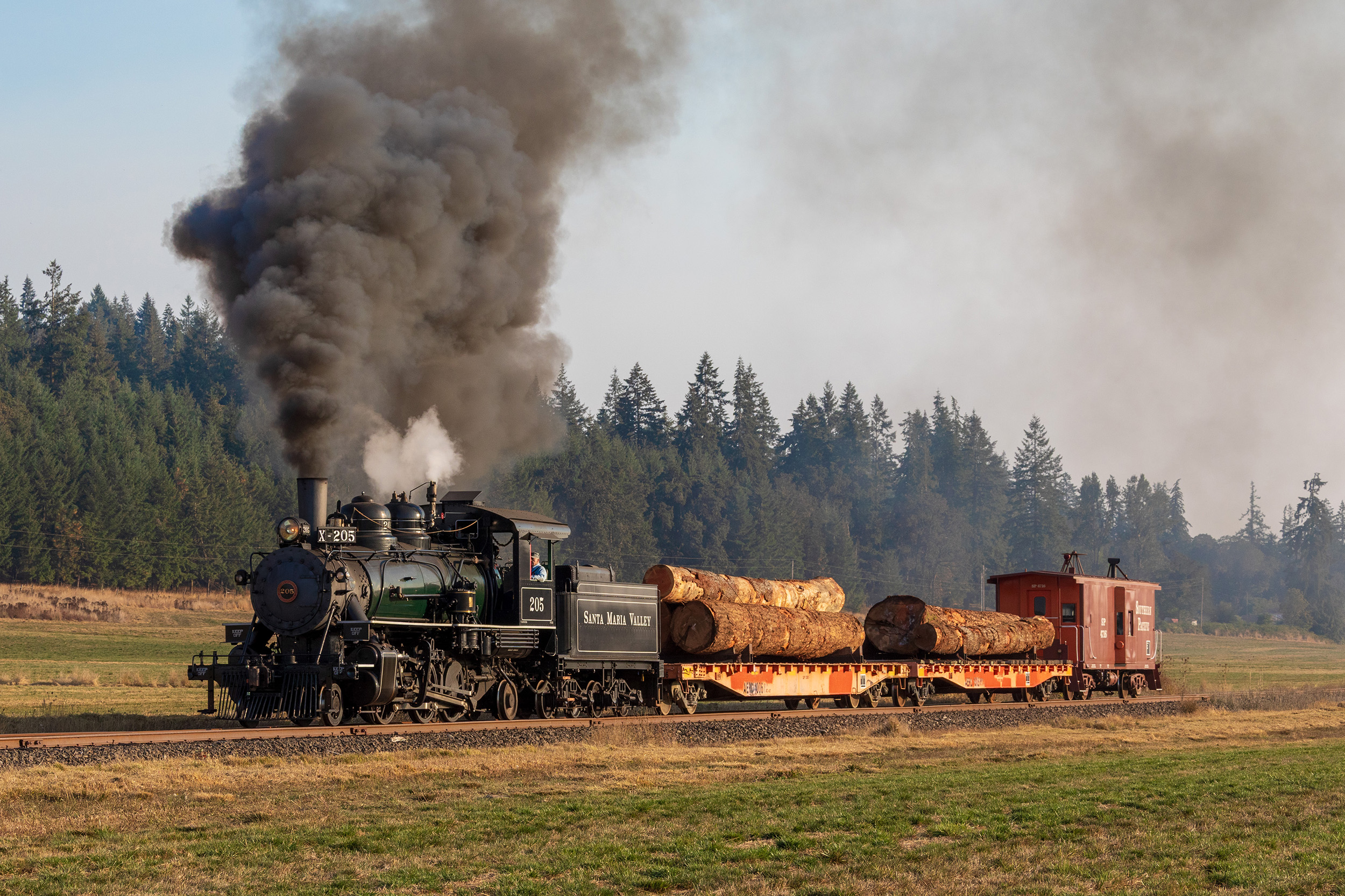
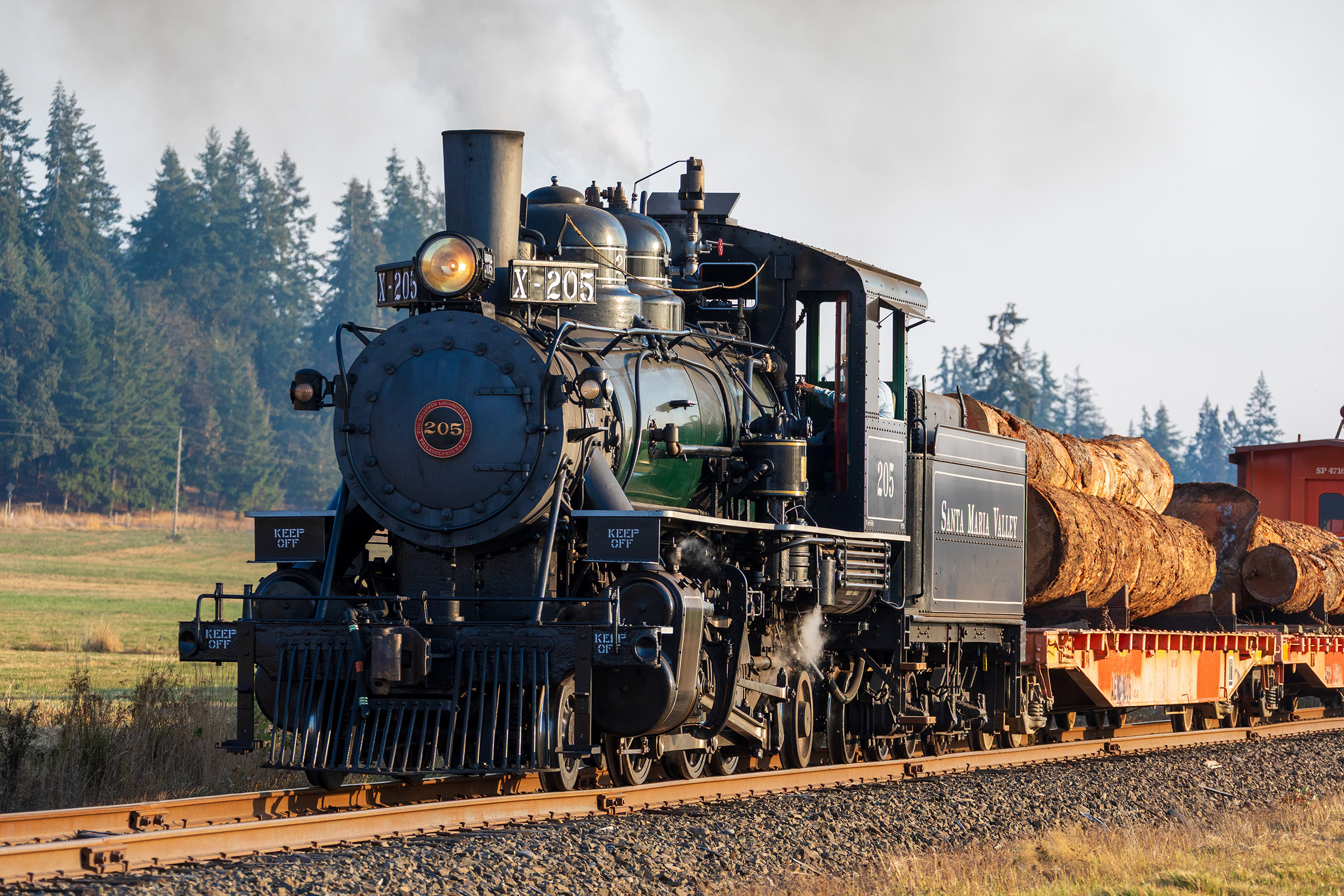
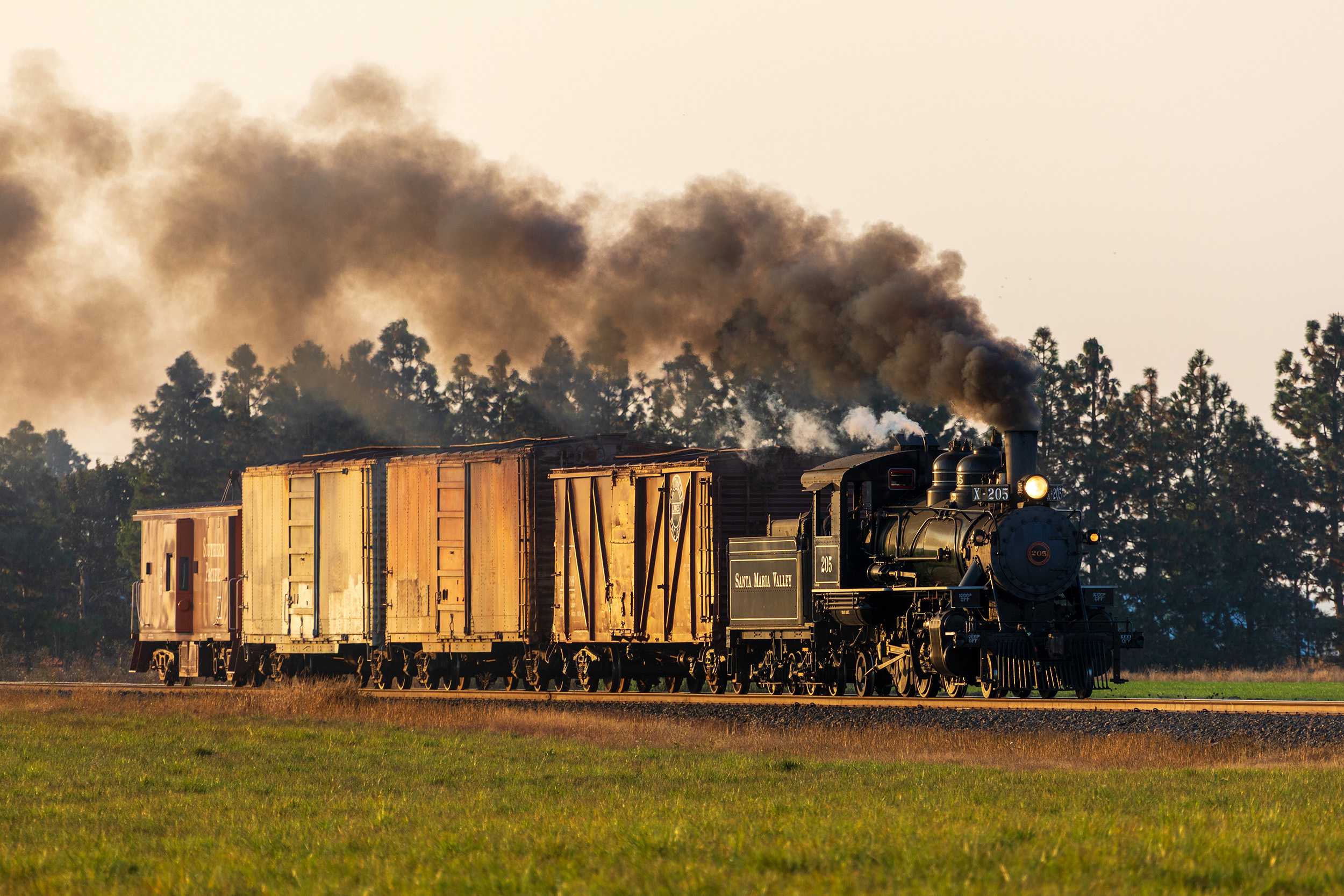
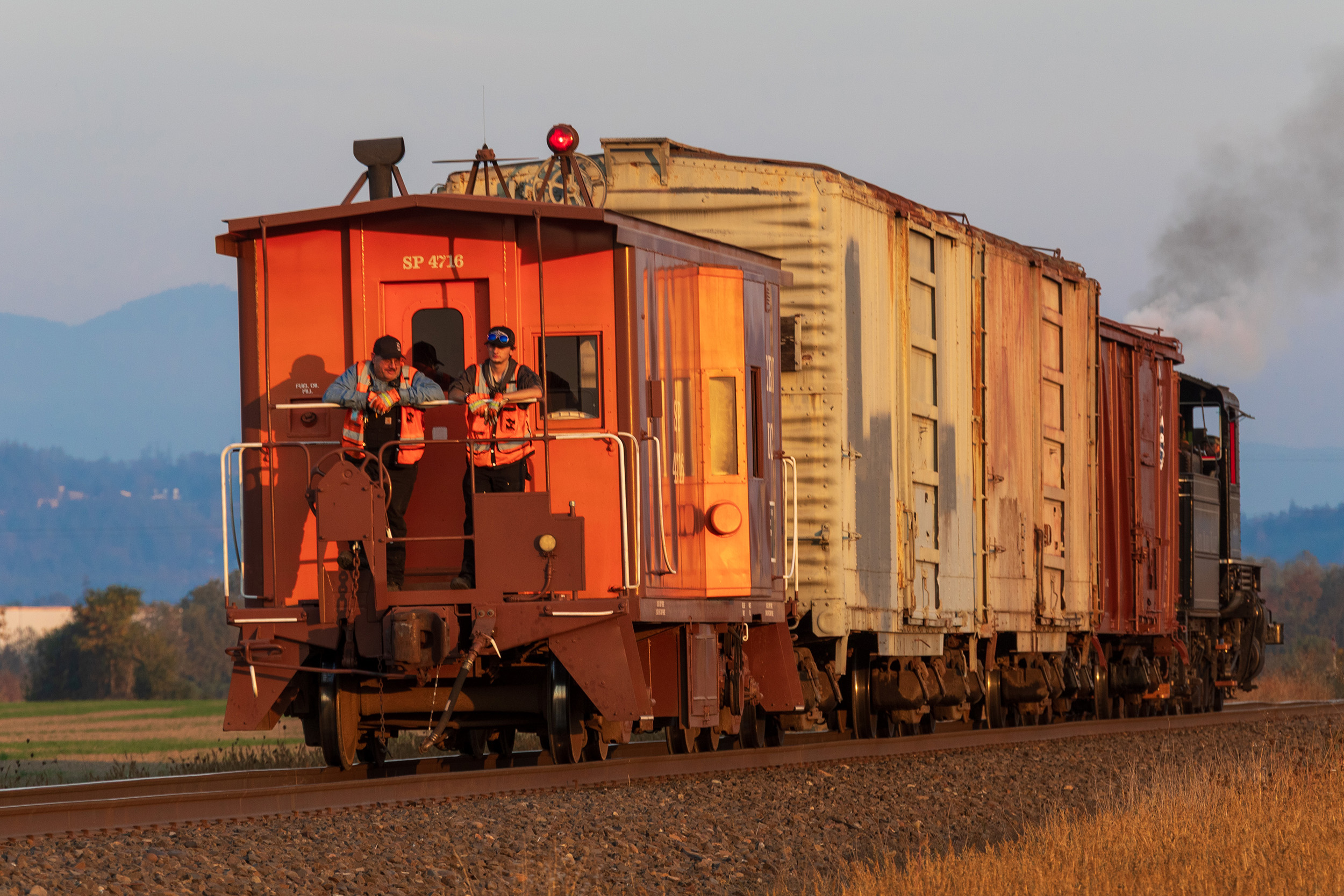
The first day, we worked up the Mill City line with a train consisting of of 205, flat cars AERC 1006 and 1005 loaded with large, fresh cut logs, and SP caboose SP 4716. Behind that was AERC coach 1099 (built as C&NW 841, a 56 seat coach with an 8 seat smoking area at one end, later Great Northern coach 1099) and rider gondola AERC 1004. 1004 appears to be a cut down heavyweight passenger car that was converted to MoW service at one point. The two passenger cars were there there to transport us along with the train, and were dropped for run-bys.
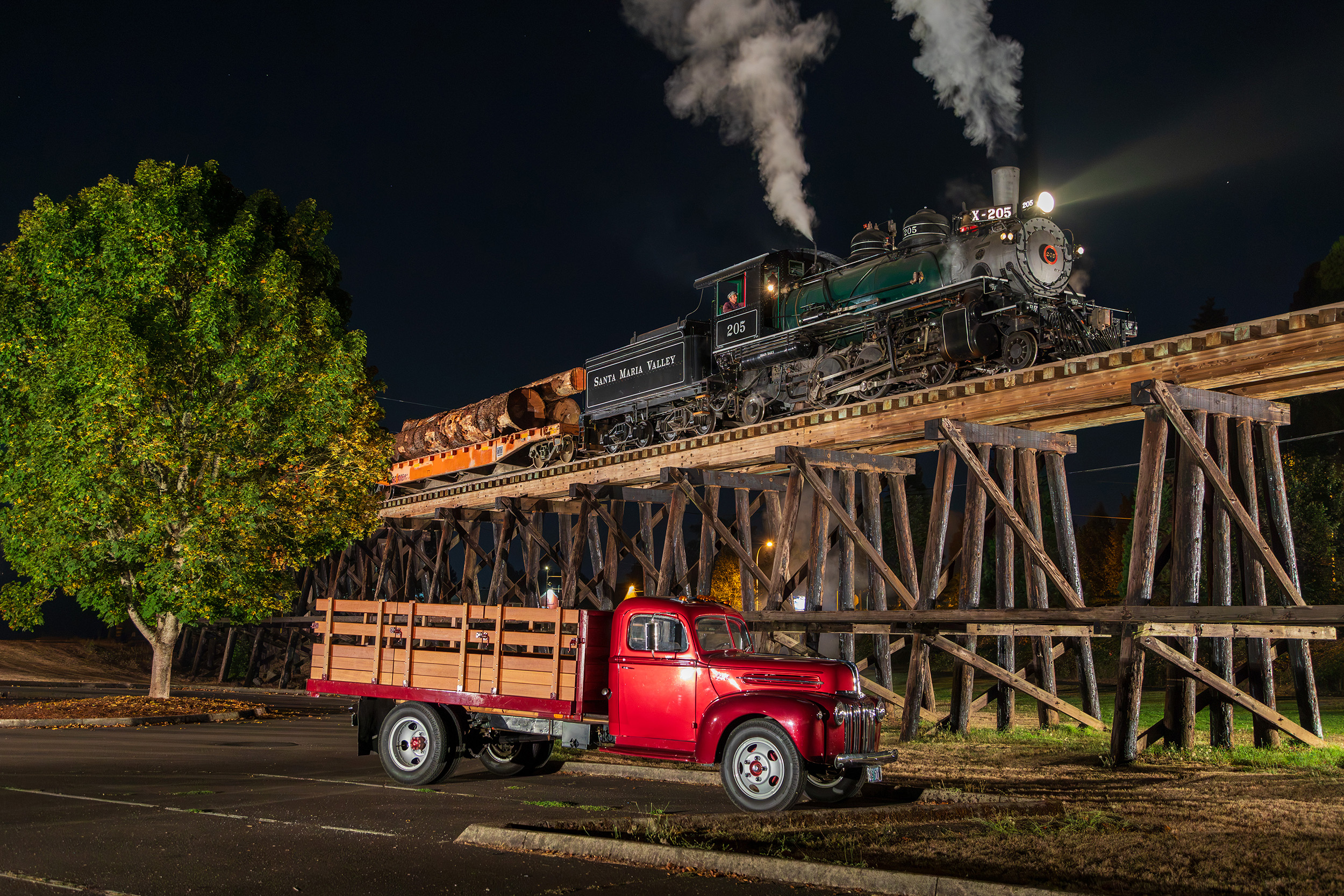
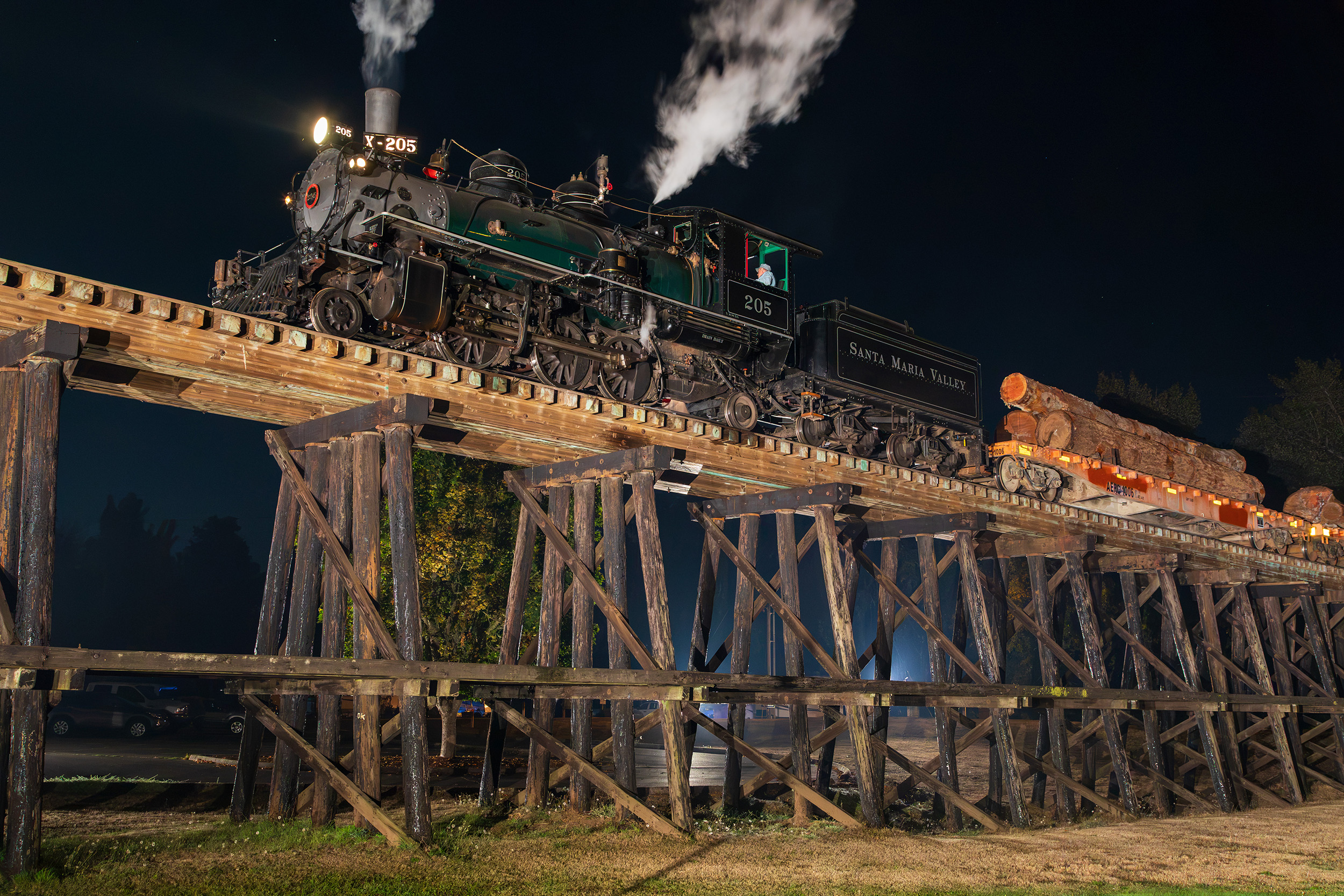
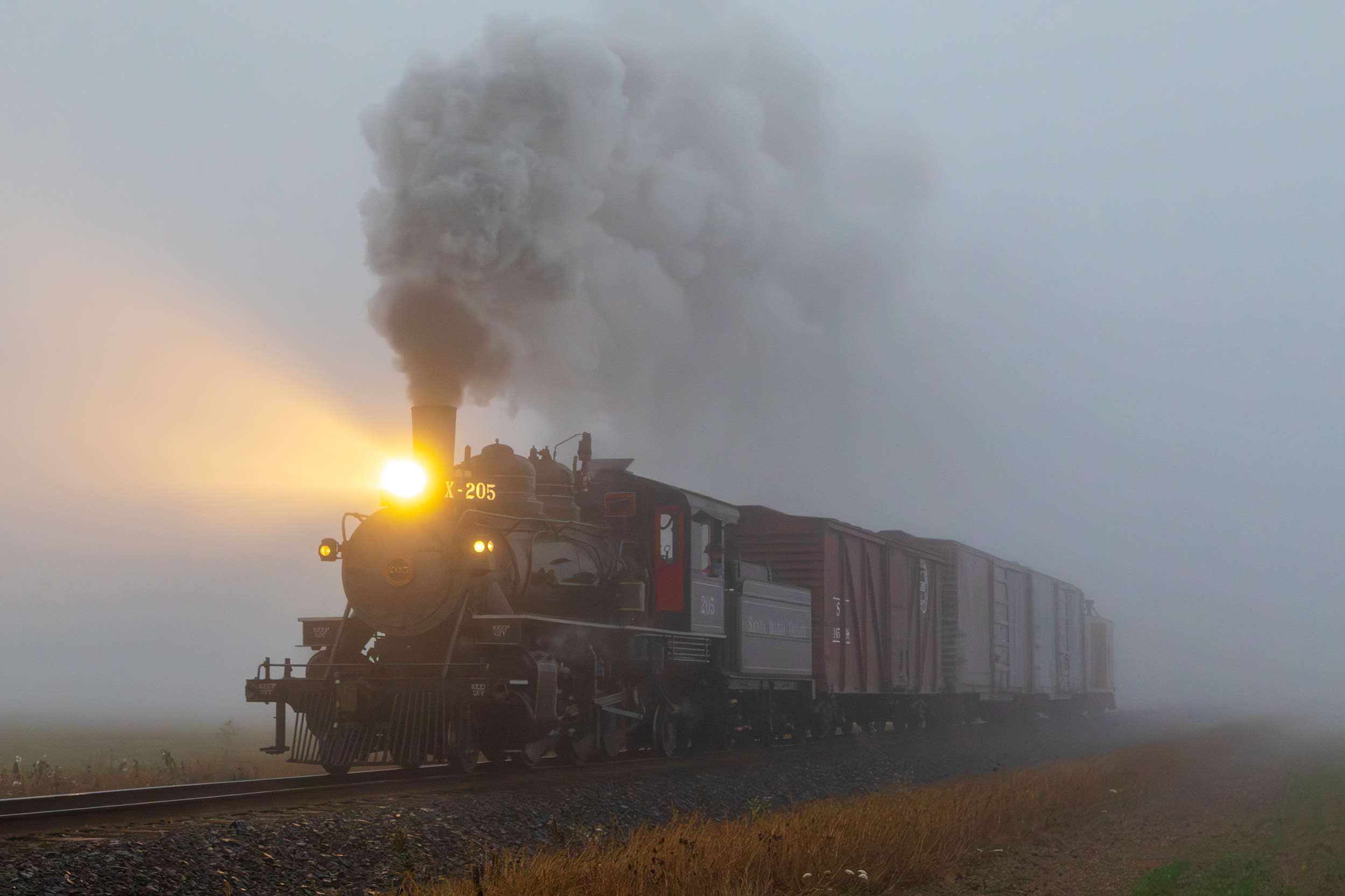
The first shots of the day were in the heavy morning fog near Whittaker, then at the Gilkey covered bridge, took on water at Kingston thanks to one of Rick Franklin Corp’s water trucks, and then worked a number of spots in the South Santiam River canyon. We got as far as a trestle about 4.5 miles west of Lyons before heading back. On the way back, the sun finally broke through the fog layer and we stopped to get some shots north of Crabtree. After taking a break for dinner, we reconvened for a night shoot on the SP trestle in Lebanon that serves as the western approach to the 1910 SP South Santiam River bridge.
Charter Day 2 – Friday, Oct 7, 2022
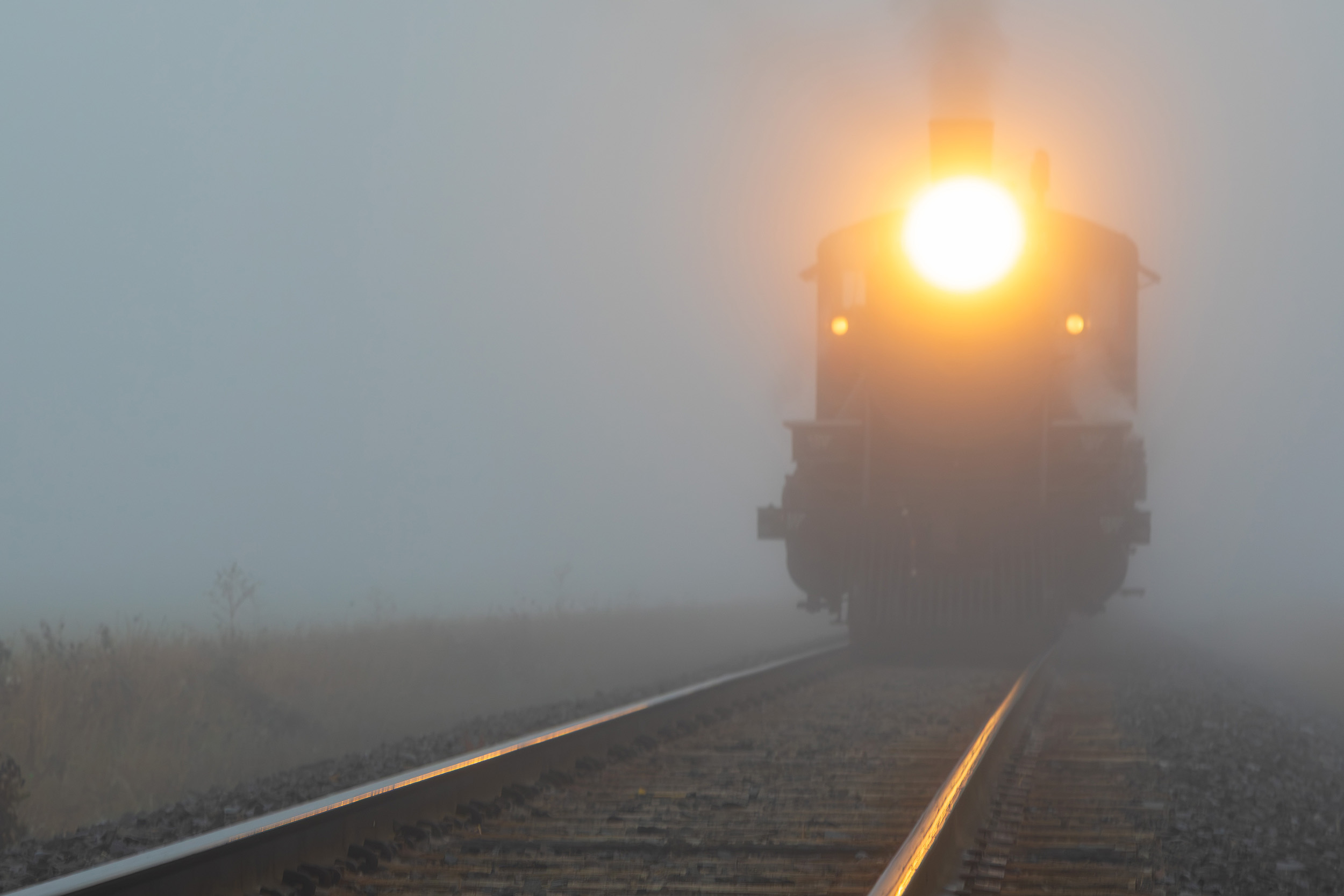
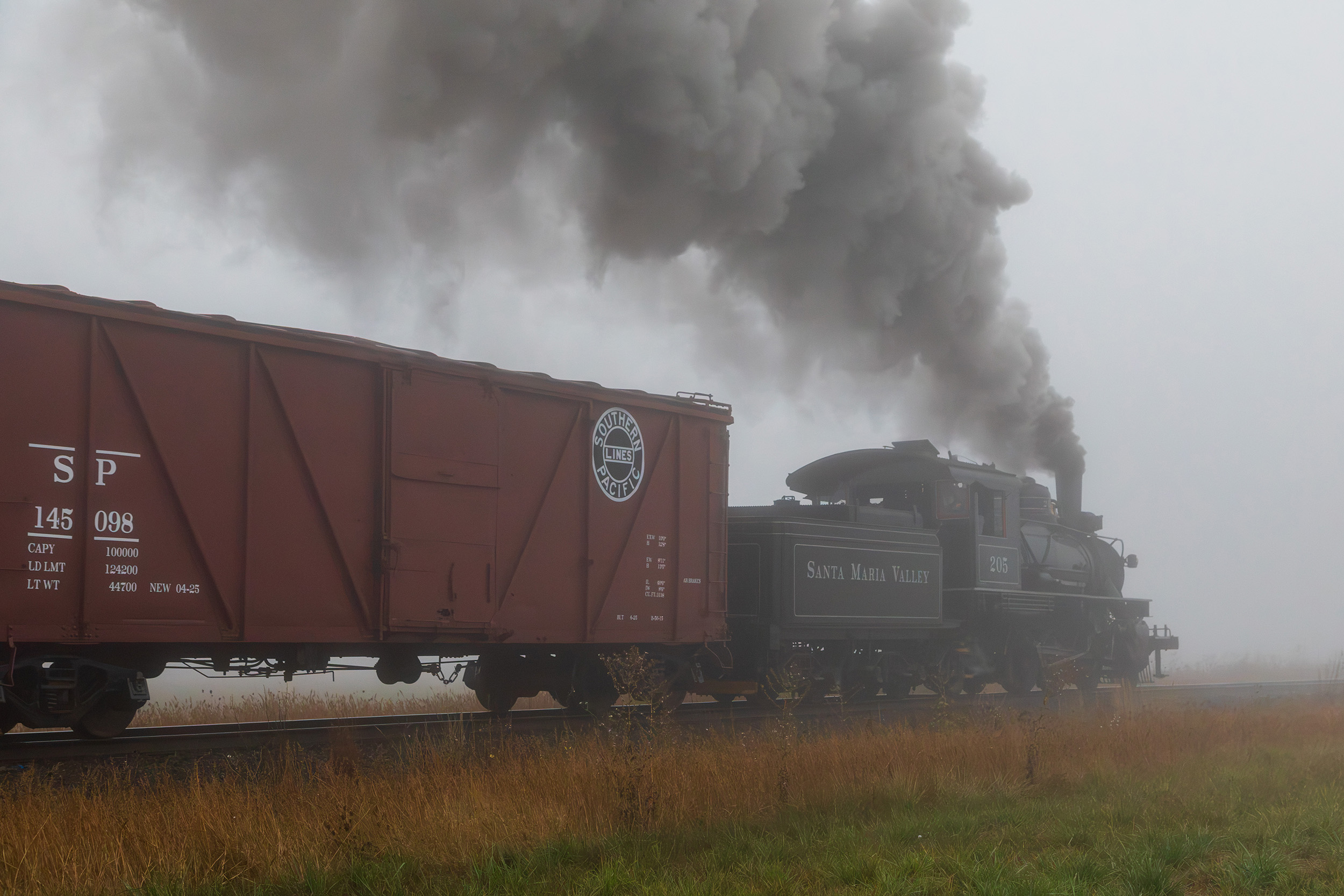
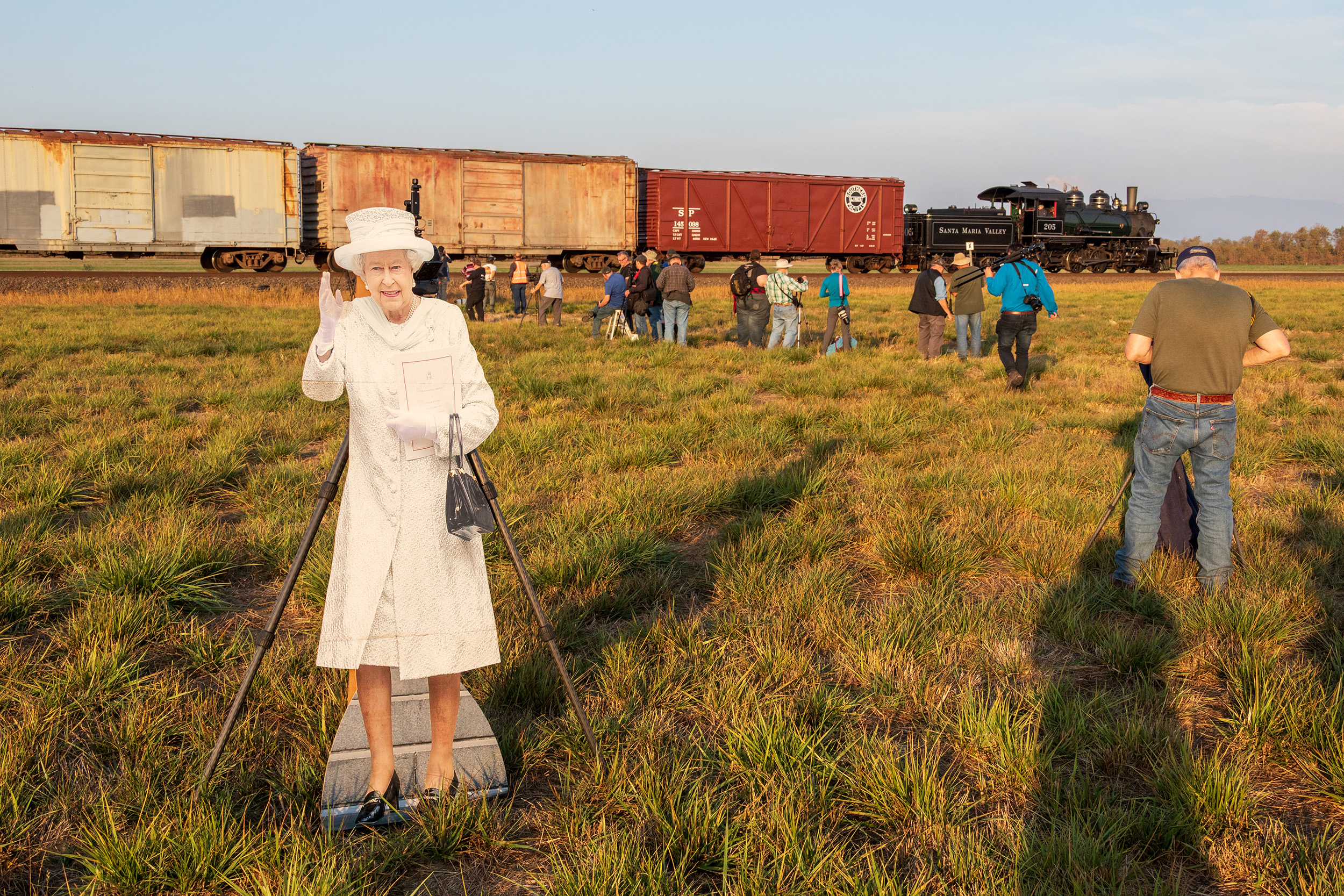
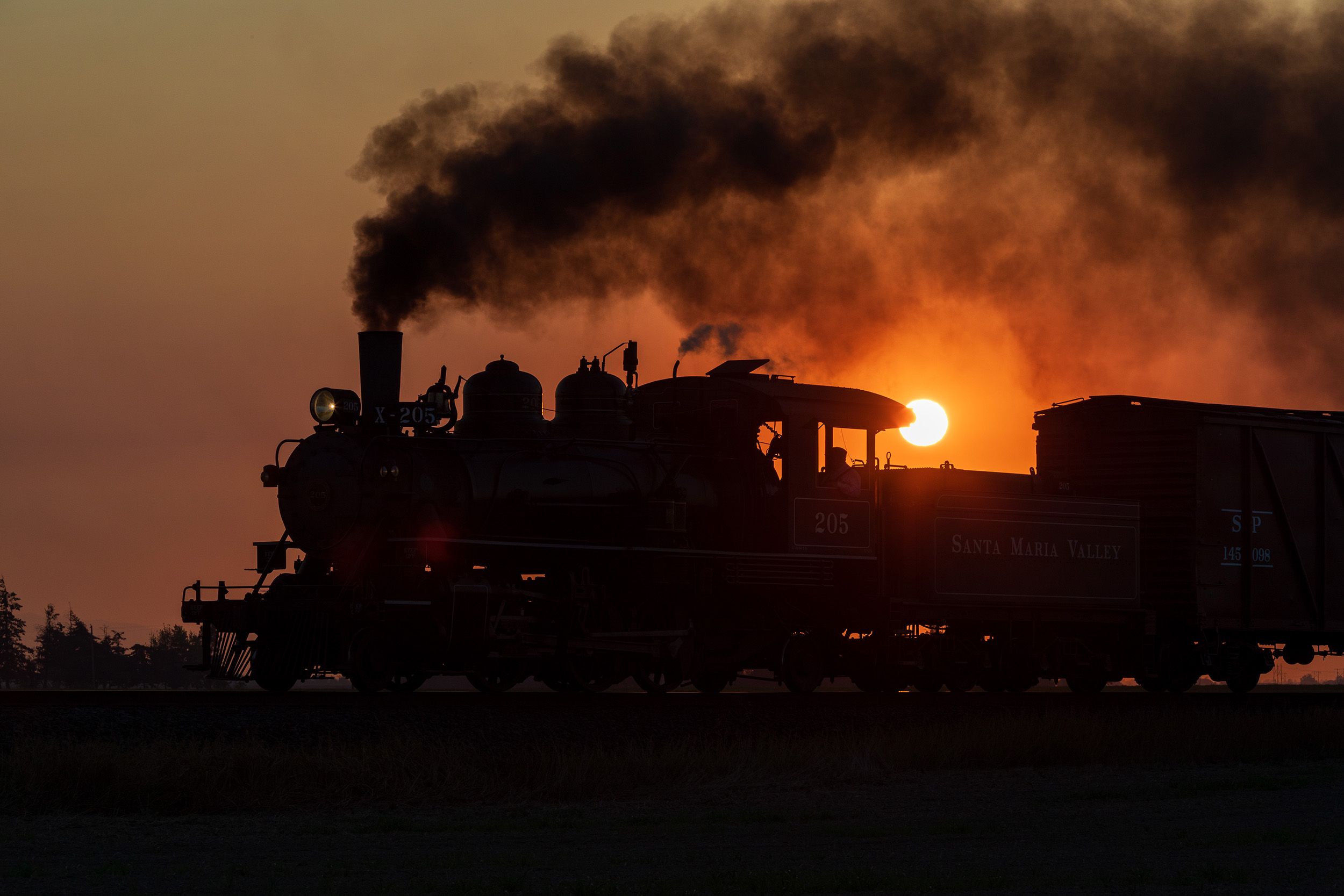
Day 2 again started out brutally foggy with another fun drive over to Lebanon. Friday’s train consisted of 205 (of course) followed by SP 145098 (ouside-braced boxcar), two nameless grey 40-fot boxcars, and caboose SP 4716 bringing up the rear again, except for our coach and open car that would get added and removed as needed.
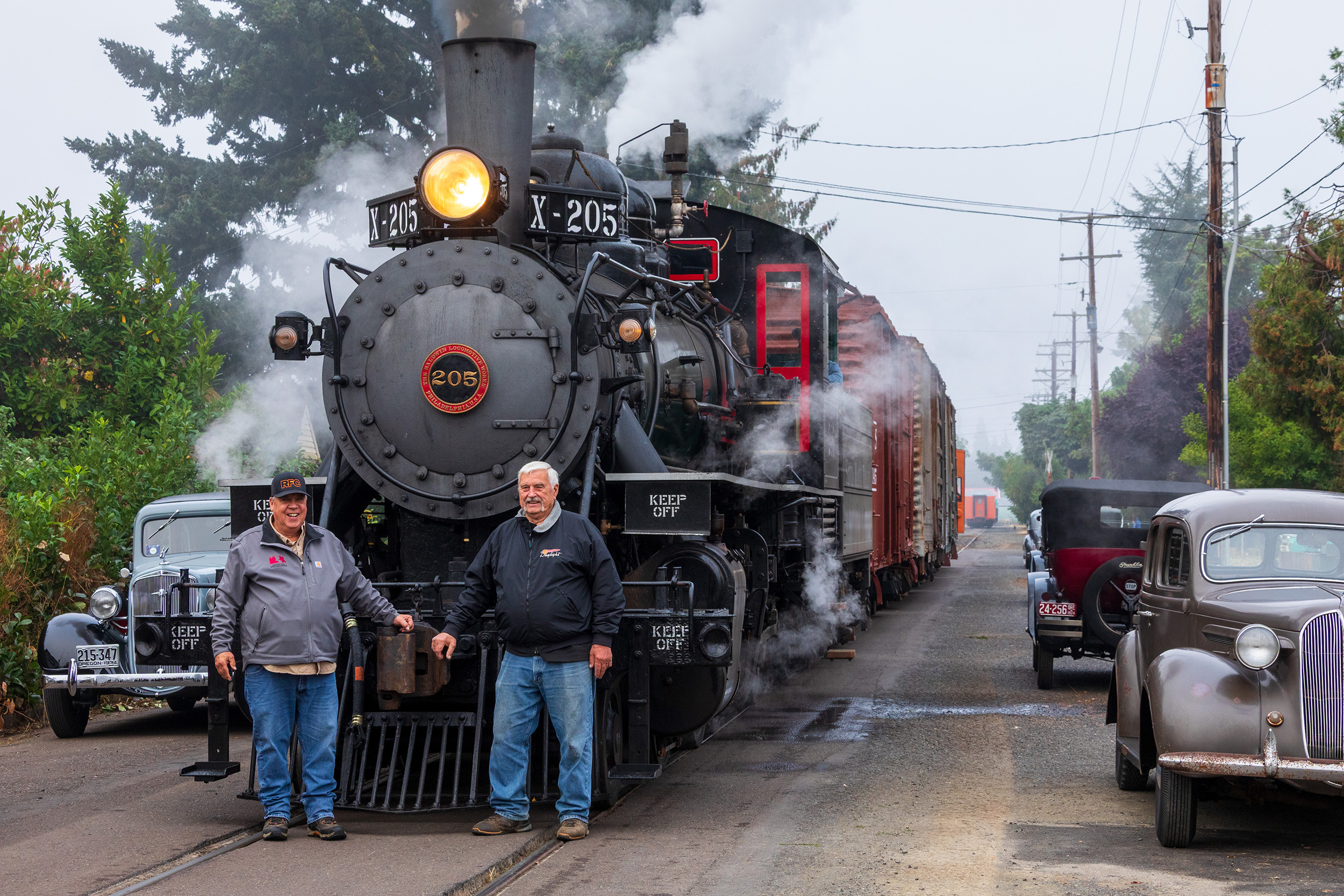
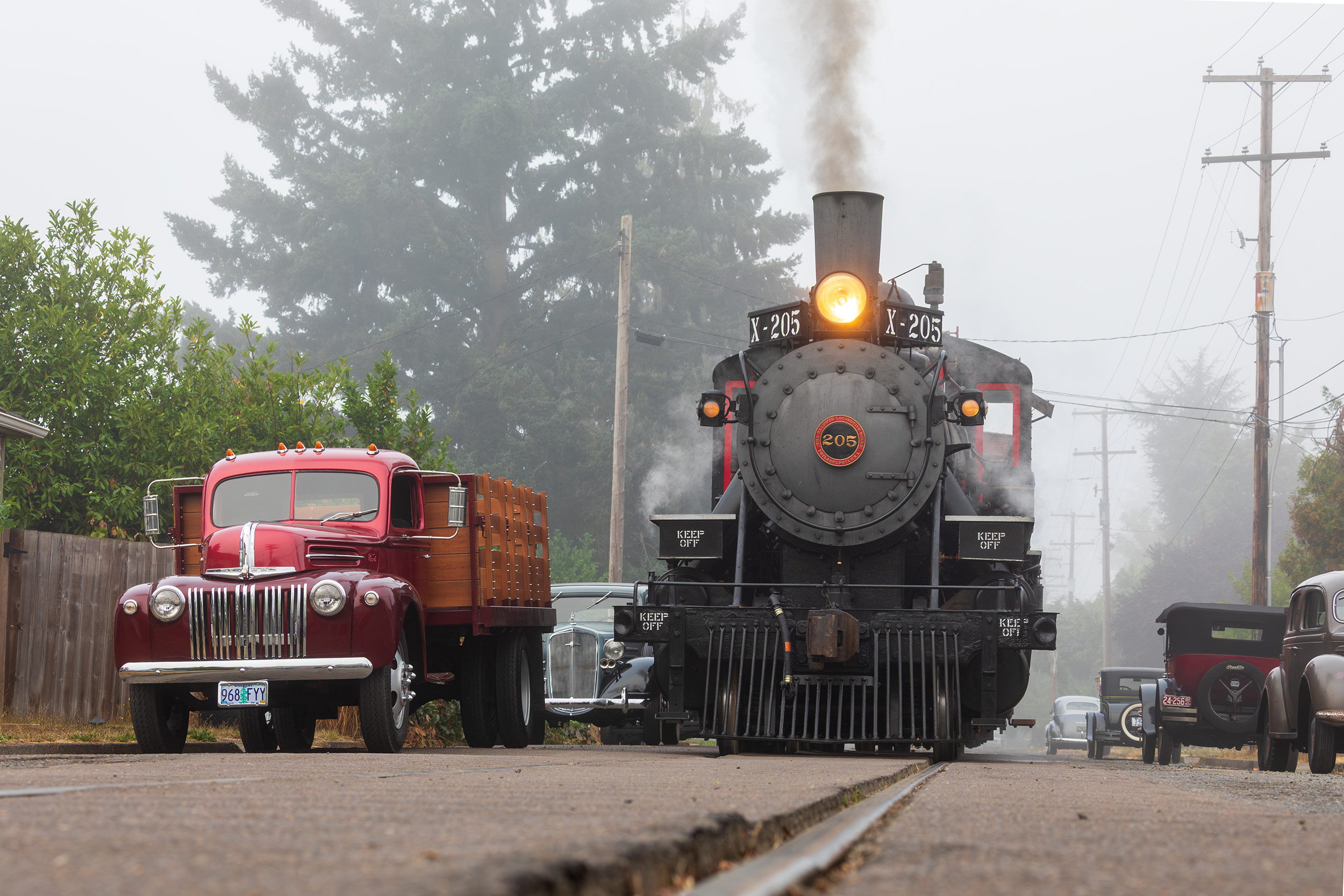
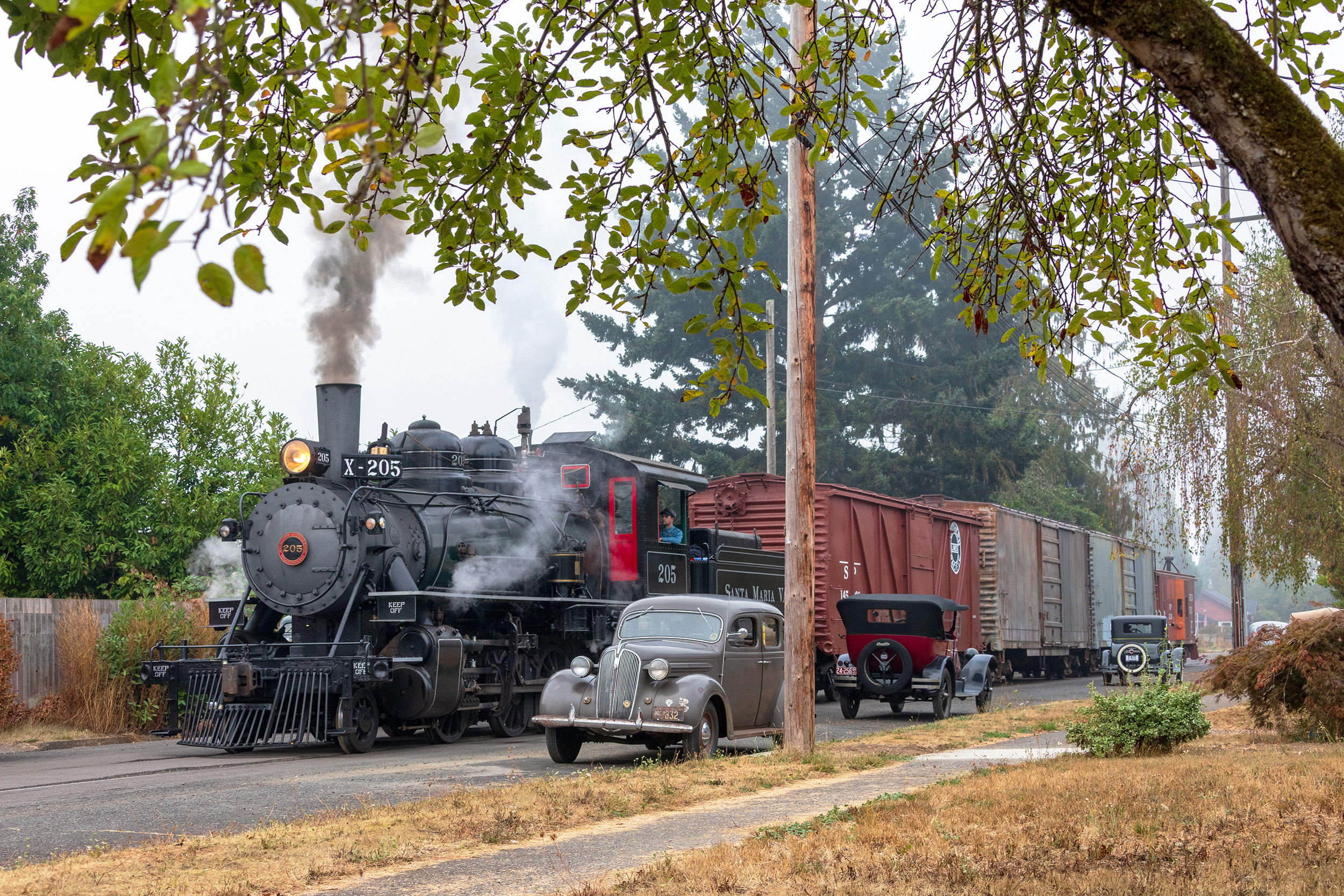
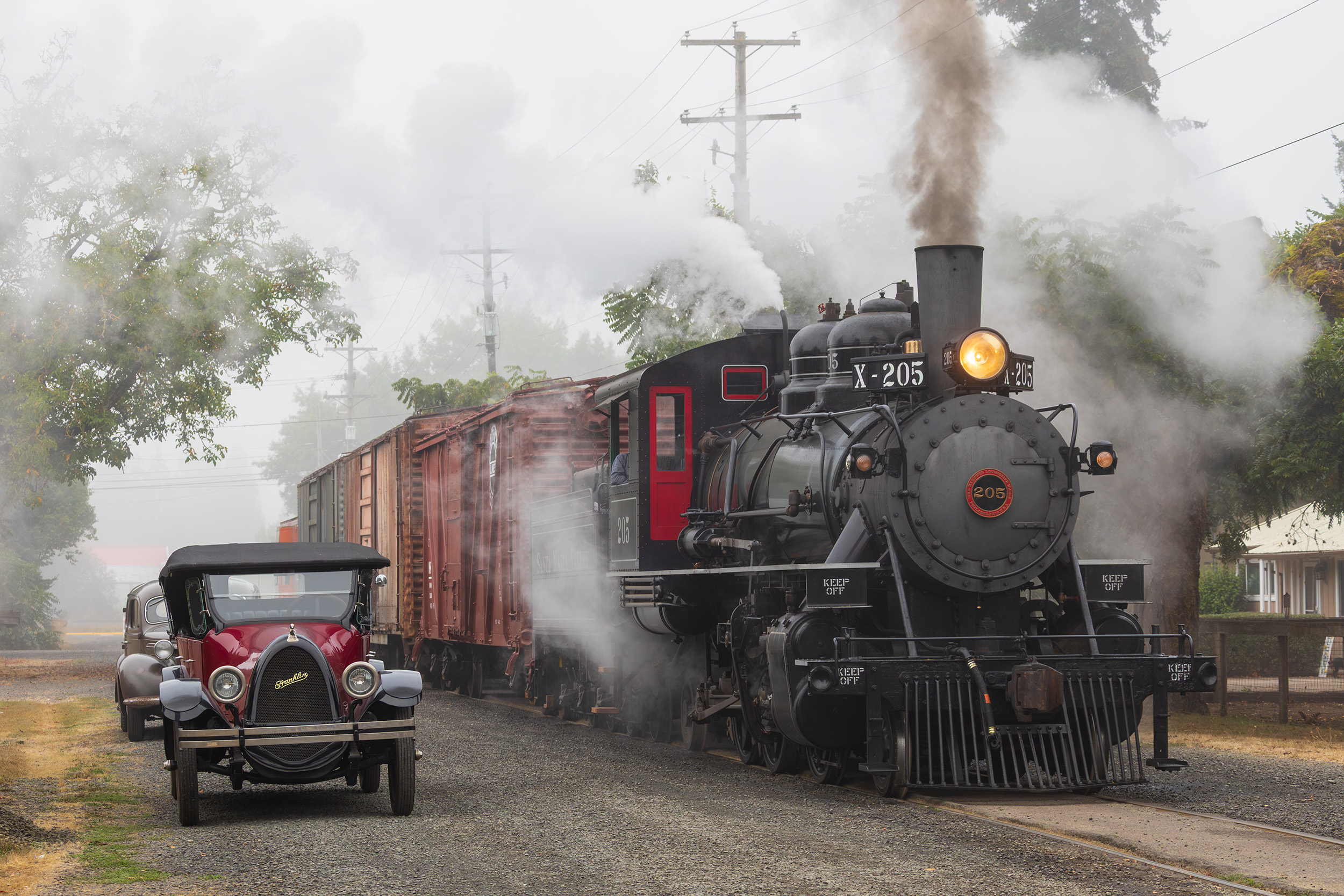
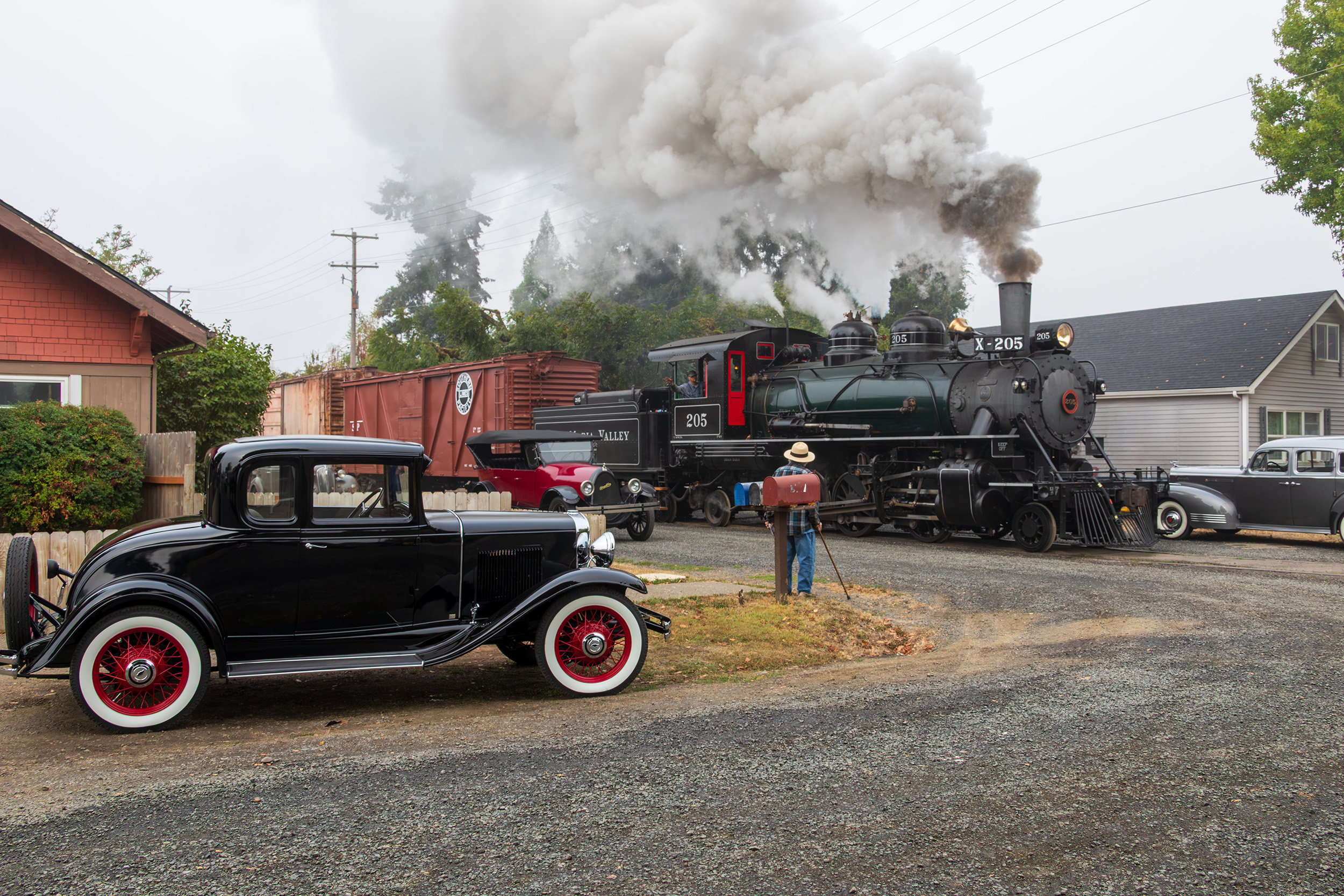
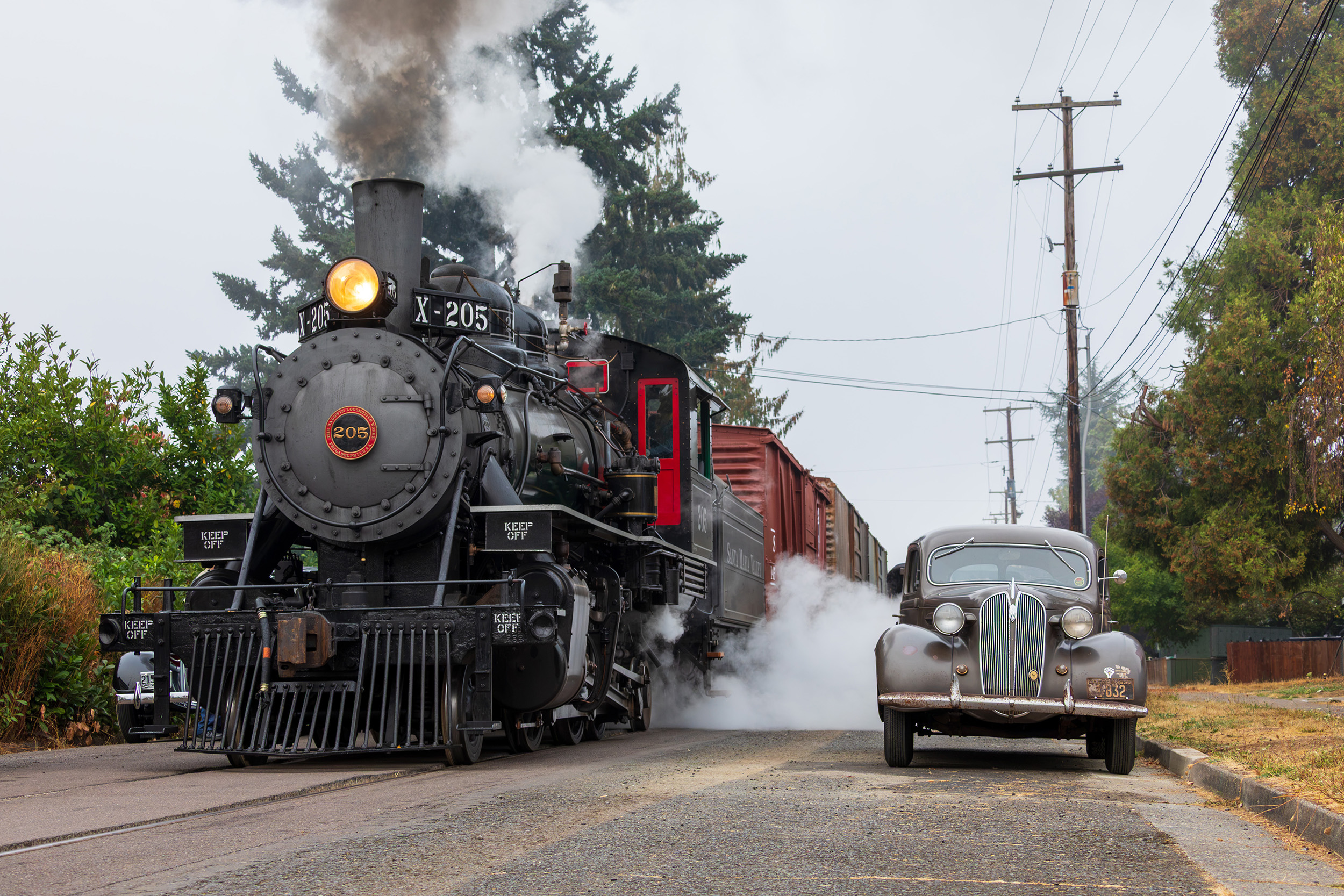
We used the morning fog to do some early morning atmospheric shots west of town near Tallman. About 9am, we headed back into town for a very special staged shoot. The Albany & Eastern has about 5 blocks of street running on Olive Street, through a residential neighborhood at the north end of Lebanon. Pete had coordinated with a number of local classic car owners to pose their vehicles and allow us to essentially “back date” the scene.
From there, it was back to the South Santiam River bridge, and while we were there the fog finally lifted to beautiful blue skies. We also had LLW 5399 – the ex-SP SD9E in “black widow” paint – working along as well, providing photo fodder for us early diesel lovers as well. From there, it was a few more photos at the depot and then a pause for an early dinner before we headed back towards Tallman for sunset shots.
That’s it, folks! A huge thank you to Rick Franklin for letting us do this, the employees of Rick Franklin Corp and the Albany & Eastern for all the work they put in on these two days, George Lavacot for the decades of work put into Santa Maria Valley 205 (and SP 5399, and other equipment), and Pete Lerro and team for putting the whole charter together and then two days of herding cats.

This work is copyright 2026 by Nathan D. Holmes, but all text and images are licensed and reusable under a Creative Commons Attribution-NonCommercial-ShareAlike license. Basically you’re welcome to use any of this as long as it’s not for commercial purposes, you credit me as the source, and you share any derivative works under the same license. I’d encourage others to consider similar licenses for their works.